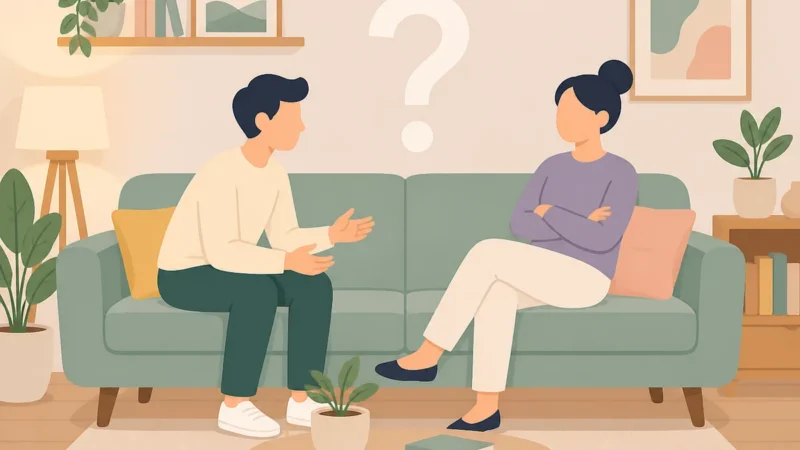
Sometimes a threesome doesn’t go the way you hoped. Maybe someone felt excluded. Maybe jealousy you thought you’d handled came roaring back. Maybe the dynamic between the three of you collapsed into something uncomfortable and no one knew how to stop it. When a threesome goes wrong, the aftermath can feel disorienting — but the experience doesn’t have to define your relationship or your sense of self. Recovery is real, and it starts with a few deliberate steps.
This guide walks through what to do in the hours and days after a difficult threesome experience. Whether you’re a couple processing together or a single person who felt blindsided by how things unfolded, there’s a path forward that doesn’t involve pretending it didn’t happen or spiraling into blame.
Table of Contents
- Why Threesomes Sometimes Go Wrong
- The First 24 Hours: Grounding Yourself
- Talking It Through Without Blame
- Common Recovery Mistakes to Avoid
- Rebuilding Trust and Intimacy as a Couple
- When to Seek Outside Support
- Red Flags vs. Normal Processing: How to Tell the Difference

Why Threesomes Sometimes Go Wrong
Most threesomes that go wrong don’t fail because someone was malicious or because the idea itself was flawed. They fail because of dynamics that were present before anyone got undressed — and those dynamics get amplified when a third person enters the picture.
Unequal attention is the most common trigger. One partner gets more focus than the other, and suddenly what was supposed to be a shared experience becomes a front-row seat to watching your partner connect with someone else. Without a plan for redistributing attention — or the communication skills to flag discomfort in the moment — resentment builds fast.
Unspoken expectations are another landmine. Maybe one person thought this was purely physical while another was quietly hoping it would evolve into something deeper. Maybe the couple assumed the third would leave immediately afterward, but the third expected to stay the night. When these expectations collide mid-experience, the result is confusion that can feel impossible to untangle in real time.
And sometimes, a threesome goes wrong because the relationship wasn’t ready for it. Not every strong couple is prepared for non-monogamous exploration, and that’s not a moral failure — it’s a compatibility question. The experience reveals cracks that already existed rather than creating new ones.

The First 24 Hours: Grounding Yourself
The first day after a difficult threesome is not the time for big decisions or permanent conclusions. Your nervous system may still be activated, your thoughts are likely cycling, and the impulse to “fix it immediately” can make things worse. Instead, focus on stabilization.
If you’re a couple: give each other space to feel whatever comes up without demanding explanations right away. Say something like “I’m feeling a lot right now and I think we should both sit with this before we try to talk it through. Can we check in tomorrow morning?” This communicates that you’re not avoiding the conversation — you’re making sure it happens when you’re both regulated enough to have it productively.
If you were the third person and the experience left you feeling used or discarded: prioritize your own wellbeing. Reach out to a trusted friend. Write down what happened while it’s fresh. Don’t pressure yourself to process it with the couple on their timeline — you’re allowed to need space. The fact that the dynamic felt unbalanced doesn’t mean you did something wrong.
Hydrate, eat something substantial, and try to sleep before making any major moves. The combination of emotional intensity and physical exhaustion distorts perspective. What feels catastrophic at 2 a.m. often looks more manageable after a full night’s rest.

Talking It Through Without Blame
The conversation about what went wrong is the hardest part — and also the most important. The goal isn’t to assign fault; it’s to understand what happened so you can decide what comes next.
Use “I” statements exclusively. Not “you ignored me the whole time” but “I felt invisible when most of the attention was focused in one direction.” Not “you made it weird” but “I got uncomfortable when the dynamic shifted and I didn’t know how to say something.” This isn’t semantic nitpicking — it’s the difference between a conversation that moves toward resolution and one that escalates into defense and counterattack.
Name specific moments rather than making sweeping judgments. “When you both went to the kitchen together and I stayed in the room alone, I felt excluded” is actionable. “You always do this” is not. The more concrete you can be, the more likely the conversation produces understanding rather than a stalemate.
For three-way conversations with the third person involved: consider whether a group chat or a phone call makes more sense than meeting in person, especially if emotions are still raw. Written communication gives everyone time to choose their words carefully. If you do meet in person, pick a neutral location — not the same space where the threesome happened. For more on navigating these discussions, our guide to threesome aftercare covers the emotional processing piece in detail.

Common Recovery Mistakes to Avoid
Good intentions can lead to recovery missteps. Here are the patterns that tend to make things worse instead of better.
Rushing to “fix it” with another threesome. The logic seems sound — replace a bad experience with a good one. But you can’t outrun an unresolved experience by creating a new one. The same dynamics will follow you into the next encounter unless you address them first.
Pretending it didn’t happen. Sweeping discomfort under the rug works for about a week. Then it resurfaces as resentment, withdrawal, or a quiet loss of trust that you can’t trace back to any single moment because you never named it.
Blaming the third person entirely. Unless there was a genuine consent violation, the dynamic was co-created. Focusing all the blame on the third partner might protect the couple’s bond in the short term, but it prevents you from learning what you need to change about your own preparation and communication.
Overanalyzing every detail. Some couples spend weeks dissecting each moment, searching for where exactly things went wrong. At a certain point, the analysis becomes its own form of staying stuck. Identify the patterns that mattered, make adjustments, and give yourselves permission to move on.

Rebuilding Trust and Intimacy as a Couple
When a threesome goes wrong, it can shake the foundation of the primary relationship. Trust that felt unshakeable suddenly has cracks, and intimacy that was effortless now requires deliberate effort. Rebuilding isn’t about returning to exactly how things were — it’s about creating something stronger from what you’ve learned.
Start by reaffirming what didn’t break. Your relationship existed before the threesome and it exists after. Spend time together doing things that have nothing to do with non-monogamy — date nights, shared hobbies, the routines that remind you why you’re together in the first place. This isn’t avoidance; it’s reminding your nervous systems that the relationship is still safe.
When you’re ready to be physically intimate again, go slowly. The goal isn’t to “reclaim” each other — that framing can make physical intimacy feel transactional or competitive. Instead, focus on presence. What does it feel like to be close without an agenda? Rebuilding physical connection after a difficult shared experience requires patience that a lot of couples underestimate.
If you’re considering trying again in the future, don’t set a timeline. The right question isn’t “when can we try another threesome?” but “what would need to be different for both of us to feel genuinely ready?” The answer to that question will tell you more about your relationship than any number of experiences will. For a structured approach to these conversations, read through our guide on finding a third safely — the preparation framework applies whether it’s your first time or a return after a difficult experience.
When to Seek Outside Support
Not every post-threesome recovery can happen within the relationship alone. Recognizing when to bring in outside support is a sign of strength, not failure.
Consider couples therapy if the same argument keeps circling without resolution, or if one partner feels the experience damaged their trust in a way that private conversations aren’t repairing. Look for a therapist who explicitly states they work with non-monogamous or polyamorous clients — a therapist who pathologizes the threesome itself rather than helping you process what happened won’t be useful. The National Coalition for Sexual Freedom maintains a directory of kink-aware and non-monogamy-affirming professionals.
Individual therapy is equally valid. If the experience brought up personal material — attachment wounds, body image issues, sexual shame — that existed long before the threesome, working through it one-on-one might be more effective than trying to process it entirely within the relationship context.
Support communities can also help. Online spaces like r/nonmonogamy provide perspective from people who have navigated similar experiences. Just be mindful that online advice is not a substitute for professional support when the situation is serious. Reading about others’ recovery journeys can normalize what you’re going through without replacing the work of processing your specific experience.

Red Flags vs. Normal Processing: How to Tell the Difference
Recovery after a difficult threesome involves emotional turbulence — that’s expected. But some signals indicate something more serious than normal processing. Knowing the difference helps you respond appropriately.
| Normal Processing | Potential Red Flag |
|---|---|
| Feeling sad or unsettled for a few days | Depressive symptoms persisting beyond two weeks |
| Occasional intrusive thoughts about the experience | Flashbacks, nightmares, or feeling unable to stop re-living it |
| Awkward conversations that gradually improve | Complete communication shutdown or stonewalling |
| Needing space for a day or two | Emotional or physical withdrawal that doesn’t ease over time |
| Questioning whether threesomes are right for you | Questioning whether the relationship itself is salvageable |
| Temporary dip in sexual desire with your partner | Physical aversion or panic at the thought of intimacy |
If you’re seeing multiple items from the right column, take them seriously. What you’re dealing with may be beyond the scope of partner conversations and check-ins. A mental health professional who understands non-traditional relationship structures can help you determine whether what you’re experiencing is within the range of normal processing or something that needs clinical attention.
Recovering from a threesome that went wrong doesn’t mean the experience was a mistake. Some of the most important growth in relationships comes from confronting difficult moments honestly, together. The question isn’t whether you can avoid every bump — it’s whether you can navigate the bumps without losing each other. If you’re reading this because you’re in the middle of that navigation: you’re already doing the work. That counts for more than you probably realize right now.
When you’re ready to explore again — or if you’re here because you want to make sure your first experience has the strongest possible foundation — 3Cupid is built for people who take these conversations seriously. Good experiences don’t happen by accident. They happen when everyone involved has done the groundwork.
This article is part of 3Cupid’s ongoing guide to safe, fulfilling threesome dating. Our content addresses real experiences — including the difficult ones — with honesty, compassion, and practical guidance for adults 18+.