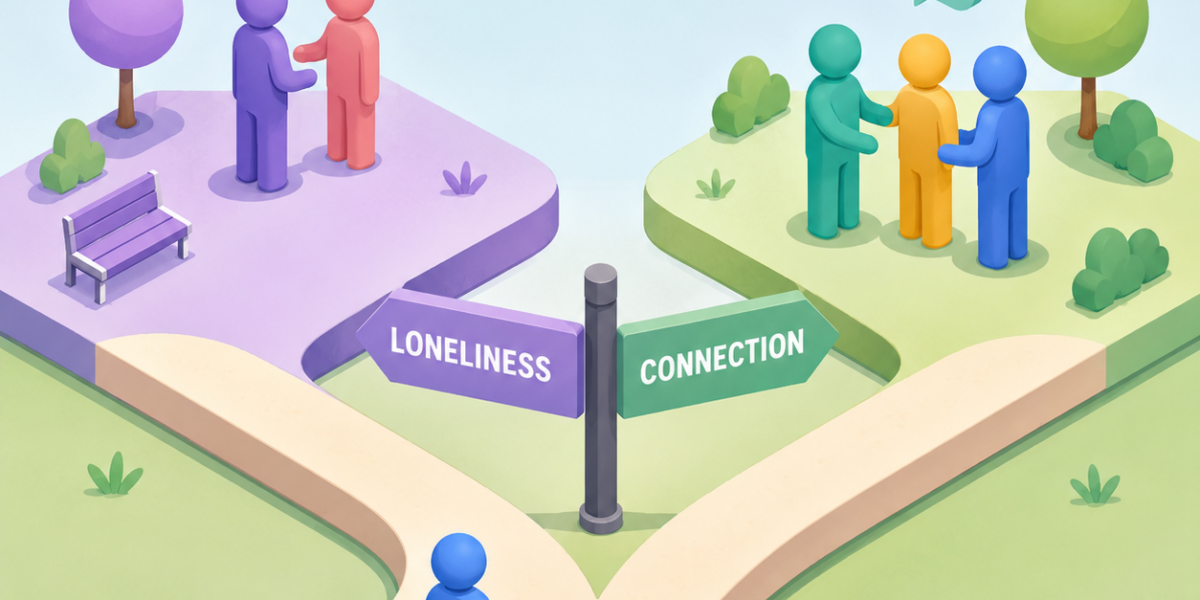
cuckolding vs threesome dating is a question more people are asking than you’d think. Search volume for both terms keeps climbing, and for good reason — many couples and singles know they want something beyond traditional monogamy, but they’re not always sure what to call it.
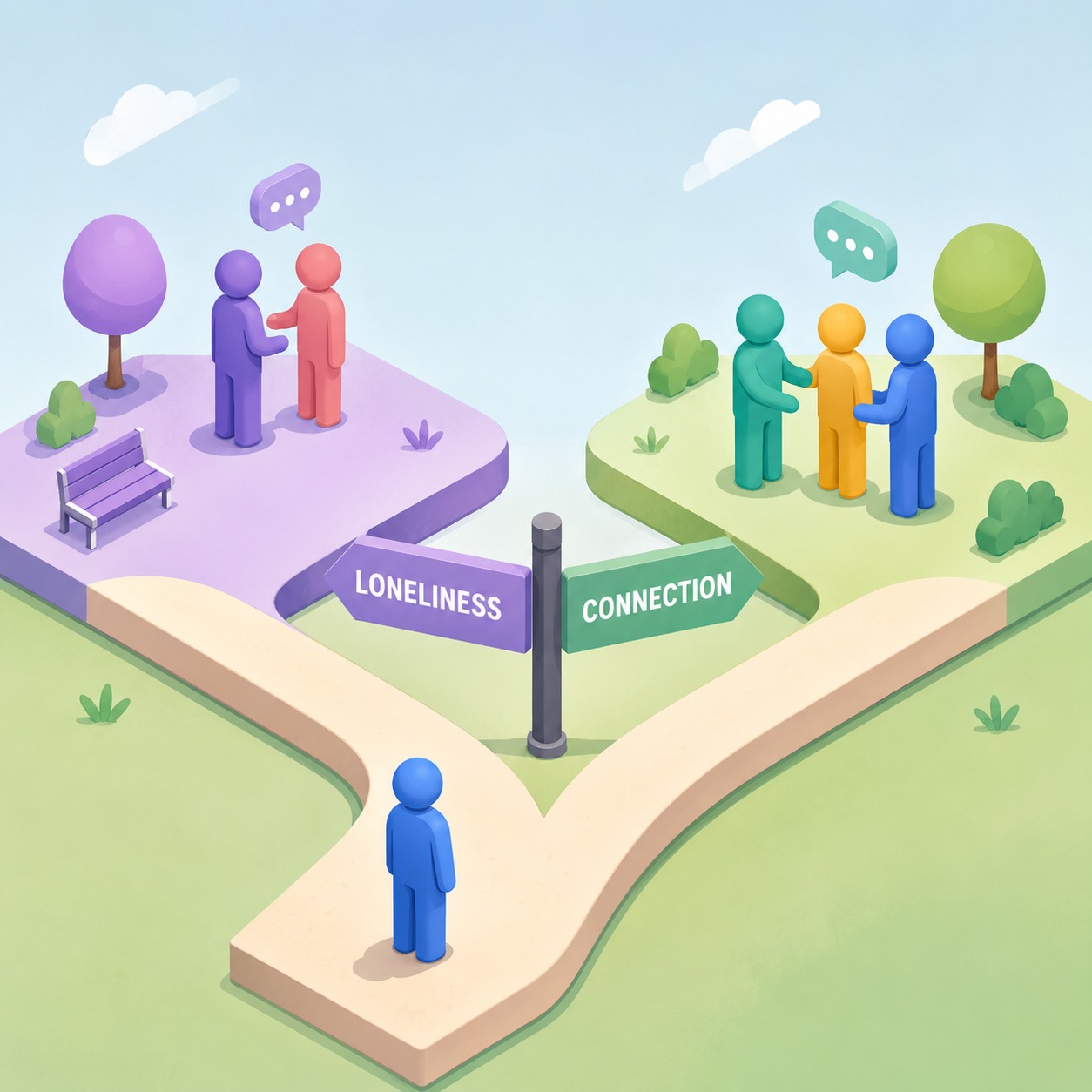
Here’s the short answer: cuckolding is a specific fetish dynamic where one partner derives arousal from watching their partner be with someone else, often with elements of humiliation or power exchange. Threesome dating is a consensual group experience where all three people participate actively as equals. They share almost nothing in common beyond involving three people.
Confusing the two leads to mismatched expectations, hurt feelings, and conversations that go sideways fast. If you’ve ever searched “cuckold near me” when what you really wanted was a threesome partner — or vice versa — this guide will help you sort out the difference and communicate what you actually want.
What Is Cuckolding, Actually?
Cuckolding is a consensual arrangement where one partner — typically the man in a heterosexual couple — experiences arousal from watching or knowing their partner is sexually involved with someone else. The dynamic often includes a power element: the “cuckold” partner is in a subordinate position, and the experience may involve psychological themes of humiliation, inadequacy, or compersion mixed with submission.
This is not the same as simply enjoying watching your partner with someone else. The distinction matters. Cuckolding is a specific fetish with a defined emotional and psychological structure. It’s not “a threesome where the guy just watches” — that’s a threesome with boundaries. Cuckolding is its own thing, with its own community, terminology, and norms.
Key characteristics include:
- Power imbalance is the point. The dynamic is built around a hierarchical relationship where one person is positioned as lesser or excluded in specific ways.
- Arousal comes from the dynamic itself. The turn-on isn’t just about seeing a partner with someone else — it’s the specific emotional cocktail of submission, jealousy, and compersion.
- The third person (the “bull”) is knowingly in a dominant role. This is a consensual arrangement where all parties understand and agree to the power structure.

Psychologically, cuckolding intersects with themes of eroticized jealousy, power exchange, and sometimes humiliation — as discussed in research on non-traditional relationship dynamics. It’s a valid consensual practice with its own ethical framework, but it’s not “threesome lite” or a stepping stone to group dating.
What Threesome Dating Actually Means
cuckolding vs threesome dating clarity starts here. Threesome dating is a consensual experience where three people participate together as equals. Everyone is involved, everyone’s pleasure matters, and the goal is mutual connection — whether that’s for one evening or an ongoing arrangement.
Unlike cuckolding, threesome dating doesn’t come with a built-in power script. The dynamics are negotiated by the people involved. Some threesomes are purely physical, some involve emotional connection, and some evolve into throuple relationships. What they share is the premise that all three people are active participants.
Our complete guide to finding a third safely covers the practical side of this in detail. The emotional side — why couples explore this in the first place — is covered in our piece on the psychology behind threesomes.
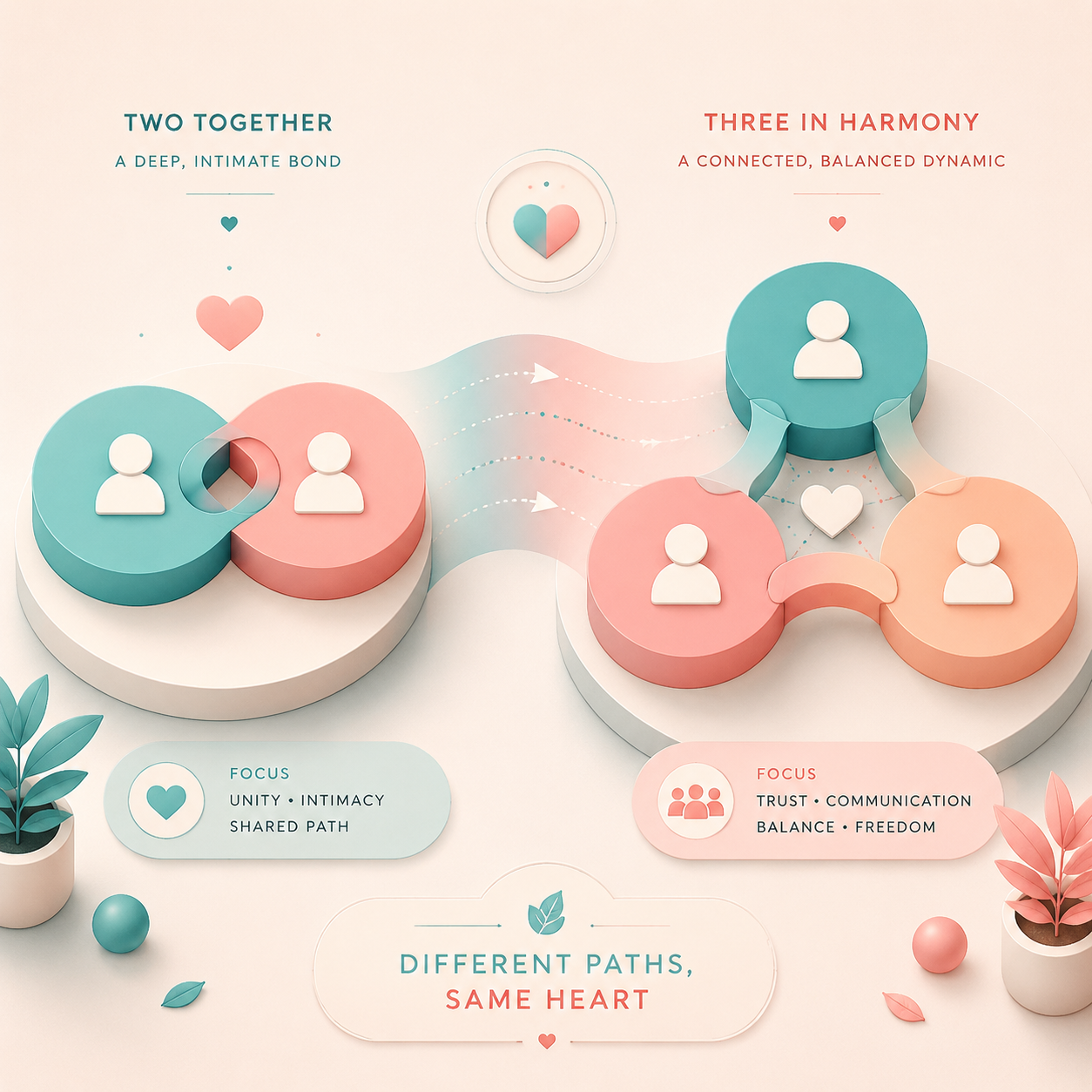
Threesome dating sits within the broader ethical non-monogamy umbrella. It emphasizes:
- Enthusiastic consent from all three people. Nobody is there to fulfill a fetish script they didn’t co-author.
- Equal participation. Even if one person takes a more observational role for part of the experience, they’re still an active participant with agency, not a prescribed “watcher.”
- Negotiated boundaries. Rules are co-created, not inherited from a pre-existing power dynamic. Our threesome rules guide walks through how to set these up.
The Core Differences That Matter
People confuse cuckolding vs threesome dating because both involve three people and exist outside traditional monogamy. But the similarities end at the surface. Here’s what actually separates them:
Motivation and Arousal Source
In cuckolding, the arousal is tied to the dynamic — the power exchange, the perceived humiliation, the specific psychological cocktail of the scene. In threesome dating, arousal comes from shared experience — mutual attraction, group chemistry, and the pleasure of connecting with multiple people simultaneously.
Power Structure
Cuckolding has an explicit power hierarchy baked in. The cuckold is subordinate, the “bull” is dominant, and the shared partner occupies a specific role within that structure. Threesome dating ideally operates on flat power dynamics — everyone has equal standing to express desires, set limits, and withdraw consent.
Emotional Involvement
Cuckolding intentionally creates emotional distance for one participant. The emotional experience of being excluded or humiliated is the point. Threesome dating, by contrast, is about inclusion — everyone is emotionally present and engaged. This difference has real consequences for aftercare and emotional processing afterward, which we explore in our guide to jealousy versus compersion.
The Third Person’s Role
In cuckolding, the third person (often called a “bull”) knowingly occupies a dominant role within a scripted scene. In threesome dating, the third is simply — a third. An equal participant who may be a one-time guest or a recurring partner, but who isn’t cast in a predetermined role.
Community and Identity
Cuckolding has its own distinct subculture with specific terminology (bull, cuckold, cuckquean, hotwife), dedicated spaces, and well-established scenes. Threesome dating is broader, overlapping with ENM, polyamory, swinging, and casual dating communities. The language, norms, and expectations differ significantly between these spaces.
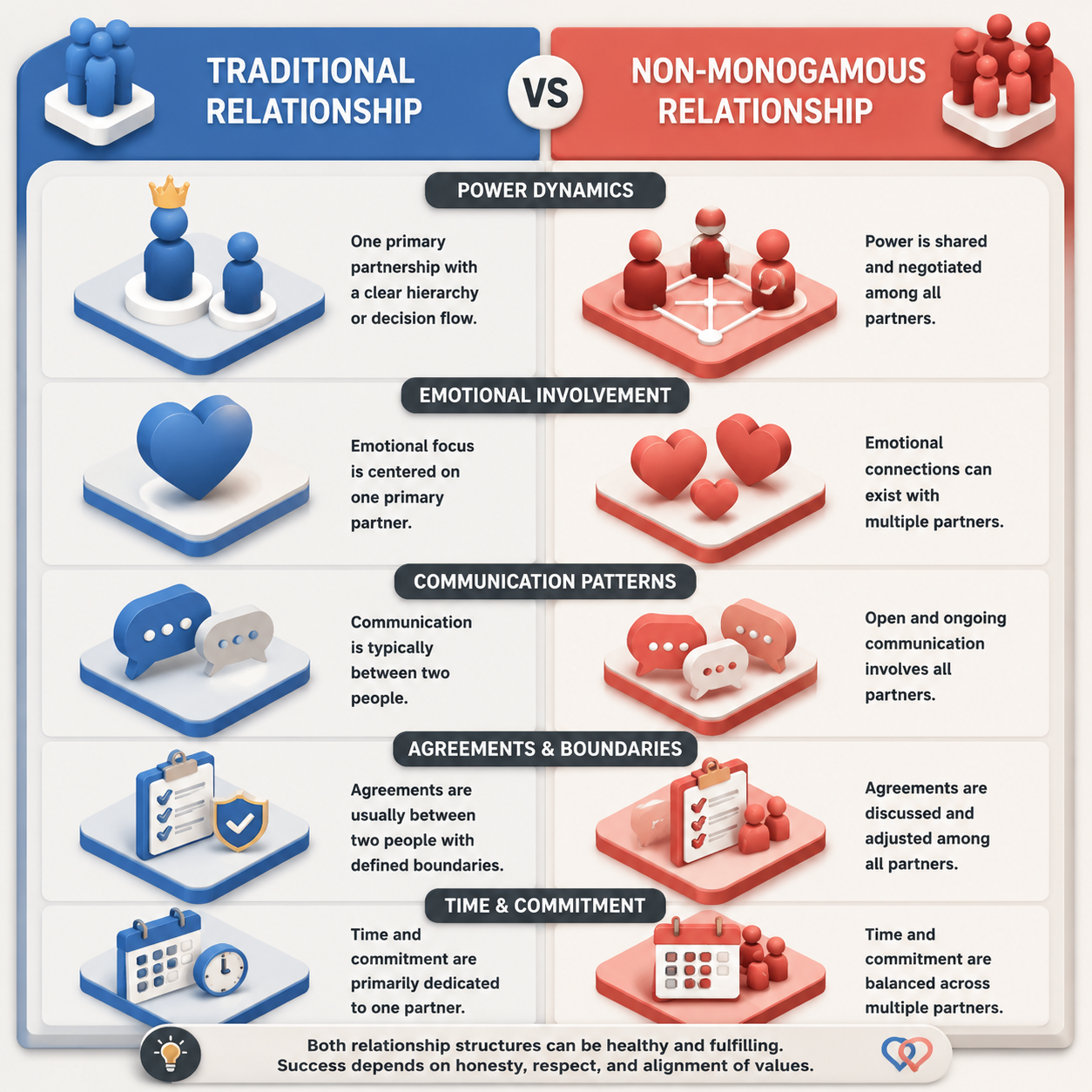
Quick Comparison: Cuckolding vs Threesome Dating
| Dimension | Cuckolding | Threesome Dating |
|---|---|---|
| Core dynamic | Power exchange + voyeurism | Mutual participation |
| Who participates | One observes, two engage | All three actively involved |
| Emotional frame | Eroticized exclusion or submission | Shared inclusion and connection |
| Power structure | Hierarchical by design | Ideally equal and negotiated |
| Third person’s role | Scripted dominant participant | Equal co-creator of the experience |
| Community | Specific fetish subculture | Broader ENM/poly/swinging communities |
| Aftercare needs | Often includes reassurance and reconnection around the humiliation dynamic | Focus on emotional check-ins and reaffirming all connections |
Why People Confuse the Two
The confusion between cuckolding vs threesome dating usually comes from a few predictable places. First, mainstream media often lumps all non-monogamous arrangements together, treating cuckolding as a punchline and threesomes as a fantasy trope — without distinguishing between them. Second, many people searching for either term are new to non-monogamy and simply don’t have the vocabulary yet.
A third reason: some couples use cuckolding-adjacent language when what they actually want is a threesome with specific boundaries. You’ll hear things like “I just want to watch” or “I want her to be the center of attention” — which can sound like cuckolding but might actually describe a threesome where one person is more observational. The difference is in whether the power dynamic is the point or just a temporary boundary.
This is why cuckolding vs threesome dating clarity matters. When you say you want “a cuckold experience” but what you mean is “I want a threesome where I watch for a bit,” you’re using language from a specific fetish community that carries expectations you might not intend. Your potential third will hear it and make assumptions — and those assumptions might not match what you’re actually offering.
How to Talk About What You Actually Want
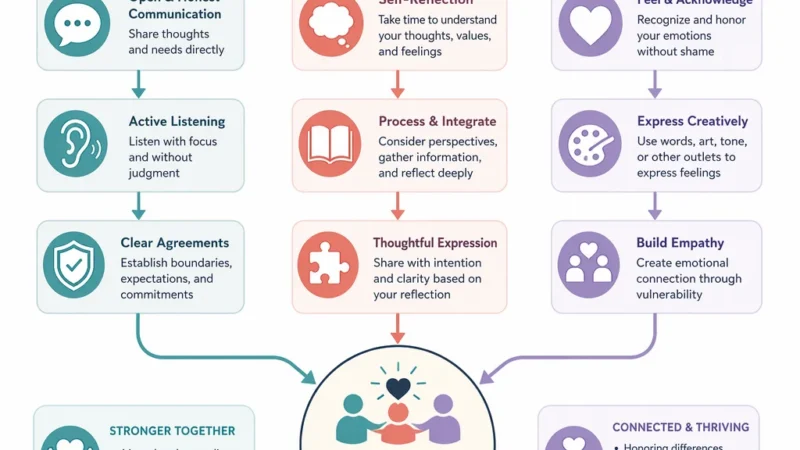
The most useful thing you can do is get specific before you start looking for partners. Vagueness creates mismatches. Here’s a practical framework for figuring out what you’re actually after:
Self-Reflection Questions
- What’s the core turn-on for each of you? Is it watching your partner? Being watched? Group connection? Power exchange? Be honest — there are no wrong answers.
- Who do you want participating and how? Does everyone need to be equally involved, or is a more observational role part of what you want?
- Is humiliation or power imbalance part of what appeals to you? If yes, you’re likely in cuckolding territory and should explore those communities specifically.
- Are you looking for a one-time scene or ongoing connection? Cuckolding is often scene-based; threesome dating can be either.
Conversation Starters for Couples
If you’re a couple trying to figure this out together, try these openers:
- “I’ve noticed we use different words to describe what we want. Can we take a few minutes to each describe what the ideal experience looks like, without using labels?”
- “When I picture this, I see myself doing X while you’re doing Y. What do you picture?”
- “Is the dynamic between us the main event, or is bringing in a third person the focus?”
- “How do we want to feel afterward? Connected? Energized? Something else?”
Getting clear on these points before involving a third person prevents the most common source of bad experiences: realizing mid-scene that you had completely different ideas of what was happening.
Red Flags to Watch For
Whether you’re exploring cuckolding or cuckolding vs threesome dating, certain warning signs suggest someone hasn’t done the emotional work yet:
- Using one label to mean another. Someone who says “I want a cuckold experience” but describes a standard threesome hasn’t clarified their own desires — and may shift expectations on you mid-experience.
- Rushing past definitions. “Let’s not overthink it, just go with the flow” sounds casual but usually means “I haven’t thought this through and hope you won’t notice.”
- Only one partner has done the research. If one person knows all the terminology and the other is along for the ride, there’s an information asymmetry that will cause problems.
- No aftercare plan. Both dynamics involve intense emotions. If someone dismisses the need for aftercare, they’re not prepared for the reality.
- The third person’s preferences are an afterthought. If the conversation is entirely about what the couple wants and the third person is treated as a prop, run — regardless of which dynamic you’re exploring.
Finding Compatible Partners for Either Dynamic
The search strategy differs depending on what you’re actually looking for. For cuckolding, specialized fetish platforms and communities are typically more useful than general dating apps — the terminology, expectations, and consent practices are community-specific. For threesome dating, platforms like 3Cupid are designed specifically to connect couples and singles looking for group experiences in a safe, transparent environment.
Regardless of which dynamic you’re pursuing, your profile or introduction should be specific about what you want. “Open-minded couple looking for fun” tells a potential third nothing useful. “We’re a couple exploring threesome dating where all three of us participate equally — we’re looking for someone who values clear communication and mutual chemistry” gives them something to work with.
Our guide to finding a third safely covers the full process — from profile writing to first meetings to ongoing communication. The same principles of clarity, consent, and mutual respect apply whether you’re seeking a threesome partner or exploring cuckolding dynamics, even though the communities and platforms differ.

Frequently Asked Questions
Can a threesome include cuckolding elements?
Yes, but it requires explicit negotiation. Some couples enjoy blending elements — maybe one partner is more observational for part of the experience. The key is that everyone knows this is the plan and has consented to it. A threesome that accidentally includes cuckolding dynamics because one person unilaterally checked out is not the same thing — that’s a communication failure.
Is cuckolding a form of ethical non-monogamy?
It can be, when practiced with full consent and clear communication. Like any consensual dynamic, cuckolding exists on a spectrum from ethical to problematic depending on how it’s practiced. The ethical version involves all parties understanding the dynamic, consenting to it freely, and having the ability to renegotiate or stop at any time.
How do I know which one I actually want?
Ask yourself one question: Is the power dynamic the point, or is mutual participation the point? If the idea of being in a subordinate position, watching from a distance, or experiencing a specific emotional cocktail around exclusion or humiliation is what appeals to you — you’re in cuckolding territory. If what appeals to you is a shared experience where everyone is actively involved — you’re looking for threesome dating.

Know What You Want So You Can Find It
cuckolding vs threesome dating is not a semantic detail — it’s the difference between finding compatible partners and wasting everyone’s time. The people who have the best experiences, in either dynamic, are the ones who can say clearly what they want before they start looking.
Take the time to figure out which dynamic actually appeals to you. Talk it through with your partner — using specific language, not vague labels. Write it down if it helps. And when you’re ready to find someone, be upfront about what you’re offering. The right people will appreciate the clarity. The wrong ones will self-select out — which is exactly what you want.
If you’re clear that threesome dating is what you’re after, you can start connecting with compatible singles and couples right here at 3Cupid — a space built specifically for people seeking group experiences with clarity, respect, and genuine connection.
This article was written to help couples and singles understand the difference between cuckolding and threesome dating so they can communicate their desires clearly and find compatible experiences. All content is intended for adults 18+ and emphasizes consent, communication, and mutual respect.