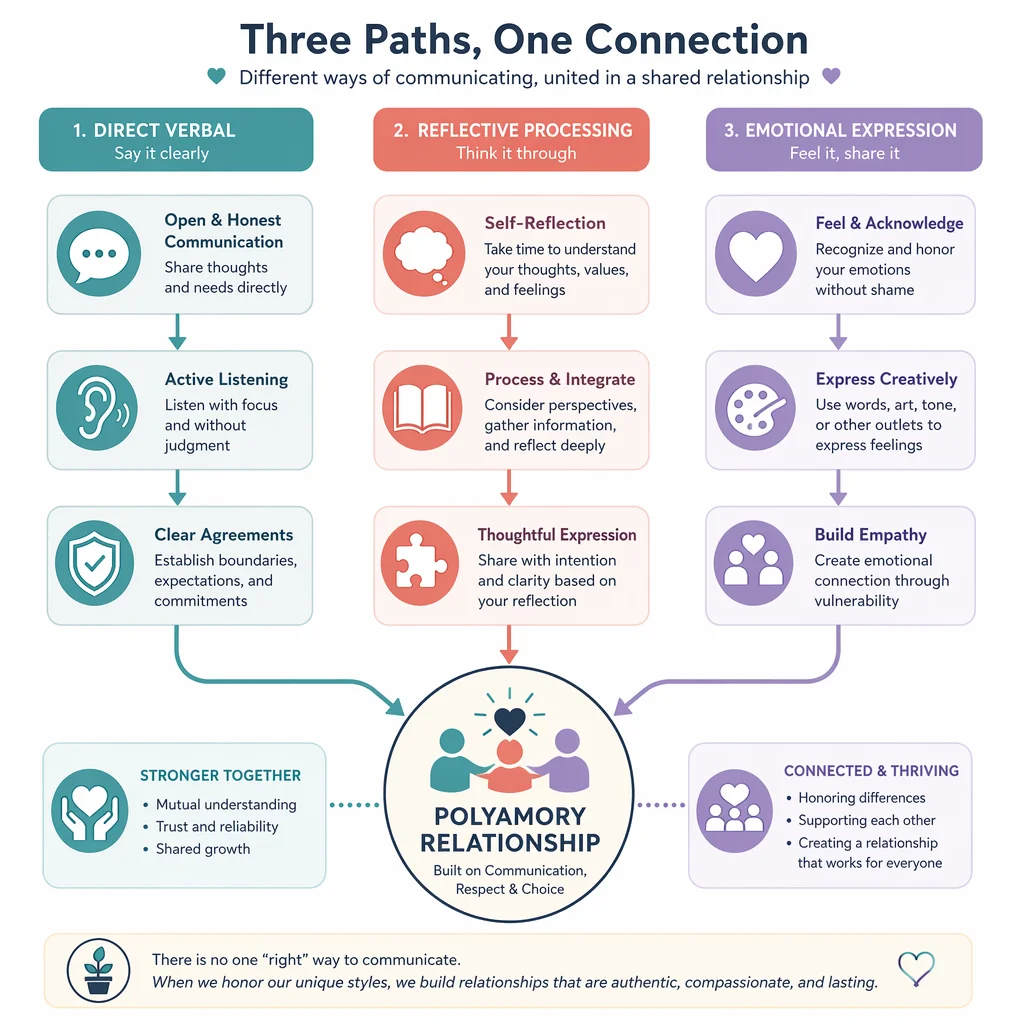
In a monogamous relationship, you only need to figure out one communication dynamic. In polyamory, you are managing several — and each one runs on a different operating system. One partner needs to talk things through the moment they feel something. Another needs 48 hours of quiet processing before they can find the words. One prefers late-night voice notes. Another only feels heard when things are written down.
None of these communication styles are wrong. But when they clash, they can create friction that feels personal — when it is really just a style mismatch. Learning to navigate different communication styles in polyamory is not about changing who you are. It is about building bridges between the ways you and your partners naturally process, express, and connect.
Table of Contents
- Why Communication Styles Matter More in Polyamory
- Three Common Communication Style Mismatches
- Creating a Shared Communication Vocabulary
- When Processing Speeds Don’t Match
- Adapting Your Style Without Losing Yourself
- Building Communication Resilience Across Multiple Relationships
Why Communication Styles Matter More in Polyamory
In any relationship, communication mismatches cause friction. In polyamory, that friction gets multiplied. You are not just navigating one partner’s preferences around texting frequency or conflict resolution — you are navigating several, plus the communication flow between metamours, plus group conversations about schedules and agreements.
Consider this: a partner who processes through talking may feel shut out when their partner needs solitude to think. A partner who relies on written check-ins may feel anxious when someone prefers spontaneous in-person conversations. Neither person is doing anything wrong. They are simply operating from different communication styles, without a shared map for bridging the gap.
Research on relationship communication consistently shows that the healthiest relationships are not the ones where partners communicate identically — they are the ones where partners develop meta-communication skills: the ability to talk about how they talk. In polyamory, this skill moves from helpful to essential.
Three Common Communication Style Mismatches
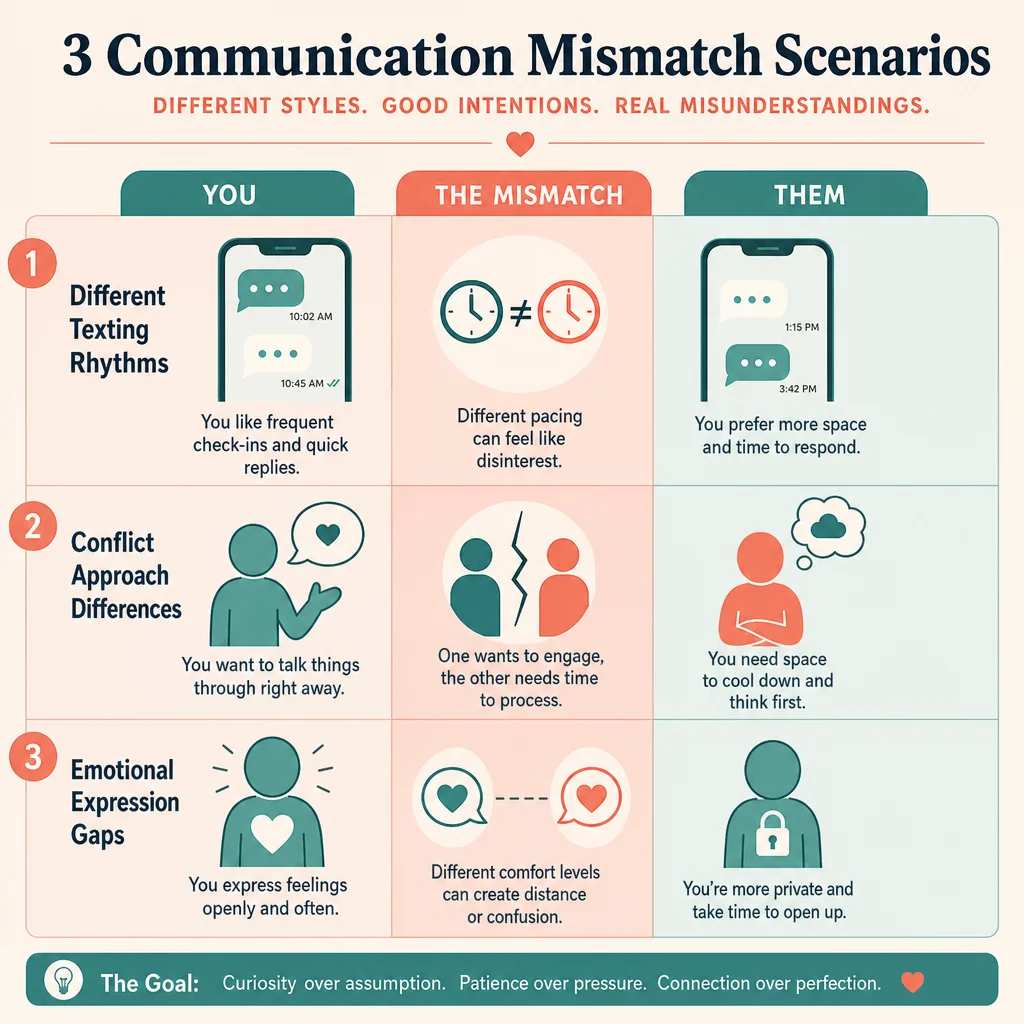
While every relationship is unique, certain communication style mismatches appear so frequently in polyamorous dynamics that they are worth naming explicitly. Recognizing these patterns is the first step toward working with them rather than against them.
1. The Texter vs. The In-Person Talker
One partner expresses care through frequent texts, check-in messages, and shared memes throughout the day. The other saves emotional conversations for face-to-face time and finds constant texting draining. The texter feels ignored. The in-person talker feels surveilled. Neither is being difficult — they simply have different intimacy languages.
2. The External Processor vs. The Internal Processor
External processors need to talk through feelings out loud to understand them. They think by speaking. Internal processors need quiet, solo reflection before they can articulate what they feel. When an external processor brings up a concern, the internal processor may go silent — which the external processor reads as stonewalling, when it may simply be thinking time.
3. The Direct Communicator vs. The Harmony-Seeker
Some people say exactly what they mean, directly and without cushioning. Others prioritize emotional safety and soften their language to avoid causing hurt. The direct communicator can come across as harsh; the harmony-seeker can come across as evasive. In polyamory, where difficult topics like jealousy, time allocation, and boundary shifts come up regularly, this mismatch can create real tension.
Creating a Shared Communication Vocabulary
One of the most practical things you can do in any polyamorous relationship — old or new — is build a shared vocabulary for talking about how you communicate. This does not mean everyone has to use the same style. It means everyone understands what each person needs, and has words for it.
Try introducing simple shared terms. For example: “I need a processing pause” can mean “I heard you and I care, but I need time to think before I respond.” “This is a heads-up, not a crisis” can help the harmony-seeker share something uncomfortable without the listener assuming the worst. “Checking my capacity — can I get back to you tomorrow?” gives the slower processor room while keeping the faster processor from feeling dismissed.
These phrases are small, but they prevent the kind of escalation that happens when someone’s communication style is misinterpreted as a character flaw. When you can name what you need — “I’m an external processor, give me 10 minutes to think out loud and then I’ll land on my actual point” — you stop your partner from filling in the blanks with their own anxieties.
When Processing Speeds Don’t Match
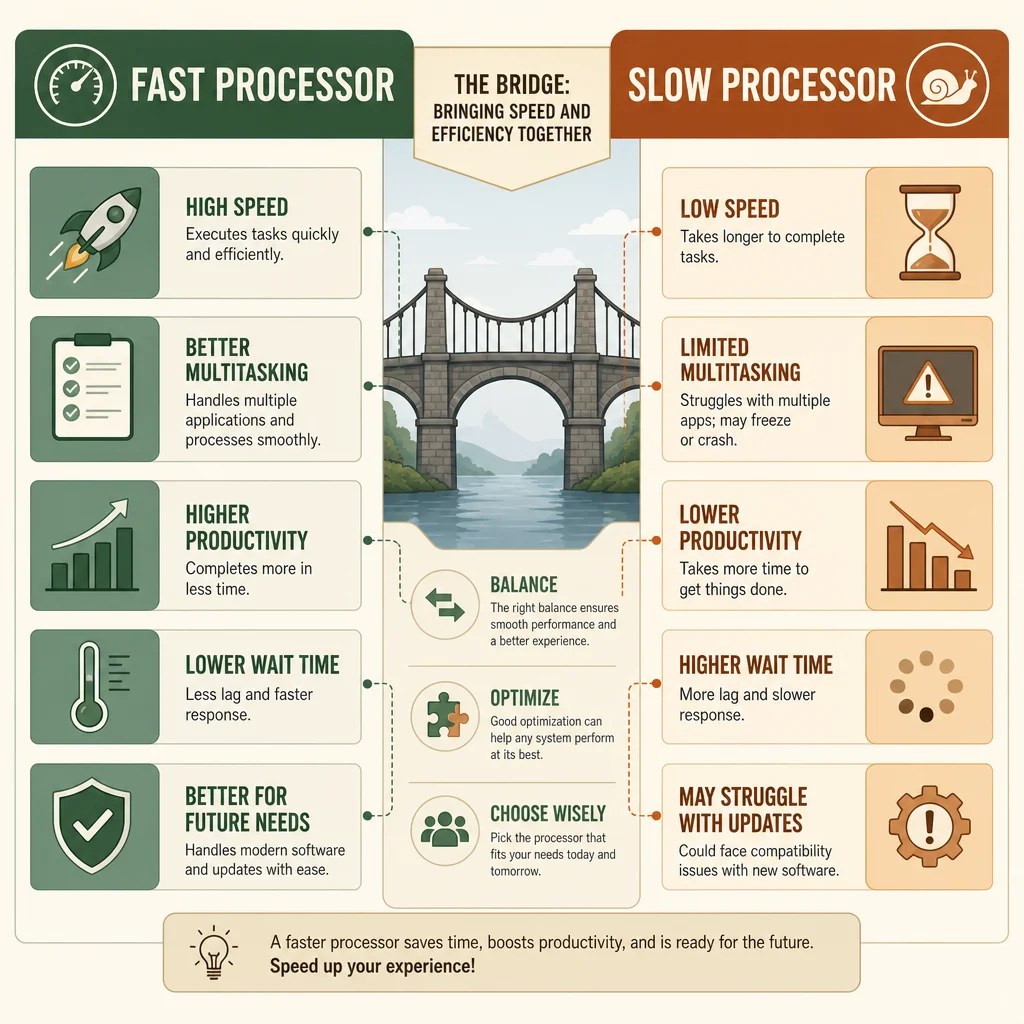
Processing speed differences are among the most under-discussed sources of tension in polyamorous relationships. One partner brings up a concern and wants resolution within the hour. The other needs two days of reflection before they even know what they think. The faster processor feels abandoned; the slower processor feels rushed into decisions they have not fully considered.
The fix is not for one person to speed up and the other to slow down — it is to build a container that holds both speeds. Agree on a structure: “We will discuss this on Thursday evening. Between now and then, I will sit with it, and you can send me any additional thoughts in writing if you want.” This gives the faster processor a clear timeline (reducing anxiety) and the slower processor protected reflection time (reducing pressure).
If you are the faster processor, it helps to notice that your urgency is often about your own discomfort with uncertainty — not about an actual deadline. If you are the slower processor, it helps to give your partner small signals along the way: “Still thinking, haven’t forgotten” goes a long way.
For more on building communication rituals that work in non-monogamous dynamics, our guide on creating a polyamory relationship agreement walks through structured conversation templates that accommodate different processing speeds.
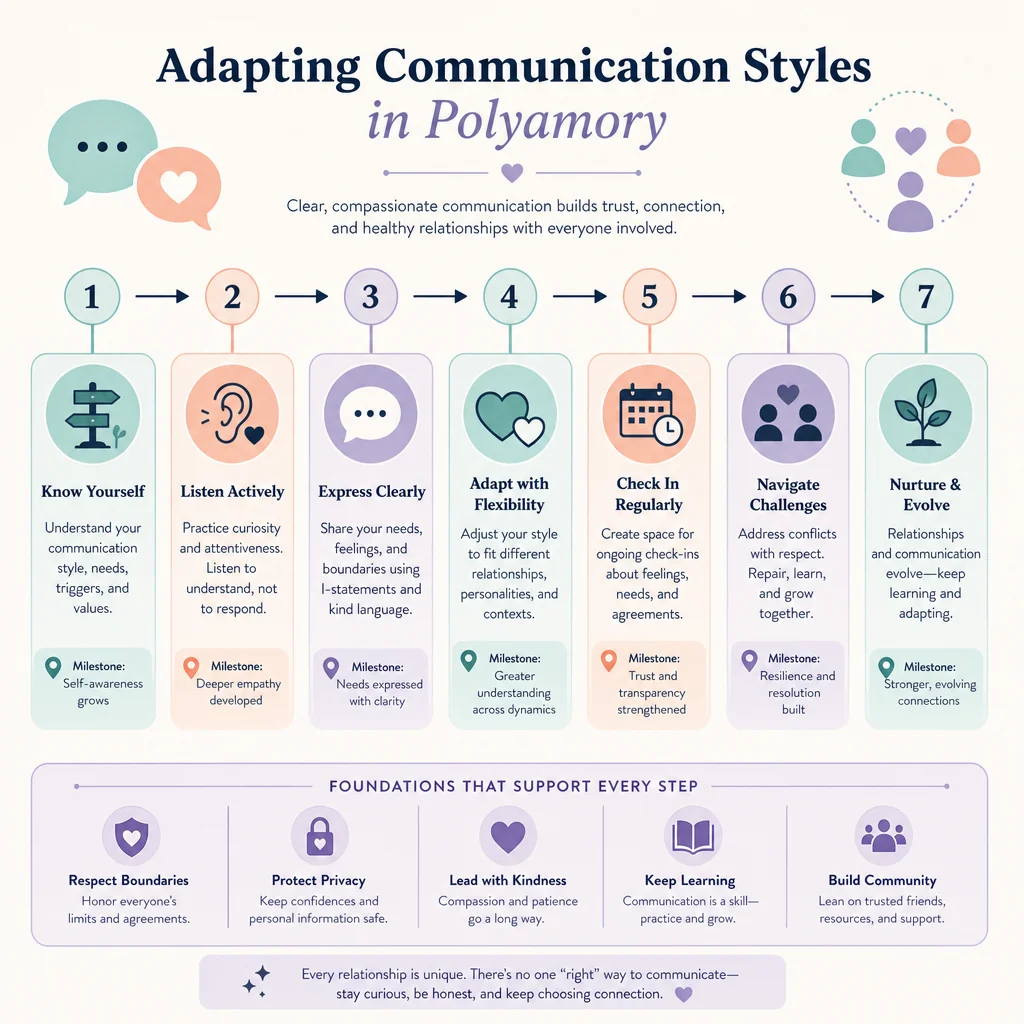
Adapting Your Style Without Losing Yourself
A common fear when the topic of communication styles comes up is that adapting means becoming someone you are not. An internal processor worries they will be forced into constant verbal processing. A direct communicator worries they will have to walk on eggshells. A texter worries they will have to stop reaching out.
Adaptation is not erasure. It is translation. If your partner processes best through writing, sending them a short message before a big conversation is not abandoning your preference for talking — it is giving them a bridge into your world. If your partner is a direct communicator, learning not to hear their directness as aggression is not abandoning your need for gentleness — it is learning their language.
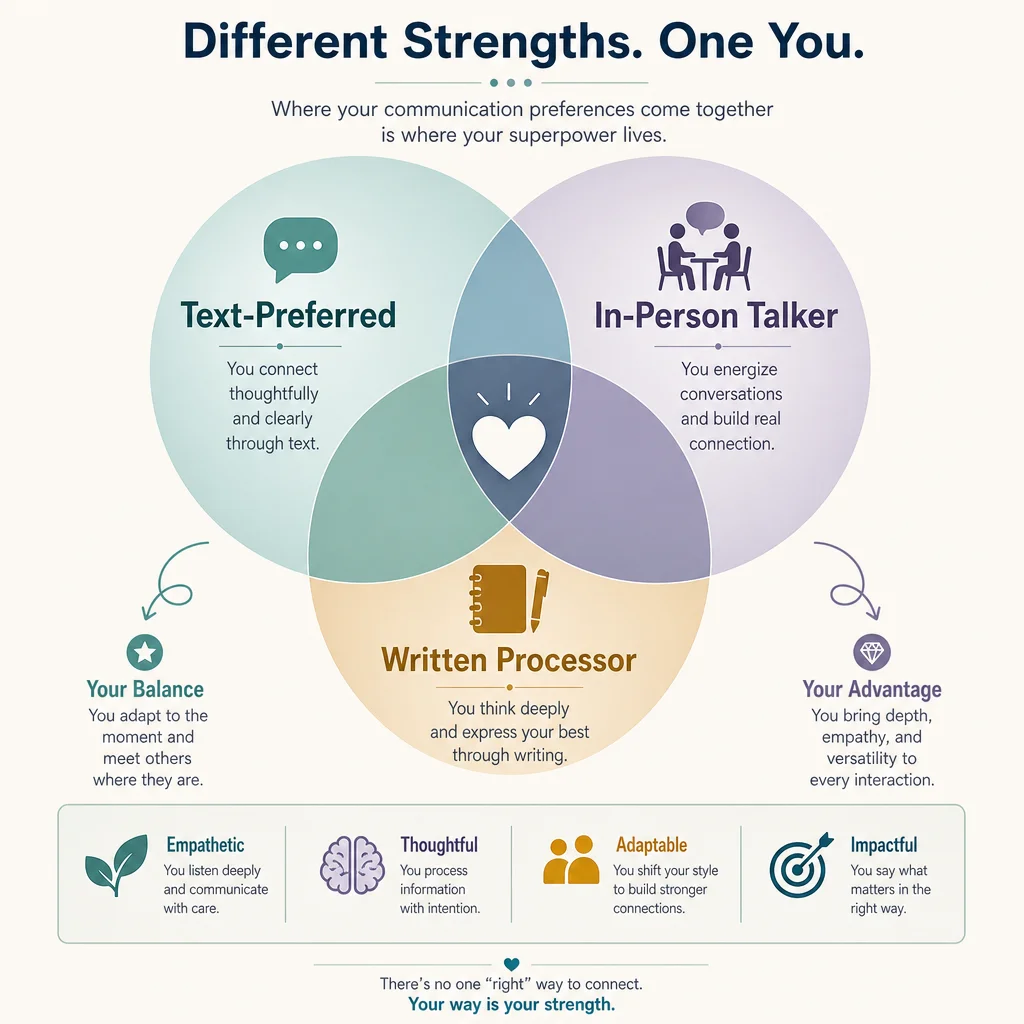
The goal is not to become identical communicators. It is to become multilingual — fluent enough in each other’s styles that you can move between them as the situation requires, while still having a home base that feels authentic to you.
Building Communication Resilience Across Multiple Relationships
When you are managing different communication styles across multiple polyamorous relationships, the cognitive load is real. You are code-switching between a texter, an in-person processor, and a written-check-in partner — sometimes all in the same evening. That takes energy, and some days you simply will not have it.
Build resilience by giving yourself — and your partners — permission to have off days. A simple “Low bandwidth today, can we check in tomorrow?” is a communication tool in itself. Keep a shared rhythm of scheduled relationship check-ins (weekly or biweekly) so that day-to-day mismatches do not pile up into resentment. And when a miscommunication happens — which it will — treat it as data, not as failure.
One underrated resilience practice: document things. A shared notes document, a group chat pin, or even a simple Google Doc where agreements, preferences, and recurring friction points are tracked can prevent the same misunderstanding from happening repeatedly.
Differing communication styles in polyamory do not need to be a source of ongoing friction. When approached with curiosity instead of judgment, they can become one of the richest parts of your relationships — a reminder that you are not dating copies of yourself, but whole, distinct people with their own ways of being in the world.
If you want to take this a step further, our companion guide on creating a relationship user manual in polyamory shows you how to turn your communication self-knowledge into a shareable guide that new partners can reference from day one. And if this resonated, you might also find our article on maintaining your sense of self in polyamory helpful — it explores how staying grounded in who you are makes it easier to flex toward others without losing your footing. And for couples opening up, our polyamory for beginners guide lays the foundation for all the communication work that follows.
This article is part of our ongoing series on communication and relationship skills in ethical non-monogamy. All content is intended for readers 18 and older.