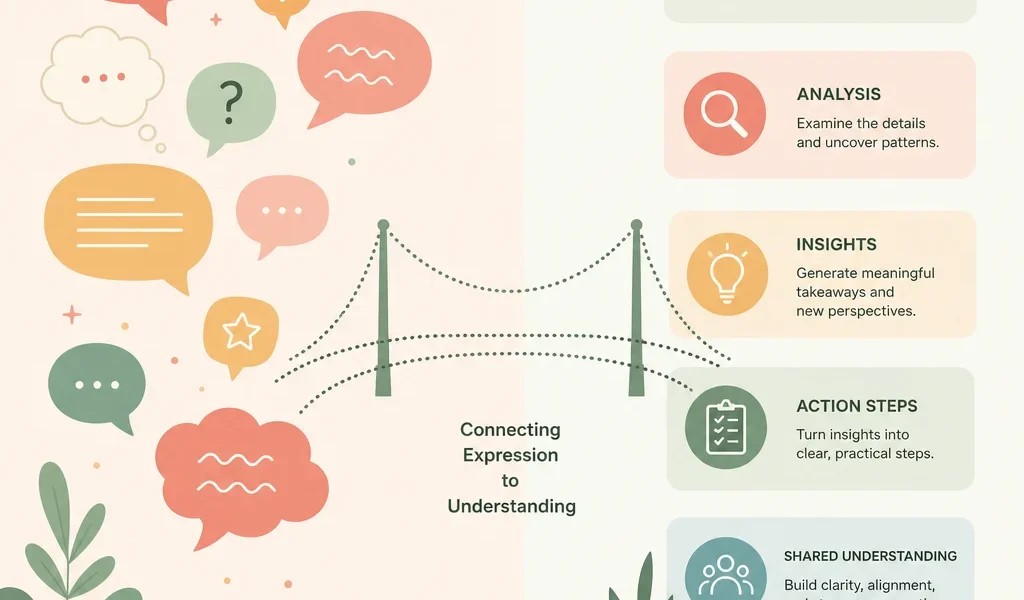
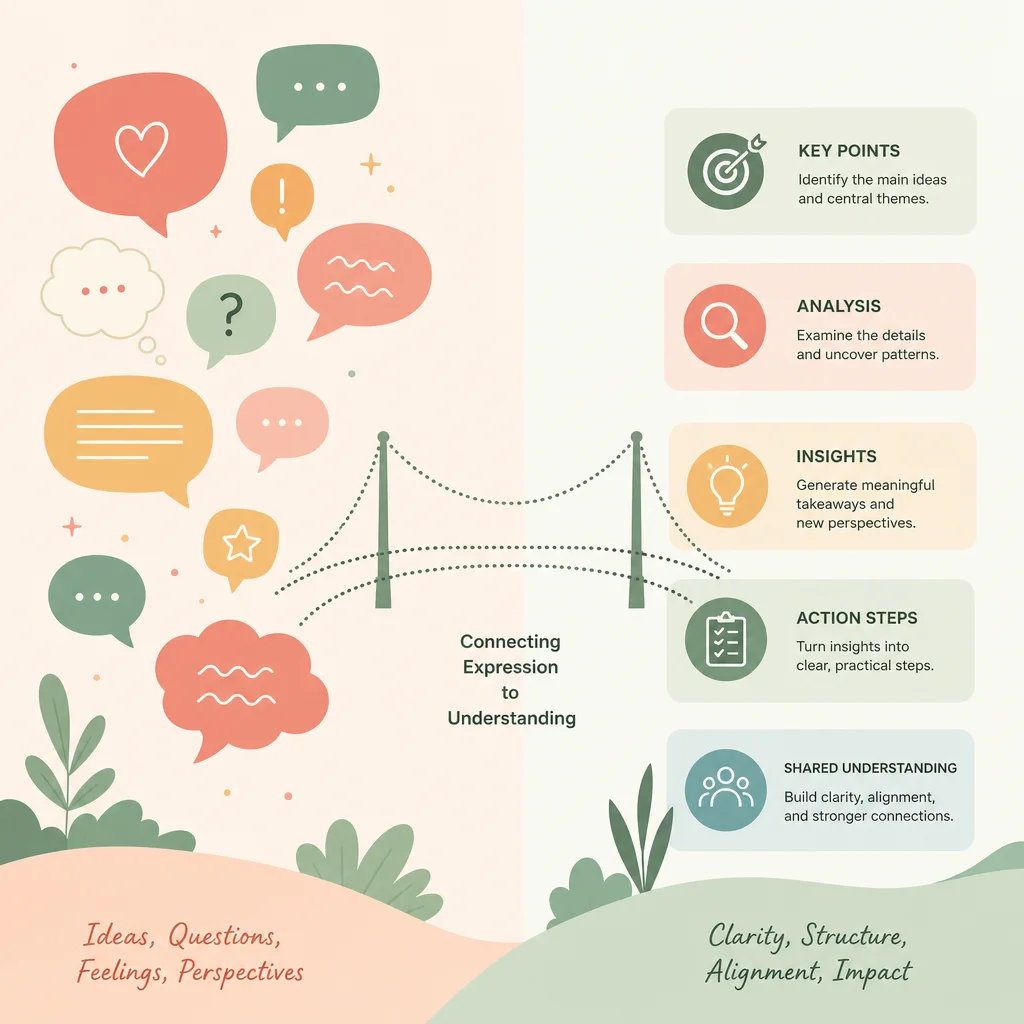
Most relationship advice assumes two neurotypical brains communicating with each other. But in ENM — where you might be juggling three, four, or more connections — the odds that everyone processes information the same way are essentially zero. Neurodivergent communication in ENM is not about teaching anyone to communicate “correctly.” It is about building systems that bridge different cognitive styles so that everyone feels heard, respected, and understood.
Table of Contents
- Why Standard ENM Communication Advice Falls Short
- The Processing Time Gap
- Designing Communication Protocols That Work
- Bridging Direct and Indirect Communication Styles
- Written Communication as an Accessibility Tool
- Handling Conflict Across Neurotypes
- Practical Templates for Neurodivergent Communication in ENM
- The Long Game of Neurodivergent-Affirming ENM
Whether you or a partner have ADHD, are autistic, or experience other forms of neurodivergence, communication gaps are not character flaws. They are design problems. And design problems have solutions. Research on neurodiverse relationships from Psychology Today reinforces that the most resilient partnerships are those that build explicit communication systems rather than relying on unspoken norms.
Why Standard ENM Communication Advice Falls Short
The standard ENM communication toolkit — RADAR check-ins, nonviolent communication scripts, “I statements” — assumes a neurotypical baseline. It assumes you can identify your feelings in real time. It assumes you can articulate them clearly in the moment. It assumes you process verbal information at roughly the same speed your partner delivers it.

For a neurodivergent brain, none of these assumptions hold reliably. Autistic partners may need more processing time before they can identify and name their emotions. Partners with ADHD may struggle to stay present during a long verbal check-in without their attention drifting. Someone with auditory processing differences may genuinely miss parts of what you said — not because they were not listening, but because their brain processes sound differently.
The fix is not to abandon communication frameworks. It is to adapt them. The best neurodivergent communication in ENM systems are flexible enough to accommodate different brains while structured enough to create clarity.
The Processing Time Gap
One of the most common friction points in neurodivergent-neurotypical ENM relationships is the processing time gap. A neurotypical partner raises an issue, expects a response within seconds or minutes, and interprets silence or delay as avoidance, disinterest, or stonewalling. Meanwhile, the neurodivergent partner is still working through step one: registering what was even said.
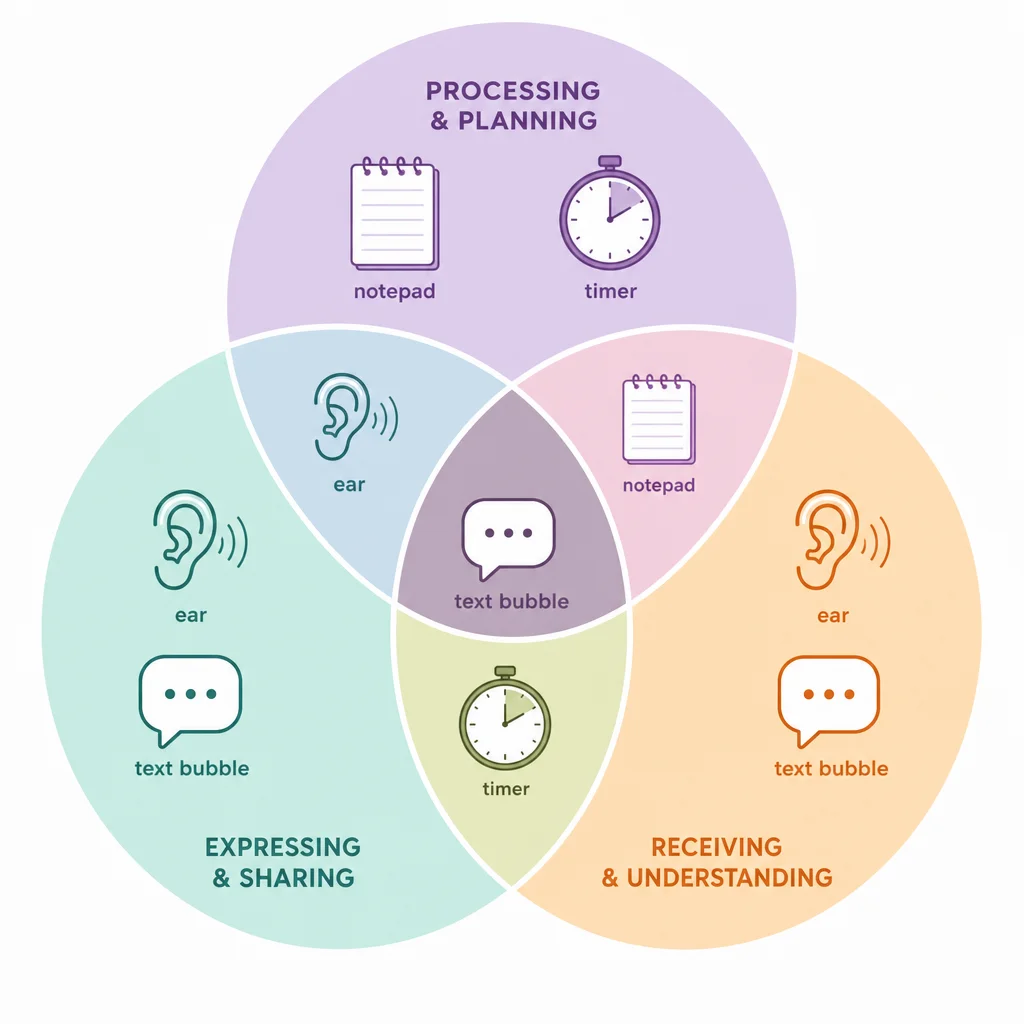
Build processing time into your communication agreements explicitly. This is not about “taking a break” when things get hard — it is about acknowledging that some brains need time to move from hearing to understanding to responding. A simple agreement might look like: “When I bring up something important, I will let you know whether I need an immediate response or whether I am just sharing. If you need processing time, say ‘I need to sit with this — can we come back to it tomorrow?’ and I will trust that you mean it.”
Structured processing tools help. Some partners use a shared document where one person writes their thoughts and the other responds in their own time. Others use voice notes, which let the sender express tone naturally and let the receiver listen and re-listen at their own pace. The medium matters as much as the message.
Designing Communication Protocols That Work
A communication protocol sounds formal, but it is simply a shared agreement about how you communicate, not just what you communicate. For neurodivergent ENM relationships, protocols reduce the cognitive load of figuring out communication norms in real time.
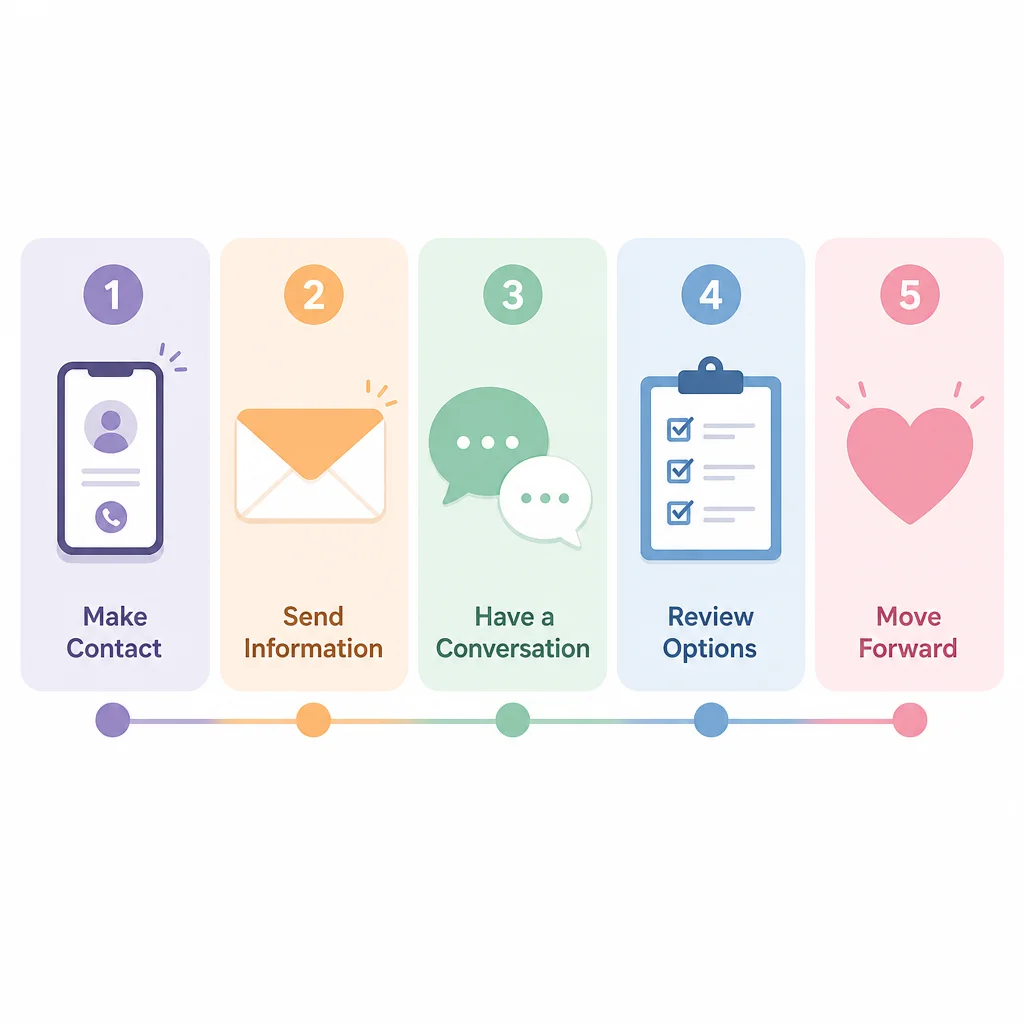
Here are protocol elements that real neurodivergent ENM practitioners use:
Communication menus. Each partner creates a one-page “how to communicate with me” document that lists their preferences: best times of day for serious conversations, preferred channels (text vs. voice vs. in-person), how they signal they need processing time, and what they need when they are overwhelmed. These are living documents, updated as needs change.
Signal systems. Instead of relying on verbal check-ins alone, use simple, low-effort signals. A color-coded emoji system in text messages (green = good, yellow = struggling but okay, red = need support). A physical magnet on the fridge that each partner moves to show their current emotional bandwidth. These bypass the executive-function demands of articulating complex internal states.
Agenda-first meetings. Rather than open-ended “how are we doing?” conversations, set a shared agenda 24 hours before any relationship check-in. Each partner adds bullet points. This gives everyone processing time and prevents the ADHD experience of being put on the spot and going blank. The agenda also keeps the conversation on track, which helps the partner whose attention tends to wander.
Emotional safety and clear communication go hand in hand. For more on creating grounded relationship agreements, read our guide on building emotional resilience in non-monogamous relationships.
Bridging Direct and Indirect Communication Styles
Many autistic people communicate directly: they say what they mean and mean what they say. Many neurotypical people communicate indirectly: they layer requests in softening language, hint at needs, and expect the listener to read between the lines. In a mixed-neurotype ENM relationship, this gap can cause constant misunderstandings.
The autistic partner says “I do not want to go to that party,” meaning exactly that. The neurotypical partner hears subtext: “I do not care about the things that matter to you.” The neurotypical partner says “It would be nice if someone planned a date night for once.” The autistic partner hears a neutral observation and does not realize it is a request.
The bridge is explicit translation agreements. Couples can agree: “When I say something directly, I mean exactly what I say — no hidden meaning. If I am making a request, I will use the word ‘request.’” On the neurotypical side: “Sometimes I communicate indirectly out of habit. If you are unsure whether I am asking for something or just thinking out loud, ask me directly. I will not be offended.”
This kind of explicit negotiation may feel awkward at first. But awkward clarity beats comfortable confusion every time, especially when multiple relationships are involved.
Written Communication as an Accessibility Tool
For many neurodivergent people, written communication is not a downgrade from verbal communication — it is a more accessible format. Text gives you time to process. It creates a record you can refer back to. It removes the pressure of real-time facial expression monitoring and tone interpretation. In neurodivergent communication in ENM, text-based tools are not cold or impersonal — they are assistive technology.

Consider adopting asynchronous written check-ins as a standard practice in your ENM relationships. A shared running document, a dedicated Discord channel, or even a private Notion page where partners drop thoughts, feelings, and requests as they come up. The neurotypical partner who prefers face-to-face conversation can still have that — but adding a written layer makes the relationship accessible to the partner who needs it.
One caveat: tone over text is genuinely ambiguous, and neurodivergent readers may be especially prone to misinterpreting it. Counter this with tone tags — short parenthetical labels like (genuine), (curious), (processing out loud), or (no urgency) that clarify intent. They take half a second to add and prevent hours of misunderstanding.
Handling Conflict Across Neurotypes
Conflict is hard for everyone, but neurodivergent brains face specific challenges. Autistic partners may shut down when overwhelmed by sensory or emotional input. ADHD partners may become reactive or impulsive, saying things they do not fully mean. Both may experience emotional flooding faster and recover more slowly than neurotypical partners.
A cross-neurotype conflict plan should include: agreed-upon pause signals that either partner can invoke, a maximum time limit for pauses (so “I need space” does not become indefinite avoidance), and a reconnection ritual for after the pause ends. Many couples find that a simple “We are on the same team, and we will figure this out” statement, delivered at both the start and end of difficult conversations, helps regulate the nervous system of the more anxious partner. Effective neurodivergent communication in ENM is as much about structure as it is about empathy.
Also worth considering: some conflicts do not need to be resolved in conversation at all. A partner who struggles with verbal processing may do better writing out their perspective and having the other partner read it separately, then coming together only after both have processed. This is not avoidance — it is accommodation.
When communication gets difficult, having a foundation of emotional safety makes all the difference. Our guide on having difficult conversations in ENM relationships offers frameworks that complement the neurodivergent-specific strategies here.
Practical Templates for Neurodivergent Communication in ENM
Sometimes you just need the words. Here are templates you can adapt for your own relationships:
Processing time request: “Thank you for sharing that. My brain needs some time to process — can we circle back [tonight / tomorrow / this weekend]? I am not avoiding this, I want to give it the attention it deserves.”
Clarifying indirect communication: “I am hearing [what you understood]. Is that what you meant, or did I miss something? I want to make sure I am responding to what you are actually saying.”
Requesting a communication adjustment: “I notice I do better with [written / shorter / scheduled] conversations about [topic]. Would you be open to trying that format next time?”
Reconnecting after a pause: “I needed that space, and I am ready to reconnect now. I care about you and I want us to work through this together. Where are you at?”
Sharing sensory or cognitive limits: “My brain is at capacity right now and I cannot give this conversation the focus it deserves. Can we pick a time when I can be more present?”
The Long Game of Neurodivergent-Affirming ENM
Building neurodivergent communication in ENM systems is not a one-time project. Needs change. Relationships evolve. What worked six months ago might need renegotiation today. The meta-skill is not any single protocol — it is the willingness to keep iterating, to treat communication structures as living frameworks rather than fixed rules.
There is a quiet gift in this work. When you build neurodivergent communication in ENM systems that actually fit your brain, you stop apologizing for how you think and start advocating for what you need. That skill does not just improve your ENM relationships — it changes how you relate to yourself. And that may be the most important outcome of all.
For strategies on managing the specific ways ADHD intersects with non-monogamous dating — from impulsivity to rejection sensitivity — read our companion piece on ENM dating with ADHD. Building effective neurodivergent communication in ENM starts with understanding your own brain first.
This article was written by the 3Cupid editorial team. Communication styles vary widely across individuals — these frameworks are starting points, not prescriptions. Adapt them to fit your specific needs and relationships.