Table of Contents
- What a Queerplatonic Relationship Is (and Isn’t)
- Queerplatonic vs. Friendship vs. Romance
- Why QPRs Fit Naturally Into Non-Monogamy
- What a QPR Can Look Like in Practice
- How to Talk About Starting a Queerplatonic Partnership
- Green Flags for a Healthy QPR
A queerplatonic relationship — often shortened to QPR — is a committed, emotionally intimate partnership that is not romantic in nature. The term was coined in the aromantic and asexual communities to describe a bond that is more than friendship but doesn’t fit the romance box either. It’s the space in between, and for a lot of people, that space is the most honest description of what they actually want.
In non-monogamy, queerplatonic relationships make an enormous amount of sense. ENM already assumes that no single partner has to meet every need, and that different relationships can serve different purposes. A QPR simply extends that logic: a partnership can be deeply committed, even life-long, without romance having to be the engine that powers it.
What a Queerplatonic Relationship Is (and Isn’t)
Let’s clear up the most common confusion first. A queerplatonic relationship is not “just best friends” and it’s not a romance you’re afraid to name. It’s its own category, with its own weight. The people in a QPR often live together, share finances, plan a future, raise children, and act as each other’s primary support — all without romantic attraction being part of the picture.

The “queer” in queerplatonic isn’t only about sexuality. It’s about the relationship itself being outside the norm — queering the usual categories of “friend” and “partner.” As one widely cited description puts it, a QPR is a non-romantic relationship of partner status. It carries the commitment and the public recognition of a partnership, without requiring romance to justify it.
For a longer walk-through, Choosing Therapy’s explainer on what a queerplatonic relationship is outlines how different people define these partnerships.
This matters because our culture treats romance as the only legitimate reason to build a life with someone. QPRs push back on that. They say: I can choose you, commit to you, and build a home with you — and that doesn’t have to be romantic to be real.
Queerplatonic vs. Friendship vs. Romance
If you’re trying to place a QPR on a map, picture three circles. There’s friendship, there’s romance, and overlapping both is the queerplatonic relationship. From the outside, a QPR can look indistinguishable from a romantic couple — shared home, shared holidays, shared life. From the inside, the difference is that the participants don’t experience it as romantic.
The distinction from friendship is mostly about explicit commitment and structure. Friendships tend to be informal and can drift; a QPR is usually named, discussed, and intentionally maintained the way a romantic partnership would be. The distinction from romance is about the kind of attraction involved — or rather, not involved. You can be head-over-heels devoted to a queerplatonic partner without it being romantic love.

That’s why labels like these exist: they give people language for a bond that was always there but had no name. If you’ve ever had someone you’d build a life with but wouldn’t describe as a romantic partner, you already understand the shape of it.
Simply Psychology’s breakdown of queerplatonic relationships is another solid reference on how these bonds differ from both friendship and romance.
Why QPRs Fit Naturally Into Non-Monogamy
Non-monogamy is, at its core, the practice of not letting one default relationship structure dictate everything. That’s exactly the freedom a queerplatonic relationship needs to thrive. In a monogamous framing, a non-romantic life partnership is hard to make sense of — where does it fit? In ENM, it fits wherever the people involved say it fits.
A QPR can sit alongside romantic or sexual relationships without competition. Someone might have a queerplatonic partner they live with, and separately date other people romantically. Or a couple might each have their own QPR outside their romance. The point is that ENM separates “who I build a life with” from “who I’m romantic with” from “who I’m sexual with,” and lets those be different people.
There’s a strong family resemblance here to other non-traditional models. Relationship anarchy, for instance, argues that no type of relationship should be assumed more important than another. A QPR is one concrete expression of that idea — a way of saying this bond matters as much as any romance, even though it isn’t one.
What a QPR Can Look Like in Practice
Because QPRs are self-defined, no two look the same. But there are common shapes. Some queerplatonic partners are nesting partners who share a home and a daily life. Some are co-parents raising children together. Some are long-distance anchors who talk every day and plan their futures around each other. Some are simply two people who have decided, out loud, that they are each other’s person — and that’s enough.

What they share is intentionality. A QPR is rarely something you slide into by accident. It usually involves a conversation — sometimes several — where both people name what they want: how often they’ll see each other, what commitment means here, whether they’ll live together, what role they want in each other’s wider non-monogamous life. In that sense, a QPR is built the way a good ENM relationship is built: on explicit agreement, not assumption.
How to Talk About Starting a Queerplatonic Partnership
If you’re realizing that a close relationship in your life is already heading toward QPR territory — or you want to ask for one — the conversation can feel intimidating, because there’s no standard script. That’s actually the advantage. You get to write it together.
Here’s a simple way in. Name the feeling, then name the structure you’d like to build around it.
- Name the feeling: “Our connection feels deeper and more committed than what I’d call a friendship, but I don’t experience it as romantic either.”
- Name the structure: “I’ve been reading about queerplatonic relationships, and I think that’s what this is. Could we talk about what a committed partnership would look like for us?”
- Invite co-creation: “There’s no template, so we’d define it ourselves. What would you want in it?”
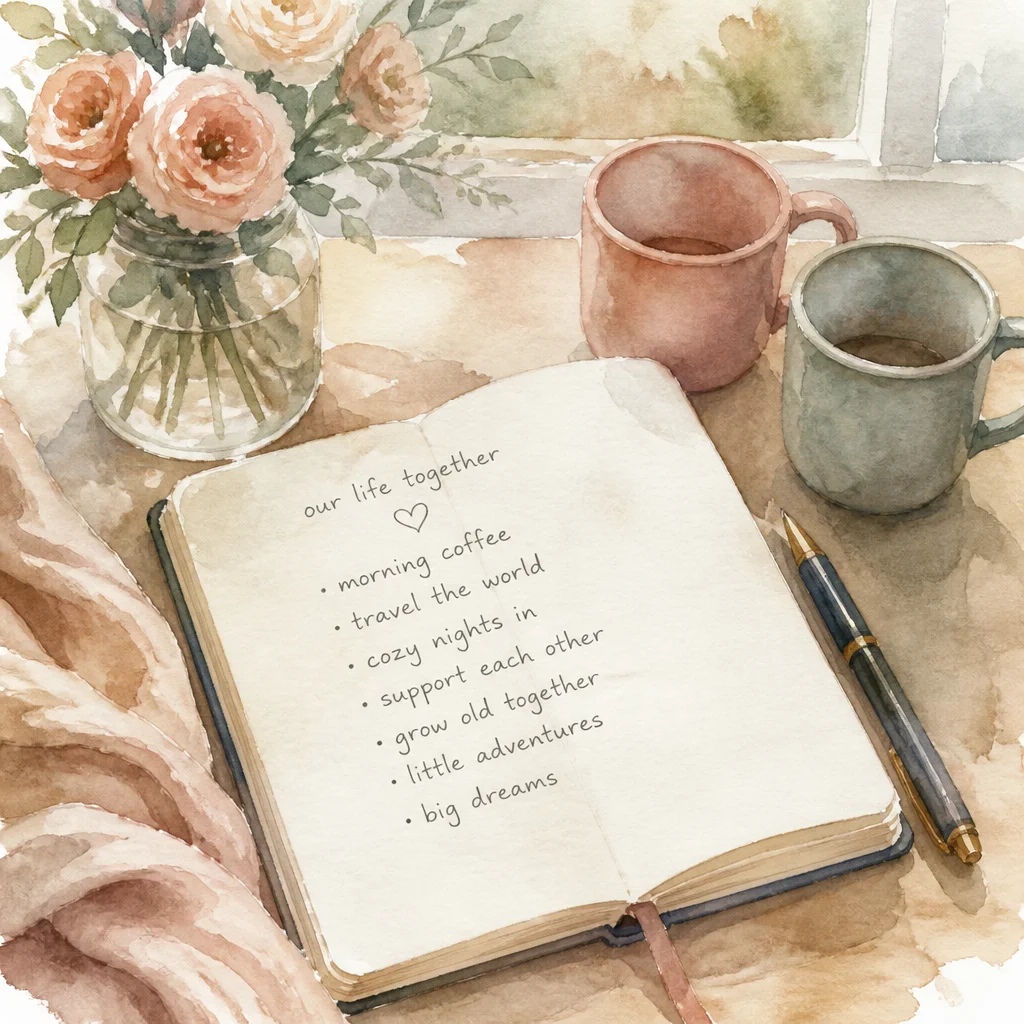
The goal isn’t to produce a perfect definition on day one. It’s to open a door. Many QPRs evolve — starting as “we’re each other’s person,” and gradually adding shared plans, shared space, or shared commitments as both people want them. Like any relationship, it deepens with honest conversation over time.
Green Flags for a Healthy QPR
Whatever shape yours takes, a few signs tend to mark a healthy queerplatonic relationship — the same way green flags mark any good partnership.
- You both name the relationship the same way, and check in when that changes.
- Commitment is explicit, not assumed — you’ve talked about what you owe each other.
- There’s room for each of you to have other relationships, romantic or otherwise.
- Neither of you feels like you’re “settling” or waiting for the other to turn romantic.
- You can talk about what the relationship is and isn’t without either of you getting defensive.

A queerplatonic relationship isn’t a consolation prize for people who don’t want romance. It’s a full, legitimate way to build a life with someone — one that happens to not need romance to justify itself. In non-monogamy, it has all the room it needs to flourish.
If you’re curious about building connections that don’t fit the usual boxes, there’s space for that at 3Cupid — whether that’s a romantic partnership, a queerplatonic one, or something you and the people you meet define together.
This guide is for educational purposes and reflects general perspectives on queerplatonic relationships and ethical non-monogamy. Every relationship is unique, and no article replaces honest conversation with the people in your life.