Compersion is often described as “the opposite of jealousy” — that genuine rush of happiness you feel when your partner connects with someone else. But if that sounds like an emotional superpower you don’t have, take a breath. Compersion in ENM relationships is not a personality trait you’re either born with or lacking. It’s a skill, and like any skill, it can be practiced, strengthened, and cultivated over time — starting right where you are.
This guide doesn’t ask you to pretend jealousy doesn’t exist or to force yourself into toxic positivity. Instead, you’ll learn what compersion actually means, why it’s genuinely difficult for most people, and which practical exercises can help you build it at your own pace.
Table of Contents
- What Compersion Actually Means (and What It Doesn’t)
- Why Compersion Doesn’t Come Naturally to Most People
- Start with Your Own Emotional Foundation
- Practical Exercises to Build Your Compersion Muscle
- What Compersion Looks Like in Day-to-Day ENM Life
- When Compersion Feels Out of Reach
What Compersion Actually Means (and What It Doesn’t)
The term compersion originated in the polyamorous community — particularly within the Kerista Commune in San Francisco during the 1970s and 1980s — as a way to name an experience that monogamous culture had no language for. At its simplest, compersion is the feeling of joy you experience when someone you love experiences joy with another person.
But here’s what compersion is not: it is not the absence of jealousy. It is not a requirement for being “good at” non-monogamy. And it is absolutely not a moral achievement that makes you more evolved than people who struggle with it. You can feel compersion and jealousy in the same hour — even the same moment. These emotions coexist, and that coexistence is completely normal.
Research published in Archives of Sexual Behavior has found that compersion correlates with higher relationship satisfaction in consensually non-monogamous relationships, but the same research emphasizes that compersion is experienced on a spectrum — not as an all-or-nothing state. Some people feel it intensely; others feel a quiet version of it; and many people move in and out of it depending on context, stress levels, and where they are in their own emotional journey.
Why Compersion Doesn’t Come Naturally to Most People
If compersion feels foreign to you, you’re not doing anything wrong. Most of us were raised in a culture that teaches exactly one script for love: exclusivity equals commitment, and your partner’s romantic attention toward anyone else equals a threat. That script gets wired in early — through movies, family expectations, jealousy-as-proof-of-love narratives, and decades of social conditioning.
Neuroscience offers another piece of the puzzle. When we perceive a threat to an important attachment, the amygdala — the brain’s alarm system — activates stress responses that feel physically uncomfortable. That racing heart or tight chest you get when your partner mentions a great date? That’s not a character flaw. That’s millions of years of evolution doing exactly what it was designed to do: protect your bond.
Understanding this can be freeing. Compersion isn’t about silencing your amygdala. It’s about teaching your nervous system, over time, that your partner’s connection with someone else is not actually a threat to your security. That takes repetition, safety, and patience — not a personality transplant.
Start with Your Own Emotional Foundation
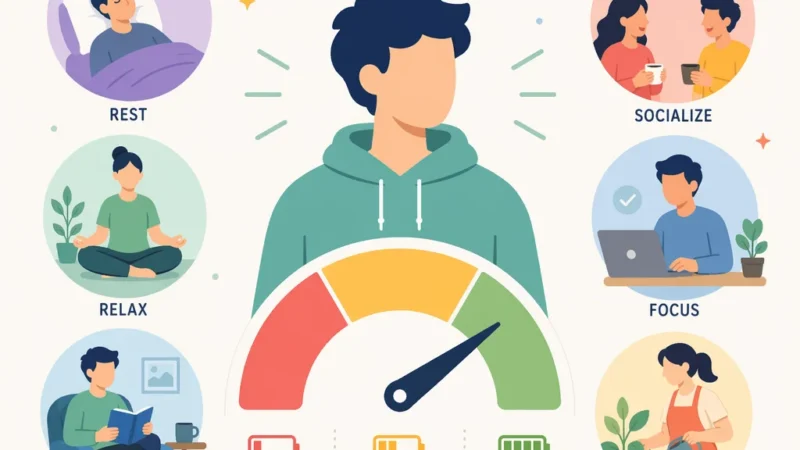
You can’t build compersion on a foundation of insecurity. If you’re constantly worried about whether your relationship is solid, your brain will stay in threat-detection mode, and compersion won’t have room to breathe. The first step is making sure your own emotional needs are being met.
This means asking yourself some honest questions: Do you feel secure in your primary relationship? Do you trust that your partner values your connection regardless of who else they’re seeing? Are your own needs for quality time, affection, and reassurance being addressed — or are you running on empty while expecting yourself to feel happy for your partner?
One practical approach is to create a brief “security checklist” for yourself before your partner goes on a date. It might include things like: “We had a meaningful conversation today,” “I know when they’ll be back,” “I have something I’m looking forward to doing while they’re out.” When those basic security needs are met, compersion has a fighting chance. When they’re not, it’s reasonable — even healthy — to focus on your own stability first.
If you’re struggling with this, our guide on managing emotions when your partner is on a date offers deeper strategies for handling those difficult moments.
Practical Exercises to Build Your Compersion Muscle
Compersion, like gratitude or mindfulness, gets stronger with practice. Here are exercises that have worked for people across the ENM spectrum — from polyamory to swinging to open relationships.
1. The Five-Minute Joy Reflection
After your partner returns from a date or shares something positive about another connection, set a timer for five minutes and write down answers to three questions: What specifically about this makes my partner happy? How does their happiness benefit our relationship? What am I grateful for in my own life right now? The goal isn’t to force positive feelings — it’s to train your attention away from threat-detection and toward noticing genuine positives.
2. Reframe the Narrative
When a jealous thought arises — “They’re having more fun without me” — practice reframing it: “My partner is experiencing something meaningful, and I want good things for the people I love.” This isn’t about denying your feelings. It’s about adding a second voice to the conversation in your head, one that gradually gets louder with practice.
3. Ask for Compersion-Friendly Sharing
How your partner shares matters. Instead of receiving a detailed play-by-play that might trigger comparison, ask them to share what they enjoyed and what they appreciated about coming home to you. A simple request like “Tell me one thing that made you smile, and one thing that made you glad to come back” can dramatically shift how your brain processes the information.
4. Map Your Compersion Moments
Keep a small log — even just a note on your phone — of moments when you felt even a flicker of compersion. What were the circumstances? What had happened earlier that day? What made it feel safe? Over time, patterns emerge. You’ll start to identify your personal “compersion conditions” — the emotional and practical circumstances that make it easier for that feeling to show up.
What Compersion Looks Like in Day-to-Day ENM Life
Compersion isn’t always a dramatic swell of emotion. For many people, it shows up in quieter ways — a sense of relief that your partner has someone to share a hobby you don’t enjoy, a feeling of expansiveness when you see them light up talking about someone new, or a simple lack of distress where distress used to live.
Sarah, who has been practicing polyamory for four years, describes it this way: “For me, compersion feels less like happiness and more like… spaciousness. There’s less constriction in my chest when my partner talks about his other girlfriend. I notice I’m genuinely curious about how she’s doing, not because I’m supposed to be, but because I’ve gotten to know her as a person and I care.”
Note the progression Sarah describes: compersion grew not through willpower, but through familiarity and genuine human connection. She didn’t force herself to feel happy. She built a relationship — however peripheral — with her metamour, which naturally dissolved the sense of threat.
When Compersion Feels Out of Reach
Some days, compersion simply isn’t available — and that’s okay. You might be stressed, underslept, or dealing with personal challenges that leave you with no emotional bandwidth. During a rough patch in your primary relationship, demanding that you feel happy about your partner’s outside dates is unreasonable.
On these days, the goal shifts. Instead of compersion, aim for neutrality. Can you coexist with the situation without spiraling? Can you acknowledge your feelings without acting on them destructively? Neutrality is a legitimate and valuable emotional state — and sometimes it’s the stepping stone that eventually leads to compersion.
If the struggle feels persistent — if weeks turn into months and the distress isn’t easing — it’s worth examining whether the current relationship structure is actually working for you. Compersion cannot be built in an environment where your basic needs for security, respect, and consideration aren’t being met. Sometimes the bravest and most self-aware decision is to seek support for what’s underneath the struggle, whether that’s with your partner, a therapist familiar with non-monogamy, or your community.
Compersion Practice Checklist
Use this checklist weekly to track your compersion-building practice. No need to check every box — even one or two is progress.
- Security Check: I had a meaningful check-in with my partner this week about our relationship — not about logistics, but about how we’re doing.
- Self-Care: I did at least one thing this week that was purely for my own enjoyment, unrelated to any partner.
- Joy Reflection: I practiced the five-minute joy reflection at least once after my partner shared something positive about another connection.
- Reframe Practice: When a jealous thought came up, I caught it and practiced adding a compersion-oriented reframe.
- Compersion Log: I noted at least one moment — however small — when I felt a flicker of genuine happiness for my partner’s other connection.
- Neutrality Acceptance: On a day when compersion wasn’t available, I accepted neutrality as a valid alternative and didn’t shame myself for it.
- Support Reach-Out: I talked to someone — partner, friend, therapist, or online community — about how this journey is going for me.
Building compersion in ENM relationships is a process that unfolds over months and years, not days. Every small shift — from distress to neutrality, from neutrality to curiosity, from curiosity to genuine warmth — is worth acknowledging. You’re not failing. You’re learning a language your culture never taught you, and that takes time.
This article is part of 3Cupid’s ongoing series on emotional wellness in non-monogamous relationships. For more resources on navigating jealousy, building security, and creating fulfilling ENM dynamics, explore our relationship guides.