You’ve talked through your rules. You’ve met a couple you both feel comfortable with. Everything aligns. Then, at the event, you glance across the room and see your partner laughing with someone else — and something twists in your chest. Jealousy in the swinging lifestyle isn’t a sign that you’re bad at this or that swinging isn’t for you. It’s a normal human emotion that shows up even when you’re intellectually on board, even when you wanted this. The question isn’t whether jealousy will appear. It’s what you do when it does.
Table of Contents
- Why Jealousy Happens in Swinging (Even When You Expect It)
- The Difference Between Healthy Concern and Destructive Jealousy
- How to Talk About Jealousy Without Blaming Your Partner
- Building a Pre-Event Jealousy Management Plan
- What to Do When Jealousy Hits During a Swinging Event
- Post-Event Processing: Turning Jealousy Into Growth
- When Jealousy Means Swinging Isn’t Right for You Right Now
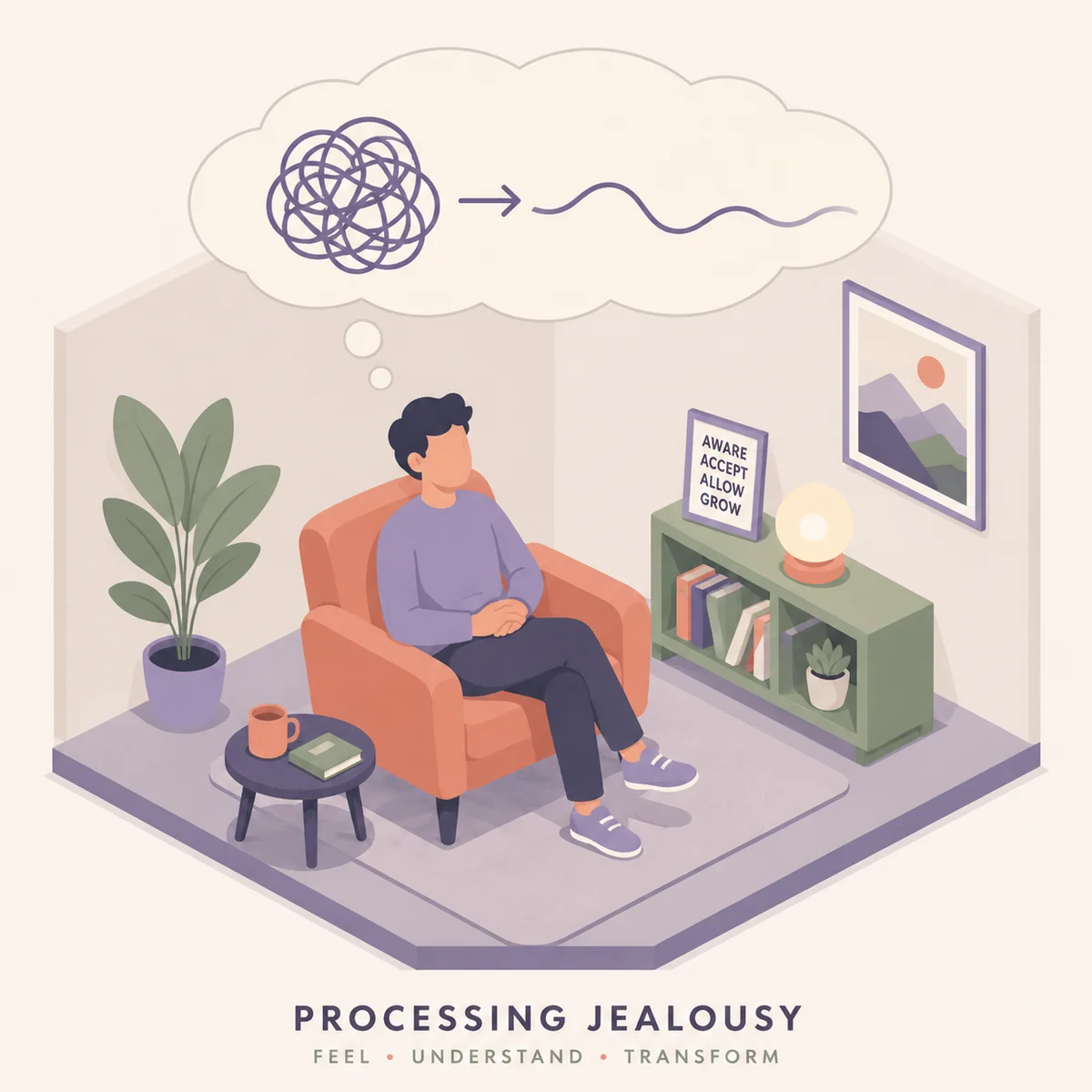
Let’s be clear about something upfront: feeling jealous doesn’t mean you’re insecure, bad at non-monogamy, or failing as a partner. Even people who have been in the lifestyle for years experience jealousy. The difference between couples who thrive and couples who struggle isn’t the absence of jealousy. It’s having a shared approach to handling it.
Why Jealousy Happens in Swinging (Even When You Expect It)
Jealousy is rarely about the event itself. It’s usually about what the event means to the person feeling it. Your partner enjoying someone else’s company can trigger fears you didn’t know you had: Am I less attractive? Will they prefer this other person? Are we drifting apart? These thoughts can feel irrational — but they’re actually your brain running a threat-detection program it’s been refining for thousands of years.
Evolutionary psychology suggests jealousy served a protective function in pair-bonding — alerting us to potential threats to our primary relationship. In the context of consensual non-monogamy, that alarm system can misfire: the threat is not real, but the emotional response is (Psychology Today). Recognizing this helps depersonalize the experience. Your brain isn’t broken. It’s just running old software on new hardware.
Common jealousy triggers in swinging include: seeing your partner experience pleasure you didn’t provide, watching them connect emotionally with someone new, feeling excluded from a dynamic that developed without you, comparing your experience to your partner’s, or discovering that a boundary you thought was fine actually wasn’t. None of these make you a bad swinger. They make you human.
The Difference Between Healthy Concern and Destructive Jealousy
Not all jealousy is the same. Healthy concern feels like a nudge — a signal that something deserves attention. Destructive jealousy feels like a hijack — it takes over your thoughts, leads to accusations, and damages trust.
| Healthy Concern | Destructive Jealousy |
|---|---|
| You notice a feeling and get curious about it | You act on the feeling without pausing to examine it |
| You can say “I’m feeling jealous and I want to talk about it” | You lash out with accusations or passive-aggressive comments |
| You recognize it’s about your own internal process | You blame your partner for “making” you feel this way |
| It leads to productive conversation and adjusted boundaries | It leads to restrictions, ultimatums, or shutting down |
| It passes once you feel heard and understood | It lingers and resurfaces as resentment |
The goal isn’t to never feel jealous. The goal is to keep jealousy on the healthy side of this table. That takes practice, self-awareness, and a partner who responds to your vulnerability with care rather than defensiveness.

How to Talk About Jealousy Without Blaming Your Partner
This is the single most important skill in lifestyle jealousy management — and the one most couples get wrong. When jealousy surfaces, the instinct is to say “you made me feel this way” or “if you hadn’t done X, I wouldn’t be feeling Y.” These statements put your partner on the defensive and shut down communication.
Instead, use “I” statements that own your experience without assigning blame:
- Instead of “You were paying way too much attention to her” → Try “I felt a wave of jealousy when I saw you two talking closely, and I’m trying to understand what that was about for me.”
- Instead of “You clearly liked them more than me” → Try “I noticed myself comparing our connection to what I saw happening, and I want to talk through that.”
- Instead of “This was a mistake and I don’t want to do it again” → Try “I’m feeling unsettled by what came up for me and I need to process it before we decide anything about next time.”
The shift is subtle but powerful. “I” statements invite collaboration. “You” statements invite combat. Your partner is much more likely to respond with empathy when they don’t feel attacked.
Building a Pre-Event Jealousy Management Plan
The best time to handle jealousy is before it happens. A pre-event management plan gives both partners a roadmap to follow when emotions run high — no improvisation required. As part of your broader swinging rules discussion, include these jealousy-specific elements:
Name your triggers in advance. If you know you’ll feel jealous when your partner kisses someone else, say so. If leaving separately makes you anxious, say so. Trigger awareness lets you either avoid the trigger or prepare for it mentally.
Agree on your check-in frequency and format. Will you check in every 30 minutes? After each new interaction? Only if someone signals? A simple “how are you doing?” at agreed intervals gives you a pressure-release valve without disrupting the flow of the event.
Establish the “pause everything” protocol. If either partner says the signal word or phrase — “pause,” “I need a minute,” or whatever you choose — everything stops. No questions asked in the moment. This isn’t a failure. It’s the safety net that makes everything else possible.

What to Do When Jealousy Hits During a Swinging Event
You’re at the event. The jealousy wave hits. Here’s your step-by-step response:
- Pause and breathe. Give yourself 60 seconds before you do anything. Jealousy feels urgent, but it’s almost never an emergency. Let the initial surge pass.
- Name the feeling internally. “I’m feeling jealous right now.” Putting words to the emotion reduces its intensity — this is basic emotional regulation, and it works.
- Check: Is this fear, sadness, or jealousy? Jealousy often masks other emotions. Are you actually afraid of being left out? Sad about something unrelated? Tired and more sensitive than usual?
- Use your check-in signal if you need to. Don’t be a hero. The signal exists for exactly this moment. Use it, step aside with your partner, and say “I’m feeling some jealousy and I need to check in.”
- Decide together: stay, adjust, or leave? Sometimes just voicing the feeling is enough and you can stay. Sometimes you need to switch from separate-room to same-room. Sometimes you need to go home. All three are valid.
The couples who handle jealousy well during events share one trait: neither partner treats the other’s jealousy as an inconvenience. When your partner says “I’m struggling,” the correct response is “thank you for telling me — what do you need?” not “seriously? right now?”
Post-Event Processing: Turning Jealousy Into Growth
The days after a swinging event are when the real work happens. Jealousy that surfaced during the evening might fade — or it might intensify. Either way, a structured post-event conversation prevents it from festering.
Wait at least until the next morning. Processing emotions the night of the event, when you’re both tired and possibly still processing the social energy, rarely produces useful insights. Then, use this framework:
- Share positives first. “What did you enjoy about last night?” Start with what worked. This sets a collaborative tone.
- Then share challenges. “Was there anything that felt uncomfortable or brought up difficult feelings?”
- Listen without problem-solving. Your partner doesn’t need you to fix their jealousy. They need you to hear it.
- Ask what the jealousy was trying to protect. Behind most jealousy is a need — for reassurance, connection, or security. What was the need?
- Adjust your agreements if needed. Maybe a boundary that seemed fine in theory isn’t working in practice. Adjust it together.
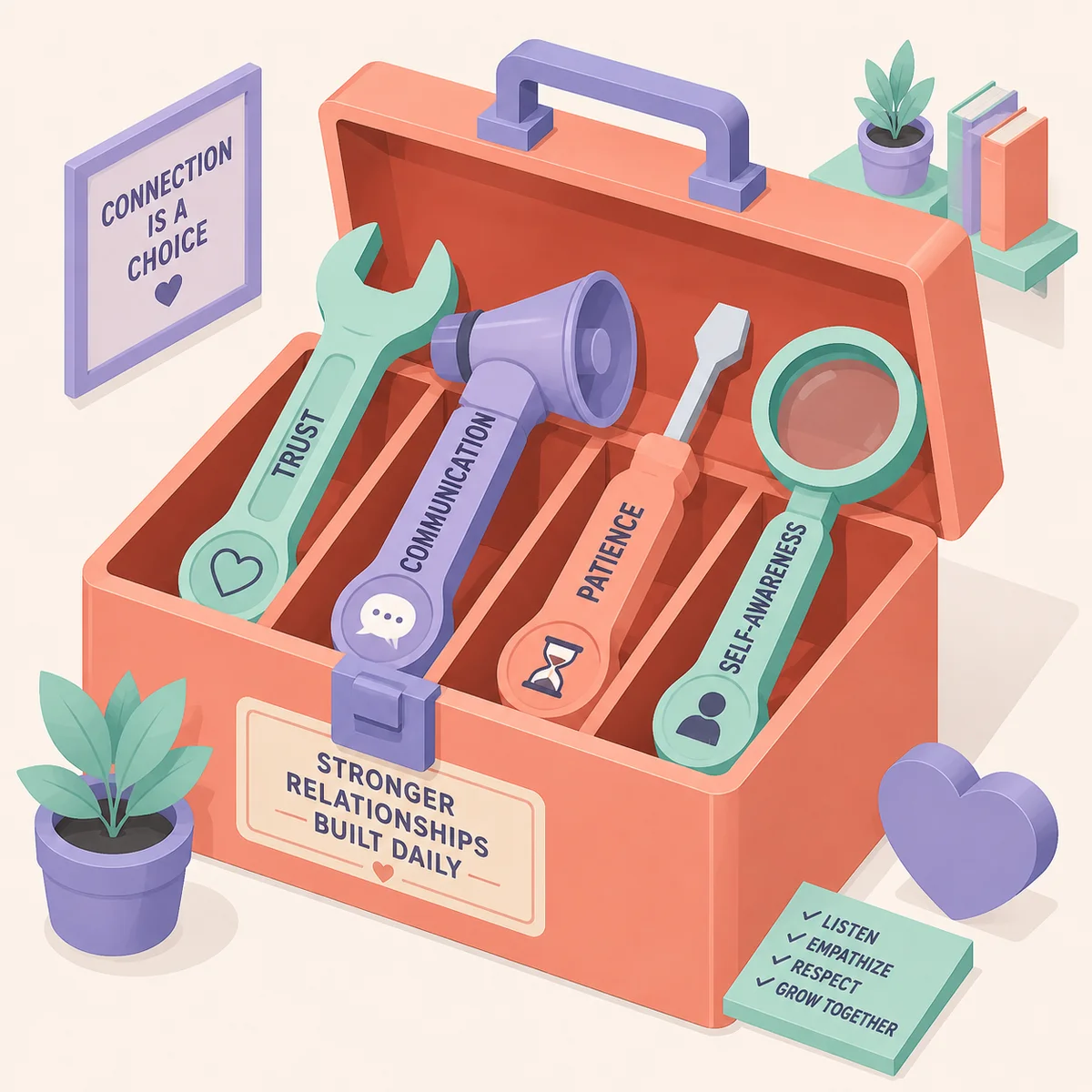
This post-event conversation is also a good time to check whether you need to adjust your approach to swinging events in general. Sometimes jealousy isn’t about the other people at all — it’s about being in an environment that overwhelmed one partner more than they expected.
When Jealousy Means Swinging Isn’t Right for You Right Now
Here’s the part nobody in the lifestyle wants to say out loud: sometimes jealousy isn’t something to push through. Sometimes it’s accurate information telling you that this isn’t the right season for swinging.
Signs it might be time to pause:
- Jealousy is showing up before events, not just during or after
- You’re dreading lifestyle activities rather than looking forward to them
- Jealousy doesn’t pass after you talk about it — it sticks around for days or weeks
- You find yourself hoping your partner will have a bad time
- Your relationship outside the lifestyle is struggling and swinging is becoming an escape
- One partner keeps pushing to go further despite the other’s clear discomfort
Pausing doesn’t mean quitting. It means honoring where you both actually are instead of where you think you should be. Many couples who take a break come back with clearer boundaries and a stronger foundation. The lifestyle will still be there when you’re both ready.

You can explore the lifestyle at your own pace. Soft swinging — where physical intimacy with others is limited or non-existent — gives couples a way to experience the social and emotional aspects of the lifestyle without the variables that tend to trigger the strongest jealousy responses. It’s a legitimate long-term choice, not just a stepping stone.
Jealousy in swinging isn’t the enemy. It’s a messenger. Listen to what it’s telling you — about your needs, your boundaries, your relationship — and you’ll find that the conversations it sparks often bring you closer than the swinging ever could on its own.

Editor’s note: This article was written to help couples navigate emotional challenges in the swinging lifestyle. All content is intended for adults 18+ and emphasizes communication, consent, and emotional safety. If jealousy is causing significant distress in your relationship, consider speaking with an ENM-affirming therapist.