Here is something most threesome guides do not say loudly enough: the difference between an amazing experience and one you wish never happened often comes down to safety—not just physical safety, but the emotional kind too. The kind where everyone wakes up the next morning feeling good about themselves and each other. The kind where trust is stronger after, not weaker.
This is not the part people like to talk about. It is not sexy. It does not make for good stories. But skipping it is exactly how couples end up with experiences they regret. At 3Cupid, we believe safety is not the boring prerequisite—it is the thing that makes everything else possible.
Here is how to protect yourself, your partner, your third, and your relationship—before, during, and after.
Physical Safety: The Non-Negotiable Basics
Let us start with the obvious stuff—because it is obvious for a reason. Physical safety in threesome dating is about more than just protection. It is about creating an environment where everyone can relax because they know the basics are handled.
Sexual Health: Get Tested, Share Results, No Exceptions
This is not awkward. What is awkward is getting a call three weeks later that you need to have a conversation you really do not want to have. Before meeting anyone, all parties should have recent STI test results. Not “I got tested a while ago and I am sure I am fine”—actual, recent, verifiable results.
According to NPR’s guide to exploring non-monogamy, sexual health conversations are one of the strongest indicators of whether people are approaching non-monogamy responsibly. Someone who dodges this conversation is not someone you want to be intimate with.
- Get tested together if you are a couple—it reinforces that this is a shared journey
- Ask to see results, not just hear about them
- Bring your own protection—do not rely on anyone else to have it
- Discuss what “safer sex” means for this specific encounter before clothes come off
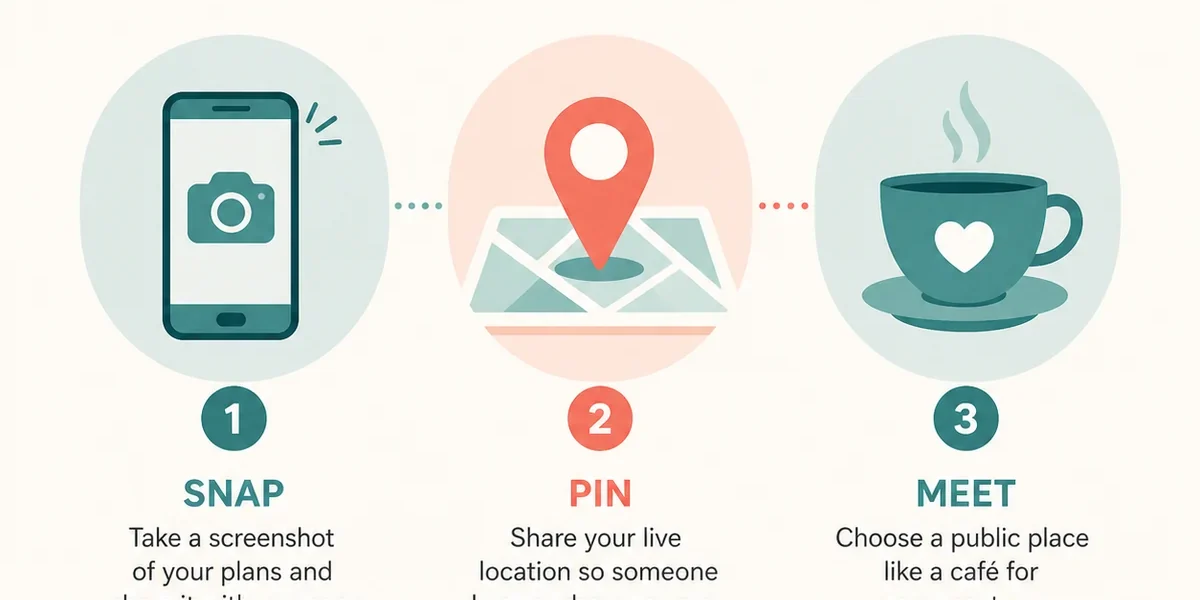
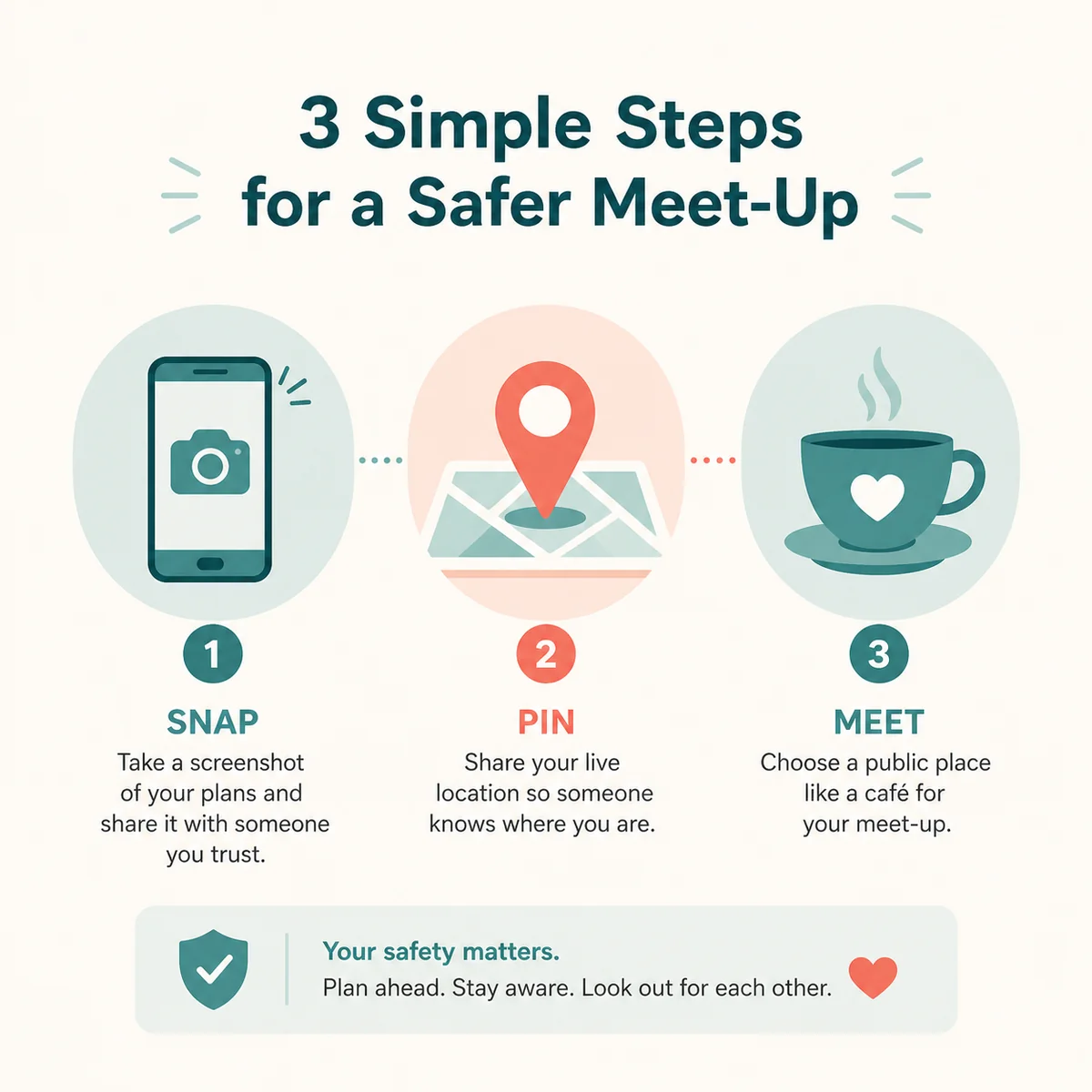
Meeting a Stranger? Do These Three Things First
Before meeting anyone in person for the first time:
- Video call first. Not a phone call. A video call. You need to confirm the person matches their photos and get a read on their energy. If they make excuses, that is your answer.
- Share details with a trusted friend. Where you are going, who you are meeting, their name and photo. This is not paranoia—it is basic safety that responsible people understand and respect.
- Meet in public first. Coffee. A drink. A walk. Not a hotel room. Not your home. Give yourself an easy exit if something feels off, and give the third the same courtesy.
Emotional Safety: The Part Everyone Forgets
Physical safety is the floor. Emotional safety is the ceiling—it determines how high the experience can actually go, and how you feel afterward.
Emotional safety means everyone involved feels comfortable expressing what they need, what they are nervous about, and what they need to stop—without fear of judgment, disappointment, or pressure.
Before: Name the Fears
Most couples skip this. They focus on excitement and possibilities while quietly carrying fears they do not voice. That silence becomes the crack that widens later.
Sit down with your partner and each answer: “What is the one thing you are most worried about?” Do not solve it. Do not reassure it away. Just name it. “I am worried I will feel jealous.” “I am worried you will look at them differently than you look at me.” “I am worried I will feel left out.”
Naming the fear does not make it more likely. It makes it manageable. When you both know what the other is nervous about, you can watch for it. You can check in. You can catch it early instead of discovering it in a fight three days later.
During: The Safe Word Is Sacred
Pick a word that would never naturally come up. “Red light” works. “Pause” works. When anyone says it, everything stops. No questions. No negotiation. No “are you sure?” Just stop. Check in. Decide together whether to continue or call it.
Many couples say they do not need a safe word because they trust each other. This misses the point. The safe word is not about trust—it is about giving yourself permission to need a pause without having to explain yourself in the moment. Having it actually makes you more relaxed, because you know there is an exit.

Digital Safety: Protecting Your Privacy Online
You are putting yourself out there. That takes courage. It also requires boundaries around what you share and with whom.
| Safe | Not Safe |
|---|---|
| Share photos without faces or identifying backgrounds | Share photos that include your face, your home, your workplace, or identifiable landmarks |
| Use the in-app messaging until trust is built | Give out your personal phone number or social media immediately |
| Discuss boundaries and expectations in detail | Share explicit content before you have verified the person is real |
| Google your own name to see what is publicly visible | Assume your online profiles are private |
| Use a platform with profile verification | Trust unverified profiles on generic dating apps |
At 3Cupid, every profile goes through verification. This does not eliminate all risk—no platform can—but it filters out a significant portion of bad actors before you ever interact with them.

The Safety Conversation Script
One of the hardest parts of safety is actually bringing it up without killing the mood. Here is a script that keeps things natural while covering the essentials:
“Hey, before we go further—we are really excited about this, and we want to make sure everyone feels good the whole way through. Can we take five minutes to cover the basics? STI status, what everyone is and is not comfortable with, and a safeword so anyone can pause at any time, no questions asked. Sound good?”
If the response to this is anything other than “absolutely, let us do that,” take it as a red flag. People who are safe to be intimate with welcome safety conversations. People who are not safe to be intimate with dodge them.
Red Flags You Cannot Afford to Miss
Some red flags are subtle. Others are screaming. Here are the ones that should end a conversation immediately:
- They refuse to discuss STI testing. This is not a gray area. It is a complete stop.
- They push back on boundaries. “Oh, you will probably change your mind about that” or “Let us just see how the night goes” are manipulation dressed up as casualness.
- They try to separate you from your partner. Suggesting one-on-one time, private messaging, or “just between us” conversations before you have all agreed on how communication works.
- They are evasive about their own situation. Vague answers about whether they have partners, whether those partners know, or their relationship status.
- They make you feel guilty for being careful. “You are overthinking this” or “I thought you were more adventurous” is pressure, not reassurance.
Trust your instincts. That uncomfortable feeling in your stomach is not anxiety—it is your brain processing red flags faster than your conscious mind can name them.

Aftercare as Safety: Why the 24 Hours After Matter Most
Aftercare is not just a nice-to-have. It is a safety practice. The chemicals in your brain are recalibrating. Emotions that were suppressed during the excitement might surface. Your partner might be processing something they cannot name yet.
Here is a practical aftercare checklist:
- Hour 1: The third leaves. You and your partner reconnect physically—cuddle, lie together, do not rush into separate activities.
- Hour 2-3: A light check-in. “How are you feeling?” No deep analysis yet. Let the feelings surface naturally.
- Next morning: A real conversation. What worked? What felt strange? Is there anything either of you needs reassurance about?
- Day 3: If something still feels off, do not ignore it. Unresolved feelings do not go away—they go underground and come out later as resentment or distance.
After reading our guides on how to talk to your partner and setting clear boundaries, you will have the communication tools to handle whatever comes up. And when you are ready to find the right person, our complete guide to finding a third safely walks you through every step.

What a Safe Threesome Actually Looks Like
Let us paint a picture of what safety looks like in practice—not as a checklist to memorize, but as a vibe to aim for.
In a safe threesome, everyone knows the boundaries before anything starts. There is a safeword that anyone can use at any time. Condoms and lube are out and visible, not hidden in a drawer to be awkwardly searched for. The third has been vetted—video call done, STI results shared, identity confirmed. A trusted friend knows where both members of the couple are.
Afterward, the third gets a genuine check-in message. The couple spends time alone together before the night ends. Within 24 hours, they talk about how they each feel. No one is punished for having complicated feelings. No one is pressured to say “that was amazing” if they are still processing. Both people in the couple feel closer to each other—not distanced—because they navigated something vulnerable together.
That is not a fantasy. That is what happens when safety is treated as the foundation, not the fine print.

Also read: Threesome Mistakes to Avoid for Couples and Singles — learn what trips people up before, during, and after, and how to get it right.
This safety guide was written by the 3Cupid editorial team. We believe every person deserves to explore their desires in an environment of genuine safety—physical, emotional, and digital. If something in this guide raised questions for you, take that as a sign to slow down and have the conversation.