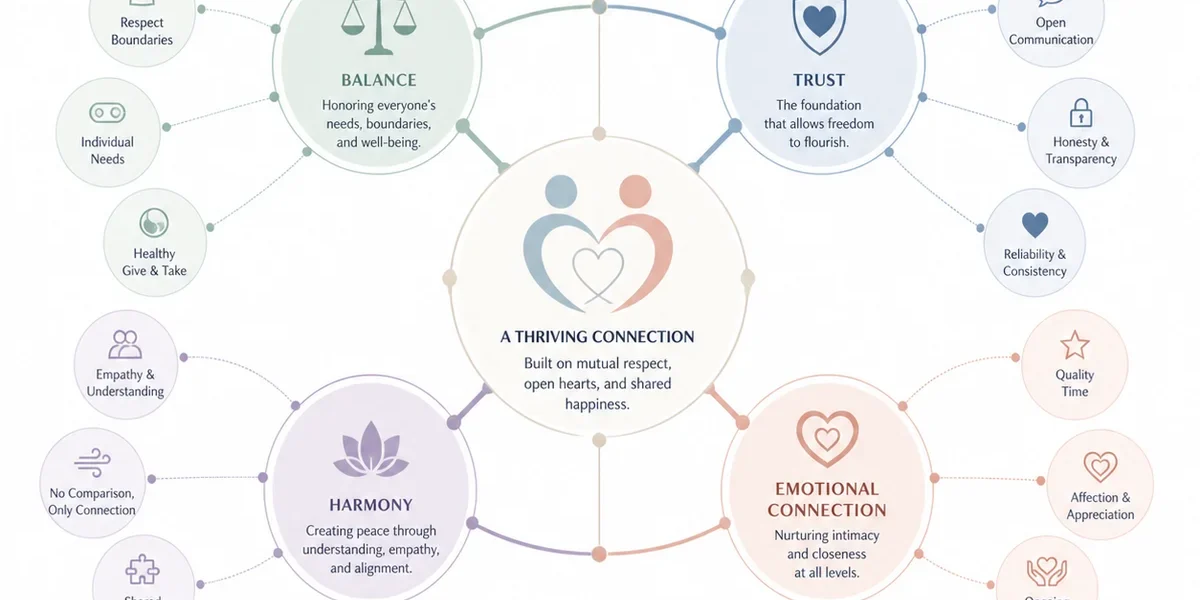
Table of Contents
- What Compersion Actually Feels Like in a Cuckold Context
- Why Compersion and Jealousy Often Coexist
- How Different Cuckold Dynamics Shape Compersion
- Practical Ways to Cultivate Compersion Over Time
- When Compersion Feels Out of Reach
- Compersion as a Relationship Skill, Not a Personality Trait
- Compersion-Building Checklist
Most people enter cuckold dating with a clear expectation of what they’ll need to manage — jealousy, insecurity, the practical logistics of finding a third partner. What catches many off guard is the opposite experience: a genuine, sometimes overwhelming sense of joy in witnessing their partner’s pleasure and connection with someone else.
That feeling has a name — compersion — and in cuckold dynamics, it operates in ways that are both more complex and more accessible than most people assume. Understanding compersion in cuckold dynamics is not about forcing yourself to feel something you don’t. It’s about recognizing where compersion naturally shows up, why it so often shares space with jealousy rather than replacing it, and what practical steps actually help it grow.
This article explores compersion from the inside — what it feels like, why different cuckold dynamics produce different emotional textures, and how to approach it as a skill you can develop rather than a trait you either have or don’t.
What Compersion Actually Feels Like in a Cuckold Context
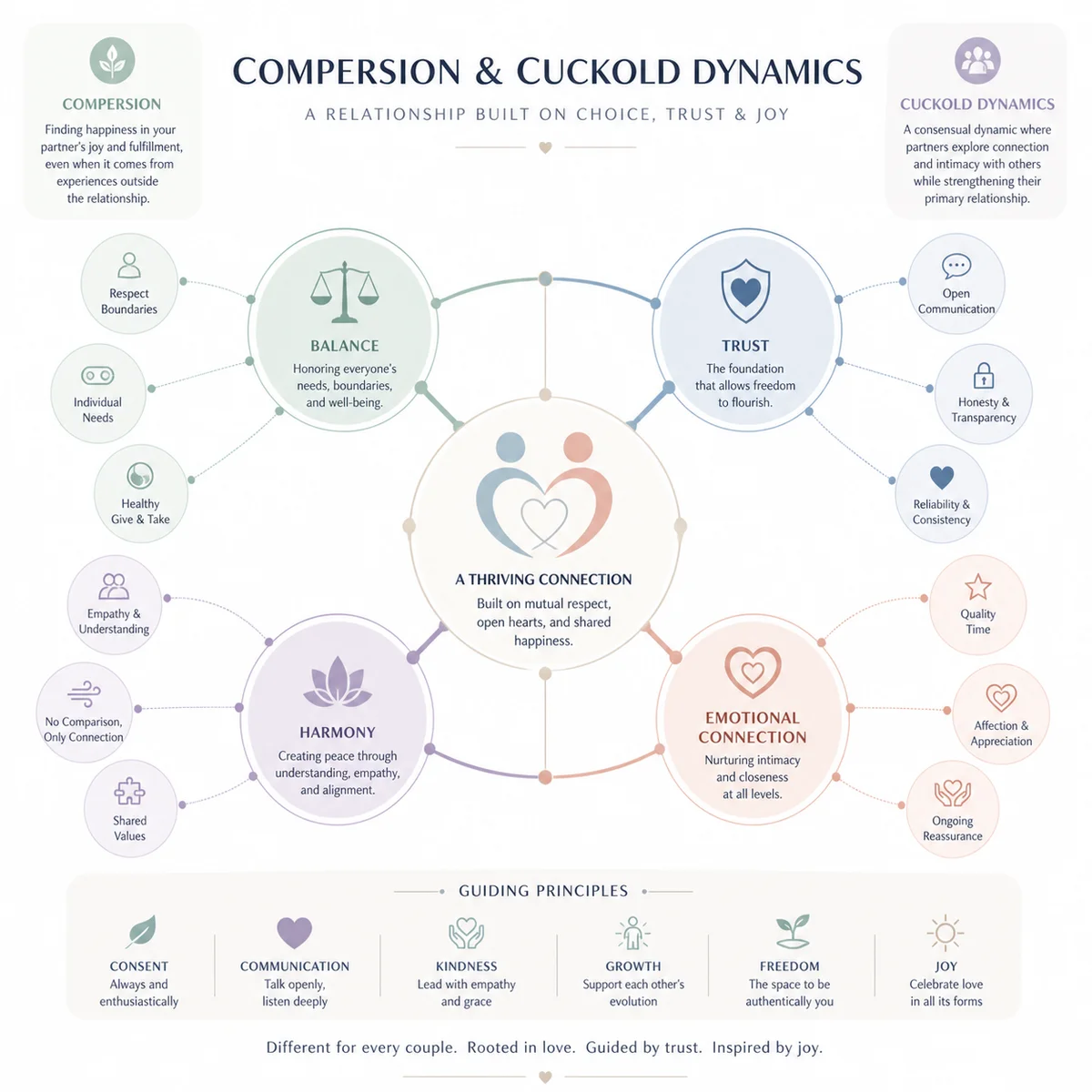
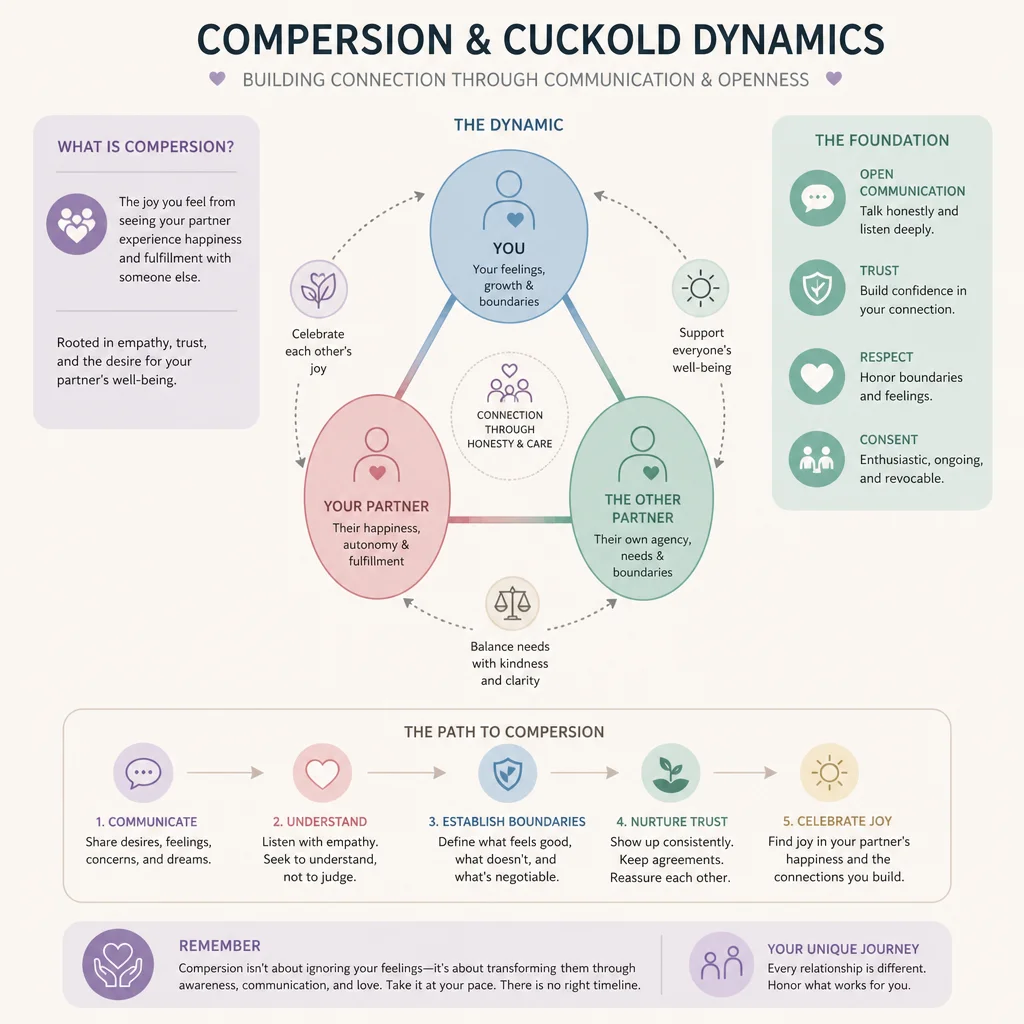
Compersion is often defined as “the opposite of jealousy” or “feeling happy for your partner’s happiness with someone else.” That definition is accurate but incomplete. In the context of cuckold dating, compersion tends to be more textured.
For the partner in the cuckold role, compersion might feel like a warm, grounded satisfaction — not a superficial “I’m fine with this” but a deeper sense of “I am genuinely glad this is happening.” It often carries elements of pride in one’s partner, appreciation for the trust involved, and a kind of vicarious fulfillment that is hard to describe to someone who hasn’t experienced it.
For the partner in the more active role, compersion can manifest differently. It may include appreciation for their partner’s emotional generosity, a heightened sense of being cherished precisely because their partner is choosing to share this dynamic, and a deepened gratitude that can be difficult to express but is deeply felt.
Critically, compersion in cuckold dynamics rarely arrives as a single, pure emotion. It is more often woven together with other feelings — a thread of compersion running alongside threads of vulnerability, protectiveness, and yes, sometimes jealousy. The goal is not to feel compersion instead of other emotions, but to notice and nurture it when it appears.
Research on the psychology of non-monogamous relationships, including work discussed by Psychology Today, suggests that compersion is a learnable emotional response — not a fixed personality characteristic — and that it tends to grow in relationships where communication, trust, and emotional safety are actively maintained.
Why Compersion and Jealousy Often Coexist
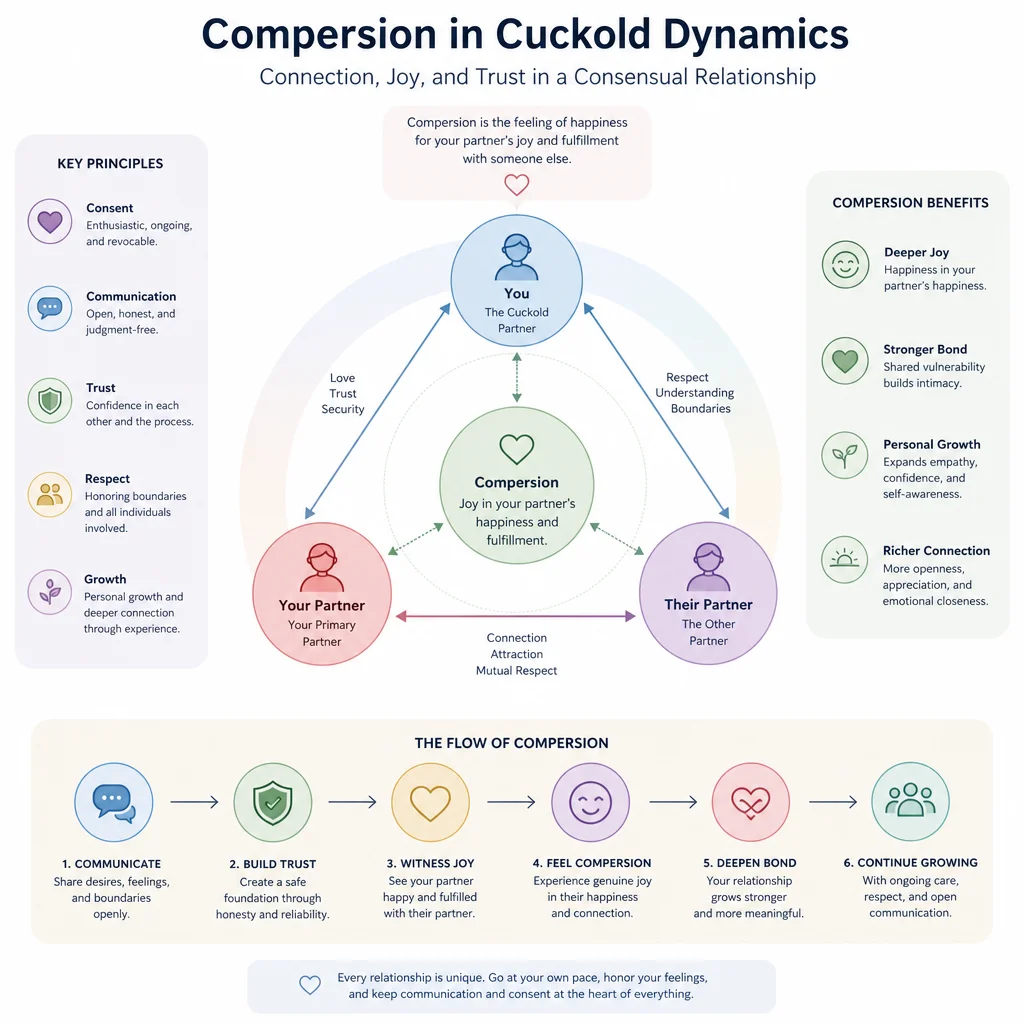
One of the most persistent misconceptions about compersion is that if you feel it, jealousy must be absent — and if jealousy shows up, it means compersion was never real. Neither is true.
The human emotional system is capable of holding contradictory feelings simultaneously. You can feel genuinely happy that your partner had a fulfilling experience while also feeling a pang about a specific detail of that experience. You can feel proud of the trust you’ve built together while also feeling a need for extra reassurance. These states coexist because they arise from different emotional sources — compersion from the part of you that values your partner’s fulfillment, jealousy from the part of you that wants to feel secure and prioritized.
In cuckold dynamics specifically, the coexistence of compersion and jealousy is often part of the emotional texture that makes the experience meaningful. The jealousy adds an edge of intensity; the compersion transforms that edge into something that feels connecting rather than threatening. Couples who accept this coexistence — rather than treating it as a contradiction to resolve — tend to navigate the emotional landscape with more ease.
The practical implication is straightforward: when jealousy surfaces, don’t interpret it as evidence that you’re bad at this or that compersion was fake. Notice it, name it, and ask what it needs — while also noticing whether compersion is still present alongside it. Often it is, quieter but still real.
How Different Cuckold Dynamics Shape Compersion
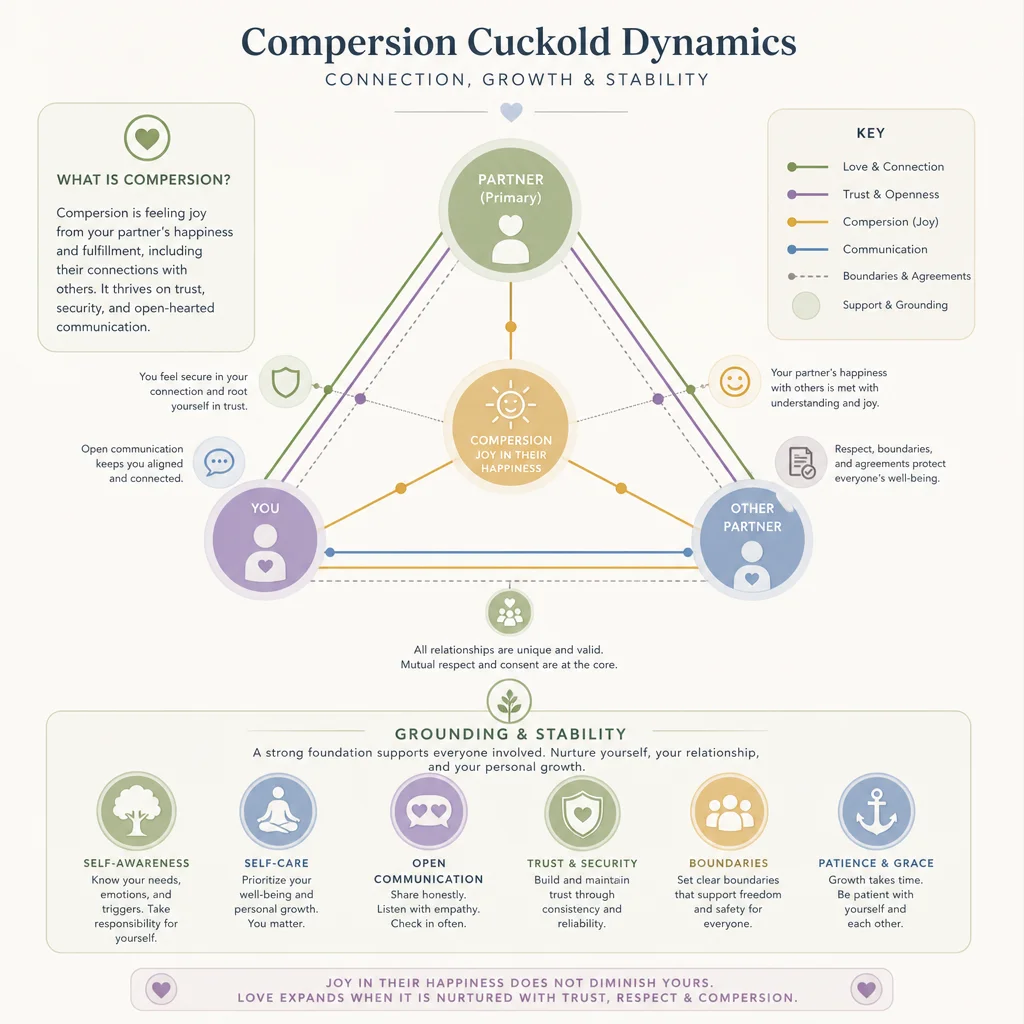
Not all cuckold dynamics produce compersion in the same way, or from the same sources. Understanding how your specific dynamic shapes the emotional experience can help you work with it rather than against it.
Stag-and-vixen dynamics — where the emphasis is on shared enjoyment and mutual participation rather than power exchange — often produce compersion that feels collaborative. Both partners may experience it as a kind of team energy: “We did this together, and it was good.” The compersion here tends to be tied closely to the quality of the primary connection.
Cuckold dynamics with negotiated power elements — where consensual roleplay around submission, watching, or reclaiming is part of the experience — can produce compersion that feels more layered. The compersion may be intertwined with the intensity of the power dynamic itself. For the cuckold partner, the joy of witnessing may be inseparable from the vulnerability of the role they’ve chosen. Both are authentic, and both deserve space.
Hotwife dynamics — where the focus is primarily on the wife’s experiences and the husband’s enjoyment of them — often produce compersion that centers on vicarious pleasure. The husband’s compersion may come from seeing his partner desired, confident, and fulfilled. The wife’s compersion may come from feeling trusted and supported in her autonomy.
Across all dynamics, the common thread is that compersion grows when both partners feel seen in their emotional reality — not when one partner’s compersion is used to dismiss or minimize the other’s discomfort. For more on how different arrangements affect the primary bond, see our guide on how cuckold dating affects your primary relationship.
Practical Ways to Cultivate Compersion Over Time
Compersion is not something you can demand from yourself — “I should feel happy about this” is a fast track to guilt, not genuine emotional growth. But there are practices that create the conditions where compersion is more likely to emerge naturally:
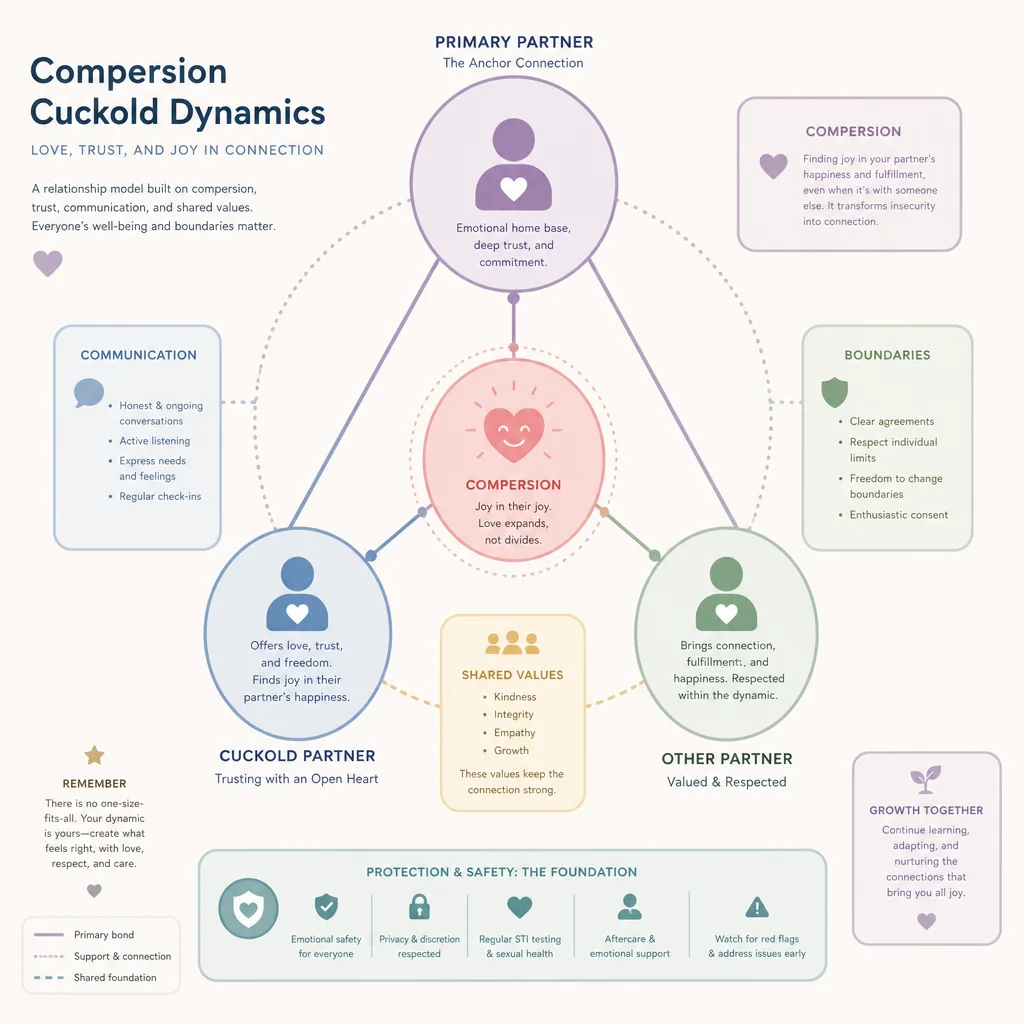
Start with security. Compersion is hard to access when you feel insecure in the relationship. Before trying to cultivate compersion, make sure the foundations are solid: Are your boundaries being respected? Is aftercare happening consistently? Do you feel prioritized in your partner’s life? Security is the soil compersion grows in. This connects directly to the broader work of building trust in cuckold relationships.
Name it when you feel it, even in small doses. Compersion often shows up first as a flicker — a brief moment of “that actually felt good to witness” — before it becomes a sustained emotional state. Noticing and naming those moments (“I just felt a little spark of compersion when you told me about that”) reinforces the neural pathways and makes the emotion more accessible over time.
Ask your partner what they appreciated. After an experience, instead of asking for a full replay (which can trigger comparison), ask your partner: “What did you appreciate most about how I showed up for this?” This reframes the conversation from comparison to connection and often surfaces the things that naturally evoke compersion.
Create space for gratitude. Compersion and gratitude are closely related emotions. When partners explicitly thank each other — for the trust, the emotional work, the generosity — it reinforces the sense that the dynamic is a shared gift rather than a tolerated arrangement.
When Compersion Feels Out of Reach
There will be times when compersion does not show up, no matter how much you want it to. This is not a failure — it’s information.
When compersion consistently feels inaccessible, it is often because something else needs attention first. Common underlying issues include: boundaries that are being pushed rather than honored, a partner who is moving faster than agreed, aftercare that feels insufficient, or an underlying sense that the cuckold dynamic is happening to you rather than with you.
Sometimes the block is internal. If you have a history of betrayal in past relationships, your nervous system may interpret any sharing dynamic as a threat — even when your conscious mind knows it’s consensual and your partner is trustworthy. In these cases, compersion may need more time and more evidence of safety before it can emerge. That’s okay. The timeline is yours.
The key is not to force compersion but to investigate what’s blocking it — with curiosity, not criticism. Pausing or slowing down the cuckold dynamic to address underlying issues is always the right call. The experiences will still be available when you’re ready. Compersion can’t be rushed, but it can be cultivated once the conditions are right.
Understanding the power dynamics in cuckold relationships can also help identify whether an imbalance is contributing to the emotional block — sometimes what feels like an inability to access compersion is actually a power dynamic that needs renegotiation.
Compersion as a Relationship Skill, Not a Personality Trait
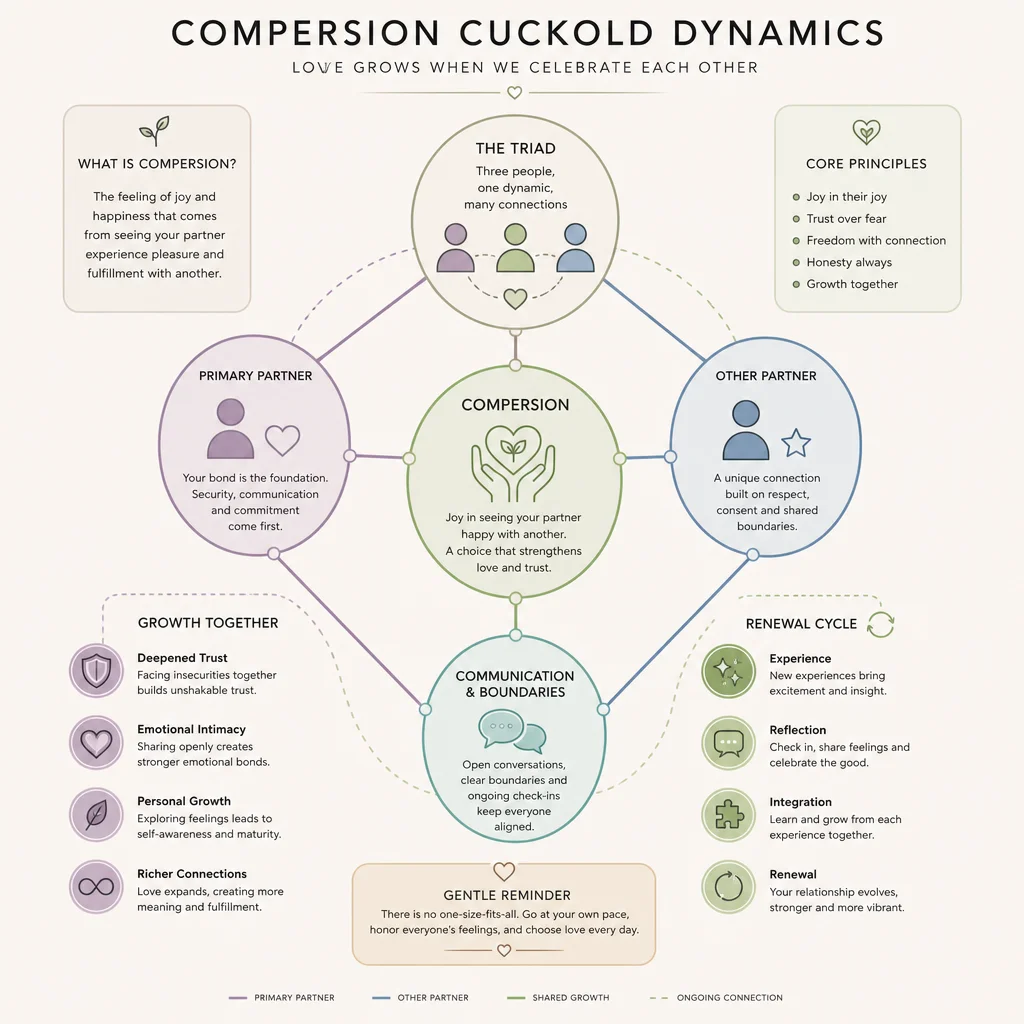
Perhaps the most helpful reframe for couples exploring compersion in cuckold dynamics is this: compersion is not something you are. It’s something you practice.
Some people seem to access compersion more naturally — they report feeling it from the beginning, with minimal effort. Others find it takes months or years of consistent emotional work before it feels accessible. Both paths are normal. The research on compersion suggests it functions more like a skill than a trait: it can be developed, strengthened, and maintained through practice, and it can atrophy when relationships stop investing in the conditions that support it.
Treating compersion as a skill also removes the shame that can come from not feeling it. If compersion is a personality trait, not feeling it means there’s something wrong with you. If compersion is a skill, not feeling it yet means you’re still building — which is true for most people, most of the time, in most relationships.
The couples who report the richest compersion experiences are rarely the ones who felt it instantly. They are the ones who kept showing up — for the check-ins, the aftercare, the boundary conversations, the difficult moments — until compersion became a familiar part of their emotional vocabulary rather than an aspirational concept.
Compersion-Building Checklist
Use this checklist as a periodic self-assessment. None of these are prerequisites — you don’t need all of them before compersion can appear. But each one you can check off makes compersion more likely:
- ☐ My boundaries are being consistently respected — not just in word, but in action
- ☐ Aftercare happens after every experience, and it feels sufficient for my needs
- ☐ I can name at least one recent moment when I felt genuinely glad about my partner’s experience
- ☐ My partner explicitly expresses gratitude for my emotional work in this dynamic
- ☐ I have space to say “I’m struggling” without fear of disappointing my partner
- ☐ Our non-cuckold connection time feels prioritized and protected
- ☐ I can distinguish between jealousy that needs attention and jealousy that passes on its own
- ☐ Power dynamics are discussed openly and can be adjusted without pushback
- ☐ When I need reassurance, my partner provides it without defensiveness
- ☐ I treat compersion as a practice rather than a test I’m passing or failing
Compersion in cuckold dynamics is not a destination you arrive at. It’s a practice you build — slowly, imperfectly, and in partnership with someone who values the effort. And when it shows up, even in fragments, it has a way of transforming what cuckold dating feels like from the inside.
Editorial note: This content is for educational and informational purposes for adults 18+. Compersion is discussed as an emotional skill that can be developed in the context of consensual, communicative relationships — not as an expectation or requirement for any individual or couple.