Table of Contents
- What Ambiamory Actually Means
- Ambiamory vs Monogamy vs Polyamory
- Ambiamory Is Not Indecision
- How Ambiamory Shows Up in Real Life
- Ambiamory and Your Partners
- Signs You Might Be Ambiamorous
- Dating as an Ambiamorous Person
- The Short Version
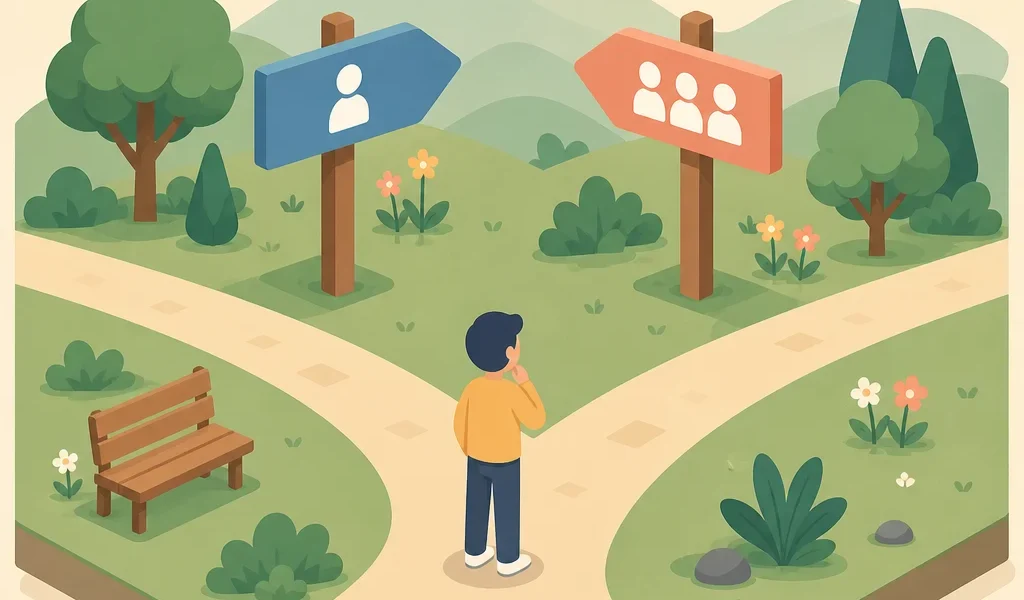
What does it mean to be ambiamorous? In short, an ambiamorous person can feel genuinely happy and fulfilled in either a monogamous relationship or a consensually non-monogamous one. The word combines “ambi” (both) with “amory” (love), and it describes people who do not have a hard internal preference for one structure over the other. Instead of feeling pressured to pick a side, they can thrive in whichever arrangement fits their partner, their current life, and the agreements everyone has actually made.
If you have felt comfortable being exclusive with one person and equally comfortable dating within an open or polyamorous dynamic, the term might click for you. It is not about indecision, and it is not about a fear of commitment. It is a legitimate relationship orientation that a growing number of people use to describe how they love. In this guide we walk through what ambiamory means, how it differs from monogamy and polyamory, and what it looks like in real relationships.
What Ambiamory Actually Means
Ambiamory is a relationship orientation. It describes people who can be genuinely content in either a monogamous relationship or an ethically non-monogamous one. The key word is “either.” An ambiamorous person is not someone who secretly wants one thing while pretending to want another. They genuinely do not feel a strong pull toward one structure over the other.
Think of it like being fluent in more than one language of relating. A bilingual person does not have to choose one language forever; they move comfortably between both depending on who they are talking to and where they are. Ambiamorous people relate to relationship structure in a similar, fluid way. The noun is ambiamory and the adjective is ambiamorous, so someone might say “I am ambiamorous” or “I am exploring ambiamory.” Both describe the same orientation.
What separates this from simply keeping your options open is the absence of a strong internal preference. An ambiamorous person can be completely monogamous with a monogamous partner for years without feeling they are sacrificing a core part of themselves — and then, in a different relationship or season of life, be genuinely happy inside a polyamorous structure too.

Ambiamory vs Monogamy vs Polyamory
Monogamy means romantic and sexual exclusivity between two people. Polyamory means having, or being open to, more than one loving relationship at a time, with everyone’s informed consent. Ambiamory sits in between — or more accurately, it spans both.
The simplest way to keep the three straight is this: monogamy and polyamory describe relationship structures, while ambiamory describes a person’s orientation, meaning their internal capacity to be happy in more than one structure. An ambiamorous person can move between structures across different relationships without it feeling like a betrayal of who they are.
- Monogamous — prefers exclusivity with one partner and would feel unfulfilled or uneasy in an open dynamic.
- Polyamorous — prefers the freedom to form multiple loving connections and feels most authentic in non-monogamy.
- Ambiamorous — comfortable and fulfilled in either; the right structure depends on the partner and the circumstances, not on a fixed internal need.
Ambiamory Is Not Indecision
This is the biggest misconception people run into. When they hear “I can be happy in either,” they sometimes hear “I cannot commit” or “I have not figured myself out yet.” That is not what ambiamory means. Indecision is about not knowing what you want. Ambiamory is about knowing that what you want is genuinely flexible.
An ambiamorous person can commit fully — to one person, to a monogamous agreement, or to a polyamorous network — without that commitment requiring them to pretend to be something they are not. Ambiamory is also not the same as settling. Choosing monogamy is not “giving up on” polyamory. It is choosing a structure because it fits the relationship in front of you.
And it is never an excuse for dishonesty. Ambiamory lives inside the same ethical framework as any other form of non-monogamy: clear agreements, honest communication, and enthusiastic consent. Choosing monogamy with one partner while secretly wanting to be open is not ambiamory — it is a broken agreement waiting to happen.
How Ambiamory Shows Up in Real Life
Ambiamory is easier to understand through concrete examples than through definitions alone. Take Maya, who spent her twenties in a monogamous marriage. When that relationship ended, she dated inside polyamorous circles for a few years and loved it. Today she is monogamous with a new partner — not because polyamory failed, but because this particular partner is monogamous and Maya is happy either way.
Or take Sam, who identifies as ambiamorous and is currently in a polyamorous relationship with two partners. If his life shifted tomorrow — if one connection deepened and another ended — he knows he could be equally content settling into monogamy. The common thread in both examples is that the person’s sense of self is not tied to a single relationship structure. What matters is that the relationships themselves are loving, honest, and mutually agreed upon.

Ambiamory and Your Partners
Ambiamory often shows up most clearly in the “should we open up?” conversation. One partner might be polyamorous while the other is monogamous. When an ambiamorous person is in that conversation, they have real flexibility — but that flexibility has to be communicated carefully. Saying “I am fine either way” and meaning it is not the same as saying “I do not care.” The truth is more precise: the ambiamorous person needs clarity, honesty, and a structure everyone can genuinely agree to.
This is why ambiamory connects so closely to the mono-poly dynamic, where one partner is monogamous and one is non-monogamous and the relationship works through negotiation rather than a shared default. We have written about how those relationships actually work in our guide to mono-poly relationships. If you are new to the broader landscape, our ethical non-monogamy 101 overview is a good place to start.

Signs You Might Be Ambiamorous
There is no official test, but there are some consistent signals. You might be ambiamorous if several of these feel true:
- You have been genuinely happy in both monogamous and non-monogamous relationships at different points in your life.
- The thought of monogamy does not make you feel trapped, and the thought of polyamory does not feel like an obligation.
- You would rather choose a structure based on the actual person in front of you than on a fixed rule.
- When a partner says “I am only comfortable with monogamy,” your honest internal response is “okay, that works for me” — and you mean it.
- When a partner says “I want to be open,” you feel curiosity more than fear.
- You do not feel like you are giving up a core part of yourself either way.

Dating as an Ambiamorous Person
If you are ambiamorous and dating, your main job is to be clear about what “flexible” means for you in practice. A sentence like “I can be happy in monogamy or non-monogamy — what I cannot do is guess what we are doing, so I need us to agree explicitly” prevents most of the confusion before it starts.
It also helps to revisit the agreement as the relationship changes. An ambiamorous person who chose monogamy with a monogamous partner is not secretly counting down the days until they can be open. But if circumstances shift — a partner’s feelings change, or a new desire emerges — the ambiamorous person is often well positioned to have that conversation without it feeling like a betrayal of identity. For a deeper look at this, our guide to polyamory for beginners explains the landscape from the ground up.

The Short Version
Ambiamory means you can genuinely thrive in either a monogamous or a non-monogamous relationship. It is a relationship orientation, not indecision, and it is never an excuse for secrecy or broken agreements. If the term resonates, you are not alone — and you do not have to force yourself into a single box. You can read more about the history and framing of the term in this overview of ambiamory.
If you are still working out whether the label actually fits you, we have put together a practical self-check in our guide to knowing if you are ambiamorous.
This article was written by the 3Cupid editorial team. 3Cupid is a dating platform for adults interested in threesome dating, ethical non-monogamy, polyamory, swinging, and unicorn dating. Content is for 18+ readers only.