Finding someone to join you and your partner is exciting. The chemistry of messages, the shared interests, the anticipation — it’s easy to get swept up. But between the first message and the first meeting, there’s a step too many people skip: actually verifying who you’re talking to.
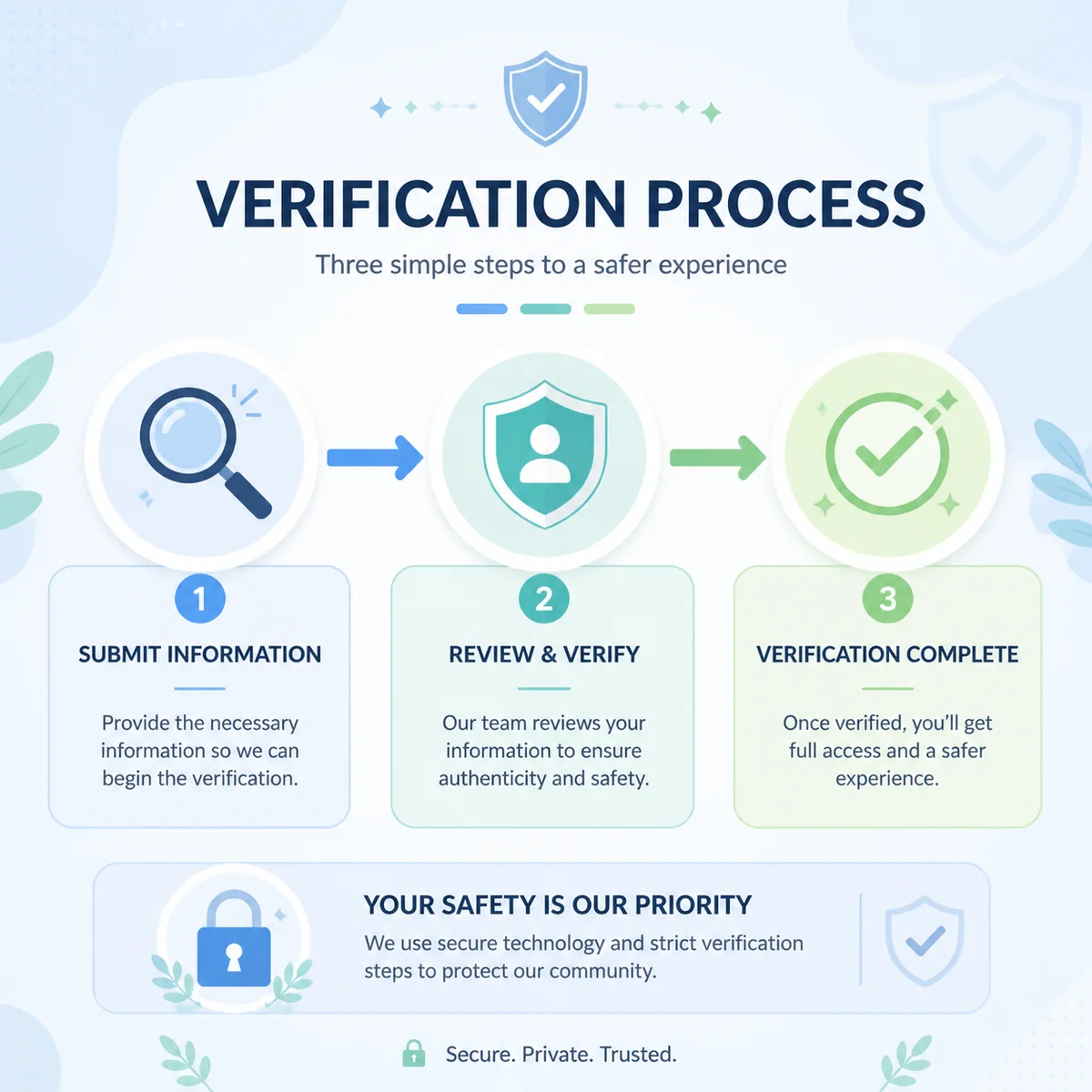
The internet is full of people who aren’t who they claim to be. Some exaggerate. Some misrepresent their intentions. A small number have genuinely bad intentions. Learning how to verify a third partner before meeting isn’t about being suspicious — it’s about being smart. The same way you’d check restaurant reviews before booking a reservation.
This guide covers practical, non-awkward ways to confirm someone is genuine — from spotting red flags in profiles to running basic background checks and planning a safe first meeting. Every step is something you can do calmly and respectfully, without turning the experience into an interrogation.
Why You Should Verify Before Meeting
When you’re looking for a third, excitement tends to override caution. The messages are flirty, the photos are attractive, and you want to believe everything lines up. That natural optimism is exactly why verification matters.
Catfishing — where someone uses fake photos or a completely fabricated identity — is more common in niche dating spaces than people admit. Even when the person is real, mismatched expectations about boundaries, experience levels, or intentions can turn a promising connection into an uncomfortable situation. A few straightforward checks before you agree to meet give you clarity and confidence. They also signal to the other person that you take safety seriously — which, for the right match, is a green flag, not a turnoff.
And this goes both ways. If you expect someone to verify themselves, be prepared to do the same. Sharing a recent photo, hopping on a quick video call, or linking to a social profile shouldn’t feel like an invasion — it’s the baseline for respectful dating in any context, including ENM and threesome arrangements.
Red Flags That Should Make You Pause
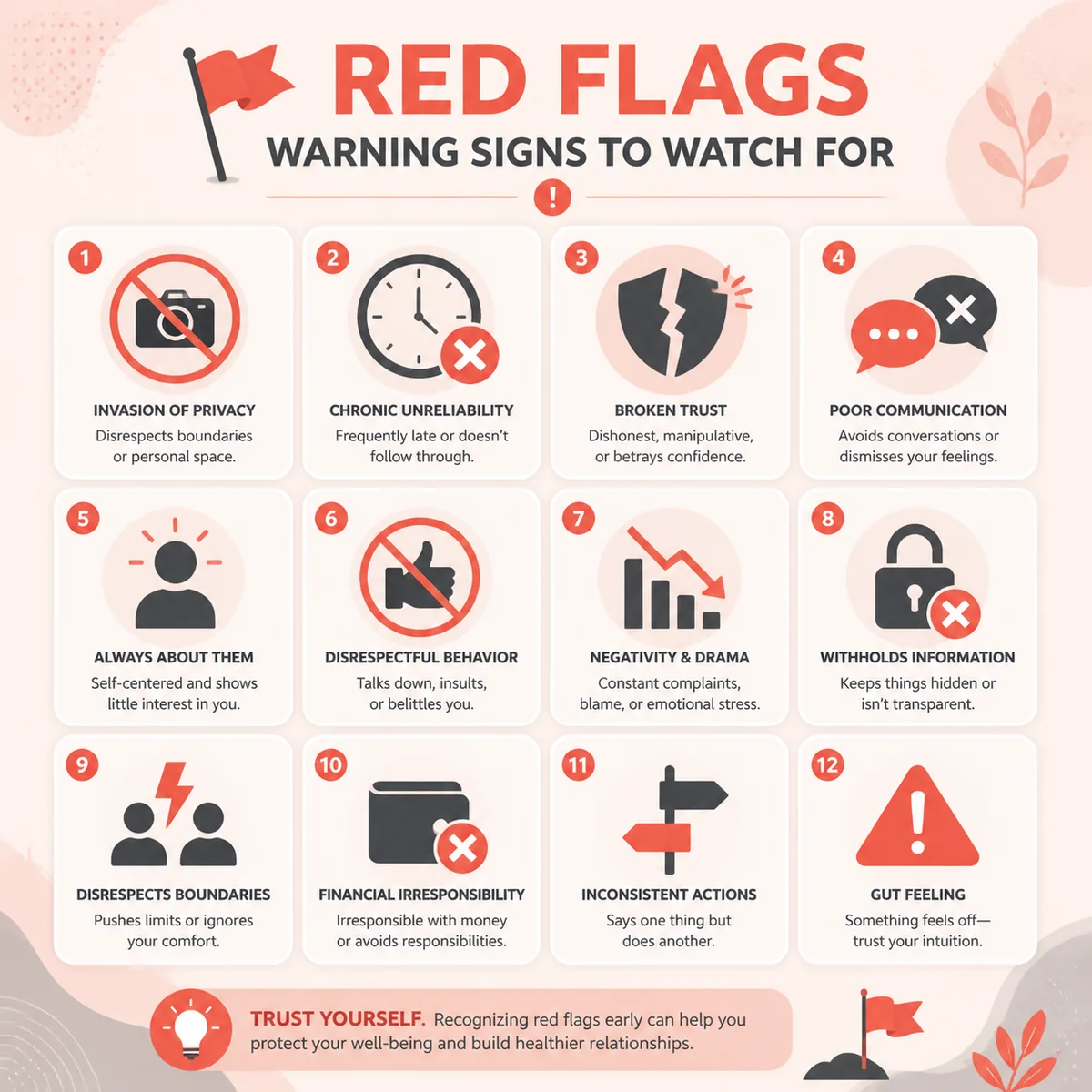
Red flags don’t always mean “run.” Sometimes they mean “ask more questions.” But when two or three of these pop up in the same conversation, pay attention. Patterns tell you more than isolated moments.
- Refuses to share recent photos or do a video call. Anyone serious about meeting will verify their identity. If every request is met with excuses — “my camera is broken,” “I’m shy,” “let’s just meet and see” — treat that as a hard stop.
- Pushes to meet immediately, skipping conversation. Some people are genuinely spontaneous. But someone who won’t spend a few days chatting and getting comfortable before setting a date is either hiding something or doesn’t care about building mutual trust.
- Only wants to talk to one partner. If you’re a couple, the third should be comfortable communicating with both of you — even if the dynamic naturally leans toward one person more. Someone who consistently avoids or dismisses one partner is a red flag for future drama.
- Stories don’t add up. Their age changes between messages. Their relationship status is vague. Their experience with threesomes shifts depending on the conversation. Inconsistency isn’t always malicious, but it usually means you’re not getting the full picture.
- No social media presence at all. Not everyone lives online, and some people genuinely prefer privacy. But in 2026, having zero digital footprint — no LinkedIn, no Instagram, no dating profile history — is unusual. Ask about it directly.
- Uses pressure or guilt tactics. “If you trusted me you wouldn’t need to ask.” “Other couples don’t make me jump through hoops.” These lines are manipulation, plain and simple. A respectful person will understand and appreciate your caution.
The Video Call Test (Non-Negotiable)
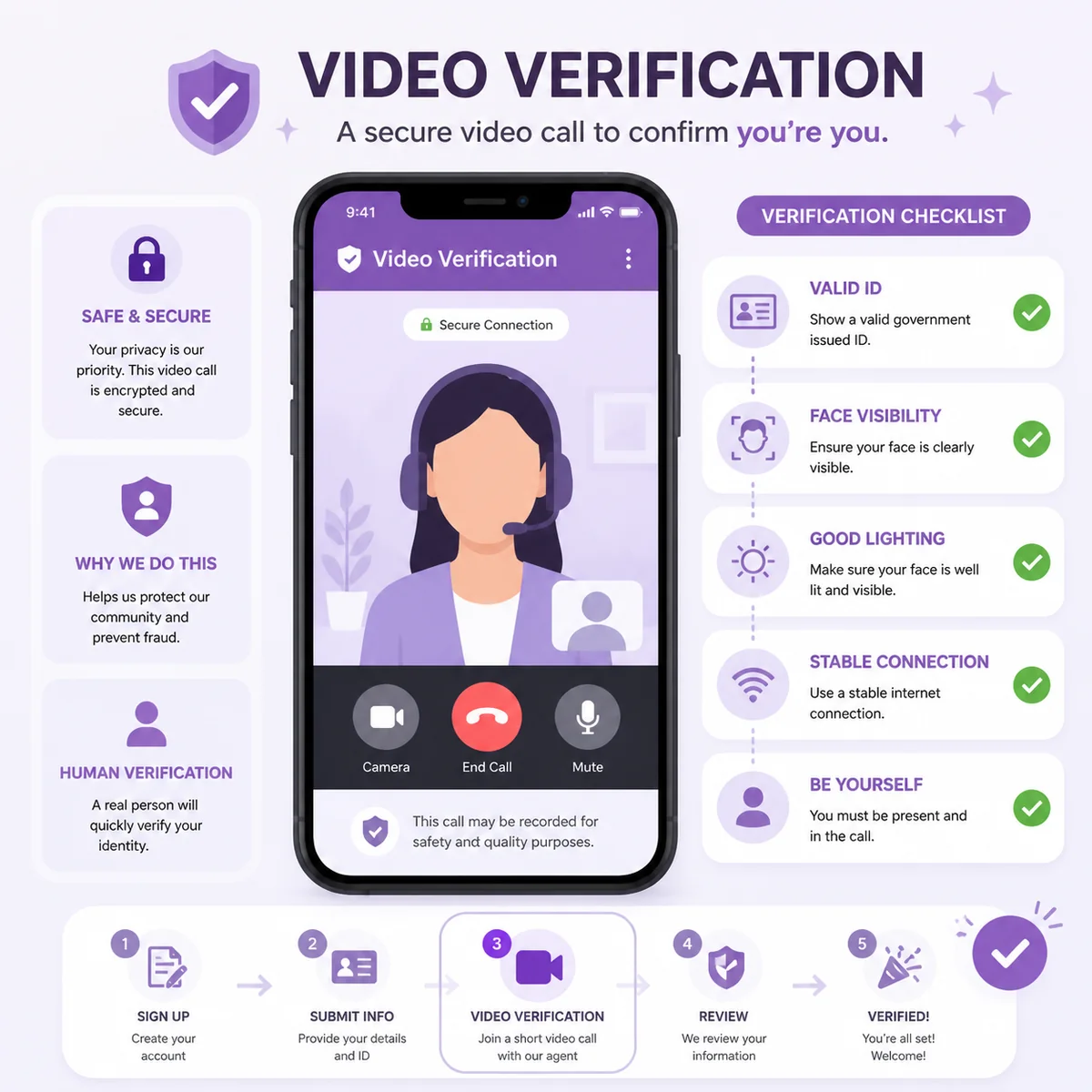
There is no substitute for a live video call. Photos can be stolen. Text messages can be carefully crafted. But a five-minute FaceTime or WhatsApp video call confirms three things at once: the person looks like their photos, they communicate genuinely in real time, and they’re willing to show up — literally and figuratively.
How you ask matters. Frame it as a mutual comfort step rather than a test. Try something like: “Before we get too far into planning, would you be up for a quick video call? Just five minutes to say hi — we find it makes everyone feel more comfortable before meeting in person.” A genuine person will say yes without hesitation. Someone who pushes back hard is telling you something important.
During the call, pay attention to more than just appearance. Do they seem relaxed and consistent with their messages? Do they engage with both partners if you’re a couple? Do they bring up safety or boundaries themselves, or does that responsibility fall entirely on you? The best video calls feel natural — like a quick coffee chat, not a job interview.
Questions to Ask Before Agreeing to Meet
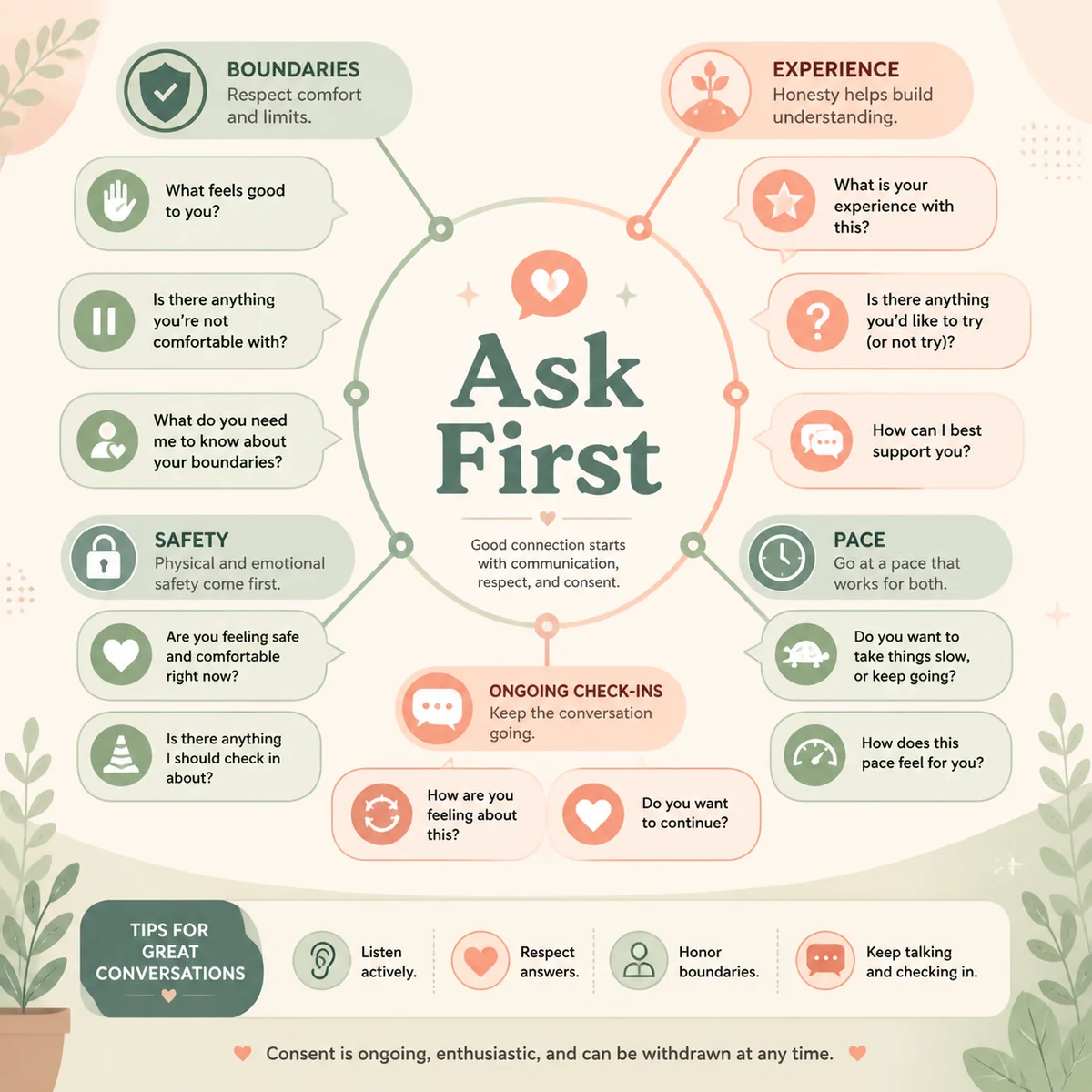
You don’t need an interrogation script, but a handful of direct questions asked naturally in conversation will surface most of what you need to know. Here’s what to cover before you set a date.
- What’s your experience with threesomes or group dynamics? Someone with no experience isn’t a deal-breaker — but you’ll want to know so you can adjust expectations and pacing.
- What are you looking for from this experience? A one-time connection? An ongoing arrangement? Just exploring? Aligning expectations here prevents mismatches later.
- What are your boundaries? If they can’t name a single boundary or preference, that’s a concern. Everyone has limits, and someone who says “I’m up for anything” usually hasn’t thought it through.
- How do you handle safer sex practices? If this question makes the conversation awkward, that’s information in itself. Someone comfortable discussing STI testing and protection is someone who takes health seriously.
- Have you been in any situation that went wrong? What happened? How someone talks about past negative experiences reveals their self-awareness — or lack of it.
Pre-Meeting Verification Checklist:
- Video call completed — identity confirmed
- At least one social media profile cross-referenced
- Experience level and expectations discussed openly
- Boundaries named by all parties
- Safer sex practices discussed without awkwardness
- Both partners (if a couple) have communicated directly with the third
- No pressure tactics or red flags in conversation history
- Meeting location and time agreed — public place, neutral ground
Running a Basic Background Check
This sounds more intense than it is. You’re not hiring a private investigator — you’re doing what any reasonably cautious person would do before meeting a stranger from the internet.
Start with a reverse image search on their profile photos. Tools like Google Images or TinEye take thirty seconds and can reveal if a photo appears elsewhere under a different name — a common sign of a fake profile. Next, check the social media profiles they’ve shared. Do the details match? Same city? Consistent photos? A LinkedIn profile that aligns with what they’ve told you about their life is a strong signal of authenticity.
A basic Google search of their first name plus city or profession often surfaces relevant information. Public records, professional listings, and news mentions are all fair game. What you’re looking for is consistency — does the person you’ve been messaging match the person who exists in public digital spaces?
There’s a line between verification and stalking, and it’s worth respecting. Don’t dig into family members, don’t contact their workplace, and don’t compile a dossier. The goal is confirmation, not investigation. If everything checks out after fifteen minutes of basic searching, that’s enough.
Planning a Safe First Meeting
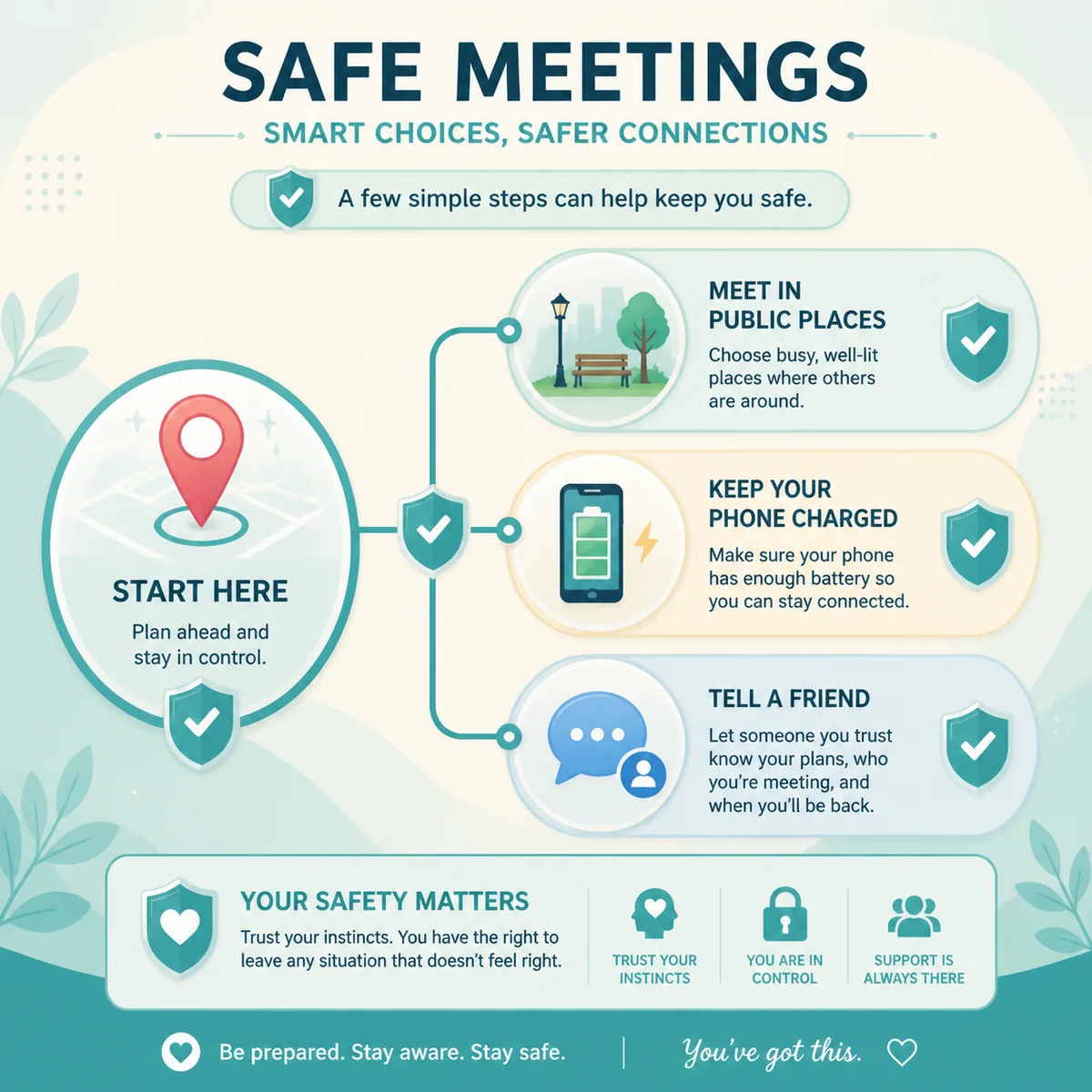
Even after verification checks out, the first meeting should follow basic safety principles. These apply whether you’re a single meeting a couple, or a couple meeting a single.
- Meet in a public, neutral place. A coffee shop, a casual bar, a busy restaurant. Not someone’s home. Not a hotel lobby. A place where other people are around and you can leave naturally if needed.
- Tell someone where you’re going. A friend who isn’t involved in the date should know the location, the time, and the name of who you’re meeting. It takes thirty seconds to send that text and it’s one of the simplest safety habits you can build.
- Keep the first meeting low-pressure. This is a vibe check, not the main event. Agree beforehand that nobody expects anything physical to happen on day one. Taking that pressure off makes it easier to be present and observant.
- Have an exit strategy. Agree on a signal with your partner if you’re a couple — a phrase or a look that means “we need to wrap this up.” If you’re solo, have a pre-arranged reason to leave (an early morning meeting, a pet that needs feeding) that you can deploy without drama.
- Trust your gut. If something feels off — even if you can’t name exactly what — listen to that feeling. You can always reschedule. You can’t undo a bad decision made under pressure.
What to Do If Something Feels Off
Sometimes you go through every verification step and still get a nagging feeling of discomfort. It might be the way they responded to a question, a small inconsistency you can’t shake, or just a gut-level sense that the chemistry isn’t what you hoped for. That’s valid. You don’t need proof of wrongdoing to decide not to meet someone.
Canceling is straightforward if you keep it simple. A message like “Hey, we’ve really enjoyed talking but after thinking about it more, we don’t feel this is the right fit right now. Wish you the best.” is direct, kind, and doesn’t invite debate. You don’t owe anyone an extended explanation. If the response is hostile, demanding, or manipulative — you just confirmed you made the right call. Block and move on.
In the rare case that something genuinely alarming surfaces — threats, harassment, or evidence of deception that could put others at risk — report the profile on whatever platform you connected through. Most dating apps and sites have reporting mechanisms for precisely this reason.
Building Trust Without Skipping Steps
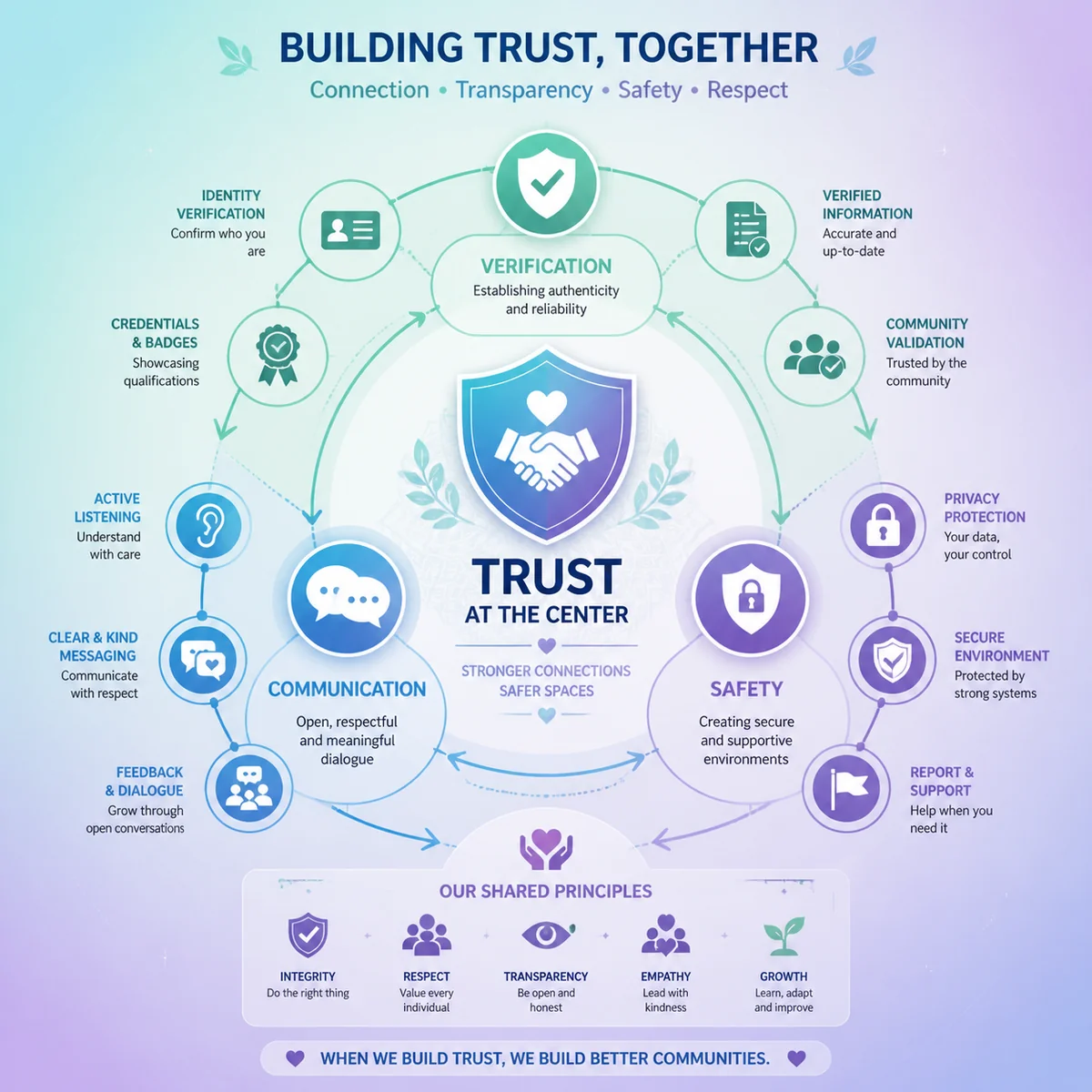
The goal of verification isn’t to treat every potential third like a suspect. It’s to create enough safety that you can relax and be present when you do meet. The people worth meeting will understand this. They’ll appreciate that you care about everyone’s wellbeing — theirs included.
Verification is also a preview of communication style. Someone who handles direct questions with ease, who volunteers their own boundaries, and who shows up on a video call relaxed and genuine is demonstrating exactly the kind of emotional maturity that makes threesome experiences positive. Someone who bristles at basic safety steps is showing you how they’ll handle harder conversations down the line.
Building a safe, respectful connection takes a little time — and that’s a feature, not a bug. The couples and singles who have the best experiences are almost always the ones who didn’t rush. They asked questions. They verified. They met for coffee first. And then, when everyone felt genuinely comfortable, they moved forward with clarity and confidence.
If you’re ready to connect with people who take safety and respect as seriously as you do, you’ll find them at 3Cupid — a community built for thoughtful, clear-eyed adults exploring threesome dating on their own terms. For more on staying safe throughout the entire experience, read our complete safety guide. And if you’re still in the searching phase, check out how to find a third for a threesome safely.
This article was written by the 3Cupid editorial team. We create evidence-based, judgment-free content for adults exploring consensual non-monogamy, threesome dating, and relationship growth. Learn more at 3Cupid Blog.
Disclaimer: This article is for informational purposes only and does not constitute professional safety or legal advice. Always prioritize your personal wellbeing and follow local laws and guidelines.