
Everyone talks about the logistics. Where to find a third, what rules to set, how to stay safe. Almost nobody talks about what it actually feels like — the emotions that surface without warning, the ones that linger for days, and the ones you didn't even know you were capable of feeling until they showed up.
The emotional realities of threesome dating are the part of the experience that catches people off guard. You can plan every physical detail and still find yourself completely unprepared for how you feel the morning after. This isn't because something went wrong — it's because nobody told you these feelings are normal.
This article names what most guides skip. Not to scare you away from the experience, but to make sure you recognize these emotions when they arrive — so you're not blindsided, and so you know what to do with them.
Table of Contents
- The Unexpected Joy You Didn't Prepare For
- The Awkwardness Nobody Mentions
- The Guilt That Shows Up Uninvited
- When One of You Pulls Away
- Feeling Closer to the Third Than Expected
- The Anticlimax After the Anticipation
- A Simple Framework for Processing

The Unexpected Joy You Didn't Prepare For
This one sounds like a good problem to have — and it is. But it still deserves attention because it's disorienting in its own way.
Some couples report feeling a wave of euphoria after their first shared experience. Not just satisfaction — a genuine high. Watching your partner experience pleasure with someone else, and feeling genuinely happy about it rather than threatened, can create a sense of connection that's hard to describe. The psychology term for this is compersion — the opposite of jealousy, a feeling of joy in someone else's joy.
The surprise isn't the feeling itself. It's how intense it can be, and how quickly it can shift. One moment you're on cloud nine. The next, a small gesture or offhand comment sends you spiraling. That swing is normal — the emotional range during and after a threesome is wider than most people expect. Noticing the joy without clinging to it is the skill. Feel it, let it exist, and know that other feelings will follow.
For a deeper understanding of managing the full emotional spectrum — especially the harder feelings — our guide on threesome jealousy covers practical strategies for when compersion gives way to something more complicated.
The Awkwardness Nobody Mentions

Somewhere between the fantasy and the planning, people forget that threesomes involve actual human bodies in an actual room with actual logistics. The result? Moments that feel nothing like the smooth, seamless experience you imagined.
Someone needs water. The music stops. A position that worked in theory feels impossible in practice. Someone laughs — and then nobody knows if laughing is allowed. These moments are not signs that things are going wrong. They're signs that three real people are navigating a shared physical space, and real people are occasionally clumsy.
The couples who handle awkwardness best are the ones who expect it. They laugh together. They check in with each other and the third person. They treat it like a shared human experience rather than a performance that needs to run flawlessly. If you're someone who needs everything to go perfectly, a threesome will test you. If you can roll with imperfection, you'll be fine.
The Guilt That Shows Up Uninvited
Guilt is one of the most common post-threesome emotions — and one of the least discussed. It doesn't always mean you did something wrong. Sometimes it's just the residue of years of cultural conditioning about what relationships "should" look like.
This guilt can take several forms:
- Guilt about enjoying it. "If I loved my partner, why did I enjoy being with someone else?" The answer: because enjoyment and love are not the same thing, and experiencing one doesn't negate the other.
- Guilt about watching. Some partners feel voyeuristic or wrong for watching their partner with someone else — even when everyone enthusiastically consented. This usually stems from internalized beliefs, not the reality of the situation.
- Guilt about wanting it again. One experience opens a door, and now you want to walk through it again. That desire can feel threatening to the stability of your relationship, even when it isn't.
- Guilt about the third person. Worrying you used them, didn't give them enough attention, or that they left feeling like an accessory — not a person.
Naming the guilt is the first step to understanding it. Ask yourself: "Is this guilt telling me something real, or is it just an old script playing on repeat?" If it's the latter — and it usually is — give yourself permission to set it down.
According to relationship experts cited by VeryWell Mind, feelings of guilt in consensual non-monogamy often stem from unexamined assumptions rather than actual harm. The key is distinguishing guilt that signals a boundary was crossed from guilt that simply reflects social conditioning.
When One of You Pulls Away
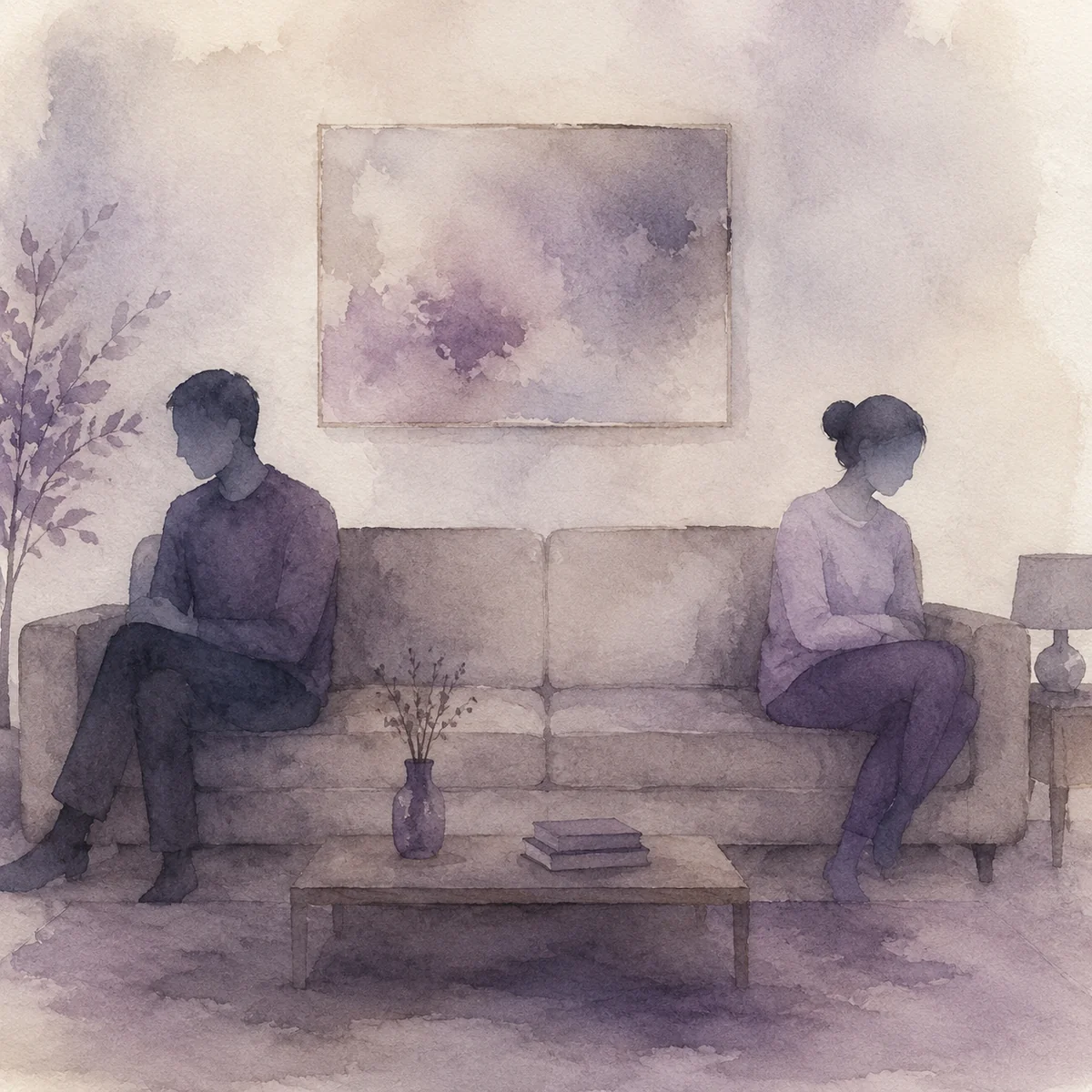
This is the one that scares people the most. You went into this together. You came out of it together. But in the days that follow, one of you seems… elsewhere. Quieter. Less affectionate. A little closed off.
Your brain wants to interpret this as: They liked it too much. They're thinking about the third person. They regret it. They're pulling away from me.
Here's what's more likely: they're processing. Some people process experiences externally — they need to talk, debrief, dissect. Others process internally — they need quiet time to sort through what they felt and what it means. When an external processor meets an internal processor, the external one panics while the internal one is simply doing their thing.
Name your processing styles before the experience. Say it plainly: "Afterward, I'll probably want to talk right away." Or: "Afterward, I'll probably need a day or two of quiet before I can discuss it." Neither is wrong. Both are easier when the other person knows what to expect.
If distance persists past the initial processing window — say, more than a few days — that's worth addressing directly. Our threesome aftercare guide has specific scripts for reopening the conversation when one partner seems to have retreated.
Feeling Closer to the Third Than Expected
This is the emotional reality that couples least want to admit might happen: developing a genuine fondness — or even a crush — on the third person. Not because your relationship is lacking, but because you just spent an intimate evening with someone who was kind, attentive, and present. Connection is a natural side effect of shared intimacy.
The cultural script says this is a crisis. The reality is usually more nuanced. Feeling warmth toward someone you were vulnerable with is human. It doesn't automatically mean you want to leave your partner. It doesn't mean you love them less. It means you had a meaningful experience with another person, and your brain is doing what brains do — forming an attachment.
What matters is how you handle it. If you and your partner can talk about it openly — "I felt surprisingly close to them, and it caught me off guard" — the feeling often loses its power. The secrecy around it is what gives it weight. If you're ready to have that level of honest conversation, start with our guide on talking to your partner about threesomes — the communication skills translate directly to this situation.
The Anticlimax After the Anticipation

You spent weeks — maybe months — building toward this. The conversations, the searching, the nervous excitement. And then it happens. And then it's over. And then Monday morning arrives, and you're making coffee like it's any other day.
The anticlimax is real, and it's disorienting. It doesn't mean the experience was bad. It means your brain built a mountain of anticipation and is now standing on the other side of it, wondering what to do with all that emotional energy.
Some people interpret the anticlimax as regret — "If I'm not euphoric afterward, maybe it was a mistake." That's a logical error. Intensity of anticipation doesn't guarantee intensity of aftermath. The experience can be genuinely good, genuinely worth having, and still leave you feeling… normal. That's not failure. That's just reality.
Give yourself permission to land softly. You don't need to have a profound takeaway. You don't need to decide anything. Let the experience be what it was — one experience, among many, in a relationship that contains multitudes.
A Simple Framework for Processing Any Emotion
Instead of trying to categorize every feeling as good or bad, use this three-step framework whenever an emotion surfaces during or after a threesome. It's simple enough to remember under pressure and deep enough to be genuinely useful.
Step 1: Name it without judging it. Say to yourself: "I'm feeling jealous." Not "I shouldn't be feeling jealous." Just name it. Feelings are data, not character flaws.
Step 2: Ask what it's pointing at. Jealousy often points to a need for reassurance. Awkwardness often points to uncertainty about what's expected. Guilt often points to an old belief that no longer serves you. The feeling itself is rarely the real issue — it's a signpost.
Step 3: Decide what action (if any) it calls for. Some feelings need conversation. Some need time. Some just need to be acknowledged and let go. You don't have to act on every emotion — but you do need to recognize it.

The framework above gives you a tool. But using it takes practice. Start with small emotions — name them out loud to yourself, or share one with your partner when you’re both calm. The goal isn’t to master your emotions. It’s to stop being surprised by them.

If there's one thing to take from this article, it's that every emotion described here — the joy, the awkwardness, the guilt, the distance, the connection, the anticlimax — is normal. None of them mean your relationship is broken. None of them mean you did something wrong. They mean you're a human being navigating an experience that society has given you almost no framework for understanding.
The couples who have the best experiences aren't the ones who feel only positive emotions. They're the ones who knew all emotions were possible — and had a plan for what to do when they arrived.
If that sounds like the kind of intentional, emotionally aware exploration you're looking for, you'll find people who share that approach right here at 3Cupid.
Editor's note: This article is part of 3Cupid's emotional wellness series on threesome dating. All content is intended for adults 18+ and does not replace professional mental health support. If you're experiencing persistent emotional distress, consider reaching out to a licensed therapist familiar with non-monogamous relationship structures.