
Most couples spend weeks talking about whether they want a threesome. Far fewer spend the same energy deciding what they won't do once they're in one. That gap is where things go wrong — not during the experience itself, but in the silence that came before it.
Threesome boundaries are the specific, named limits you and your partner agree on before inviting anyone else into your dynamic. They're not restrictive — they're protective. The couples who have the smoothest experiences aren't the ones with the loosest approach. They're the ones who talked through the awkward stuff first.
This guide walks you through every category of boundaries worth discussing — with a printable-style checklist at the end. Whether you're a couple just exploring the idea or a single person considering joining one, knowing where the lines are drawn benefits everyone involved.
Table of Contents
- Why Boundaries Matter More Than Rules
- Physical Boundaries to Discuss First
- Emotional Boundaries Couples Often Overlook
- Digital Privacy and Communication Boundaries
- Boundaries With the Third Partner
- Post-Threesome Boundaries
- Your Boundaries Checklist

Why Boundaries Matter More Than Rules
Rules and boundaries get used interchangeably, but they function differently in practice. A rule is often a restriction placed on someone else's behavior: "you can't kiss them on the mouth." A boundary is a line you draw around your own emotional safety: "I'd feel uncomfortable if kissing on the mouth happened, and I'd need to talk about it beforehand."
Rules can feel like a parent telling a child what not to do. Boundaries feel like two adults clarifying what keeps them both safe. Research published by Psychology Today on non-monogamous dynamics emphasizes that successful exploration depends less on an exhaustive list of rules and more on openly negotiated boundaries that both partners genuinely agree with — not just tolerate.
When boundaries are clear, everyone relaxes. The third person doesn't have to guess what's off-limits. You and your partner don't spend the night silently panicking about crossed lines. And the aftermath — often the hardest part — becomes a conversation about what happened, not an argument about what should have happened.
If you haven't yet had the foundational conversation about opening your relationship, our guide on how to talk to your partner about a threesome walks through that first step. What follows here assumes you've already agreed to explore — now you're building the guardrails.
Physical Boundaries to Discuss First

Physical boundaries are the most obvious category, and they're usually where couples start. But the mistake most people make is speaking in vague categories instead of naming specific acts. "Nothing too intimate" means entirely different things to two different people.
Here's what needs to be named explicitly:
- Kissing. For many couples, kissing on the mouth carries more emotional weight than anything else. Decide where you stand. Is it fine? Only with you? Only with the third? Not at all?
- Oral contact. Be specific about giving and receiving — they can be different boundaries for different people.
- Penetrative contact. If it's on the table, clarify with whom and under what circumstances. If protection is required (it should be), state that explicitly.
- Touching that's not genital. Massage, caressing, holding — these can feel unexpectedly intimate. Address them.
- Eye contact during physical moments. This one surprises people. Some partners report that prolonged eye contact between their partner and the third person felt more intimate than the physical acts themselves.
If you need a broader framework for these conversations, our threesome rules guide covers the six foundational agreements every couple should make. The checklist here goes deeper into the specifics.
Emotional Boundaries Couples Often Overlook
Physical boundaries get all the attention because they're easier to talk about. Emotional boundaries are where most threesomes actually unravel — and they're the ones couples tend to skip.
The core emotional boundary question is: What kinds of connection are reserved for just the two of you? Some couples are fine with their partner feeling genuine affection for the third person. Others want the interaction to stay warm but not emotionally deep. Neither answer is wrong, but not having an answer is where the trouble starts.
Specific emotional boundaries to discuss:
- Aftercare exclusivity. Who gets held afterward? Who sleeps in which bed? The reconnection phase between you and your partner needs its own set of expectations — and our threesome aftercare guide covers that in depth.
- Ongoing contact with the third. Is texting the third person the next day fine? A week later? What about a group chat vs. one-on-one messages?
- Emotional check-ins with the third. If the third person seems to be developing feelings, how do you handle it? Who brings it up?
- Inside jokes and shared references. It sounds minor, but when you and the third develop a little joke your partner isn't part of, it can sting more than anything physical.
- Comparison language. Agree upfront that neither of you will compare the third to your partner — not as a compliment, not as a criticism, not at all.
If jealousy has been a concern in your relationship before this conversation even started, our guide on managing threesome jealousy helps you work through those feelings before they surface at the worst possible moment.
Digital Privacy and Communication Boundaries
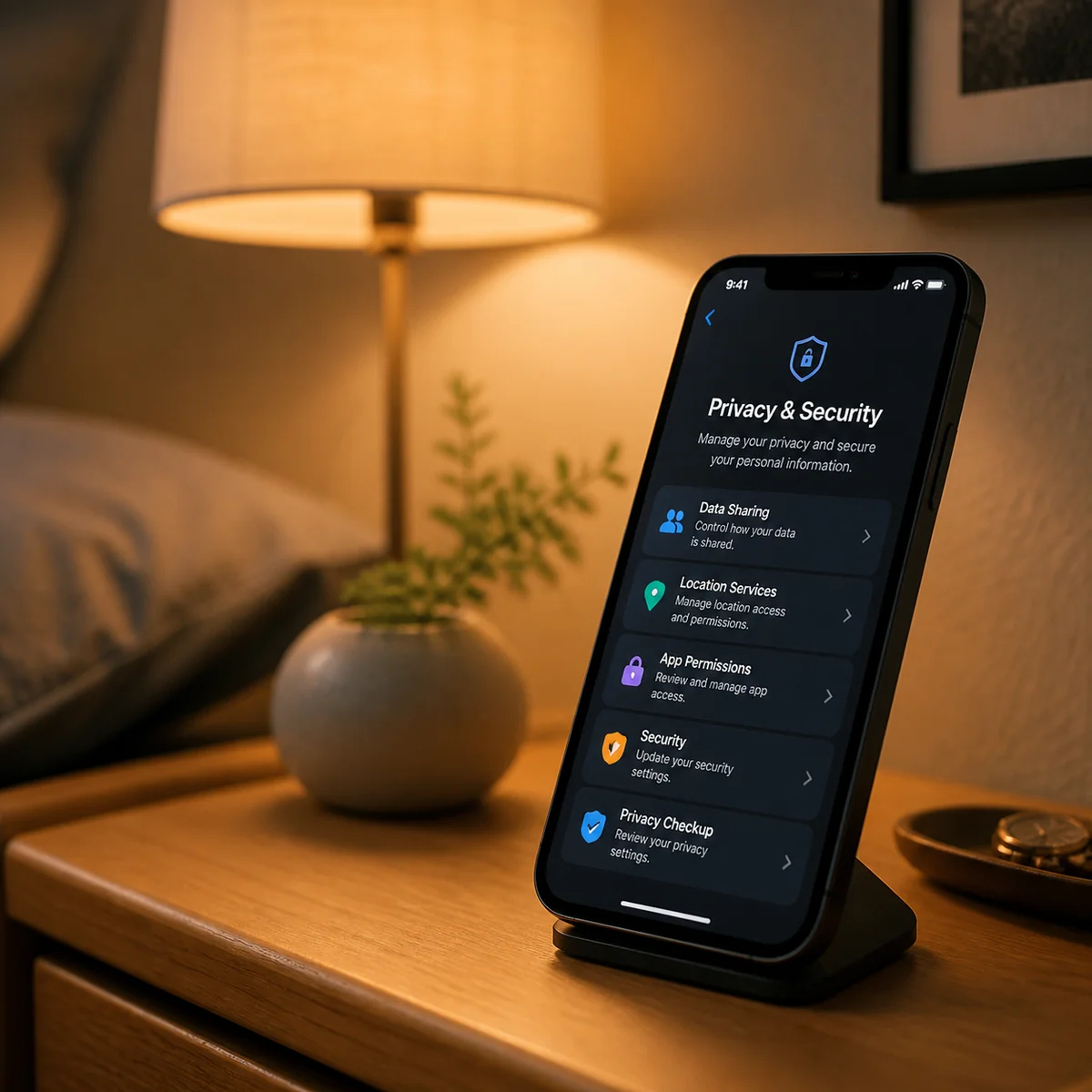
In an era where everything can be screenshotted, shared, and preserved forever, digital boundaries are not optional. They protect everyone — the couple, the third partner, and any relationship that might continue.
- Photos and videos. This should be a hard conversation. If any photos are taken, who has them? Where are they stored? When do they get deleted? The safest default is: no photos, no videos, no exceptions.
- Group chat etiquette. If you create a group chat with the third person, agree whether it's for logistics only or casual conversation too. Decide who can message whom privately.
- Social media. Don't tag each other. Don't post about the experience. Don't check in together. Privacy isn't secrecy — it's respect for everyone's real lives outside this dynamic.
- App profiles. If you met on a dating app, decide when (or if) you unmatch or stay connected. Some couples prefer to clear the slate; others want to keep the connection open for future possibilities.
These conversations also tie directly into physical safety. Our threesome safety guide covers the full spectrum from first message to post-meeting protocols.
Boundaries With the Third Partner
The third person is not a prop. They're a person with their own boundaries, and how you treat those boundaries says everything about the kind of couple you are.
Before the experience, communicate your boundaries to the third partner clearly. Not as demands — as information. "Here's what we've agreed on" is very different from "here's what you're not allowed to do." The first invites collaboration. The second feels like a contract of restrictions.
Things to share with the third person upfront:
- What's on the table and what's off — in plain language, no euphemisms
- How you prefer to communicate (group chat? one person as point of contact?)
- What happens after — do you part ways immediately? Hang out? Stay in touch?
- Whether either of you needs a check-in moment alone during the experience
- That they can revoke consent or change their mind at any point, no questions asked
Equally important: ask about their boundaries. A third partner who feels their limits are respected is a third partner who shows up relaxed, present, and genuinely engaged. A third partner who feels like an accessory will check out emotionally before anything even starts.
For more on finding and vetting a third partner with clear communication from the start, check out our pillar guide on how to find a third for a threesome safely.
Post-Threesome Boundaries

What happens after the experience matters as much as what happens during it. Couples who don't plan for the aftermath often find themselves in an emotional vacuum — one person wants to process, the other wants to sleep, and neither knows what the other needs.
Post-experience boundaries to set:
- The first hour. Decide together: do you want time alone as a couple immediately after? Or do you prefer the third person stays for a while? There's no right answer, but leaving it undecided creates awkwardness for everyone.
- The first conversation. Agree that the first post-experience talk between you two happens within 24 hours. Not to analyze or critique — just to check in. "How are you feeling?" is enough to start.
- Processing timelines. Some people need to talk through an experience immediately. Others need days of quiet reflection. Name your styles so neither of you interprets silence as anger or distance.
- Follow-up with the third. Decide together what you'll say to the third person afterward. A simple "thank you for a lovely evening" goes a long way — and ghosting after an intimate experience is never acceptable.
- Deciding what's next. Don't make the decision about "doing this again" in the immediate emotional haze. Agree to wait at least a week before discussing whether to repeat the experience.
Your Threesome Boundaries Checklist
Here's the practical takeaway. Go through this list with your partner — ideally over more than one conversation. Tick things off only when you both genuinely agree, not when one person reluctantly says "fine."
Physical boundaries — we agree on:
- ☐ Specific acts that are included and excluded (named, not hinted at)
- ☐ Protection requirements for each type of contact
- ☐ Kissing — included, excluded, or conditional
- ☐ Who touches whom, and in what configurations
- ☐ Eye contact and non-verbal intimacy during physical moments
Emotional boundaries — we agree on:
- ☐ What level of emotional connection with the third feels comfortable
- ☐ Who provides aftercare to whom, and for how long
- ☐ Rules around ongoing contact with the third (texts, calls, social media)
- ☐ How to handle it if the third develops deeper feelings
- ☐ No comparison language — ever
Digital boundaries — we agree on:
- ☐ Photo and video policy (strongly recommended: none)
- ☐ Group chat vs. private message rules
- ☐ Social media — no tagging, no posting, no check-ins
- ☐ App profile status after the experience
Third partner boundaries — we agree on:
- ☐ How we'll communicate our boundaries to them (tone: informative, not restrictive)
- ☐ How and when we'll ask about their boundaries
- ☐ What happens if they need to stop or pause
- ☐ Post-experience follow-up plan
Post-experience boundaries — we agree on:
- ☐ What the first hour after looks like
- ☐ When the first check-in conversation happens
- ☐ How we each prefer to process (talker vs. thinker)
- ☐ What we'll say to the third person afterward
- ☐ Waiting period before deciding whether to do it again (minimum one week)

The checklist above covers the specifics. But the real work happens in the conversation that follows — where you and your partner sit with what you’ve written and figure out what it actually means for you as a couple.

Boundaries aren't about limiting the experience. They're about creating a container safe enough that everyone inside it can actually relax. A threesome without boundaries isn't freer — it's just more anxious. The couples who talk through the uncomfortable details beforehand are the ones who get to be fully present when it actually happens.
If you're ready to start connecting with people who share your approach to honest, boundary-respecting exploration, you'll find a community that values communication as much as connection right here at 3Cupid.
Editor's note: This article is part of 3Cupid's guide series on navigating threesome dating with clarity and care. All content is intended for adults 18+. No part of this guide replaces professional relationship counseling or medical advice.