Most couples spend more time deciding where to eat dinner than they spend discussing sexual boundaries for threesomes. And then they wonder why things got uncomfortable.

Here’s a truth that doesn’t get said enough: the boundary conversation isn’t about limiting the experience. It’s about making sure everyone — you, your partner, and the third person — walks away feeling good about what happened. Boundaries don’t kill the mood. Uncertainty and crossed lines do.
This guide isn’t abstract theory. It’s a practical walkthrough of how to identify your boundaries, communicate them clearly, and negotiate where preferences differ. You’ll leave with actual scripts, a do/don’t framework, and a worksheet you can fill out tonight.
Why Sexual Boundaries Matter More Than You Think
In any sexual experience involving three people, the number of possible interactions — physical, emotional, and situational — multiplies fast. Two people have one dynamic. Three people have four: A+B, B+C, A+C, and A+B+C. Each of those dynamics needs its own set of understood limits.
Without explicit boundaries, people default to assumptions. And assumptions in a threesome are unreliable. One person might assume kissing is fine for everyone but intercourse isn’t. Another might assume the opposite. Someone might assume that one particular act is off the table, while the other two have no idea it was ever a concern.
According to research on consensual non-monogamy, the relationships that thrive aren’t the ones with the fewest rules — they’re the ones where agreements are explicit and mutually understood. When everyone operates from the same playbook, the experience feels safer — and safety is what allows people to actually enjoy themselves.
The Four Types of Boundaries You Need to Discuss
Sexual boundaries aren’t one-size-fits-all. They fall into categories, and skipping any of them leaves a gap. Here’s what to cover:
Physical boundaries: What specific acts are on the table, and which aren’t? Be specific. “We’ll see how it goes” is not a boundary. “Oral sex is fine, intercourse requires a separate conversation and protection” is a boundary. Include kissing preferences, touch, positions, and anything involving protection or barriers.
Emotional boundaries: How much emotional intimacy is welcome? Is eye contact during sex okay? What about cuddling afterward, or staying overnight? For some couples, the emotional aspects are more triggering than the physical ones. Name them.
Logistical boundaries: Where is this happening? Who’s hosting? Is alcohol involved? What time does it end? Are phones allowed in the room? These might seem like logistics, but they’re actually boundaries — they define the container the experience happens inside.
Aftermath boundaries: What happens after? Do you debrief immediately or wait until morning? Can anyone contact the third person afterward, and if so, how? Is this a one-time thing or potentially recurring? The aftermath is where most boundary violations that “ruined the experience” actually happen.

How to Identify What Your Boundaries Actually Are
Before you can communicate boundaries, you need to know what they are. And most people haven’t actually done that work. They’ve got vague feelings — “I don’t want to feel left out” or “I want this to be fun” — but feelings aren’t boundaries.
Here’s an exercise that works: separately, you and your partner each write down answers to these questions. No comparing until you’re both done:
1. What am I genuinely excited about? (Not what you think you should be excited about — what actually interests you.)
2. What makes me nervous? Be honest. Even if it seems small or irrational.
3. What would make me feel safe during this experience? Concrete things — not vibes.
4. What’s my biggest fear about how I’ll feel afterward?
5. What’s one thing I absolutely don’t want to happen?
Question 5 is the most important. It’s your hard boundary — the thing that, if it happens, means something went wrong. Everything else is negotiable. That one thing isn’t.
This is also the time to think about the third person’s boundaries. They’re not a prop in your experience — they’re a full human with their own needs and limits. Our guide on what it’s really like being the third is essential reading for understanding their perspective.

The Boundary Conversation: A Script That Actually Works
You’ve done your homework. You know your own boundaries. Now comes the part most people skip: saying them out loud, to your partner, before anyone else is in the room.
Here’s a framework that’s direct without being clinical, warm without being vague:
Opening (set the tone): “I want to talk about what we’re both comfortable with, so that when the time comes, we can just enjoy it instead of worrying. This isn’t about restrictions — it’s about clarity. Cool?”
Share first (lead by example): “Here’s what I’ve been thinking about what I’d be comfortable with. [List your physical, emotional, and logistical boundaries.] What about you?”
Find the overlaps: “So it sounds like we’re both comfortable with X and Y. We differ a bit on Z. Let’s talk about that.”
Negotiate differences: When your boundaries don’t match, the smaller boundary wins. If one person is comfortable with something and the other isn’t, the answer is no — not “let’s revisit this in the moment.” That’s not a compromise. That’s a pressure cooker.
Agree on a pause signal: “If either of us feels uncomfortable during the experience, what’s our signal to pause? Let’s pick a word or phrase that means ‘I need to check in'”
Close with appreciation: “Thank you for being honest with me. I feel closer to you knowing we’re on the same page.”
For a deeper dive into structuring these conversations, our threesome negotiation guide covers the full pre-experience discussion framework.
Sexual Boundaries: The Do’s and Don’ts

✅ DO: Discuss boundaries when you’re both sober, rested, and not in a sexual context
✅ DO: Use specific language — “I’m comfortable with X, not Y” instead of “let’s just see”
✅ DO: Write down what you agree on — memory fails under pressure
✅ DO: Include the third person in boundary conversations before anything physical happens
✅ DO: Revisit boundaries after each experience — your comfort zone shifts
❌ DON’T: Assume your partner shares your boundaries without checking
❌ DON’T: Negotiate boundaries during sex — arousal impairs judgment
❌ DON’T: Pressure someone to “loosen up” or be “more adventurous”
❌ DON’T: Make the third person responsible for enforcing your couple’s boundaries
❌ DON’T: Skip the debrief — unspoken resentment grows in silence
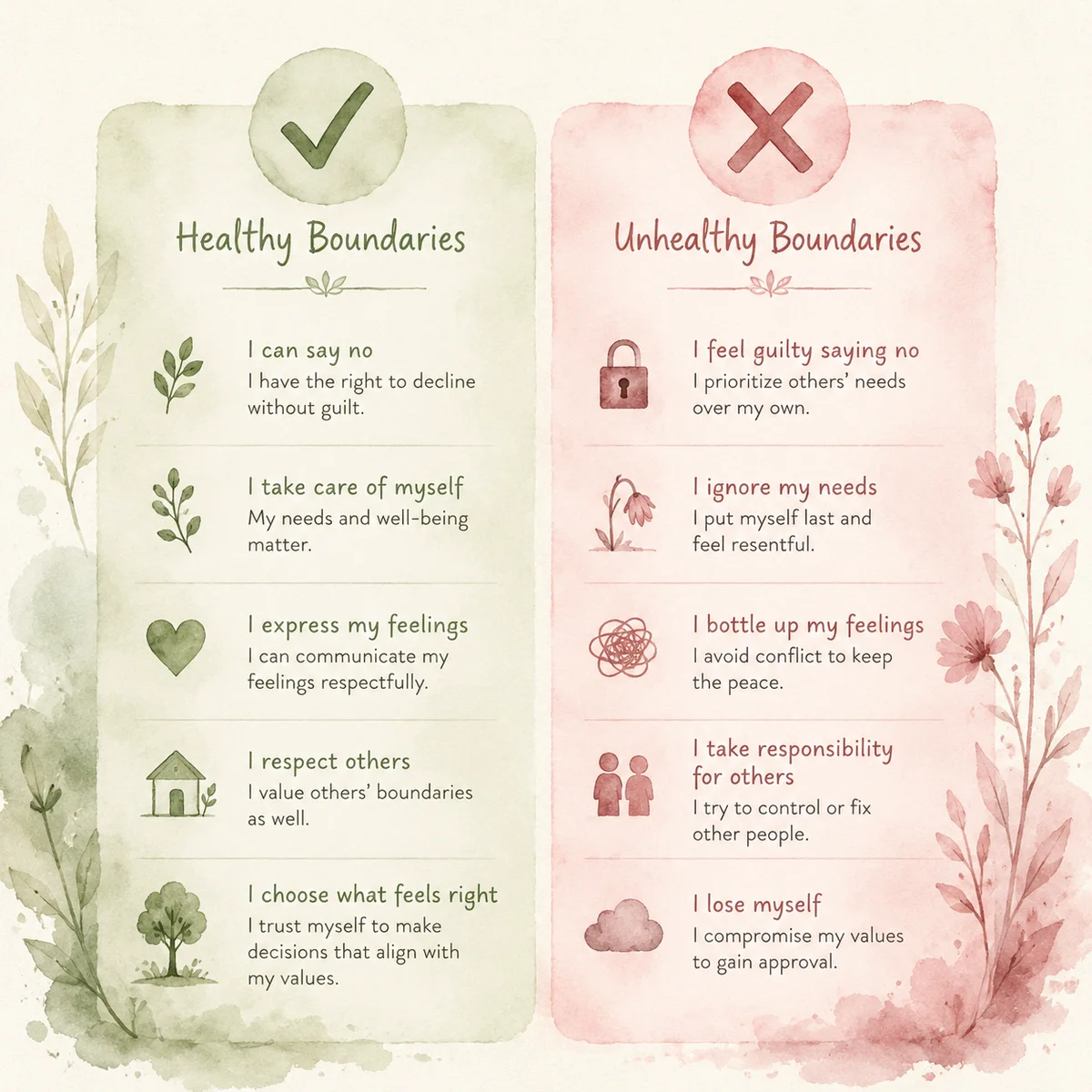
The distinction between a boundary and a rule matters here. Boundaries protect people. Rules control people. Our piece on veto power and agreements explores this difference in detail.
What to Do When a Boundary Gets Crossed
It happens. Even with the best preparation, someone says something, does something, or assumes something that crosses a line. How you handle it determines whether it becomes a rupture or a repair.
In the moment: Use your pause signal. Say “I need to stop” or whatever phrase you agreed on. Don’t explain, don’t apologize, don’t soften it. Just pause. The explanation can wait. The pause can’t.
Immediately after: Check in privately with your partner first. “Are you okay? What happened from your perspective?” Don’t assign blame yet — just gather information. You might have misunderstood what happened.
The next day: Have the real conversation. “When X happened, I felt Y. I don’t think it was intentional, but I want to make sure it doesn’t happen again. Can we talk about what we’ll do differently?”
If the third person crossed a boundary: This is serious. Decide as a couple how to handle it — but handle it. Ghosting someone who crossed a line is common but unhelpful. A brief, direct message closing the door is better for everyone: “We appreciated meeting you, but some things happened that didn’t align with the boundaries we discussed, and we don’t think this is a fit going forward.”
If your partner crossed a boundary: This is the hardest one. You need a separate conversation — outside the context of threesome dating — about what happened and whether it reflects a pattern. One crossed boundary during a new experience is different from repeated boundary violations.
If trust feels shaky after a boundary issue, our guide on threesome rules every couple should agree on can help you rebuild clearer agreements from the ground up.
Your Sexual Boundaries Worksheet
Grab a notebook or open a private document. Fill this out before you talk to your partner. Be honest. There are no wrong answers.
- Acts I’m excited to try: _______________
- Acts I’m open to, depending on the vibe: _______________
- Acts I’m not comfortable with: _______________
- My feelings about kissing (everyone / just my partner / I’m unsure): _______________
- My feelings about oral sex: _______________
- My feelings about intercourse (with / without barriers): _______________
- My feelings about cuddling / staying overnight / aftercare: _______________
- My pause signal word or phrase: _______________
- What I need from my partner to feel safe: _______________
- What I need afterward (debrief / alone time / reconnection): _______________
- One thing that would absolutely ruin the experience for me: _______________
- One thing I’m secretly looking forward to: _______________
Once you’ve both filled this out, compare your answers. The overlaps are your green zone. The differences are your discussion points. The hard nos are non-negotiable — for both of you.
Including the Third Person in Boundary Conversations
The person joining you isn’t a guest following your house rules. They’re a co-creator of the experience, and their boundaries matter just as much as yours. The most common complaint from singles who date couples is that their boundaries were treated as secondary — or ignored entirely.
Before anything physical happens, have a three-way conversation. It doesn’t need to be formal. It can be as simple as: “Before we go further, let’s each share what we’re comfortable with and what’s off the table. I’ll go first.”
Then actually listen. If the third person says they’re not comfortable with something, that’s the end of that discussion. No negotiation, no “are you sure?”, no “but we were really hoping to…” A boundary stated once is a boundary respected immediately.
The healthiest threesome dynamics we see at 3Cupid are the ones where all three people have equal say in what happens. Not the couple making rules and the third person complying — but three adults co-creating an experience that works for everyone.
Why Boundaries Should Change Over Time
Your first threesome won’t be your last conversation about boundaries. As you gain experience, your comfort zone shifts. Things that felt scary become familiar. Things you thought you’d be fine with turn out to be more emotionally complex than expected.
After each experience, ask each other: “What worked? What didn’t? Do any of our boundaries need updating?” This isn’t a critique — it’s maintenance. The same way you’d check the tires before a road trip.
Some boundaries become more flexible with trust and experience. Others become firmer — you try something, realize it doesn’t work for you, and draw a clearer line. Both directions are valid. The goal isn’t to have fewer boundaries. It’s to have boundaries that actually reflect who you are and what you need, right now, not six months ago.
Sexual boundaries aren’t the boring prelude to the fun part. They’re what makes the fun part possible. When everyone knows what’s welcome and what’s not, you can stop managing anxiety and start being present — which is the whole point of doing this in the first place.
If you’re ready to connect with people who take boundary conversations seriously, start the conversation with your partner, then set up your privacy-protected profile and find people who match your approach.
Editor’s note: This guide is meant to help adults have clearer, safer conversations about sexual boundaries in consensual non-monogamous contexts. Everyone’s boundaries are personal and valid — the goal is communication, not conformity.