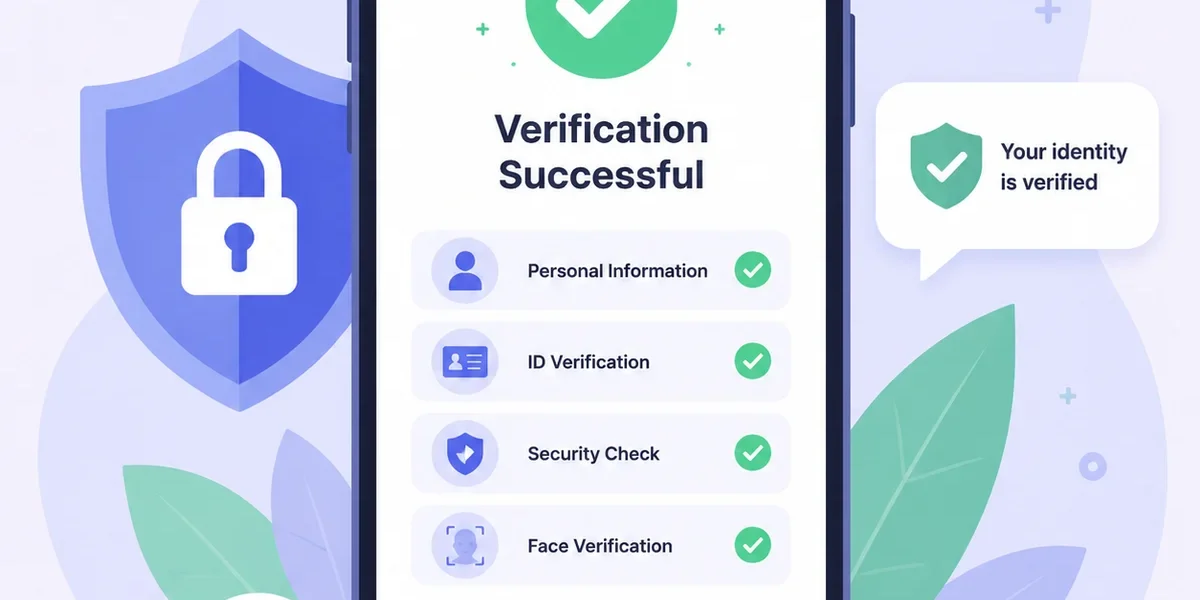
Finding someone to join you for a threesome is one thing. Knowing they’re who they say they are — and that meeting them is genuinely safe — is another. The gap between a profile picture and a real person sitting across from you is where screening lives. Getting good at it isn’t optional; it’s the difference between an experience you remember fondly and one you wish you’d never had.
Learning to verify third partner threesome candidates doesn’t mean treating every person like a suspect. It means building a consistent, respectful process that protects everyone — you, your partner if you have one, and the person you’re meeting. Good screening isn’t about suspicion. It’s about clarity. When you know how to confirm someone’s identity, intentions, and comfort with the dynamic, you can relax into the experience instead of second-guessing it.
This guide covers the practical steps, from the first message to the first meeting. Every step is designed to be doable, non-creepy, and focused on what actually matters.

Table of Contents
- Why Screening Matters More Than You Think
- First Message Filtering: Spotting Serious vs Time-Wasters
- The Video Call: Your Most Important Verification Tool
- Identity Confirmation Without Being Creepy
- The Safety Meetup: First In-Person Protocols
- Red Flags That Mean Stop — Not Slow Down
- Ongoing Vetting: Trust Is Built Over Time
Why Screening Matters More Than You Think
Threesome dating attracts a wide range of people — some genuinely interested in ethical, consensual experiences, and some who are not. The anonymity of dating platforms means anyone can present themselves however they choose. Catfishing, misrepresentation of relationship status, undisclosed partners, and outright bad actors all exist in this space. Screening is how you sort signal from noise.
But screening isn’t just about avoiding the bad. It’s also about identifying the good. Someone who engages thoughtfully with your screening process — who shows up on time for a video call, who volunteers information before being asked, who respects your pace — is already demonstrating the communication skills that make for a better experience. Good screening attracts good people because it signals that you take safety seriously, and serious people respect that.
As Psychology Today notes, the foundation of healthy non-monogamous encounters is mutual trust built through consistent, verifiable actions — not assumptions. Screening is how you turn “I hope this person is safe” into “I’ve done enough to feel reasonably confident.”
This connects directly to the broader process of finding a third partner safely — screening is the verification layer that sits on top of attraction and chemistry.
First Message Filtering: Spotting Serious vs Time-Wasters
Screening starts the moment someone reaches out — or the moment you read their profile. Before you invest time in deeper verification, a quick first-pass filter saves you from conversations that were never going anywhere.
Here’s what to look for in the first few exchanges:
What a serious person’s profile and messages look like: Their profile has more than one sentence. They use complete thoughts. They mention something specific about what they’re looking for, not just “open to anything.” In messages, they ask questions about you — not rapid-fire, but genuinely curious. They respond to what you’ve actually said rather than steering every exchange toward fantasy or logistics. They can articulate why they’re interested in this dynamic specifically, not just “it sounds fun.”
What a time-waster’s messages look like: One-word answers. Immediate sexual questions before knowing anything about you. Refusing to share basic information about themselves while demanding details from you. Messages that only arrive late at night. Pushing to meet immediately without any conversation. Vague answers that change when you ask follow-up questions.
This first filter doesn’t need to be formal. It’s just pattern recognition. If someone can’t sustain a basic conversation for a few days, the odds of them showing up as a respectful, communicative partner are low. Trust the data: the quality of early messages predicts the quality of the eventual experience with surprising accuracy.

The Video Call: Your Most Important Verification Tool
A video call is the single most effective screening tool available to you. Photos can be stolen, outdated, or carefully selected. Text conversations can be sustained by anyone with a keyboard and imagination. But a live video call — even a quick ten-minute one — answers questions that nothing else can.
Here’s what a video call reveals that messaging doesn’t:
- Identity match: Is this the same person from the photos? Do they look like their profile?
- Communication style: How do they handle real-time conversation? Are they present, engaged, and comfortable?
- Relationship dynamics: If they claim to be part of a couple, are both people present? If only one person shows up and the other is “busy” every time, that’s worth investigating.
- Consistency: Does what they say on video match what they’ve said in messages? Inconsistent details surface quickly in live conversation.
- Vibe check: Chemistry is hard to fake on video. You’ll know within a few minutes whether the energy feels right or something seems off.
Suggest a video call naturally: “Hey, we’d love to hop on a quick video chat sometime this week — just to say hi face-to-face before we make plans. Does that work for you?” Make it casual, make it short, and treat it as a normal step — because it should be.
If someone consistently avoids or makes excuses about video calls, treat that as information. There are legitimate reasons someone might be nervous about video, but there are also reasons that don’t hold up. Someone genuinely interested will find a way to make it work. This is part of protecting your identity and privacy while still doing due diligence.
Identity Confirmation Without Being Creepy
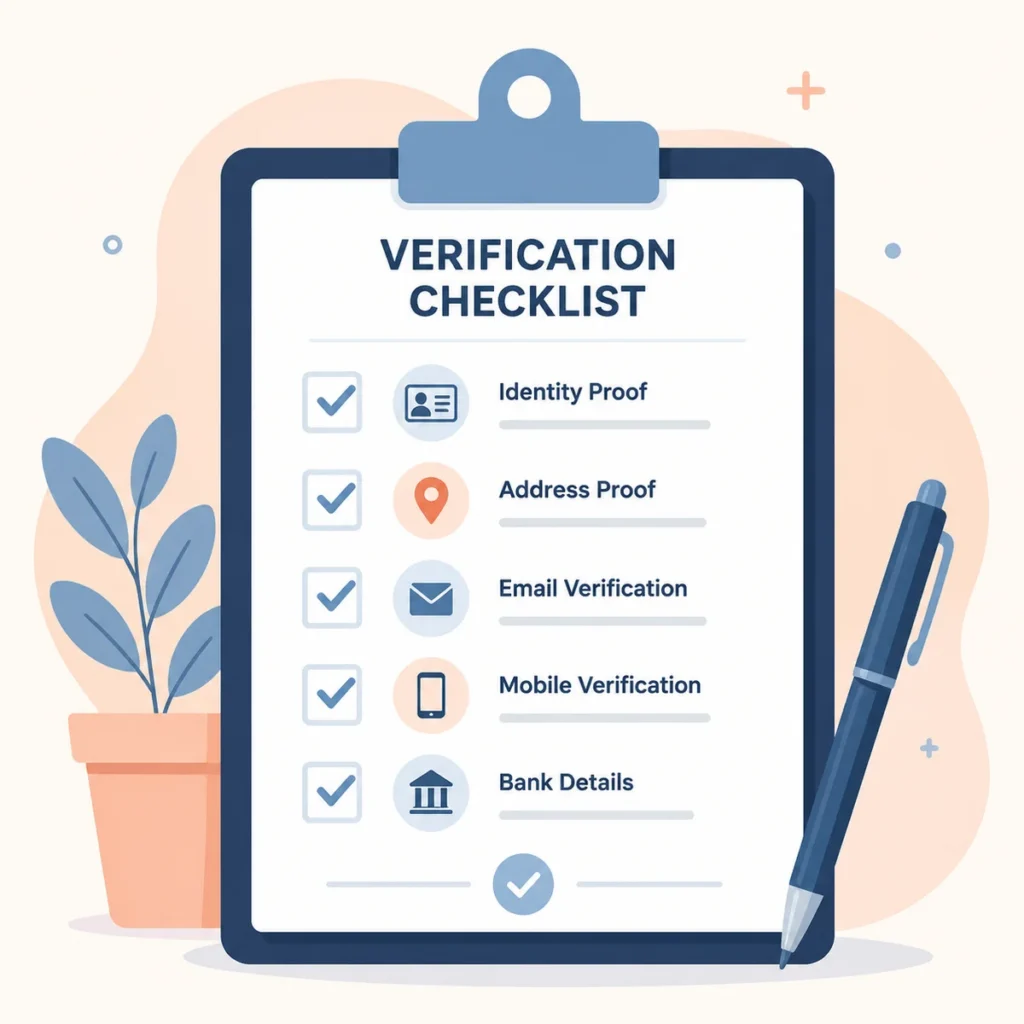
There’s a line between reasonable verification and invasive demands, and it’s worth knowing where that line is. You’re not running a background check agency — you’re making sure someone is who they say they are, operating in good faith, and safe to meet.
Here’s a practical approach to identity confirmation that respects everyone’s privacy:
- Social media cross-reference: After building some rapport, it’s reasonable to ask if they’re comfortable connecting on a platform like Instagram or Facebook. Not to stalk — just to confirm the person matches the profile.
- Consistency over time: A real person’s details stay consistent. Their age, job, relationship status, and location don’t shift from conversation to conversation.
- Couple verification: If you’re talking to someone who claims to be part of a couple, both partners should be visible and engaged at some point in the process — ideally on a video call together.
- Photo verification: You can ask for a casual, specific photo — not an ID, not something invasive. “Could you send a quick selfie with today’s date written on a piece of paper?” This is standard in dating communities.
The key is reciprocity. If you’re asking someone to verify their identity, offer to do the same. “I’m happy to send one too” goes a long way toward keeping the dynamic balanced rather than one-sided.
The Safety Meetup: First In-Person Protocols
The first in-person meeting is where screening shifts from digital to physical. This should be treated as a meetup, not a date that’s expected to lead anywhere. The goal is to confirm chemistry in person, not to jump into anything.
Here’s a protocol that works:
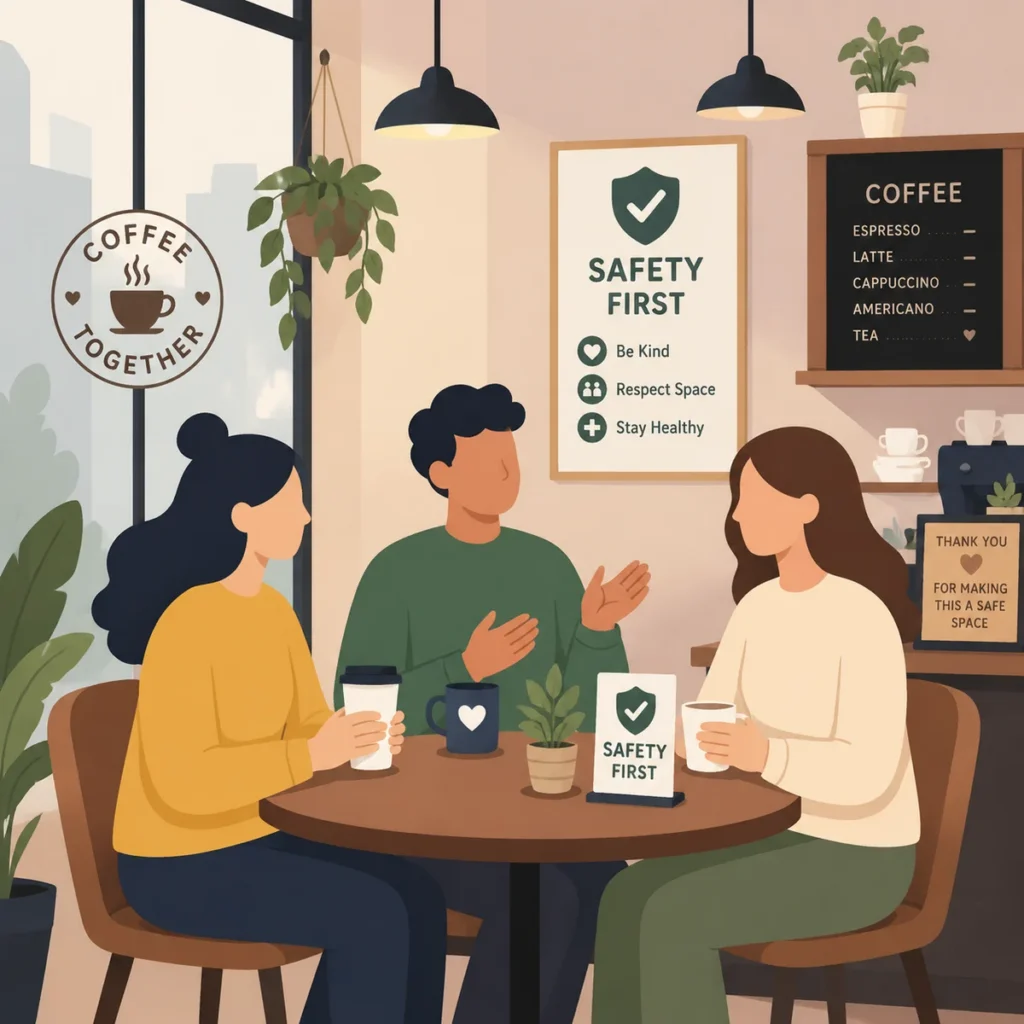
- Public place, neutral ground: Coffee shop, casual bar, park bench. Somewhere with other people around, easy to arrive and leave independently. Not someone’s home, not a hotel, not a club where it’s hard to talk.
- Separate transportation: Everyone arrives on their own and can leave on their own. No one is dependent on anyone else for a ride home. This preserves everyone’s autonomy.
- Set a time boundary upfront: “We’re thinking an hour or so — just enough to chat and see how the vibe feels. No pressure to extend.” This removes the awkwardness of having to invent an exit strategy mid-meeting.
- Tell a friend: Let someone you trust know where you’re going, who you’re meeting, and when you expect to be back. For singles especially, this is non-negotiable.
- Shared understanding: Make it explicit that no physical activity is expected at this meeting. This removes pressure for everyone.
Red Flags That Mean Stop — Not Slow Down
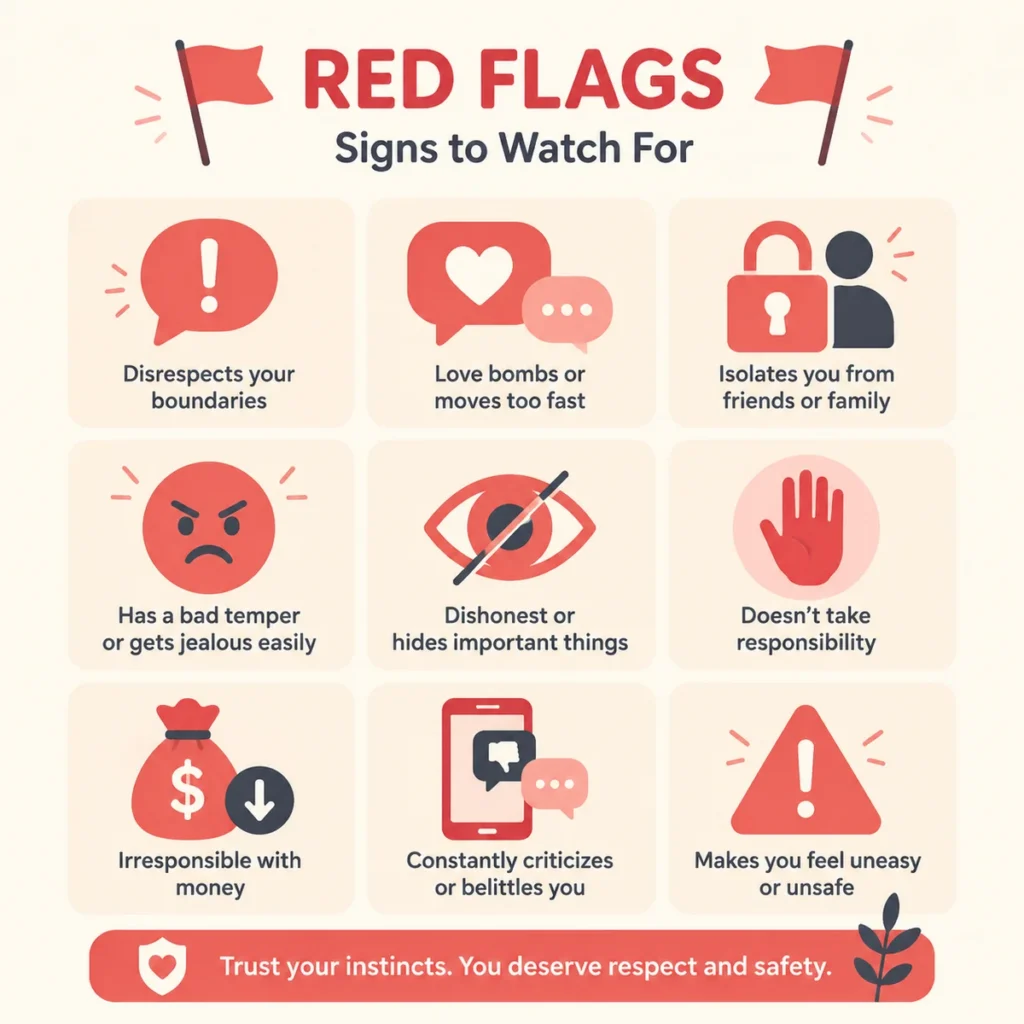
Screening isn’t just about confirming what checks out. It’s equally about recognizing what doesn’t. Some warning signs are subtle — worth noting but not necessarily dealbreakers. Others are hard stops. Here’s how to tell the difference.
Hard stops (do not proceed):
- Refusing a video call after multiple requests while pushing to meet in person.
- Photos that are clearly stolen or don’t match across platforms — especially if they get defensive when asked.
- Pushing for immediate physical activity before any conversation or screening has happened.
- One partner in a couple being completely absent from all communication — no voice, no video, no messages.
- Pressure to drink, use substances, or “relax” in ways you haven’t agreed to.
- Ignoring stated boundaries — even “small” ones — as a test of what they can get away with.
- Inconsistent stories about basic identity details: age, job, relationship status, location.
Yellow flags (pause and investigate):
- Reluctance to share social media — some people genuinely value privacy. Ask why and see if the answer feels honest.
- Nervousness on video — lots of people find video calls awkward. Look for engagement, not polish.
- Vague answers to direct questions — sometimes this is evasiveness, sometimes it’s social anxiety. Follow up and see if clarity improves.
- Changing availability patterns — people’s lives are complicated. But a pattern of cancellations and reschedules deserves attention.
This builds on our guide to red flags to spot in potential partners — screening and red flag awareness are two sides of the same safety practice.
Ongoing Vetting: Trust Is Built Over Time
Screening doesn’t end once you’ve met someone once. If you’re building an ongoing dynamic — whether it’s a recurring arrangement or something that might become a throuple — verification is a process, not an event.
Here’s what ongoing vetting looks like in practice:
- Consistency over time: Do they show up when they say they will? Do they communicate clearly about changes of plan? Reliability is a form of verification — it confirms that someone’s words match their actions over weeks and months.
- Boundary respect: Do they honor the boundaries you set during screening — not just the first time, but every time? Someone who respects a “no” on the third meeting as gracefully as they did on the first is demonstrating character.
- Evolving transparency: As your dynamic deepens, the level of sharing should deepen too. If someone was open early on but becomes cagey later, that shift itself is information.
- Check-in culture: Build periodic check-ins into your dynamic. “Hey, just wanted to check in — is everything still feeling good for you? Anything we should talk about?” This normalizes ongoing communication and makes it easier to surface issues early.
The best screening processes aren’t interrogations — they’re just good communication habits that happen to double as safety practices. When you get good at this, you stop feeling like you’re “screening” at all. You’re just being a thoughtful person who pays attention, asks clear questions, and trusts what the answers tell you.
And once you’ve confirmed that someone is safe and genuine, the next step is making sure everyone’s on the same page about health — which is where sexual health conversations come in. Screening and health communication are partners in the same process: building the foundation that lets everyone relax into the experience.

This article is part of 3Cupid’s Safety & Ethics series. We believe that better screening makes for better experiences — and that everyone deserves to feel genuinely safe before, during, and after.
Frequently Asked Questions
How can I verify someone is real before meeting for a threesome?
The most reliable method is a live video call. It confirms identity, communication style, and consistency with profile information. A photo with a specific request (like holding up today’s date) is a secondary option if video isn’t possible.
What’s the safest way to meet a third partner for the first time?
Meet in a public, neutral location — a coffee shop or casual bar. Everyone should have independent transportation. Set a clear time boundary (one hour is common). No physical activity should be expected at this first meeting. Tell a trusted friend where you’ll be.
What if someone refuses a video call but seems great in messages?
Proceed with caution. Some legitimate reasons exist (privacy concerns, anxiety), but consistent refusal combined with pressure to meet in person is a red flag. Ask directly about their concerns and see if they’re willing to find a compromise.
How do I verify both members of a couple before a threesome?
Both partners should participate in at least one video call together. If one partner is consistently absent, avoidant, or “not into the chatting part,” treat that as a significant yellow flag. A couple seeking a third should be equally invested in the screening process.