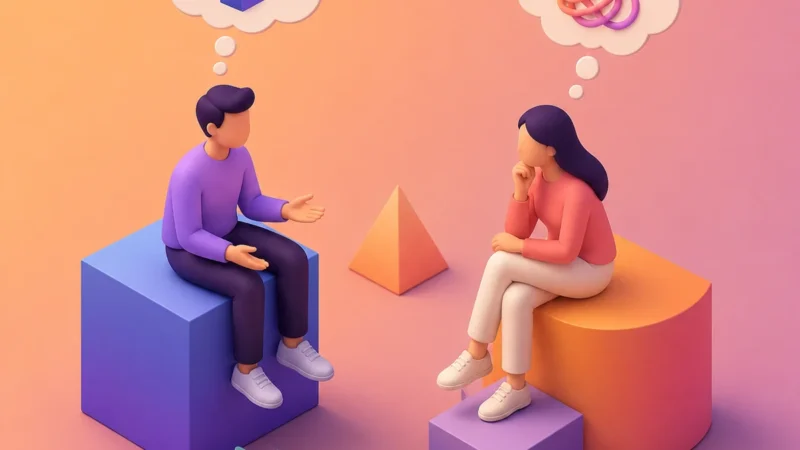
It starts innocently enough. You’re scrolling through profiles together, or your partner mentions what they find attractive in a potential third. And suddenly, one detail lands differently than the rest. The person they described doesn’t look anything like you. The body type is different. The energy is different. And a quiet voice in the back of your mind asks: If that’s what they want, where does that leave me?
This is one of the most common — and least discussed — emotional experiences in threesome dating. It’s not regular jealousy. It’s not relationship insecurity in the usual sense. It’s the specific sting of realizing your partner has a “type” for thirds, and you’re not it. This article is about what to do with that feeling so it doesn’t eat away at something good.

Sitting with uncomfortable feelings about your partner’s attractions isn’t weakness — it’s the kind of self-awareness that makes relationships stronger over time.
Table of Contents
- Why Your Partner’s “Type” Can Trigger Insecurity
- Is It Really About the Type? Or Something Else?
- Separating Preference from Threat
- How to Talk About It Without Making It Weird
- Building Confidence in Your Own Value
- When Your Insecurity Is Actually Pointing at Something Real
- Practical Steps to Feel More Secure
Why Your Partner’s “Type” Can Trigger Insecurity
This isn’t the same as general threesome jealousy. Jealousy usually involves a third person who’s already in the picture. What we’re talking about here is pre-emptive — the discomfort of hearing your partner describe what attracts them before anyone specific is even involved.
Part of what makes this so unsettling is that it challenges a quiet assumption many of us carry: that being our partner’s primary partner means being their only type. In monogamous culture, that assumption mostly holds. But threesome dating introduces a new variable — your partner can be deeply committed to you and genuinely attracted to people who look or feel different from you. Those two things coexist more often than we’re taught to believe.
According to relationship psychology research, attraction in non-monogamous contexts operates differently than the “one person fulfills everything” model most of us grew up with. The diversity of attraction isn’t a commentary on what’s missing — it’s a reflection of how human desire actually works.

The stories we tell ourselves about why our partner is drawn to certain traits are often far more painful than the reality of what they actually feel.
Is It Really About the Type? Or Something Else?
Before you spiral, pause and ask yourself a harder question: is this actually about your partner’s preference, or is it touching something already tender in you? Sometimes “I hate that they’re into that body type” is really “I’ve never felt fully confident in my own body and this brings it to the surface.” Sometimes “why do they want someone so different from me” is code for “I’m scared this means they’re bored with us.”
This doesn’t mean your feelings aren’t valid — they absolutely are. But understanding where they’re actually coming from changes what you do about them. If it’s about your own body image, the solution involves working on self-perception, not policing your partner’s attractions. If it’s about feeling emotionally replaced, the solution involves reassurance and connection, not changing who your partner finds attractive.
One useful exercise: write down exactly what you’re afraid of. Not “I’m afraid they prefer that type” — that’s the surface thought. What’s underneath? “I’m afraid they’ll realize they settled for me.” “I’m afraid they’ll leave.” “I’m afraid I’m not enough.” The deeper fear is what actually needs addressing, and it’s rarely about a physical trait.
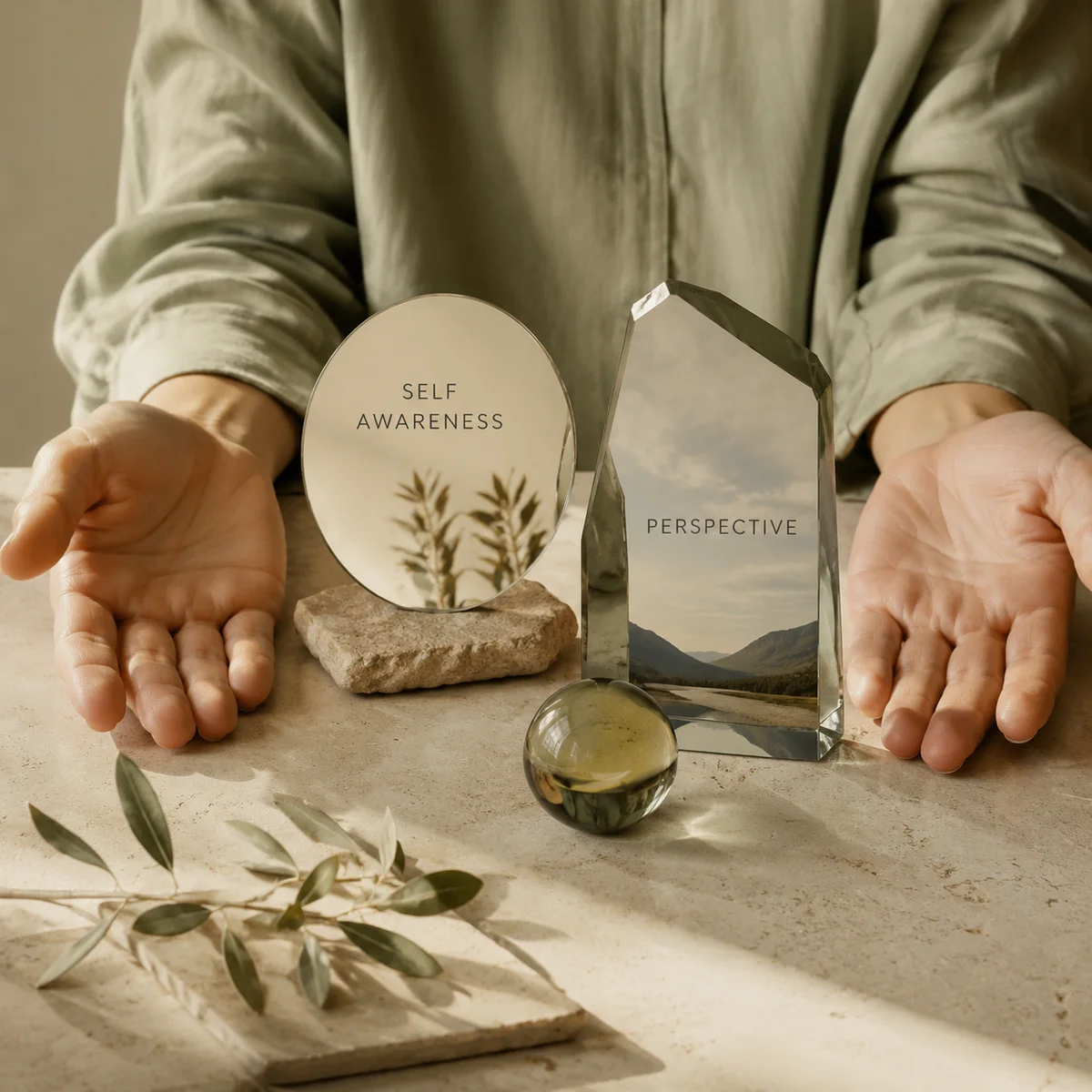
Preferences are personal history, not a ranking system. Your partner being drawn to a type doesn’t mean they’re comparing — it means they’re human.
Separating Preference from Threat
Here’s a reframe that helps a lot of people: your partner having a “type” for threesomes doesn’t mean they wish you were different. It often means the opposite — they’re with you for reasons that go far beyond physical type, which is exactly why they feel safe exploring variety with you as their anchor.
Think about your own attractions. If you’re drawn to exploring with someone of a different gender, height, or energy than your partner, does that mean you value your partner less? Probably not. You can hold deep commitment to one person while being curious about others. The same logic applies in reverse — even when it’s harder to feel.
This is where understanding the difference between jealousy and compersion becomes useful. Compersion — taking joy in your partner’s enjoyment — isn’t something you force. It’s something that becomes available when you genuinely believe their attraction to someone else doesn’t threaten what you have. And that belief is built through experience, not forced positivity.
How to Talk About It Without Making It Weird
So you’ve identified what’s really bothering you. Now comes the part most people dread: bringing it up with your partner without sounding accusatory or needy.
Start with ownership. “I’ve noticed I’m feeling insecure about something, and I want to talk about it — not because you did anything wrong, but because I don’t want it to sit between us unspoken.” That framing does two things: it makes clear this isn’t an accusation, and it signals that you’re bringing this up to protect the relationship, not create conflict.
Be specific about what you need, not what they should stop doing. “I don’t want you to stop being honest about what attracts you” is very different from “I need you to stop talking about that type.” The first asks for support while preserving honesty. The second asks them to hide parts of themselves to manage your feelings — which doesn’t work long-term for anyone.
If you’ve already created a threesome agreement together, this kind of conversation is exactly what the emotional check-in section is designed for. Having a structure already in place makes it easier to raise sensitive topics without it feeling like you’re springing something on them.

The most productive conversations about insecurity start with curiosity rather than accusation — for both people in the room.
Building Confidence in Your Own Value
The most durable solution to type-related insecurity isn’t getting your partner to change what they’re attracted to. It’s building enough confidence in your own value that someone else’s appeal stops feeling like a subtraction from yours.
This isn’t a quick fix, and it’s not about “just loving yourself more.” It’s about accumulating evidence over time that your partner’s attraction to you is specific and deep, not generic and replaceable. Pay attention to how they show up for you outside of physical attraction — the ways they support you, the things they remember, the shorthand you’ve built together. That history is something no “type” can compete with because it’s not in the same category.
Also worth noting: your partner chose you. They continue to choose you. If they wanted to leave you for someone with different hair or a different build, they could. They haven’t. That’s not proof against future change — nothing is — but it’s a meaningful data point that insecurity tends to dismiss too quickly.

Building confidence isn’t about becoming someone else’s type. It’s about becoming someone you respect regardless of who else is in the room.
When Your Insecurity Is Actually Pointing at Something Real
While most type-related insecurity comes from internal fears rather than external threats, there are situations where your discomfort is telling you something worth listening to. Knowing the difference matters.
A partner who consistently compares you to their “type” is not the same as a partner who’s honest about their attractions. If you’re hearing things like “I wish you were more like…” or “the third has the body I really prefer,” that’s not insecurity on your part — that’s disrespect. Emotional triggers exist for a reason, and some of them are legitimate signals that a boundary is being crossed.
Similarly, if your partner dismisses your feelings entirely — “you’re just being insecure, get over it” — that’s a different problem than type preference. That’s a communication and respect issue that would exist regardless of who either of you is attracted to. Pay attention to how your partner responds when you bring this up. The response often tells you more than the original trigger did.
Practical Steps to Feel More Secure
Here’s a concrete roadmap for working through type-related insecurity — not once, but as an ongoing practice:
- Name the specific fear. Write it down in one sentence. Not “I feel weird about their type” but “I’m afraid that if they’re with someone thinner than me, they’ll lose attraction to me.” Specificity makes fears manageable.
- Check the evidence. Has your partner ever given you reason to believe they value you less because of how you look? If yes, that’s a different conversation. If no, let that reality carry some weight.
- Ask for reassurance directly. “I could really use hearing what you love about us right now” is a fair request. You don’t have to earn reassurance by hiding that you need it.
- Set one manageable boundary. Not “you can’t be attracted to that type” — that’s unenforceable. Try “if we’re looking at profiles together and something triggers me, I’d like to be able to say ‘hey, that one’s hitting a sore spot’ without it becoming a whole thing.”
- Expand your own sense of self. Invest in the parts of your identity that have nothing to do with how you compare to others — your friendships, your skills, your interests. The fuller your life is outside the relationship, the less any single insecurity can dominate it.
- Revisit your agreement. If you have a threesome agreement, schedule a review specifically to check in on the emotional section. Agreements aren’t static — they should evolve as you learn what you need.

Seeing yourself clearly means acknowledging insecurity without letting it define how you show up in your relationship. The goal isn’t to never feel insecure — it’s to feel it, understand it, and not let it make decisions for you.
Self-Check: Is This Insecurity or Intuition?
Use this quick reference to distinguish between internal insecurity and genuine red flags when your partner’s “type” bothers you:
| Likely Insecurity (work on yourself) | Possible Red Flag (address together) |
|---|---|
| You feel inadequate even though your partner reassures you | Your partner makes unfavorable comparisons between you and others |
| You compare yourself to their “type” without them bringing it up | They bring up their “type” in ways that feel pointed or hurtful |
| You’re anxious about hypothetical scenarios | They’ve given you real reasons to feel replaced or devalued |
| Your insecurity fades when you feel connected and validated | Your discomfort persists even when the relationship is otherwise strong |
| The feeling is mostly about your own self-esteem history | The feeling is a direct response to something they consistently do or say |
Most type-related insecurity falls on the left side of this table — which is actually good news, because it means the solution is within your control. But if you find yourself on the right side consistently, take that seriously. Your feelings aren’t always accurate, but they’re always information.
This article is part of 3Cupid’s ongoing guide to the emotional side of threesome dating. If you’re working through these conversations with your partner, 3Cupid offers a space where honesty and respect come first.