
Every relationship has tough moments. In ENM relationships, those moments can multiply — because you’re not managing one dynamic, you’re managing several. A partner feels left out. Someone catches feelings. Boundaries shift. A metamour dynamic gets tense. These aren’t signs your relationship is failing — they’re signs it’s real. The difference between relationships that grow through these moments and relationships that break is one thing: knowing how to have difficult conversations in ENM relationships before they become crises.
This guide walks you through the conversations most ENM practitioners eventually face — jealousy disclosures, boundary renegotiations, relationship structure changes — with actual scripts and frameworks you can adapt. No vague advice about “just communicating better.” Concrete, actionable tools.
Table of Contents
- Why ENM Conversations Feel Harder
- The 4-Step Conversation Framework
- How to Disclose Jealousy Without Blame
- Renegotiating Boundaries When Something Isn’t Working
- Discussing Relationship Structure Changes
- Recovering After a Tough Conversation
Why ENM Conversations Feel Harder
Monogamous relationships have a cultural script. Everyone roughly knows the milestones, the expectations, the vocabulary. ENM relationships don’t get that. You’re building the plane while flying it — and the stakes feel higher because the relationship structure itself is less socially reinforced.
There’s also simply more to coordinate. In a dyad, one conversation involves two perspectives. In a V-shaped or triad configuration, one conversation may need to factor in three or four people’s emotional realities. Plus, difficult conversations in ENM relationships often touch on topics mainstream culture has no vocabulary for — compersion, metamour tension, hierarchy renegotiation. You’re not just having a hard conversation; you’re inventing the language as you go.

This is why generic “just be honest” advice falls short. You need a framework designed for the specific complexity of non-monogamous dynamics. Understanding ENM fundamentals provides the foundation, but execution requires tools built for these specific situations.
The 4-Step Conversation Framework
Before diving into specific conversation types, let’s establish a basic framework that works across almost any difficult conversation in ENM relationships. Think of this as your default operating procedure.
- Step 1 — Schedule, Don’t Ambush. “Hey, I’d like to talk about how we’re handling overnights with other partners. Can we set aside 30 minutes tomorrow evening?” This gives everyone time to prepare emotionally rather than getting defensive on the spot.
- Step 2 — State Your Intent Up Front. “I’m bringing this up because I value our relationship and want to find a solution that works for both of us.” Lead with care so the other person doesn’t brace for an attack.
- Step 3 — Use I-Statements, Not You-Accusations. “I feel anxious when I don’t know when you’ll be home” instead of “You never update me on your schedule.” One invites collaboration; the other invites defensiveness.
- Step 4 — Agree on One Actionable Next Step. Don’t end with vague resolutions. End with: “So we agree to text each other an ETA when plans change. I’ll set a phone reminder. Can we check in on this in two weeks?”
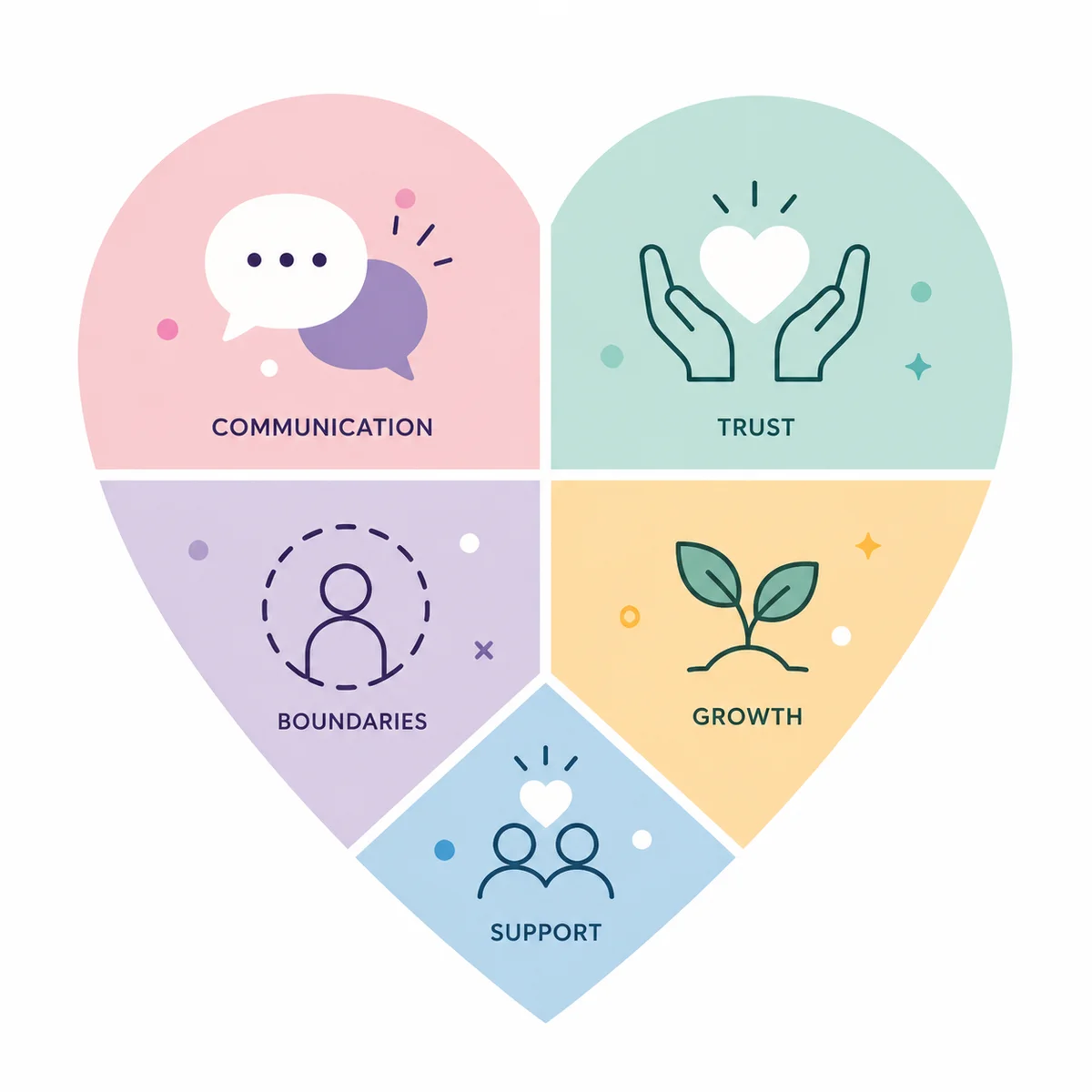
This framework works because it reduces ambiguity — the number one enemy of productive ENM communication. When everyone knows what’s being discussed, why it matters, and what happens next, the emotional temperature drops dramatically. The same principles apply whether you’re managing NRE in ENM or navigating a completely different challenge.
How to Disclose Jealousy Without Blame
Jealousy in ENM isn’t a failure — it’s data. But how you share that data determines whether it strengthens your connection or creates resentment. The goal isn’t to eliminate jealousy; it’s to talk about it in a way that brings you closer rather than pushing you apart.
Here’s a script template for disclosing jealousy:
“I want to share something that’s been coming up for me, and I’m not asking you to change anything yet — I just need you to hear it. When you [specific behavior], I notice I feel [specific emotion]. I know this is my feeling to work through, and I’m doing that. What I need from you right now is just [specific support request — e.g., ‘reassurance that we’re okay’ / ‘a 10-minute check-in after your dates’]. Does that feel doable?”
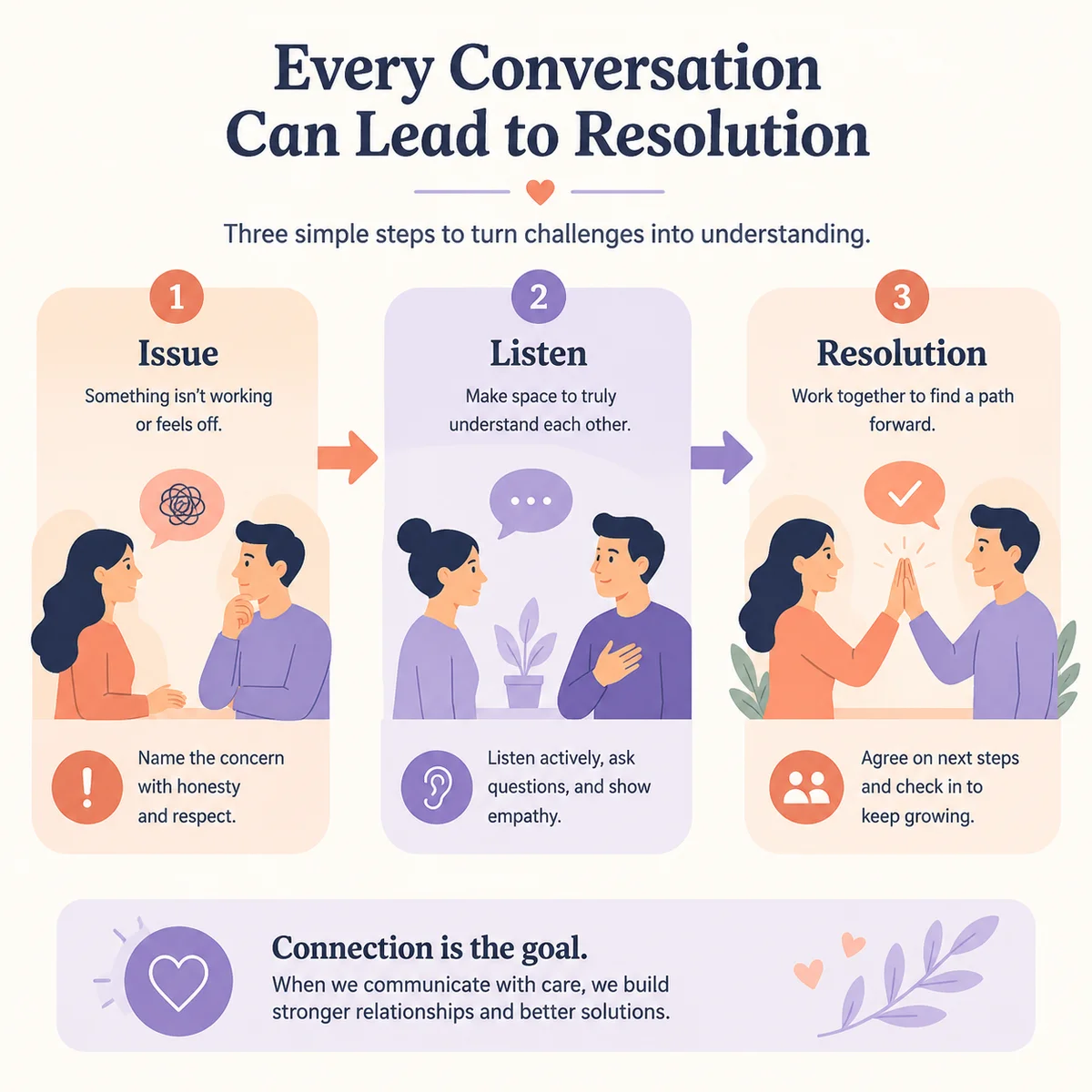
Why this works: You’re not accusing, you’re not demanding rule changes, and you’re owning your emotional experience. You’re also being specific — “when you come home later than expected” rather than “when you’re with other people.” Specificity makes the problem solvable. For related strategies, see our guide on how to talk to your partner about a threesome, which covers foundational communication approaches applicable to any ENM conversation.
Renegotiating Boundaries When Something Isn’t Working
Boundaries in ENM aren’t set in stone — they’re living agreements that need periodic review. Maybe you agreed to “no sleepovers” six months ago, but now it feels unnecessarily restrictive. Or you agreed to “inform each other before dates” but the timing is causing friction.
The biggest mistake people make when renegotiating boundaries is framing it as “I want to change the rules” rather than “Our current arrangement isn’t serving us — can we revisit it?” The second framing positions you as teammates solving a shared problem.
- Don’t: “I think the no-sleepover rule is stupid and I want it gone.”
- Do: “I’ve noticed the no-sleepover rule has been causing me stress when I have to leave late at night. Can we talk about whether there’s a version of this boundary that works better for both of us?”

When renegotiating, use the “What worked / What didn’t / What next” format:
- What worked: “The check-in text before dates has been really helpful — it reduces my anxiety.”
- What didn’t: “The rule about sharing every detail afterward sometimes feels invasive.”
- What next: “What if we tried: you share what you want to share, and I ask if there’s something specific I need to know?”
This format transforms difficult boundary conversations from adversarial standoffs into collaborative design sessions.
Discussing Relationship Structure Changes
This is the heavy one. Maybe you want to shift from parallel polyamory to kitchen-table. Maybe a casual connection is becoming more serious and you need to renegotiate hierarchy. Maybe you’re realizing solo polyamory fits you better than the nested structure you’ve been in.
Structure-change conversations are the most emotionally charged because they touch identity — how someone sees their role in your life. Approach them with extra care.
- Give a preview: “I’ve been thinking about something that affects how our relationship is structured. Can we schedule time to talk about it this weekend?”
- Lead with reassurance: “Before I say anything else: I love you and I’m not going anywhere. This is about how we structure things around us, not about wanting less of you.”
- Be specific about what changes — and what doesn’t: “I’m realizing I need more autonomy in my solo dating life. That doesn’t change our weekly date nights, our shared calendar, or how I feel about you.”
- Give processing time: “You don’t need to have a response right now. Take a few days to sit with this, and let’s talk again Thursday.”

This isn’t about getting a “yes” in one conversation. It’s about opening a door and standing in it together long enough for both of you to see what’s on the other side. According to Psychology Today’s research on communication, the most successful relationship transitions happen when both partners feel heard throughout the process — not just when decisions get made.
Recovering After a Tough Conversation
Difficult conversations can leave an emotional hangover — even when they go well. Both people may feel raw, exposed, or uncertain. What you do in the 24-48 hours after matters.
- Do a soft check-in: “How are you feeling after our conversation yesterday? Anything still sitting with you?” No pressure to re-litigate — just a temperature check.
- Reconnect physically: Not necessarily sexually — a long hug, holding hands while watching something, cooking together. Physical proximity rebuilds safety.
- Don’t rush to “fix everything”: The first conversation is rarely the final one. Let the agreements settle before you evaluate whether they’re working.
- Celebrate the courage: “That was a hard conversation and we got through it. I’m proud of us.” Acknowledging the effort reinforces that difficult talks are worth having.
The relationships that last aren’t the ones that never have hard moments — they’re the ones that learn to walk through those moments together. Learning to navigate difficult conversations in ENM relationships is a skill, not a personality trait. It gets easier with practice — and the payoff is relationships that can handle reality instead of relationships that depend on avoiding it.

Conversation Scripts You Can Adapt
Here are three additional scripts for common difficult ENM conversations. Adapt the language to your voice — the structure is what matters.
Disclosing a New Connection
“I want to let you know I’ve started talking to someone new. Nothing is serious yet, but I wanted you to hear it from me. How much detail would you like at this stage — name and basics, or would you prefer I wait until there’s more to tell?”
Asking for More Quality Time
“I’ve been noticing I miss the quality time we used to have before our schedules got busier with other connections. Can we look at the calendar together and find one recurring slot that’s just ours — no phones, no other partner talk, just us?”
Addressing Metamour Tension
“I’ve noticed some friction between me and [metamour name], and I want to handle it carefully because I know you care about both of us. I’m not asking you to take sides. I’d just like us to figure out what parallel or structured interaction would reduce the tension for everyone. Can we brainstorm together?”
Do’s and Don’ts for ENM Difficult Conversations
- ✅ Do choose a calm, private setting — not the car, not right before bed
- ✅ Do use “I feel” statements to own your experience
- ✅ Do give your partner time to process before expecting a response
- ✅ Do check in a day or two later — “how are you feeling about what we discussed?”
- ❌ Don’t start a difficult conversation within 30 minutes of another commitment
- ❌ Don’t use comparison language — “you spend more time with X than with me”
- ❌ Don’t bring up unrelated grievances to strengthen your case
- ❌ Don’t expect one conversation to resolve everything permanently
If you’re building your ENM journey, having the right community and tools makes all the difference. You can explore connections that align with your relationship style right here at 3Cupid, where thousands of ENM-minded people are looking for the same thing you are.
Editor’s note: This article was written to support adults navigating consensual non-monogamy. All advice emphasizes communication, emotional safety, and mutual respect.