Table of Contents
- Why Board Game Nights in Non-Monogamy Work So Well
- The House Rules Nobody Posts
- Teaching, Quarterbacking and the Rules Arbiter
- Time Boxes and the Long-Game Commitment
- Public Tables, Home Tables and Safety
- When to Say You Are Non-Monogamous
- Leaving a Group Well
Board game nights in non-monogamy work because the group is repeat, low-pressure and structured. You see the same faces every week, the table gives everyone something to do with their hands and their attention, and nobody has to pretend they came for the scenery. The catch is that a game group is a closed set: you cannot swipe past a bad first impression, your partners may be sitting across from you, and whoever owns the game quietly owns the evening. This guide covers the etiquette that keeps a table friendly, how to handle the host-and-owner power most groups never name, when to say you are non-monogamous, and what to do when a group you love gets complicated.
A note on scope, because the internet keeps merging these things. This is about the table: a game store with open play, a weekly home group, a campaign that runs for a year, a public board game cafe. It is not about online play and it is not about collecting. Where those overlap I will say so, and if what you want is the screen version, the guide to gaming and non-monogamy and the piece on ENM Discord servers are the right doors.
Two references worth having open while you read. The APA topic page on friendship is a good baseline for what makes a recurring group stable rather than merely tolerable, and the APA page on social support explains why a standing weekly group does more for most people than a pile of one-off social plans. Both matter here, because a game group is a friendship group first and a dating pool a distant second.
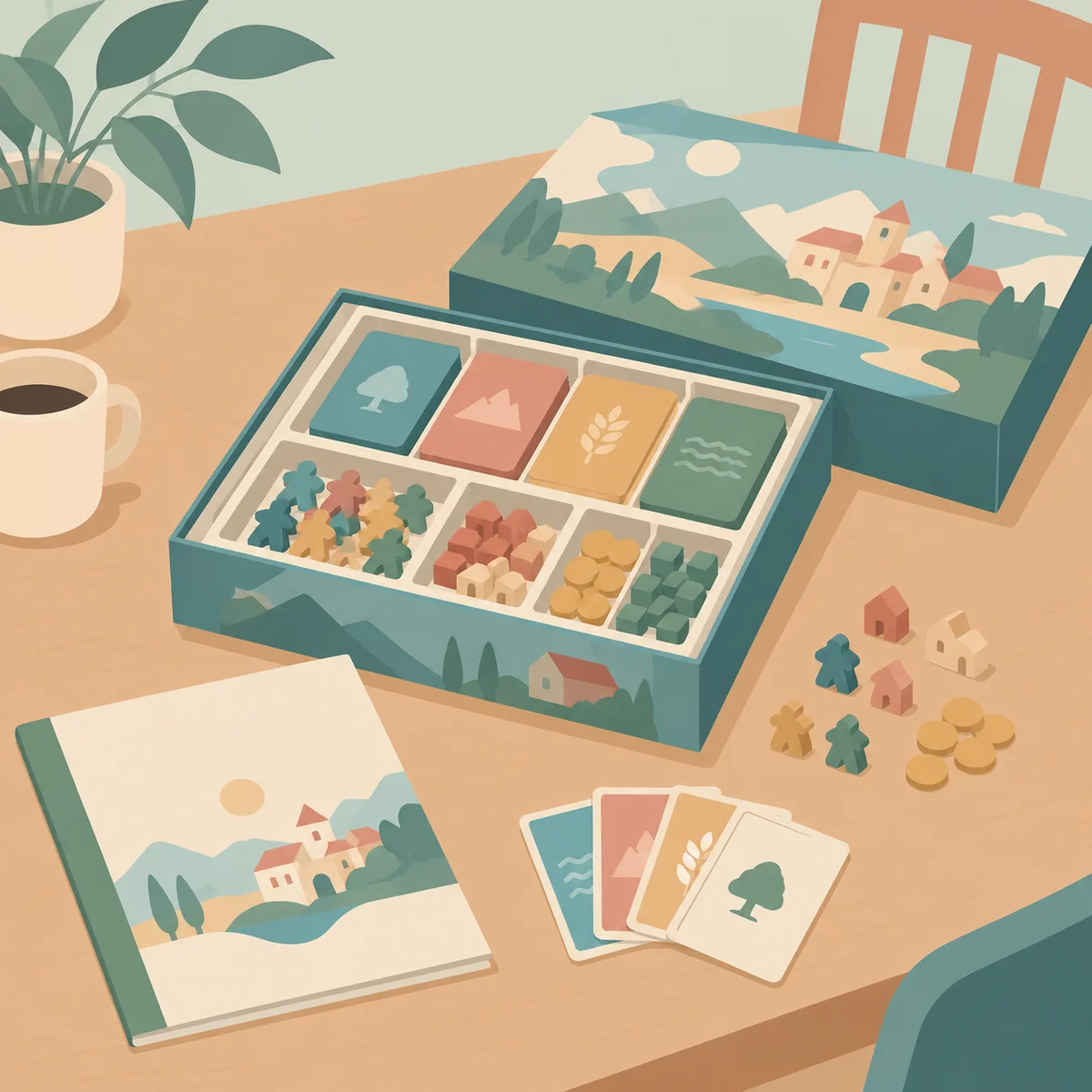
That last point is the one to hold on to. Almost every problem described below comes from somebody treating a standing group as if it were a marketplace. Groups can feel it when they are being shopped, and they close ranks quietly, usually by stopping inviting the person rather than by saying anything.
Why Board Game Nights in Non-Monogamy Work So Well
Three features do the work. First, repetition without obligation: you show up, the same eight or twelve people are there, and you get to be seen being normal over months rather than selling yourself in a single evening. Second, a shared task, so conversation happens alongside something and nobody has to be interesting on demand. Third, and this is the one non-monogamous people notice fastest, the group gives you a place where your partners can meet the people you spend time with without anybody having to announce anything at all.
There is a fourth feature that gets less credit than it deserves. Games make preferences visible. How somebody handles losing, a disputed rule, a slow player, a rule they think is badly written — all of that shows up within two hours, and none of it can be hidden behind a profile. If you are trying to work out whether someone is kind under mild pressure, four players and a board will tell you more than three dates.
Compare that with the scenes people usually reach for first. App-based dating gives you volume and no context. Bar nights give you context and no repetition. An adult recreational sports league gives you both but asks for your body and your Saturday morning. A game group asks for three hours and a willingness to learn one ruleset, which is a considerably lower bar, and the guide to hobbies in polyamory makes the same argument about any standing interest group.
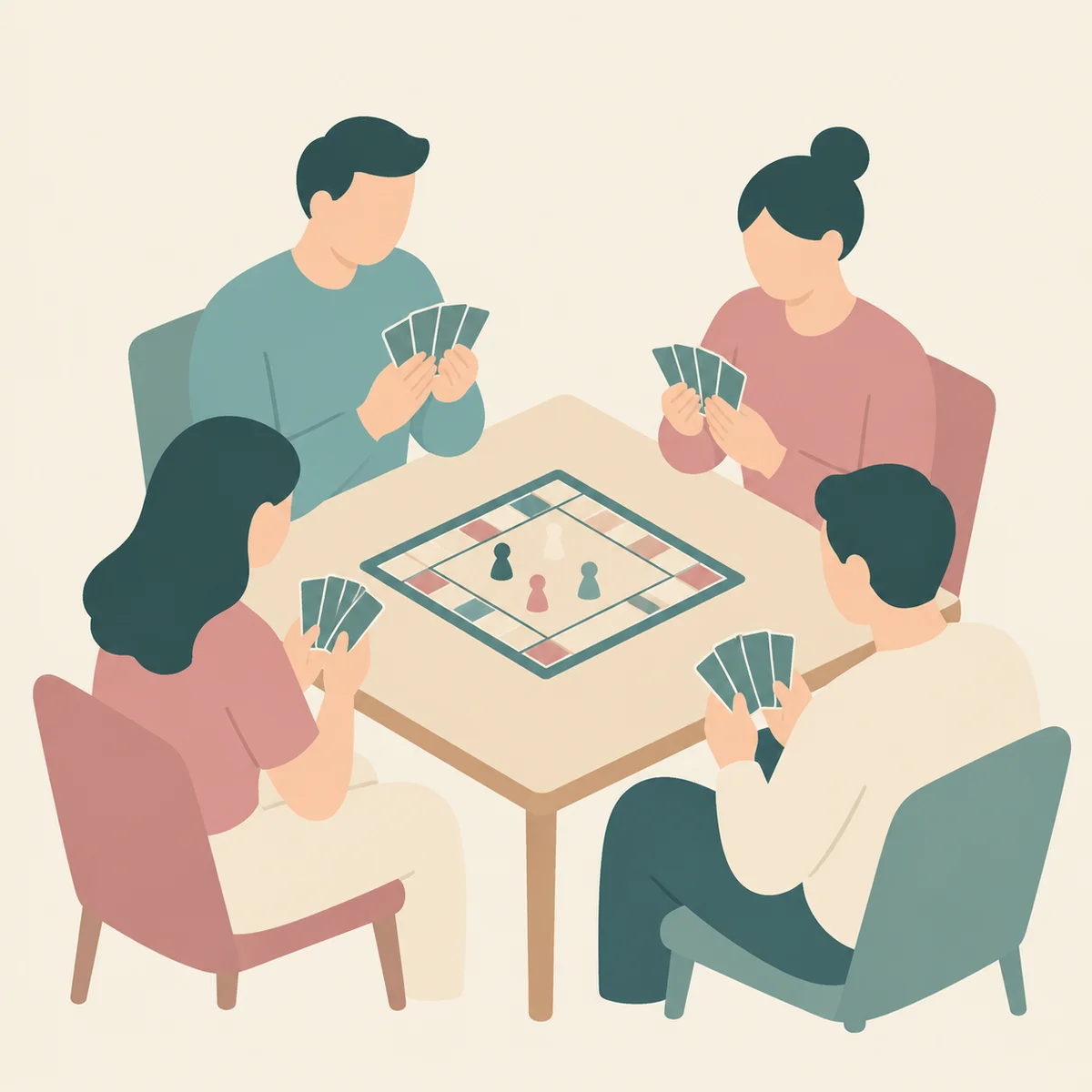
If you have tried structured community events and bounced off them, the contrast is instructive. The guide to non-monogamy at conventions describes rooms that are huge, loud and one-off; a weekly table is the opposite on all three. Plenty of people who find big events exhausting do perfectly well at a table of six, and the piece on introverts and threesome dating is worth reading if that is you.
The House Rules Nobody Posts
Every group runs on unwritten rules. Here are the ones that hold almost everywhere, and the ones newcomers break most often.
- Say yes to the teach. If somebody offers to teach a game, take it. Declining and asking to be taught again later reads as a snub even when nobody means it as one.
- Do not quarterback. Telling another player which move to make on their turn is the fastest way to sour a table. Offer an idea once, then let them play their own game.
- Ask before you rearrange the surface. Boxes, snacks and drinks on a shared table belong to everybody for the evening.
- Handle the components like they are somebody’s property, because they are. Sleeved cards, painted miniatures and custom inserts cost real money and real hours.
- Be on time or say so. A five-player game that starts forty minutes late because one person was vague costs everybody an hour they did not agree to.
- Lose well and win quietly. Neither needs commentary, and both get noticed.
- Match the quietest person, not the loudest. Trash talk is fine at some tables and poison at others, and you cannot tell which until week three.
The quarterbacking rule deserves an extra paragraph, because it is the clearest transferable skill in the whole hobby. Non-monogamy already asks you to let adults run their own lives even when you can see a better move. A game table is a weekly, low-stakes rehearsal for exactly that, and people who cannot do it with a handful of cards usually cannot do it with a partner either.
Teaching, Quarterbacking and the Rules Arbiter
Two authority roles exist in most groups, and neither is ever formally assigned. The first is the owner: whoever bought the game, carried it, and knows the rules. The second is the arbiter: whoever everybody looks at when a rule is disputed. Both are fine when held lightly and corrosive when held tightly.
An owner who teaches generously makes a table better. An owner who treats their collection as leverage — who decides what gets played, who explains slowly to people they like and quickly to people they do not, who can make any evening feel like a favour — is running a small fiefdom, and the group will start declining invitations without ever saying why. If you are the owner, the fix is easy and slightly annoying: rotate who chooses, and teach at the same speed to everybody.
| Moment | What many groups say | Why it works |
|---|---|---|
| The teach is turning into a lecture | Could we start and pick the rest up as we go? | Most rules make sense once you are holding cards. |
| The owner always picks the game | I will bring something next week, can we play mine? | Rotating the choice rotates the power. |
| A rules dispute stalls the table | House rule for tonight, check the book after. | Keeps the evening moving without declaring a winner. |
| One player is being quarterbacked | It is their turn, let them look. | Names the pattern without naming a person. |
| The game is running long and you are done | I am going to sit out the next one. | Leaving a game is allowed; leaving in silence is what stings. |
| Somebody wants to join a full table | We are at max players, but there is a two-player game over there. | A real alternative beats a soft maybe. |
None of those sentences apologises, and none explains at length. That is deliberate: long justifications invite debate, and the same logic is laid out at greater length in how to withdraw consent cleanly and in the piece on rules, boundaries and agreements.

One structural point to add. If your group runs a long campaign with a game master, that role holds narrative power for months: who gets focus, whose character gets a moment, whose ideas get adopted. Rotate it, or at least name it out loud. A campaign that quietly runs for a year on one person’s attention is a power arrangement wearing a game as a costume.
Time Boxes and the Long-Game Commitment
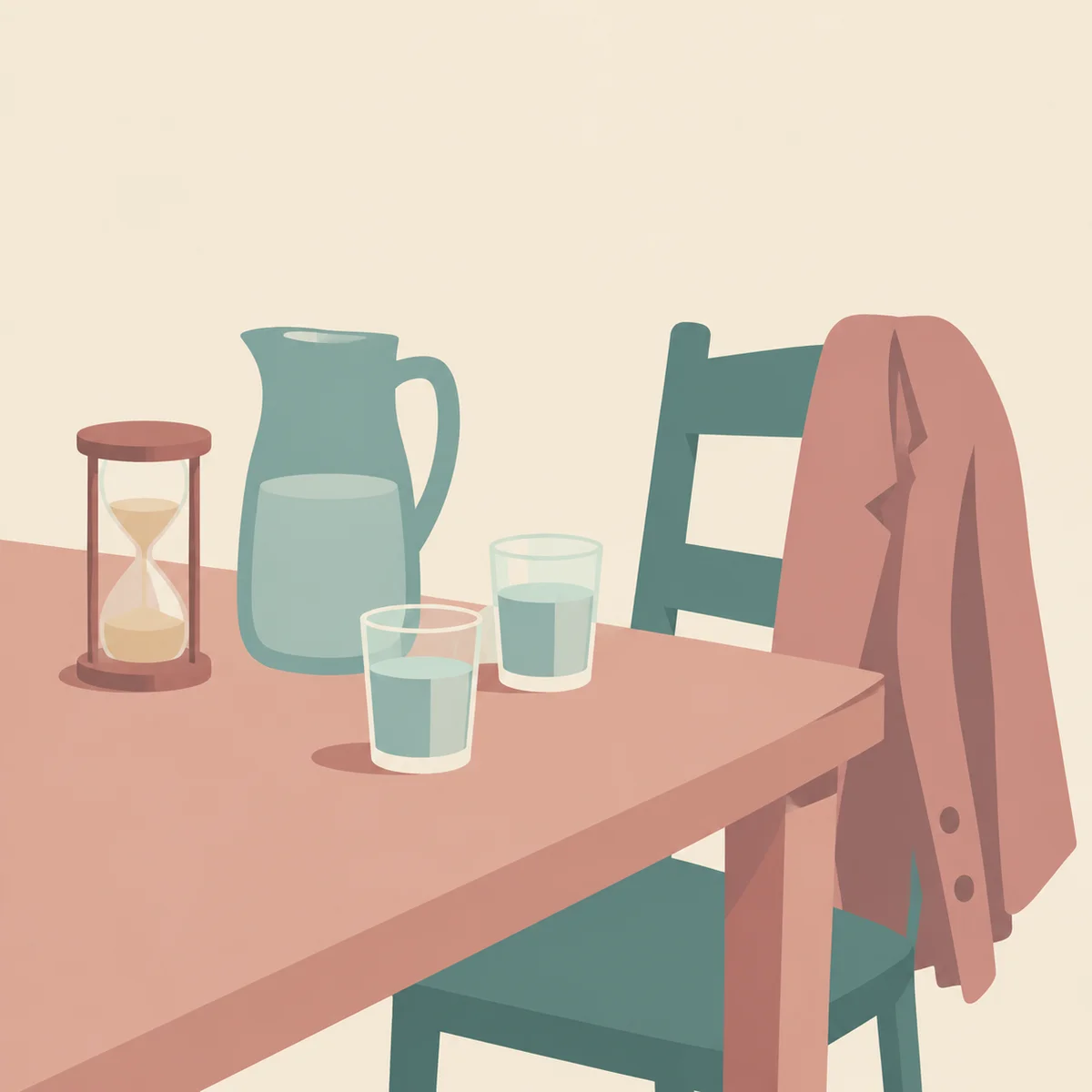
A four-hour game is a four-hour commitment that most people agree to without noticing. That is the most common failure mode in home groups: somebody says yes to an evening and discovers at hour three that they are stuck in a session they cannot politely leave.
- Ask how long it runs before you sit down, not after.
- Agree an end time out loud at the start, including a hard stop.
- Prefer games with a natural midpoint when the group has mixed stamina.
- Keep one short game in reserve so late arrivals and early leavers both land somewhere.
- Say the stop time again when somebody suggests one more round.
- Treat a stated end time as part of the agreement, not as a preference.
For anyone juggling more than one relationship, this is the same problem as time management in threesome dating and fair scheduling without keeping score, just with dice on the table. A group that respects a stated end time is a group worth keeping. A group that treats it as negotiable every single week is telling you something about how it will handle your other limits too.
Public Tables, Home Tables and Safety
Where you play changes what you owe each other. A store or a cafe is a public venue: staff are present, there is a door you can walk out of, and nobody invited you into their home. That is the right setting for a first visit, and the same reasoning that makes the first meetup safety guide worth reading applies here even though nothing romantic is on the agenda.
Home tables are better in some ways and worse in others. You get quiet, space and a longer session. You also get a host whose house, whose rules, whose pets and whose fridge set the terms, and a guest who cannot simply leave without a small production. Two practical notes: a good host says at the start where coats go, what is off limits and whether there is anywhere quiet; and anyone who feels off should be able to say I am going to head out without being talked out of it.
Two details people forget. Many stores run all-ages open play, which means teenagers at the next table and a firm limit on what anybody says out loud, so check before you assume an adult room. And drinks show up at home groups far more often than at store nights, which is where the guide to alcohol and healthy limits and the sober ENM guide both earn their place.

Cameras, finally. Somebody always photographs the final board state, and a group photo can put you in a public album next to people you would rather not be linked with. Ask before posting anyone, and read social media privacy in non-monogamy and the guide to ENM profile photographs before you end up in somebody’s highlight reel.
When to Say You Are Non-Monogamous
Not as an opener and not as a warning label. Disclosure belongs at the point where it becomes relevant to the other person: when you swap contact details, when somebody asks about your weekend in a way that would require a lie, or when it starts to look likely that you will keep showing up.
A sentence that works at most tables: I should say, I have partners / we are open. Happy to keep playing either way. It states the fact, asks for nothing, and the last clause makes clear the game is not conditional on their reaction. If you want the longer version of the decision, disclosing ENM status while dating walks through the pacing, and if the part that worries you is the wider world finding out, handling social stigma is the honest version of that conversation.
The reason to get ahead of it is structural rather than moral. Game groups are small and extremely talkative. Being the person who mentioned it early is a much better position than being the person somebody heard about secondhand. And if you happen to be in a group where it would be a problem, finding that out in week two costs you far less than finding out in month six.
Two adjacent situations are worth naming. If you arrive with a partner and one of you gets asked out, decide in advance what happens rather than discovering it at the table; group chat etiquette is the smaller-scale version of the same coordination problem. And if you are watching a partner get along very well with somebody at the table, that is a mild, repeatable exposure, which is exactly why understanding jealousy in non-monogamous relationships and cultivating compersion both treat recurring settings as useful practice grounds rather than hazards.
Leaving a Group Well
Groups end for boring reasons: a host moves, a campaign wraps, somebody’s shift changes, two people split up and the table becomes awkward. Most of those are survivable if you leave plainly.
Say it to the organiser rather than fading out, give a reason that is true and short, and do not ask the group to arbitrate anything. If you are leaving because of one person, you can say that without asking anybody to choose. And if you are the one staying while somebody else goes, resist the urge to narrate it: the fastest way to lose a group is to turn it into a venue for your side of the story.
If it is going well and you want more from somebody at the table, that is where the companion piece on dating someone from your board game group picks up. Everything above is about the harder and more useful job: keeping the table itself worth showing up to, whoever else turns out to be sitting at it.
Is a game group a good place to meet non-monogamous people?
It is a good place to meet people and a slow one to find out anything. The advantage is that you get months of observed behaviour before anybody risks anything; the disadvantage is that treating the group as a dating pool is the fastest way to stop being invited. Go for the game, let the rest be a bonus.
Do I have to tell the group I am non-monogamous?
No, and you should not make an announcement of it. Mention it when it becomes relevant to the person in front of you: when you swap contacts, when a question would force a lie, or when it looks like you will keep coming. Early and casual beats late and formal.
What if I do not get on with the person who hosts?
Then you have three honest options: find a second group, host a night yourself, or say plainly that the format is not for you. What does not work is accepting invitations for months while quietly resenting the person whose living room you are sitting in.
How do I handle dating two people in the same game group?
Slowly, and with both of them knowing. A shared table means your relationships are visible to each other whether you planned that or not, so the guide to metamours in polyamory and navigating polycule conflict without taking sides are the relevant reading. Keep game night as game night at least some of the time.
Editor’s note: this is general information for adults, not legal, medical or professional advice. Game groups are self-governing and vary enormously in who hosts, who owns the games and what the room allows. Nothing here is a rule anybody has to follow; it is a set of questions that are easier to answer before you sit down than after. Venue policies on alcohol, age and photography differ by shop and by country, and if a group ever makes you feel unsafe, the venue staff and the door are the relevant resources, not this page.
Board game nights in non-monogamy reward the slow approach: show up, learn the games, be the person who teaches patiently and loses well, and let the group decide what it wants to be. Whatever else comes of it, a standing table with people who are glad to see you is worth more than most of what the apps are offering. If you are building that from scratch rather than joining one, finding your ENM community in a new city and organising an ENM meetup both start in the same place — one room, one recurring date, and the same faces often enough to become familiar.