Table of Contents
- What Dating Someone from Your Board Game Group Changes
- Read How They Play Before You Read How They Flirt
- The Ask, and Where to Make It
- Telling the Group Without Making It Their Business
- When You Already Have Partners
- If It Ends: The Table Survives
- A Short Pre-Ask Checklist
Dating someone from your board game group is different from dating someone you met anywhere else, and the difference is not the romance. It is the table. A game group is a standing appointment with a fixed cast: you will see this person every week whether it works out or not, your friends will watch the whole thing happen in real time, and there is no version of a clean break that does not involve other people. The short answer is to read how they play before you read how they flirt, ask away from the table, tell the group once and briefly, and agree what happens if it ends before you start.
The good news is that a table gives you something dating apps cannot: months of observed behaviour under mild pressure. You already know how this person handles losing, being corrected, waiting, and not getting their own way. That is a much larger sample than three dates, and it is free.
Two references that help frame it. The APA topic page on healthy relationships sets out the basics of what makes a new connection stable, and the womenshealth.gov section on relationships and safety is a useful yardstick for what pressure looks like when it arrives wrapped in friendliness. Neither is about games; both are about the part that tends to go wrong.
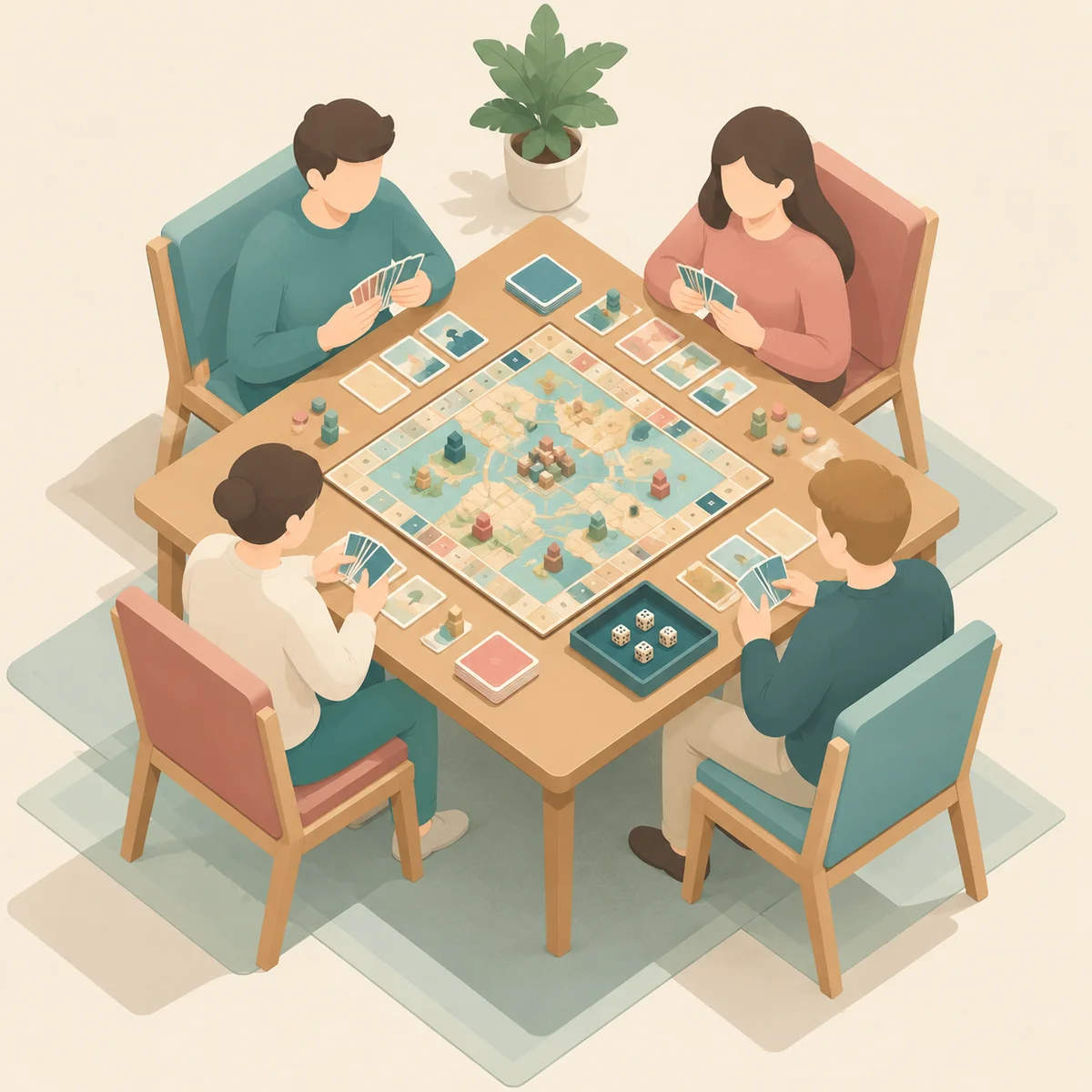
One framing note before the specifics. A game group is not a pool of candidates and nobody in it is auditioning. The reason this works at all is that everyone is there to play, and the reason it goes wrong is somebody treating the table as a roster.
What Dating Someone from Your Board Game Group Changes
Four things, concretely. You lose the option of a slow fade. The group sees the arc. Any ending has an audience that did not choose to be one. And the activity itself, the thing you bonded over, belongs to the group rather than to the two of you, so neither of you gets to keep it.
There is a quieter change as well. In most dating you can control how much two parts of your life touch each other. In a game group you cannot: your new person is going to end up in a chat with your other friends, possibly with your other partners, and certainly with whoever runs the campaign. If you lean toward kitchen-table polyamory that is a feature. If you prefer parallel, it is a problem worth naming early rather than discovering in month four.
The closest comparisons are other standing scenes, and they all land on the same trade. Dating a teammate in non-monogamy and dating a fellow dancer both describe situations where the group outlives the romance, and the lesson from all three is identical: the scene comes first, because the scene is the thing that keeps showing up.

Which suggests the useful first question, and it is not do I like them. It is can I sit at this table for another year if this goes badly. If the honest answer is no, the cost of asking is much higher than the cost of waiting a few months and seeing whether the feeling survives.
Read How They Play Before You Read How They Flirt
Play style is a genuinely useful compatibility signal and it is available to you for free, long before you have to risk anything.
- How they lose. Do they stay in the room and stay kind, or go quiet and punish the table for it?
- How they handle a rule going against them. Argue the point once and drop it, or relitigate for an hour?
- How they treat a slower player. Impatience here is rarely confined to games.
- Whether they teach generously. People who explain rules kindly tend to explain feelings kindly too.
- Whether they notice who has not spoken. Some players run the table; others make room.
- How they handle being wrong in front of other people. This is the big one, and it takes about four weeks to see.
One caution: do not over-read a single session. Everyone has a bad night, and a person who is quiet at a table of strangers may be entirely different with four people they know. What you are looking for is a pattern across several weeks, not one telling moment that confirms what you already hoped.
The piece on staying present during group experiences is worth reading here for a different reason. A competitive, heightened setting flatters people and distorts judgement in predictable directions, and a game table is exactly that kind of setting. Enjoy it, then check your conclusions in a quieter room.
The Ask, and Where to Make It
Away from the table. Not during a game, not in the group chat, and not in front of the other players, all three of which put somebody in the position of answering publicly to an audience they did not choose.
The best moment is the natural end of a night: people are packing up, somebody is walking to the car or the bus stop, the group has thinned to two or three. That gives you a conversation with a built-in ending and an easy exit for both of you, which is more valuable than any amount of atmosphere.
A sentence that works: I have liked getting to know you here. Would you want to get a coffee sometime, just the two of us, no game? It is specific, it is low stakes, it does not ask anybody to define anything, and the no game part tells them you are proposing something different rather than a fourth session of the same thing.
Then the part people skip: make it easy to say no. Happy to leave it exactly as it is if you would rather is not self-deprecation, it is information. Somebody who has to manage your disappointment in front of a room of mutual friends will say yes when they mean maybe, and you will both pay for that for a year.
| Before you ask | The question to answer | Why it matters |
|---|---|---|
| Can you stay in the group if it ends badly? | Be honest. If no, wait. | The group outlives most short romances. |
| Do your existing partners know this is possible? | Tell them before, not after. | Surprises land far worse than plans. |
| Is there a power gap at the table? | Owner, organiser, game master. | Asking across a power gradient is never neutral. |
| Where will you ask? | Away from the table, not the chat. | Public asks create public pressure. |
| What happens the week after a no? | You still show up, and you are normal. | That is the whole difference between fine and awful. |
The power-gap row is the one people skip. If they own every game, organise every night, or run the campaign, they cannot fully refuse you without risking their standing in the group, and you cannot fully hear a no. The mechanics are in how to withdraw consent cleanly; the principle is that a real yes needs a real option to say no.
If the answer is no, the follow-through is the actual test. Show up the next week, play normally, do not narrate it to anybody, and do not quietly stop coming. A group can absorb an unrequited ask easily. What it cannot absorb is a disappearance, because everyone will fill the silence with their own explanation.
Telling the Group Without Making It Their Business
You do not owe the group an announcement, and you should not make one. You are dating; the group is not a family meeting. What you do owe everyone is enough honesty that nobody has to pretend, and enough discretion that nobody feels drafted into something.
The standard that works: tell the organiser, tell anyone who is directly affected, and let the rest arrive on its own. If it becomes the thing everybody is whispering about, that is usually a sign you told one person too many rather than too few.
The practical details matter more than the announcement. Do not turn the table into a stage — no pet names, no inside jokes that need explaining, no sitting together every single week if the group rotates. Do not use the group chat as a shared diary; group chat etiquette exists precisely because everyone else can read it. And do not ask friends to carry messages between the two of you.
If there is a metamour angle — you are dating somebody whose partner also sits at the table — say so early and plainly. The guide to metamours in polyamory and building healthy metamour relationships both cover this, and the complication is rarely the jealousy. It is that the group now contains a structural relationship nobody designed and everyone can see.

One more practical point. A group album is a semi-public record, and the two of you appearing in it together is information you may not want distributed. Social media privacy in non-monogamy is the longer version of that note, and it is worth agreeing between yourselves before someone else decides for you.
When You Already Have Partners
If you are already non-monogamous, the table version of this is mostly logistics, and the logistics are the part people underestimate.
- Say it before the first date rather than during it. They should not hear it from a group member.
- Ask whether your partners want to meet them at all, and do not assume the answer is yes.
- Decide whether your new person joins the main night or a separate one.
- Keep game night as game night at least sometimes, so one relationship does not swallow the room.
- Do not drift from one relationship into another at the same table without anybody noticing.
That last one sounds obvious and is broken constantly. A standing group is the easiest place in the world to let one connection slide into another over months without a single conversation, because it all looks like the same activity from the outside. Time management in threesome dating is the mechanics of catching it; rules, boundaries and agreements is the framework for preventing it.
If you are the partner watching this happen, the useful question is not whether you approve. It is what you would need in order to be comfortable at a table you share. Sometimes that is an introduction, sometimes it is a separate night, and sometimes it is a wider conversation about how much of your social life you want intertwined. All three are reasonable, and all three are much easier to ask for in advance than to retrofit.
If It Ends: The Table Survives
This is the section that makes dating inside a group different from dating anywhere else, so it is worth being blunt about it.
Agree the ending before you need it. Not a contract, just one sentence said out loud: if this stops, we both keep coming, we do not ask the group to take sides, and neither of us uses the table to make a point. People who have said that sentence mostly keep it. People who have not, mostly do not, and the group pays for it either way.
Then do the unglamorous things. Do not stop coming. Do not let the group sort itself into seats, nights or camps. Do not brief people one at a time, which is how a two-person problem becomes a twelve-person one. And if it is genuinely unbearable, take a break from the group and say why in one sentence rather than vanishing and letting everyone guess.
If you are a friend watching two people at your table split, the useful move is to stay neutral and keep the game going. Groups survive breakups when the group declines to become a courtroom. The guide to debriefing as a couple and the piece on aftercare are both, underneath, about the same skill: closing something cleanly so the people around it do not have to manage the fallout.

And if it goes well for months, the table shifts again. You stop being two people who are dating and become a unit the group plans around, which is comfortable and worth watching. The guide to regular relationship check-ins is the obvious place to notice whether you still have separate lives at that table, and the boundaries checklist is a quick way to see whether anything drifted without either of you quite saying so.
A Short Pre-Ask Checklist
Five questions, and if you cannot answer yes to most of them, wait a month and ask again.
- Have I watched them lose, wait and be corrected, more than once?
- Can I stay in this group if this ends badly?
- Do my existing partners know this is on the table?
- Is there a power gap I am choosing to ignore?
- Am I asking somewhere private, with a real option to say no?
None of that is romantic, and all of it is why this can go so well. You get to know somebody across months before either of you risks anything, which is a luxury almost no other setting gives you.
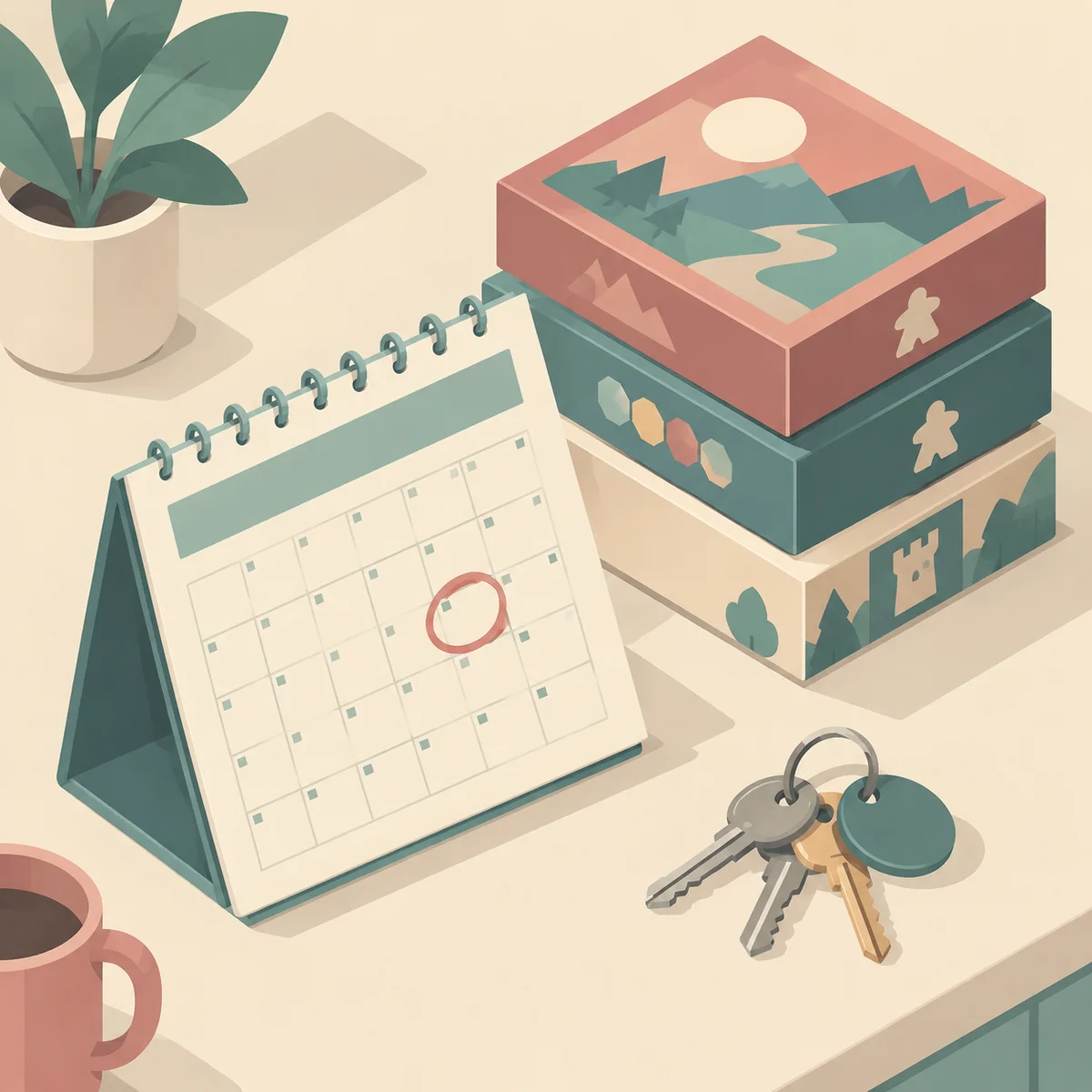
The table itself is worth protecting either way, and the companion piece on board game nights in non-monogamy covers how to do that — who owns the games, whose house it is, and what happens when a group you love gets complicated.
Is it a bad idea to date inside a hobby group?
Not inherently, but it is a different risk profile. The group is the shared thing, so the cost of a messy ending is paid by people who did not choose to be involved. If you can both picture sitting at the same table a year from now either way, the risk is manageable.
Should I ask during game night or afterwards?
Afterwards, and away from the other players. An ask made in front of the group puts somebody in the position of answering to an audience, which turns a private question into a public one. The walk to the car and a coffee invitation both work better.
Do we have to tell the group we are dating?
You do not owe an announcement, but you do owe the people affected enough honesty that nobody has to pretend. Tell the organiser, tell anyone directly affected, and let the rest arrive naturally. Avoid turning the table or the chat into a stage.
What if my partner is also in the group?
Then it is a metamour situation with an audience, and the sooner everyone knows the shape of it the better. Read the guide to metamours in polyamory and navigating polycule conflict without taking sides, and decide together whether game night stays shared or splits.
Editor’s note: this is general information for adults, not legal, medical or therapeutic advice. Nobody in a hobby group owes anybody a relationship, and no one owes the group an explanation for their private life. What follows is about reducing avoidable damage to a shared social space, not about telling anyone who they may or may not ask out.
Dating someone from your board game group works best when you treat it as a slow thing: months of watching somebody be themselves, one private question, an answer you make genuinely easy to refuse, and a plan for the ending before you need it. The table will still be there next week either way, and that is the point — it is the reason this can start gently, and the reason it is worth handling well.