If you’re feeling jealous in a non-monogamous relationship, here’s something most advice articles won’t tell you upfront: jealousy is not a sign that ENM isn’t for you. It’s a sign that you’re human. The goal isn’t to eliminate jealousy — it’s to understand it, work with it, and stop letting it drive your decisions. Plenty of people who have been happily polyamorous or in open relationships for years still feel pangs of jealousy. The difference is they’ve learned what to do with it.
This article breaks down where jealousy actually comes from in non-monogamous dynamics, how to identify your specific triggers, and what to do when that knot tightens in your stomach — whether you’re the one feeling jealous or the one watching your partner struggle with it.
Table of Contents
- Why Jealousy in Non-Monogamy Is Normal — Not a Red Flag
- Where Jealousy Actually Comes From (The Root Causes)
- The 5 Most Common Jealousy Triggers in ENM Relationships
- How to Talk About Jealousy Without Making It Worse
- Practical Tools for Working Through Jealousy
- When Jealousy Signals a Deeper Problem
- Building a Relationship Where Jealousy Doesn’t Control You
Why Jealousy in Non-Monogamy Is Normal — Not a Red Flag
There’s a persistent myth in ENM communities that “evolved” people don’t get jealous — that if you’re truly polyamorous or truly comfortable with non-monogamy, jealousy just doesn’t happen. This idea does real damage. It makes people feel broken when they experience a completely normal emotion, and it discourages them from talking about it.
Jealousy is a signal, not a character flaw. It’s your brain’s way of flagging something that needs attention — an unmet need, an insecurity, a boundary that feels shaky, or sometimes just a reminder that you care deeply about this relationship. According to research discussed by Psychology Today, jealousy serves an evolutionary function of protecting valued relationships — but in modern ENM, that protective instinct needs translation, not suppression.
What distinguishes healthy ENM from struggling ENM isn’t whether jealousy shows up. It’s whether people have the tools to process it together rather than letting it fester or using it to control each other’s behavior.
Where Jealousy Actually Comes From (The Root Causes)
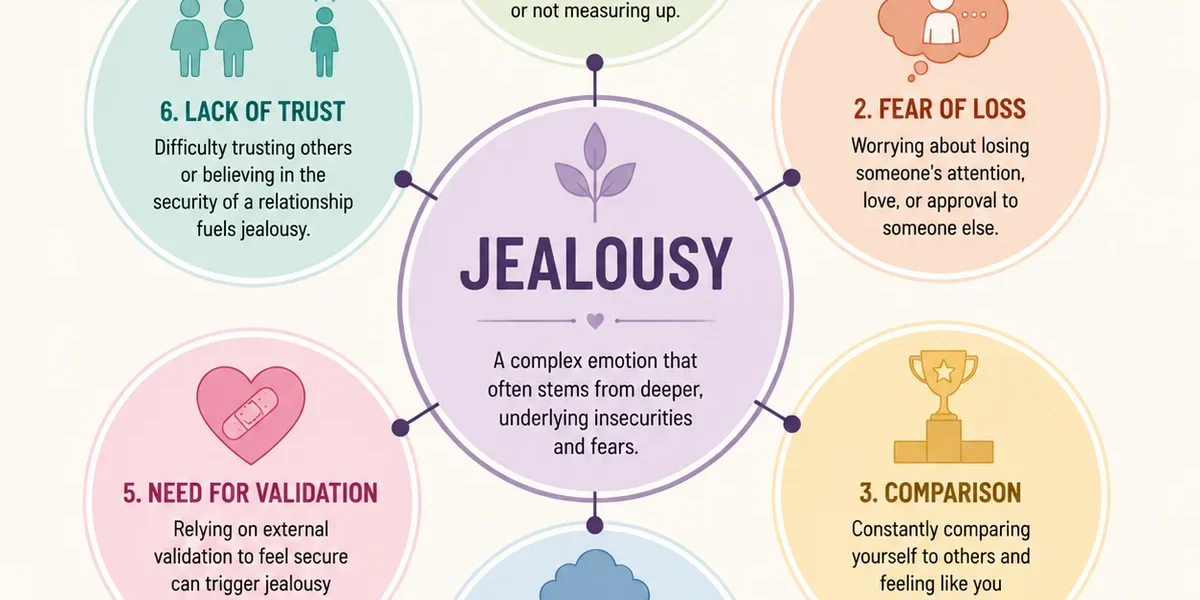
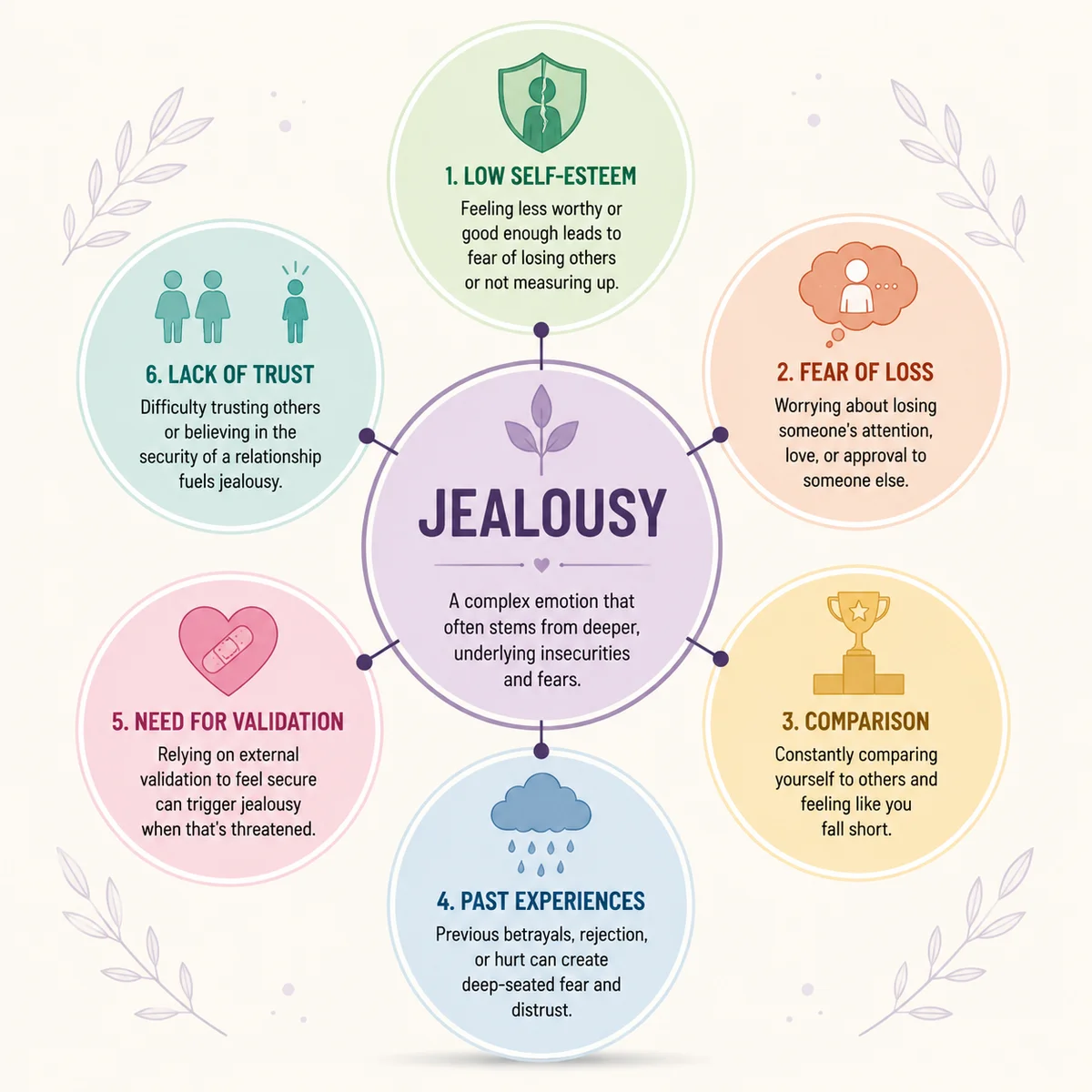
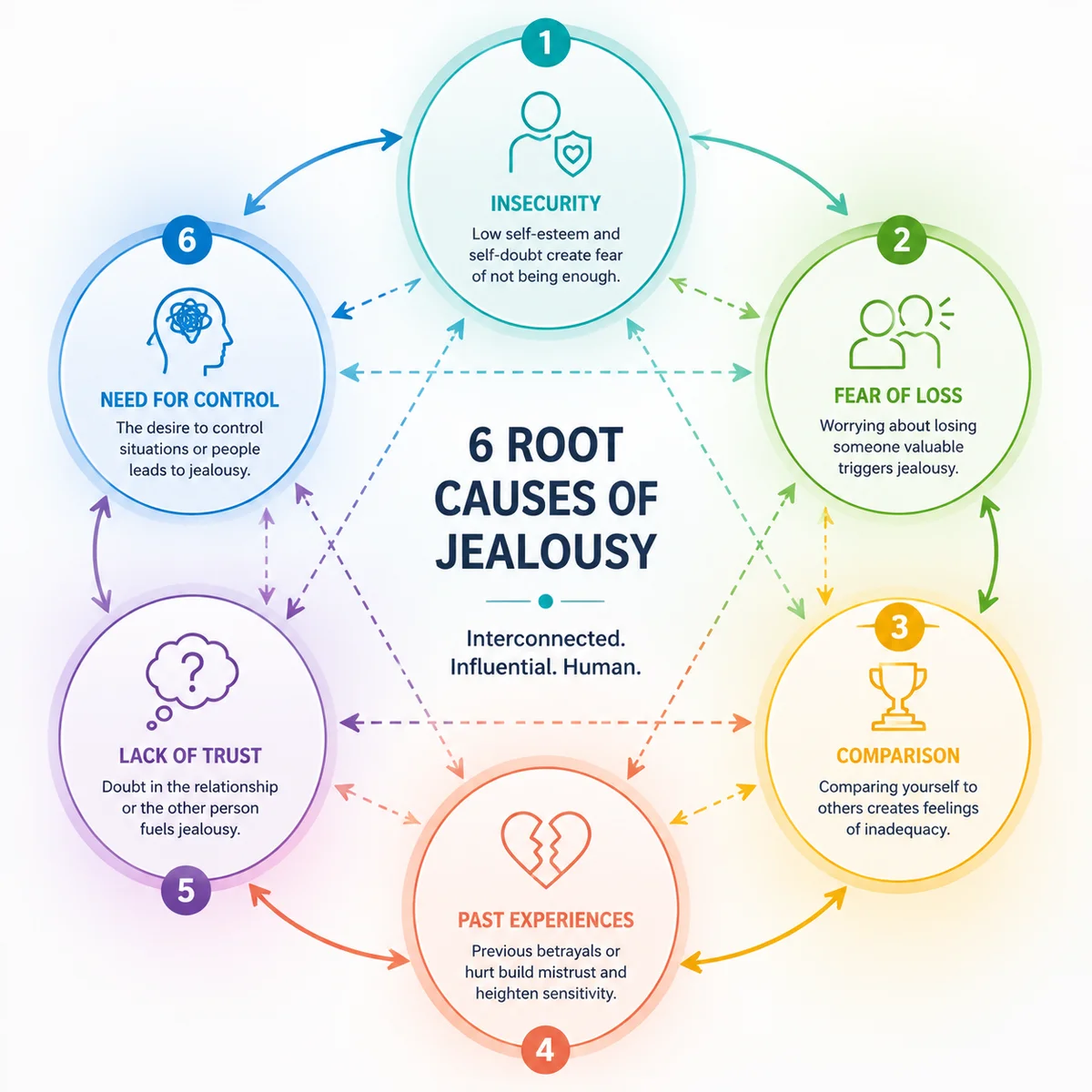
Most people lump all jealousy into one category and call it a day. But jealousy in non-monogamous relationships usually falls into distinct types — and each type needs a different response. Treating fear of abandonment the same way you treat FOMO (fear of missing out) is like putting a bandage on a broken bone.
| Root Cause | What It Feels Like | What It’s Actually About |
|---|---|---|
| Insecurity / Comparison | “They’re more attractive / interesting / fun than me” | Self-worth tied to being “the best” your partner has access to |
| Fear of Abandonment | “What if they realize they’d rather be with this person instead?” | Doubting the security of the primary bond |
| Scarcity Mindset | “They only have so much time/love/energy, and now I’m getting less” | Viewing love and attention as finite resources |
| Exclusion / FOMO | “They’re having fun without me, and I’m on the outside” | Fear of being left out of shared experiences |
| Control Loss | “Things are happening that I can’t predict or influence” | Discomfort with uncertainty and unpredictability |
| Unmet Needs | “I’m not getting something I need in this relationship” | Genuine gap — jealousy as a symptom, not the problem |
Here’s the thing: most people experiencing jealousy are actually dealing with a combination of two or three of these at once. You might feel insecure about your body and scared they’ll leave and annoyed that you’re home alone while they’re on a date. Naming each piece separately makes the whole thing feel more manageable — and makes it easier to figure out what to ask for.
If you’re navigating the emotional complexity of multiple relationships, our guide on managing New Relationship Energy (NRE) covers a specific jealousy amplifier that catches many ENM newcomers off guard.
The 5 Most Common Jealousy Triggers in ENM Relationships
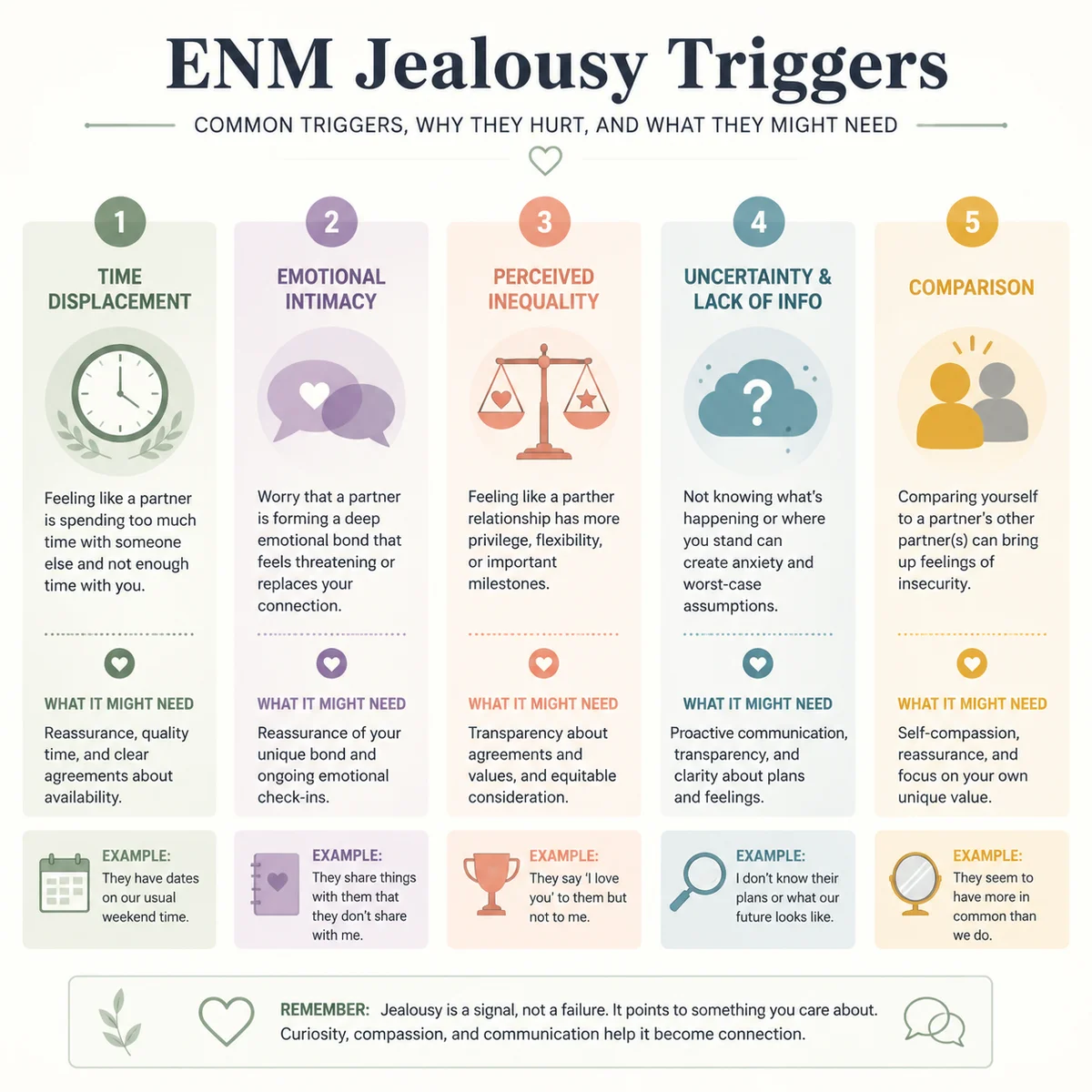
Knowing your root causes helps with the “why.” Knowing your triggers helps with the “when.” Here are the situations that most reliably activate jealousy — and why they hit harder than people expect.
- 1. The First Overnight. Even couples who’ve been fine with dates and encounters often hit a wall the first time their partner spends the night with someone else. Something about waking up alone shifts the emotional register.
- 2. New Relationship Energy (NRE). Watching your partner light up about someone new — texting constantly, glowing after dates, talking about them — can feel like being slowly demoted, even when your partner insists nothing has changed between you.
- 3. Special Occasions. Holidays, birthdays, anniversaries — when your partner spends one of these with someone else, jealousy often arrives disguised as hurt or disappointment. The question underneath is usually: “Am I still the priority?”
- 4. Emotional Intimacy (Not Just Physical). Many couples set physical boundaries but get blindsided by emotional jealousy. Your partner telling someone else their deepest fears or sharing inside jokes can sting more than any physical act.
- 5. Schedule Inequity. When one partner is consistently busier with other relationships while the other has fewer outside connections, the imbalance itself becomes a jealousy factory — even when both theoretically support the arrangement.
These triggers don’t mean your relationship is failing. They’re predictable patterns that show up in almost every ENM dynamic at some point. For a deep dive into managing time and attention across multiple relationships, see our guide on time management in polyamorous relationships.
How to Talk About Jealousy Without Making It Worse
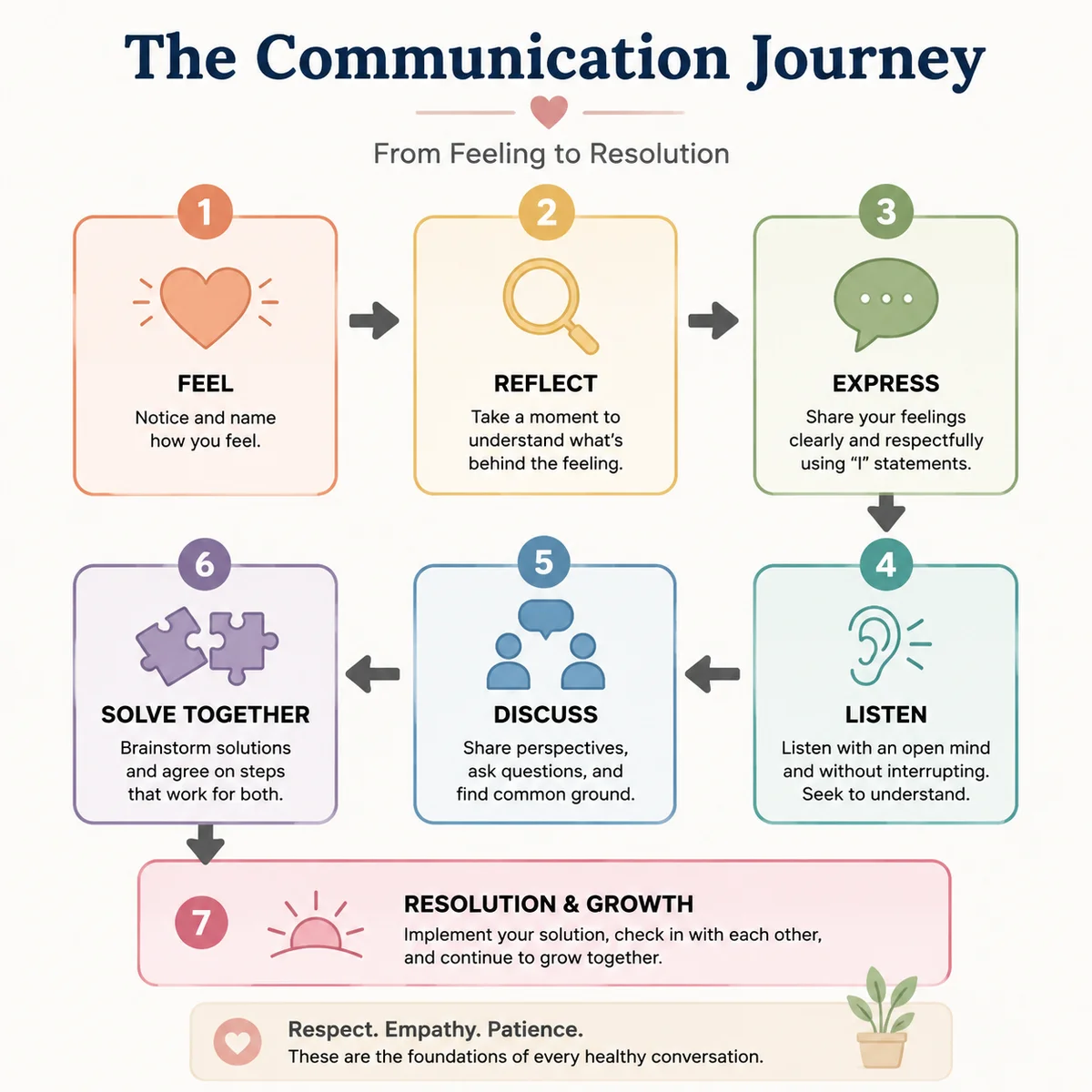
The way you bring up jealousy determines whether the conversation brings you closer or pushes you apart. The most common mistake: expressing jealousy as an accusation. “You’re always on your phone with them” or “You clearly like them more than me” puts your partner on the defensive before the real conversation even starts.
A better script:
“I want to share something that’s been coming up for me — not because I think you’re doing anything wrong, but because I want us to work through it together. When [specific situation] happens, I notice I feel [specific feeling]. I think it might be connected to [root cause]. Can we talk about it?”
Three things this script does right: (1) It owns the feeling without blaming, (2) it’s specific rather than vague (“when you text during dinner” vs “you’re always on your phone”), and (3) it invites collaboration rather than demanding a fix.
If you’re the one hearing about your partner’s jealousy, resist the reflex to defend yourself or solve the problem immediately. Your job in the first five minutes is just to listen and validate: “I hear you. That makes sense. Tell me more.” Jumping to “but I didn’t do anything wrong” or “what do you want me to do about it” shuts down the conversation before it reaches the part that actually helps.
For couples navigating ENM communication, our guide to difficult conversations in ENM relationships provides a broader framework for these discussions.
Practical Tools for Working Through Jealousy
Talking helps, but you also need concrete strategies for the moments when your partner is on a date and you’re sitting at home with your thoughts spiraling. Here’s what actually works.
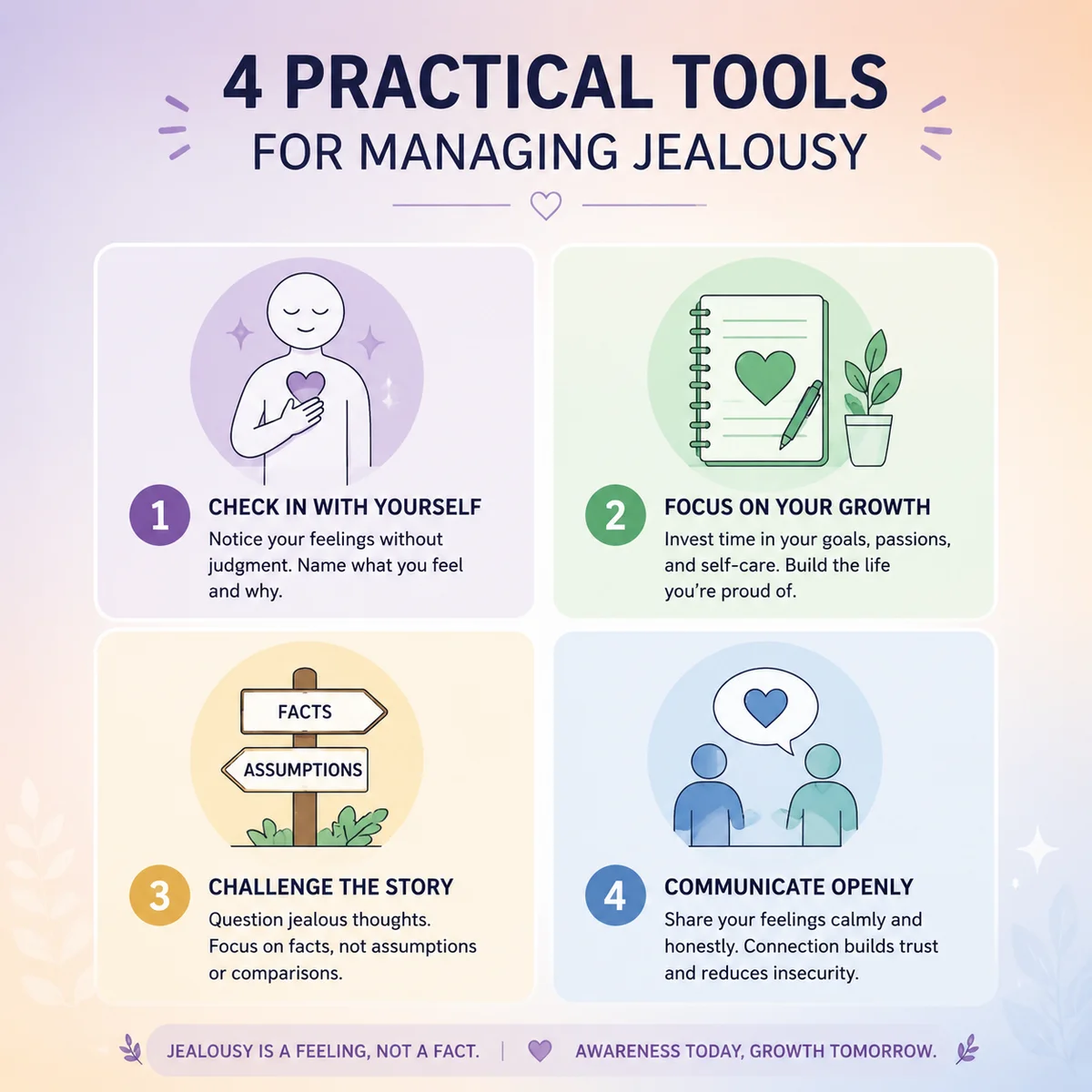
The Jealousy Journal. When jealousy hits, write down: (1) What triggered it, (2) What physical sensations you notice (tight chest, clenched jaw), (3) What story you’re telling yourself about what it means, and (4) What you actually need right now. Most of the time, the story in step 3 is catastrophizing — and writing it down makes that visible.
Planned Distraction. Don’t sit alone waiting for your partner to come home. Schedule something engaging for yourself during their dates — not just Netflix, but something that absorbs your attention: a workout class, a dinner with a friend, a creative project. The goal isn’t to avoid feeling anything; it’s to give your brain something else to chew on while the intensity passes.
Reconnection Rituals. Create a small ritual for when your partner returns — a specific food you eat together, a walk around the block, 20 minutes of uninterrupted conversation about anything except the other relationship. Having a predictable, positive reconnection point trains your nervous system that separations end in reconnection, not abandonment.
The Compersion Practice. Compersion — feeling joy in your partner’s joy with others — isn’t something you can force. But you can cultivate it by practicing gratitude for the ways your partner’s other relationships benefit you: they come home energized, they’re learning things that enrich your dynamic, someone else is meeting needs you don’t have to carry alone. Start small and be honest about when you’re not feeling it.
These strategies are useful across all relationship structures, but they’re especially relevant if you’re exploring specific dynamics. Check out our piece on handling jealousy in the swinging lifestyle for context-specific advice, or our benefits of ENM article for a reminder of why you’re doing this in the first place when jealousy makes you forget.
When Jealousy Signals a Deeper Problem
Not all jealousy is something to be “worked through” on your own. Sometimes jealousy is doing exactly what it’s supposed to do — alerting you that something in your relationship needs structural change, not just emotional processing.
Pay attention when:
- Jealousy is constant, not episodic. If you feel jealous every single time your partner engages with someone else — not just occasionally — the arrangement itself may not be meeting your core needs.
- Agreements keep getting bent. If your partner consistently pushes or ignores boundaries you’ve set, your jealousy isn’t irrational — it’s a legitimate response to feeling unsafe.
- Your partner dismisses it. “You’re just being insecure” or “this is your stuff to deal with” is not how healthy ENM partners respond to jealousy. If your feelings are regularly minimized, the jealousy isn’t the problem.
- It’s affecting your daily functioning. If jealousy is disrupting your sleep, appetite, work performance, or ability to enjoy other parts of your life, this is bigger than a relationship dynamic — it may be worth talking to a therapist familiar with non-monogamy.
- You’re using jealousy to control. If you find yourself making rules designed to prevent your partner from ever triggering your jealousy rather than learning to manage it, you’re outsourcing the work to them — and that’s not sustainable.
For a comprehensive understanding of ENM foundations, our ENM 101 guide walks through the core principles that make all of this possible — including what healthy vs. unhealthy dynamics look like.
Building a Relationship Where Jealousy Doesn’t Control You
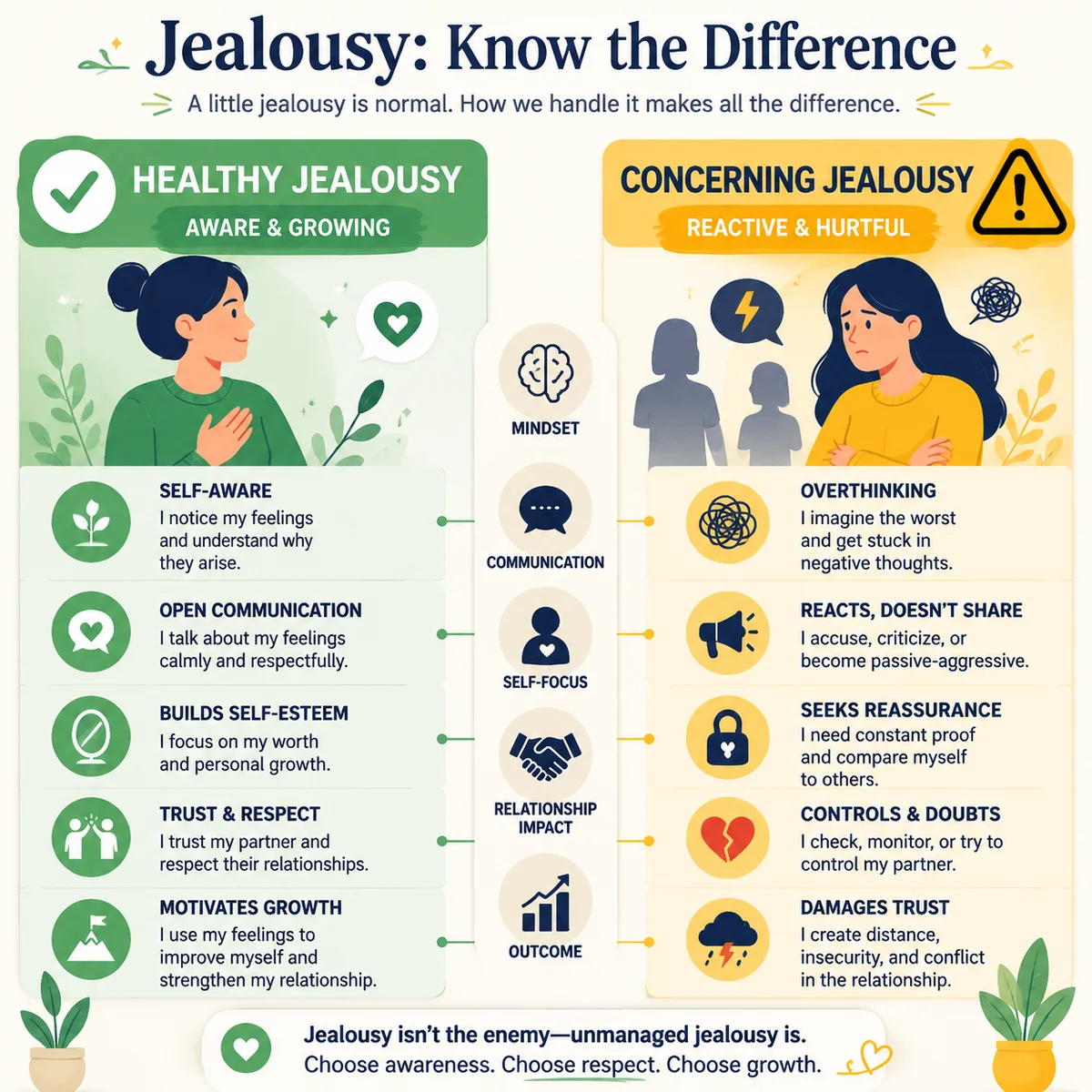
The long-term goal isn’t to become someone who never feels jealous. It’s to build a relationship where jealousy can show up, be named, and be processed — without derailing everything or dictating who gets to do what.
That kind of security comes from consistency over time: showing up when you say you will, following through on agreements, responding to your partner’s vulnerability with care rather than defensiveness, and being honest about your own struggles. It’s not glamorous work. It’s the everyday reliability that makes the extraordinary parts of ENM possible.
If you and your partner can sit down after a jealousy flare-up and say “okay, what did we learn from this?” instead of “whose fault was this?” — you’re already doing it right. The jealousy itself isn’t the measure of your relationship. How you handle it together is.
When you’re ready to put these ideas into practice, 3Cupid’s community of like-minded people offers a space to connect, communicate, and build relationships on your own terms. Join 3Cupid to start meeting people who share your approach to honest, ethical, and fulfilling connections.
This article was written by the editorial team at 3Cupid, a platform dedicated to helping adults explore ethical, consensual non-monogamous relationships. All content is intended for readers 18+ and emphasizes communication, safety, and mutual respect.