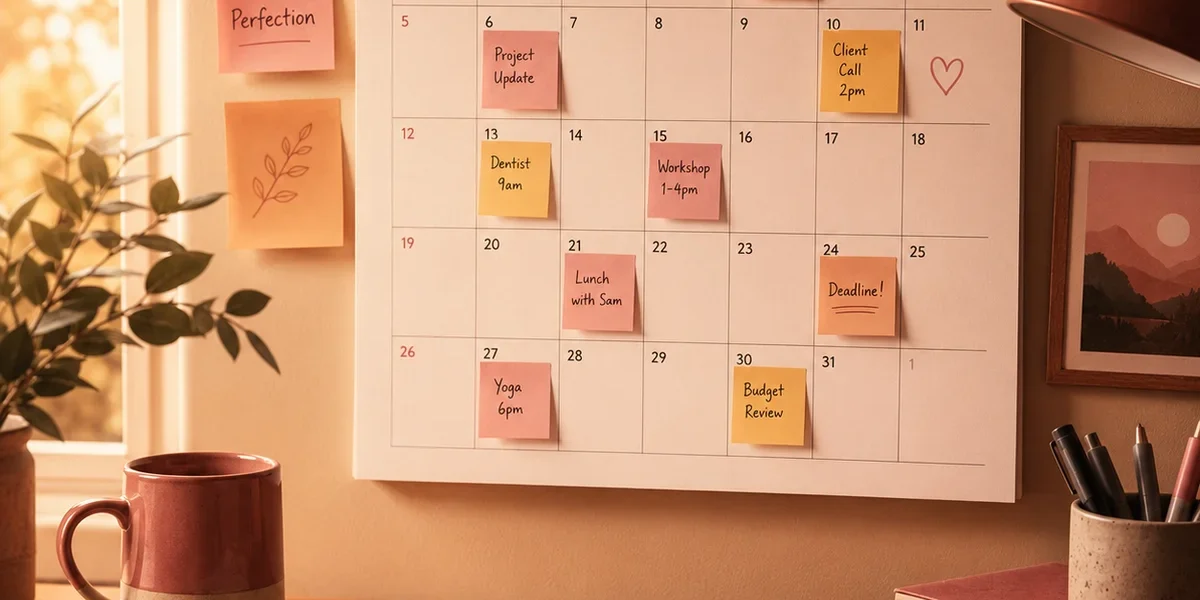
Most polyamory advice focuses on communication, jealousy, and boundaries. Those matter. But there’s a quieter challenge that trips up even the most emotionally intelligent people in ENM: time. You have the same 24 hours as everyone else, yet you’re trying to nurture multiple relationships, maintain friendships, work, rest, and still have space for yourself. Without intentional polyamory time management, the cracks show fast—missed dates, distracted conversations, and partners who feel like afterthoughts. Relationship researchers emphasize that time and energy management is one of the most under-discussed challenges in non-monogamous relationships.
This guide covers practical strategies for scheduling, prioritizing, and protecting your time across multiple relationships—without turning your love life into a spreadsheet that drains the joy out of it.
Table of Contents
- Why Time Management Matters in Polyamory
- The Calendar Is Non-Negotiable
- Priority, Not Equality
- Protecting Solo Time in ENM
- Scheduling Frameworks That Actually Work
- When Someone Feels Neglected
- Avoiding Burnout as a Poly Person

Why Time Management Matters in Polyamory
In monogamous relationships, time together often defaults to “whenever we’re both free.” There’s a built-in assumption that evenings and weekends belong to the partnership unless stated otherwise. Polyamory dismantles that default. Suddenly, your Tuesday night might belong to Partner A, your Saturday to Partner B, and Thursday is the only evening you have to yourself—if you’re lucky.
When time isn’t managed intentionally, three predictable problems emerge. First, the squeaky wheel gets the grease—the partner who asks for more time gets it, while quieter partners are left feeling invisible. Second, default time becomes no one’s time—unclaimed hours get absorbed by scrolling, errands, and low-quality “hangout” that doesn’t actually nurture any relationship. Third, you burn out—trying to be everywhere for everyone leaves you present nowhere.
Good polyamory time management isn’t about squeezing more into your schedule. It’s about making the time you do spend feel intentional, connected, and fair—even when it’s not equal.

The Calendar Is Non-Negotiable
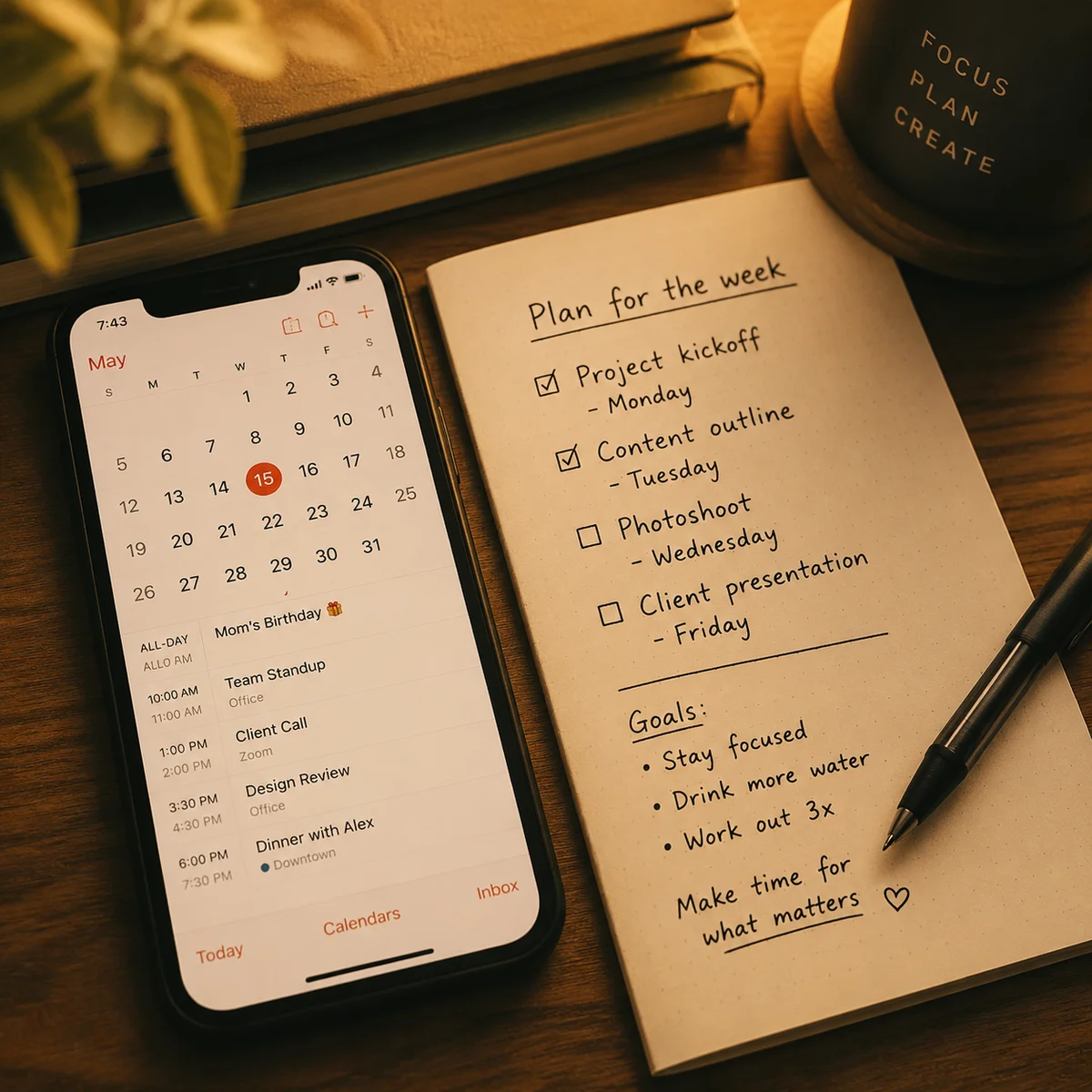
If you’re practicing ENM with more than one partner, a shared calendar isn’t optional—it’s infrastructure. The couples who resist this tend to be the ones who keep having “I thought we had plans” conversations. Here’s what a functional poly calendar system looks like:
- One shared calendar per relationship dyad. You and Partner A have a calendar. You and Partner B have one. They don’t need to see each other’s calendars, but everyone needs visibility into the time you’ve committed to them.
- Color-coding by person, not by activity. When you glance at your week, you should immediately see whose time is protected. Red for Partner A, blue for Partner B, green for solo time, yellow for work.
- Recurring slots for anchoring relationships. “Every Wednesday is our night” removes decision fatigue and signals that the relationship has a stable foundation, not just leftover time.
- Buffer zones between partners. Back-to-back dates with different people are exhausting. Leave at least an hour between commitments to reset emotionally.
A digital tool like Google Calendar with separate sub-calendars works well for most people. The specific tool matters less than the commitment to actually using it.

Priority, Not Equality
One of the biggest mistakes in polyamory time management is chasing equal time distribution. It sounds noble—“I’ll give Partner A and Partner B exactly the same number of nights per week.” But equality isn’t the same as fairness, and treating relationships as interchangeable units ignores real differences in needs, logistics, and relationship stages.
A nesting partner you share a home with will naturally have more incidental time—morning coffee, grocery runs, falling asleep together. A partner who lives across town and has kids may only be available every other weekend. Giving them “equal time” makes no sense and pressures everyone into an artificial framework.
Instead of equality, aim for attunement: each partner feels their time with you is protected, predictable, and sufficient for the kind of connection you’ve both agreed to build. For some relationships, one dedicated evening per week is plenty. For others, two evenings plus a weekend day feels right. The key is that the arrangement is discussed, not assumed.

Protecting Solo Time in ENM
When you’re managing multiple relationships, solo time is often the first thing sacrificed—and the most important thing to protect. Without it, you have no space to process emotions, recharge, or simply exist as an individual rather than as someone’s partner.
Treat solo time as a standing appointment, not a filler. Block it on your calendar before anyone else’s time goes in. If you wait until your schedule is “full” before carving out personal space, you’ll never have it. Solo time is not “free time”—it’s committed time with yourself, and it deserves the same protection as a date.
What you do with solo time is up to you. Hobbies, exercise, reading, staring at the ceiling—the point is that nobody else has a claim on those hours. Partners who respect your solo time boundaries are partners who understand that a healthy poly person needs to exist outside of their relationships.
Scheduling Frameworks That Actually Work
Different relationship structures call for different scheduling approaches. Here are three frameworks that poly people have found effective:
| Framework | Best For | How It Works |
|---|---|---|
| Anchor Days | Established relationships | Each partner gets a fixed recurring day/night per week. Flexibility exists around the anchors, but anchors don’t move without a conversation. |
| Rotating Priority | Balancing 2-3 partners | Each week, one partner gets the “first pick” for scheduling. Rotates so no one always gets leftovers. Works well when schedules are unpredictable. |
| Monthly Planning | Multiple partners + busy life | At the start of each month, everyone sits down (or checks in async) to map the next four weeks. Major events, trips, and holidays are blocked first, then regular dates fill in around them. |
Poly Time Management Checklist
- Weekly review (Sunday evening): Glance at the upcoming week. Are any partners getting shortchanged? Is your solo time intact?
- Monthly check-in with each partner: “How has our time together felt this month? Enough? Too little? Right quality?”
- Quarterly “big picture” review: Are you at capacity? Is there room for a new connection, or are you already stretched thin?
- Buffer days: At least one evening per week with zero commitments—not even with yourself. Just unstructured space.
- Travel and holidays planned 30+ days out: These are high-stakes scheduling moments. Don’t let them sneak up.

When Someone Feels Neglected
Even with the best systems, someone will occasionally feel shortchanged. The response to that feeling determines whether it becomes a wound or a blip. Here’s how to handle it:
Don’t get defensive. When a partner says “I feel like I haven’t seen you much lately,” your first instinct might be to list all the times you did see them. Resist. The feeling is the data—not your calendar. Respond with curiosity: “Tell me more about what’s been feeling off.”
Distinguish quantity from quality. Sometimes the issue isn’t hours—it’s presence. You might be spending Tuesday nights with a partner, but if you’re exhausted, distracted, or mentally with someone else, those hours don’t register as connection. Ask directly: “When we’re together, do you feel like I’m actually here?”
Make a specific repair offer. “I’ll try harder” is meaningless. “Let’s block next Saturday afternoon—no phones, no errands, just us” is concrete. Specificity rebuilds trust faster than broad promises.
Avoiding Burnout as a Poly Person
Burnout in polyamory doesn’t always look like exhaustion. It can look like numbness—going through the motions of dates, conversations, and check-ins without actually feeling present. When you notice that happening, it’s time to pull back and reassess.
Warning signs include: dreading dates you used to look forward to, feeling relieved when plans get canceled, struggling to remember basic details about your partners’ lives, and using scheduling as a way to avoid emotional depth. These aren’t character flaws—they’re signals that your capacity is maxed out.
The fix isn’t always “better scheduling.” Sometimes it’s acknowledging that you have fewer relationship hours available than you’d like, and that adding another partner right now would be unfair to everyone—including yourself. Polyamory isn’t a competition to maximize connections. It’s about quality of presence, and presence has limits.
If you’re looking for partners who value intentional connection and clear communication around time and availability, 3Cupid was built for people practicing ethical non-monogamy. For more on navigating the emotional side of ENM, read our guide on Managing New Relationship Energy (NRE) in ENM Relationships. And if you’re learning how ENM changes your identity over time, check out how ENM dating changes your sense of self.
Editor’s note: This article draws on community wisdom and practical experience within polyamorous and ENM networks. It offers guidance, not clinical advice. Every relationship structure is unique—adapt these strategies to what works for you and your partners.