Dating in a city of two million people has its own problems. Dating in a town of two thousand? That’s an entirely different game — especially when you’re looking for a threesome. In a small town, the person you match with on Tuesday might be your kid’s teacher on Wednesday, your neighbor’s cousin on Thursday, and sitting two tables over at the only diner in town on Friday.
Threesome dating in small towns requires a particular kind of discretion — not because you’re doing anything wrong, but because the social stakes are genuinely higher. This guide covers practical privacy strategies for navigating ENM dating when anonymity isn’t something you can take for granted.
According to research on social networks and privacy in rural communities published by VeryWell Mind, the density of overlapping social connections — where your dentist is also your neighbor’s cousin — means that information travels faster and further in small communities than in urban ones. Understanding this dynamic is the first step to dating safely within it.
The Unique Challenge of Small-Town ENM Dating
In major cities, the default assumption when you see someone on a dating app is “huh, interesting.” In a small town, the default assumption is often judgment — and that judgment can have real consequences. Jobs, custody arrangements, reputations, church memberships, school board positions — the ripple effects of being “outed” as non-monogamous can be far more severe in communities where everyone knows everyone’s business.
But here’s the thing: small towns also have ENM communities. They’re just quieter about it. The challenge isn’t that nobody’s interested — it’s that the margin for error is smaller. One careless screenshot, one indiscreet message, one awkward public encounter, and suddenly your private life is the topic of conversation at the hardware store.
This doesn’t mean threesome dating in small towns is impossible. It means the approach has to be different. You’re playing the same game, but the difficulty setting is higher — and the cheat codes are different too.
A key difference between urban and rural ENM dating is what sociologists call “network density.” In a city, your dating life, work life, and social life occupy largely separate spheres. In a small town, they’re all the same sphere. The person you’re messaging might be connected to you through three different channels you haven’t even thought of. Understanding this density is the first step to navigating it.
Digital Privacy When Everyone Knows Everyone
The digital privacy challenges of threesome dating in small towns start before you even send your first message. Here’s what to lock down:
Profile photos are your biggest exposure point. If you’re recognizable in your town, think carefully about which photos you use. A photo that’s also your Facebook profile picture is trivially reverse-image-searchable. A photo taken at the local coffee shop with the town’s recognizable mural in the background tells everyone exactly where you live. Consider: photos that don’t appear anywhere else online, neutral backgrounds (nature, against a plain wall, while traveling), and images where you’re styled differently than your everyday look.
Location settings matter more than you think. Most dating apps default to showing your approximate distance. In a city, “2 miles away” narrows you down to a neighborhood. In a small town, it narrows you down to a few blocks. Check your app’s privacy settings: turn off distance display if possible, or set it to “city level” if the option exists. Some apps let you hide your location entirely. Use that.
Communication channels need compartmentalization. Don’t use your main phone number. Get a Google Voice number or use a messaging app like Signal or Telegram that doesn’t require sharing your number. Keep ENM-related conversations off your primary social media accounts. Create a separate email address that doesn’t contain your real name. This sounds paranoid — but in a town where the mail carrier reads postcards, a little paranoia is just good sense.
For a more comprehensive approach to digital safety, read our full guide on threesome dating privacy and identity protection.
These privacy measures aren’t signs of shame or secrecy. They’re practical infrastructure — the same way you lock your front door even though you trust your neighbors. You’re building the systems that let you date freely while maintaining control over who knows what.
Expanding Your Search Radius Strategically
The most practical solution for threesome dating in small towns is also the most obvious: look beyond your immediate zip code.
Set your app’s distance radius to include the nearest mid-sized city, even if it’s an hour away. Many small-town ENM daters treat the “commute date” as standard practice — meet in a town halfway between you, or drive to the city for weekends. It’s more logistical effort, but the trade-off is significantly more privacy and a much larger dating pool.
What a realistic expanded radius looks like: If you’re in a town of 5,000, expand to 50-75 miles — you’re looking for the nearest city of 50,000+ people. If you’re 90 minutes from a major metro, that’s your dating zone. Plan for weekend dates rather than trying to squeeze things in on weekday evenings. If you’re truly remote (hours from any population center), travel-based dating becomes your primary strategy. Plan trips to cities with active ENM communities, attend lifestyle events or meetups while you’re there, and be upfront with matches that you’re not local.
The commute is worth it. The privacy premium of dating 50 miles from home is enormous — and the dating pool is exponentially larger.

The “commute date” isn’t just a privacy strategy — it’s also a relationship filter. Someone willing to drive an hour to meet you is demonstrating genuine interest, not just convenience-swipe energy. The effort itself becomes a vetting mechanism.
Handling Public Encounters with Matches
In a small town, you will eventually run into someone you’ve matched with. At the grocery store. At the school pickup line. At your dentist’s office. Planning for this in advance removes the panic when it happens.
Agree on a protocol before you meet in person. During early conversations, have a brief exchange about this: “Hey, we both live in a small area. If we run into each other in public before we’ve met or decided how we feel, what’s our default? Friendly nod? Pretend we don’t know each other? Quick hello?” This conversation takes 30 seconds and prevents an excruciating moment of mutual uncertainty.
The neutral greeting script. If you do encounter someone unexpectedly, the safest default is a brief, neutral, unmemorable greeting. “Hey, good to see you” with a small smile, then keep moving. Don’t stop to chat. Don’t introduce them to whoever you’re with. Don’t make eye contact that lingers. The goal is to be polite enough to not be rude, but unremarkable enough to not raise questions.
If you’re with your partner or family when it happens. This is the highest-stakes scenario. The neutral greeting still applies: “Oh hey, this is my partner [name]. We’re just grabbing groceries. Good to see you!” No explanation of how you know each other. If asked later: “Just someone I know from around town.” That’s not a lie — it’s appropriate compartmentalization.
For more on how to handle the social dimensions of ENM, our guide on managing social stigma in ENM dating dives deeper.
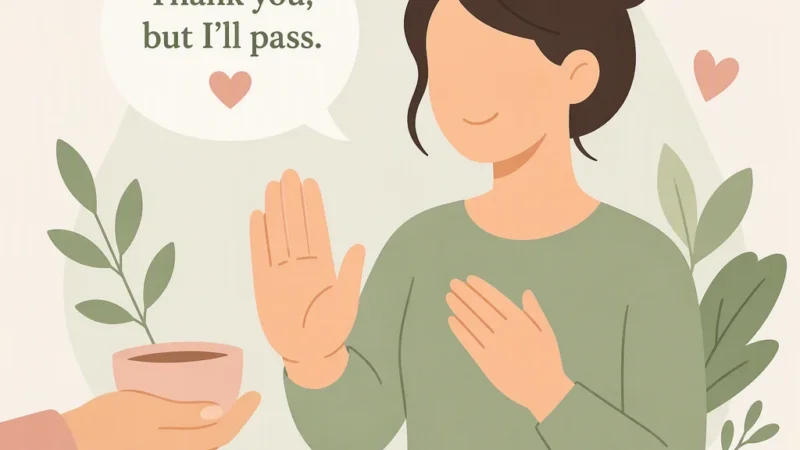
Compartmentalization isn’t dishonesty — it’s the recognition that different contexts call for different levels of disclosure. Most people you interact with in daily life don’t need access to every part of who you are.
Building a Discreet Local Network
Counterintuitively, the best privacy strategy for small-town ENM dating is having a trusted local network. Isolation makes you more vulnerable to gossip, not less.
Find your people quietly. Look for regional ENM or polyamory Facebook groups (join with a profile that doesn’t use your full name). Check Meetup.com for lifestyle discussion groups in your broader region. Attend events in the nearest city — munches, discussion groups, or poly cocktails — where you can meet people who understand the privacy stakes because they share them.
The value of vouched connections. In small-town ENM communities, vouching is everything. If someone you trust can say “these people are safe and discreet,” that carries more weight than a hundred matching-profile checkboxes. Cultivate a few trusted connections who can make introductions, and be willing to vouch for others when appropriate.
What not to do. Don’t gossip about other people’s ENM involvement — even with other ENM people. Don’t use real names when discussing dating experiences. Don’t assume anyone is “out” just because they’re on a dating app. The small-town ENM community survives on mutual discretion. Be part of what makes it work, not what breaks it.
When Anonymity Isn’t Possible
Sometimes, despite your best efforts, someone finds out. A coworker sees your profile. A family member hears through the grapevine. Your partner’s ex puts two and two together. When this happens, how you handle it matters more than whether it happened.
Decide in advance what you’re willing to say. With your partner, have a conversation about disclosure levels: Who absolutely must not know? Who would you be okay telling if it came up? What’s your rehearsed, one-sentence explanation if someone asks directly? Having these answers ready prevents you from freezing or over-explaining in the moment.
A sample response for unsolicited discovery: “That’s a private part of my life that I don’t discuss publicly. I’d appreciate it if you’d respect that.” This is firm, calm, and doesn’t invite further conversation. It doesn’t confirm or deny anything specific. It draws a boundary without being defensive.
If you choose to be more open. For some people in small towns, the long-term strategy is selective openness. Telling a few trusted people — your sister, your best friend, your therapist — creates a buffer against the fear of being “found out.” When you know some people already know and still accept you, the threat of wider discovery loses some of its power. Our threesome safety guide covers more strategies for navigating disclosure in different contexts.

The goal of building a discreet network isn’t to hide forever — it’s to have people in your corner who understand your life without judgment, so that if wider disclosure does happen, you’re not facing it alone.
In-Person Safety Beyond Privacy
Privacy and physical safety are connected. In small towns, the same dynamics that make gossip dangerous also affect safety: limited options for meeting places, fewer neutral public spaces, and the fact that most people know where you live.
Meeting in person for the first time: Choose a location in the nearest town over, not yours. A coffee shop 30 minutes away is worth the drive. Don’t host at your home for first meetings. If someone turns out to be incompatible — or worse — you don’t want them knowing your address. Tell a trusted friend where you’re going and who you’re meeting, even if you have to be vague about the “why.” Have your own transportation. Never rely on someone else for a ride to or from a first meeting. Trust the “off” feeling. In a small town, there’s social pressure to be polite because “you’ll see them around.” Safety overrides politeness.
Verifying identities. In small towns, the usual advice about verifying a third partner before meeting becomes both more important and more delicate. Frame it as mutual courtesy: “I always do a quick video chat before meeting anyone — it’s just my routine. Would Wednesday work?” The key is making it about your process, not about suspicion of them.
Red flags specific to small-town dynamics: Someone who knows more about you than you’ve shared (they’ve been researching you through mutual connections). Someone who pushes to meet at locations in your immediate area despite your preference for neutral ground. Someone who name-drops mutual acquaintances to create false intimacy. Someone who dismisses your privacy concerns as “paranoid.” For a broader overview, we’ve compiled a guide to red flags when looking for a third partner.
Small-Town ENM Privacy Checklist
- Dating profile photos don’t appear elsewhere online (reverse-image-search them yourself to check)
- Photos use neutral backgrounds — no local landmarks, no recognizable locations
- Location/distance display is minimized or turned off in app settings
- Separate communication channel set up (Google Voice, Signal, Telegram)
- Separate email address created for ENM-related accounts
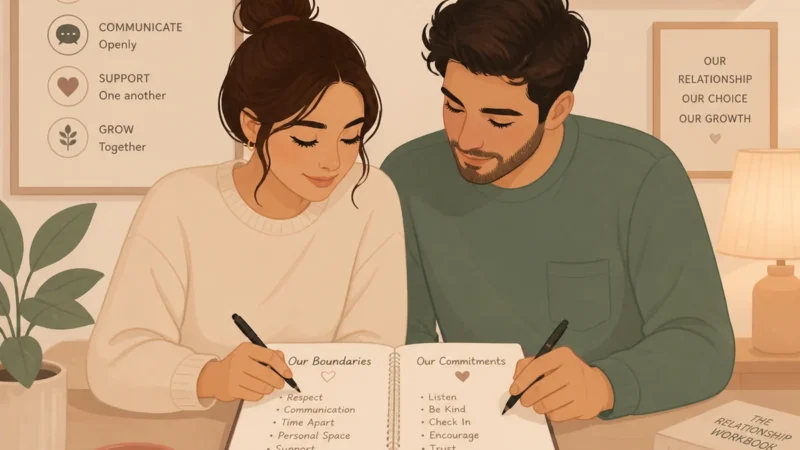
- Partner and I have agreed on our public-encounter protocol
- Partner and I have discussed disclosure levels (who must not know vs. who could know)
- First-meeting location strategy established (next town over, not home base)
- Trusted friend knows about my dating activity and can be a safety check-in
- I know the nearest city with an active ENM community and have researched meetup options
This isn’t about living in fear. It’s about being intentional. The more groundwork you do upfront, the less mental energy you spend worrying about privacy — and the more you can actually enjoy the connections you’re making.

Threesome dating in small towns isn’t simple, but it’s far from impossible. The people who make it work share a few common traits: they’re strategic about digital privacy without being paranoid, they expand their dating radius beyond the county line, they have a plan for public encounters, and they build quiet networks of trusted people who respect the same codes of discretion they do.
If you’re looking for a space where you can connect with people who understand the value of privacy — whether you’re in a town of 500 or a city of 5 million — 3Cupid is built for that. Your dating life is yours to share or protect as you see fit.
Editorial note: This article provides practical guidance for maintaining privacy in small-community contexts as of May 2026. Individual circumstances vary — use your judgment about what level of disclosure is appropriate for your specific situation.