
Table of Contents
- Why Screening Matters More Than You Think
- The Pre-Chat Checklist: What to Look For Before You Even Say Hello
- Red Flags That Deserve Your Attention
- The Video Call: Your Most Important Screening Tool
- Questions Worth Asking Before You Meet
- Safety Protocols for the First In-Person Meeting
- When Your Gut Says No
Finding a third partner for a threesome can feel exciting — but skipping the screening process is one of the fastest ways to turn that excitement into regret. When you screen threesome partners thoughtfully, you protect not just your physical safety but also the emotional health of everyone involved. This isn’t about being paranoid or treating people like suspects. It’s about being intentional enough to filter out people who don’t align with your boundaries before they ever get close to them.

Whether you’re a couple looking for a third or a single person inviting someone into your dynamic, the screening habits covered in this guide will serve you long after the first conversation ends. A few well-placed questions, a clear routine, and the willingness to walk away when something feels off — that’s the difference between an experience you remember fondly and one you wish you’d avoided.
Why Screening Matters More Than You Think

Most people assume bad threesome experiences happen because of jealousy or awkwardness in the moment. But a surprising number of negative experiences trace back to something much simpler: the wrong person was invited. Screening isn’t just about avoiding predators or catfish — though those are real concerns. It’s also about making sure the person you bring into an intimate situation genuinely shares your expectations, respects your boundaries, and communicates clearly.
Think of screening as a compatibility filter. You wouldn’t rent an apartment without viewing it first. You wouldn’t accept a job without an interview. A threesome involves a level of vulnerability that deserves at least that much care. The goal isn’t to interrogate anyone. It’s to create a space where everyone can be honest about what they want — and what they don’t — before clothes come off and emotions get complicated.
Research on consensual non-monogamy consistently points to upfront communication as the strongest predictor of positive experiences. According to Psychology Today, people who discuss boundaries and expectations before sexual encounters report significantly higher satisfaction and fewer instances of regret. Screening is simply the practical application of that principle.
The Pre-Chat Checklist: What to Look For Before You Even Say Hello

Before you send a single message, take thirty seconds to scan the profile or post that caught your eye. This initial filter catches problems that would waste your time later. Here’s what to check:
- Profile completeness. Blank profiles with one image and no bio are a yellow flag. Someone genuinely interested in a thoughtful experience will have put at least minimal effort into describing themselves and what they’re looking for.
- Tone of the bio. Does the person sound like someone you’d want to have a conversation with? Profiles that are entirely sexual from line one or that read like a list of demands rarely translate to a comfortable in-person dynamic.
- Image consistency. One professional-looking image among a sea of casual selfies can be a sign of a stolen picture. Reverse image search isn’t paranoid — it’s practical.
- Terms and language. Pay attention to whether the person uses the same vocabulary your community uses about consent, boundaries, and safety. Shared language often signals shared values.
- Response to boundaries. If your profile mentions specific limits and their first message ignores or challenges those limits, that’s not a screening failure — that’s the screening working. Move on.
This checklist takes maybe two minutes total. It won’t catch everything, but it will filter out the people who aren’t even trying to present themselves honestly. And honestly — that’s a bigger percentage than most newcomers expect.
Red Flags That Deserve Your Attention
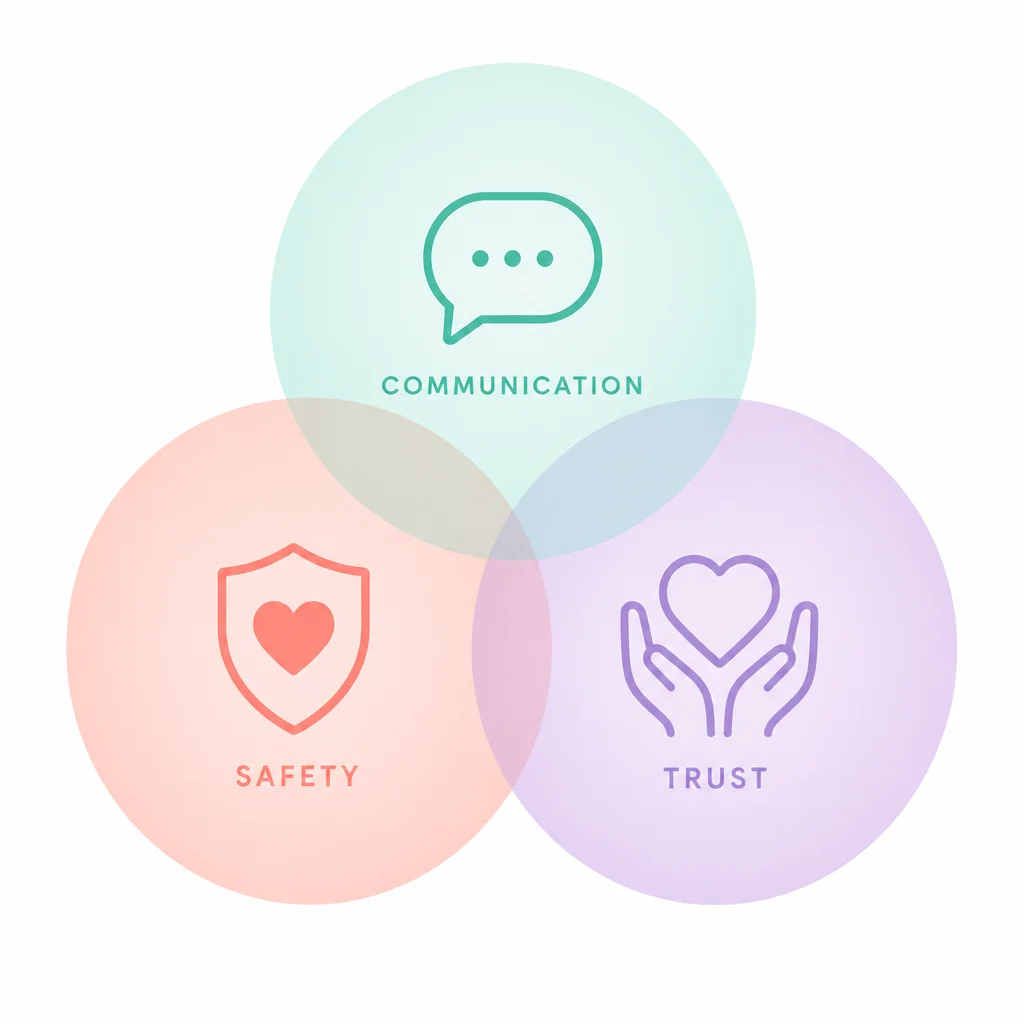
Some warning signs are subtle. Others announce themselves loudly. Here are the ones worth knowing before you find yourself halfway through a conversation wondering why something feels off.
- Pushing for immediate meetups. Anyone who refuses to have a conversation before meeting in person — or worse, pressures you to skip the conversation — is prioritizing their agenda over everyone’s comfort. That dynamic doesn’t improve once you’re face to face.
- Avoiding specific questions. Vague answers to direct questions about experience, STI testing, or boundaries are not a communication style. They’re a deflection. Trustworthy people answer clearly, even when the answer is “I’m still figuring that out.”
- Inconsistent stories. If their relationship status, location, or experience level shifts between messages, you’re not dealing with someone who values consistency. You’re dealing with someone who tells you what they think you want to hear.
- Disrespecting “no” in small ways. If you decline a particular suggestion and they circle back to it ten minutes later dressed up differently, they’re testing your boundaries. People who do this with small things will do it with big things.
- Treating one partner as invisible. In couple-seeking-third dynamics, a third who only engages with one member of the couple — or a couple where only one person does all the talking — signals a power imbalance that will show up in person.
One red flag doesn’t always mean “run.” Context matters, and people have off days. But two or three in combination? That’s a pattern, not a coincidence. Trust the pattern.
The Video Call: Your Most Important Screening Tool

A video call does something messaging cannot: it verifies identity, reveals communication style in real time, and creates a space where body language and tone become part of the screening equation. If you take nothing else from this guide, take this: never skip the video call.
Schedule it for a time when everyone involved can be present and not rushed. Twenty to thirty minutes is plenty. The goal isn’t to run through a script; it’s to see how the conversation flows when there’s no time to craft the perfect reply. Do they listen? Do they ask questions back? Do they seem comfortable with silence, or do they fill every pause with nervous chatter? These signals matter more than any single answer they give.
A few practical tips for running the call well: Use a platform that doesn’t require sharing your personal phone number until you’re ready. Have good lighting and a quiet space so they can see and hear you clearly — and expect the same in return. If someone’s camera is “broken” or they can only do audio, treat that as a yellow flag. The video call exists specifically to build trust through visibility, and avoiding visibility at the trust-building stage is worth noting.
Also worth mentioning: this is a two-way street. You’re screening them, but they’re screening you too. Be just as open, just as consistent, and just as respectful as you want them to be. The best screening processes feel less like interviews and more like conversations where both sides are figuring out if there’s a genuine fit.
Questions Worth Asking Before You Meet

You don’t need fifty questions. You need the right ones, asked at the right time, in a way that invites honest answers rather than performative ones. Here are the categories and specific questions that surface what actually matters.
Experience and expectations: “What’s your previous experience with threesome dynamics?” “What are you hoping for this time around?” “What does an ideal experience look like to you — not just physically, but emotionally?” These reveal whether your visions are even in the same neighborhood.
Boundaries and limits: “Are there any hard limits you already know about?” “How do you usually communicate if something isn’t working for you in the moment?” “What’s your approach to safer sex practices and recent testing?” These aren’t awkward questions — they’re the questions that make everything else possible.
Communication style: “How do you prefer to handle it if feelings come up unexpectedly?” “What does aftercare or post-experience check-in look like for you?” “Have you ever had an experience where you wished you’d spoken up sooner?” The answers tell you more about someone’s emotional maturity than any bio ever could.
Notice that none of these questions are about body type, specific acts, or performance. Those topics can come later if trust is established. The screening phase is about character, compatibility, and communication — the foundation everything else rests on.
Safety Protocols for the First In-Person Meeting
Once the screening conversations feel solid and you’re ready to meet in person, a few practical steps create a safety net that lets everyone relax into the experience.
Pick a neutral, public location for the first meeting. A coffee shop, a casual bar, a park bench — anywhere public where people can arrive and leave independently. This gives everyone a chance to confirm that the in-person chemistry matches the online conversation before anyone is in a private space. If someone pushes to skip this step and go straight to someone’s home, treat that as the red flag it is.
Tell a trusted friend where you’re going. You don’t need to share details you’re not comfortable sharing. “I’m meeting someone new, here’s the address and the time I expect to be back” is enough. Share the person’s name and image if you have them. This applies to everyone involved — couples and singles alike.
Have your own transportation. Never rely on someone you’ve just met for your ride home. Having your own way to leave means you can leave whenever you want for any reason — no explanations required. Autonomy is the best safety tool you have.
Agree on a check-in schedule. Decide with your partner (if you have one) that you’ll pause at a specific point to check in privately. A quick “How are you feeling? Still good to continue?” takes thirty seconds and prevents the most common scenario where someone’s discomfort goes unspoken until it’s too late to address gracefully.
These protocols aren’t about distrusting anyone. They’re about creating an environment where trust can actually develop — because everyone knows they’re safe enough to be present.
When Your Gut Says No
Here’s something most screening guides won’t tell you: you can follow every checklist, ask every right question, and still end up with a feeling that something isn’t quite right. That feeling isn’t a failure of your screening process. It is your screening process.
Intuition isn’t magic. It’s your brain processing signals faster than your conscious mind can articulate them — micro-expressions on a video call, a tone that shifted slightly, a pattern you’ve seen before but can’t name. When your gut says something is off, you don’t need to justify it to anyone. You don’t need to “give them a chance” or “not be judgmental.” You’re allowed to say, “I don’t think this is the right fit,” and leave it at that.
The entire purpose of learning how to screen threesome partners is to give yourself permission to be selective. The right person won’t be offended by your screening process. They’ll recognize it as a sign that you take everyone’s wellbeing seriously — including theirs. And when you find someone who passes every stage with ease, who makes the screening feel less like a filter and more like the beginning of a good conversation, you’ll know the effort was worth it.
For more guidance on navigating threesome dynamics from start to finish, see our guide on threesome etiquette for couples and singles and our companion piece on questions to ask before your first threesome — it picks up right where screening leaves off. If you’re ready to start putting these principles into practice, join 3Cupid to connect with people who value the same intentional approach to threesome dating.
Editorial disclaimer: This article was written by the 3Cupid editorial team to provide practical, safety-focused guidance for adults exploring threesome dating. All recommendations emphasize consent, communication, and mutual respect.