Table of Contents
- Why Your Polyamory Dating Profile Needs a Different Approach
- Be Clear About Your Relationship Structure Up Front
- How to Talk About Your Existing Partners
- What You’re Looking For: Be Specific, Not Vague
- Words and Phrases That Send the Wrong Message
- Photo Tips for a Polyamory-Friendly Profile
- Profile Examples: Before and After
- Your Polyamory Profile Self-Audit Checklist
Writing a polyamory dating profile is nothing like writing a regular dating profile. On mainstream apps, a one-sentence bio and three selfies might get you matches. But when you’re practicing ethical non-monogamy, your profile has to do more work. It needs to explain your relationship structure, signal what you’re actually available for, and filter out people who don’t understand — or respect — what polyamory means.
A well-written polyamory dating profile saves everyone time. It spares you from the “wait, you have a partner?” conversation on date three. It discourages people who think polyamory equals casual hookups (unless that’s what you want, in which case it attracts them). And it gives potential matches enough context to decide whether your particular flavor of ENM aligns with theirs. Here’s how to write one that actually works.
Why Your Polyamory Dating Profile Needs a Different Approach
Monogamous dating profiles operate on a shared assumption: two people, exclusive trajectory, eventual nesting as the default goal. Polyamory throws all of that out the window. Your profile has to communicate things a monogamous dater never has to think about — how many partners you have, whether you’re hierarchical or not, how much time you can realistically offer someone new, and what kind of connection you’re actually seeking.
Think of your polyamory dating profile as a pre-screening tool. The people who read it and swipe left because they’re monogamous? That’s a win — they self-selected out. The people who read it and message you with “so you’re basically single, right?”? They’ve just told you they didn’t read it. And the people who engage thoughtfully with what you wrote? Those are the matches worth pursuing.
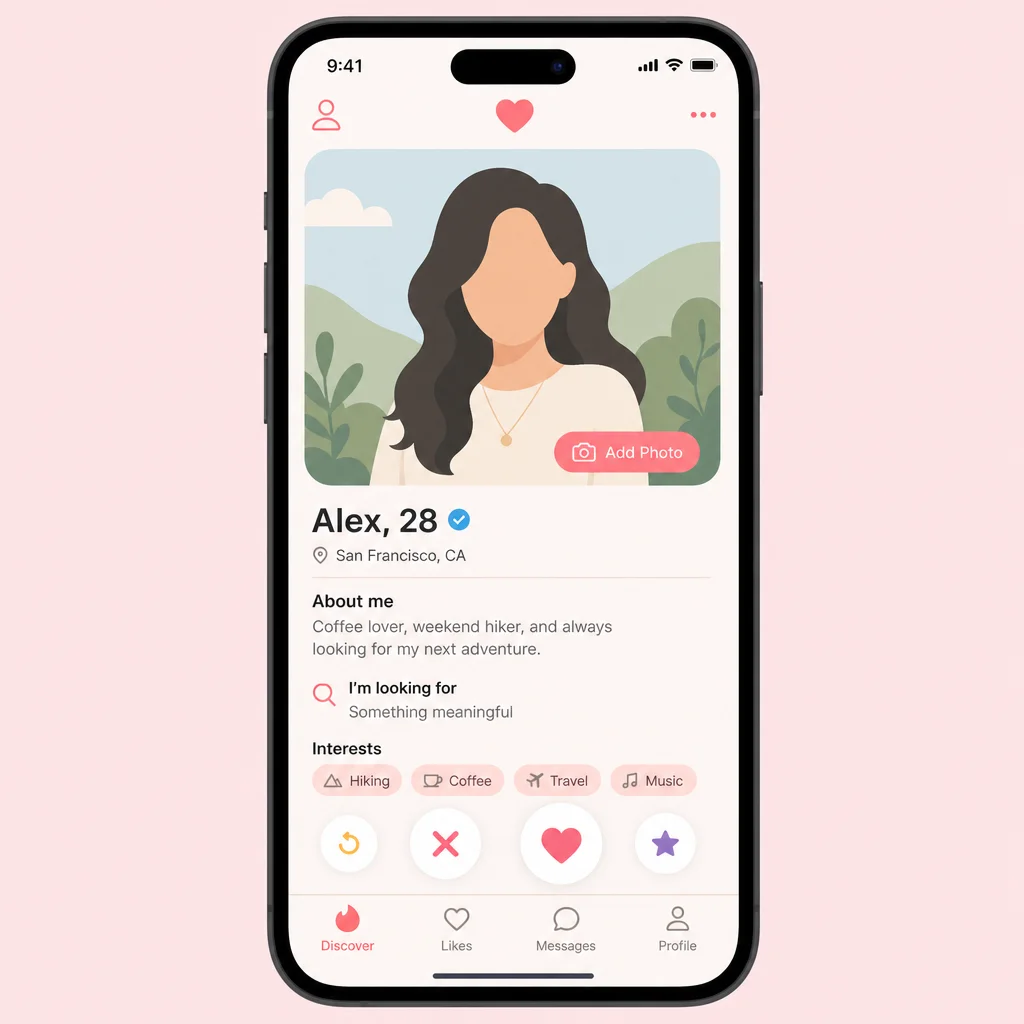
Research on dating profile effectiveness from Psychology Today confirms that profiles with specific, authentic details consistently outperform vague, generic ones — and that advice applies doubly to non-monogamous dating, where clarity about what you can and can’t offer is the foundation of ethical practice.
Be Clear About Your Relationship Structure Up Front
The single most important section of any polyamory dating profile is the one where you describe your relationship configuration. Don’t bury this. Put it in the first third of your profile, before hobbies, before favorite travel destinations, before your opinion on pineapple pizza. A potential match needs to understand the landscape before they can decide whether to enter it.
What to include: Are you solo poly? Do you have a nesting partner? Are you in a hierarchical structure with a primary? Are you practicing relationship anarchy? How many partners do you currently have, in broad strokes? You don’t need to provide a full polycule map with names and anniversaries, but you should give someone enough information to understand what kind of space exists in your life for a new connection.
Avoid the temptation to soften this information. Some people worry that mentioning existing partners will scare matches away — and it might, but only the matches you shouldn’t be pursuing anyway. A profile that hides a nesting partner until the third date isn’t saving anyone trouble; it’s just postponing an inevitable mismatch. As we explain in our polyamory for beginners guide, transparency from the start is non-negotiable in ethical non-monogamy.

How to Talk About Your Existing Partners
This is where many people’s polyamory dating profile goes sideways. Either they say too little (“partnered, ENM”) or too much (a full paragraph about their partner’s career, hobbies, and astrological sign). The sweet spot is somewhere in the middle.
A good approach: mention that you have partner(s), briefly indicate the nature of those connections (nesting, long-distance, comet, etc.), and then pivot to what you’re looking for. The profile is about you and what you can offer a new person. It’s not a couples’ profile unless you’re specifically dating as a unit — which is a different scenario entirely and comes with its own set of disclosure considerations that deserve their own conversation.
One practical tip: if you’re partnered, include a line about whether your partner is open to meeting metamours, wants parallel dynamics, or falls somewhere in between. This directly addresses a question most experienced poly daters want answered early, and it signals that you’ve thought through the practical implications of adding a new person to your life.
What You’re Looking For: Be Specific, Not Vague
“Open to whatever” sounds flexible and low-pressure. In a polyamory dating profile, it reads as “I haven’t thought about this enough to articulate what I want, so I’m leaving it to you to figure out.” That is not the energy you want to project.
You don’t need to prescribe an exact relationship outcome — nobody can predict chemistry before meeting — but you should describe the shape of what you’re hoping to find. Are you looking for a regular dating partner with weekly date nights? A comet connection who visits every few months? A casual friendship that sometimes includes physical intimacy? Someone to attend polyamory community events with?
Being specific about what you want in your polyamory dating profile isn’t limiting — it’s clarifying. The right person reads “I’m hoping to find a consistent dating partner for 1-2 evenings a week, with potential for emotional depth but not cohabitation” and thinks “that’s exactly what I’m looking for too.” The wrong person reads it and moves on. That’s the system working as designed.
Words and Phrases That Send the Wrong Message
Certain phrases pop up repeatedly in polyamory dating profile bios, and experienced ENM daters have learned to treat them as amber flags at best. Here are a few to reconsider:
- “My partner and I date separately (but we tell each other everything).” — This raises privacy questions. Where’s the boundary between healthy transparency and treating a new partner’s private conversations as couple’s entertainment?
- “Drama-free, please.” — In practice, this often means “I haven’t developed the skills to navigate conflict or difficult emotions, so I’ll label any expression of them as drama.”
- “We have so much love to give.” — Love isn’t a resource that overflows from a couple to a third person like a fountain. It frames the couple as givers and the new person as receiver, which reinforces couple-centric dynamics.
- “Looking for our third.” — Language like this reduces a person to a role-filler. Even if the intent is warm, the phrasing can feel objectifying to someone who’s been treated as disposable before.
The fix isn’t complicated. Instead of those phrases, try: “I share relevant information with partners but keep individual conversations private,” or “I’m looking for a connection where all three of us feel equally valued,” or simply describe what you’re offering without couching it in couple-centric language.
Photo Tips for a Polyamory-Friendly Profile
Photos in a polyamory dating profile serve a slightly different function than in a monogamous profile. You’re not just signaling “this is what I look like” — you’re communicating who you are as a person and whether your life has space for someone new.
A few guidelines: If you have a nesting partner, it’s fine to include one photo of the two of you — it acknowledges their existence and shows transparency. But make the majority of your photos solo shots. A profile that’s entirely couple photos raises the question: am I dating you, or am I dating the two of you? If you’re dating separately, your profile should reflect that visually as well as textually.

Show yourself doing things you actually enjoy — hiking, cooking, playing music, whatever fills your non-dating hours. This gives potential matches a window into what time with you might look like, and it helps them gauge lifestyle compatibility beyond relationship structure alone.
Profile Examples: Before and After
Sometimes the best way to understand what works in a polyamory dating profile is to see concrete examples. Here are two common profile snippets and how to improve them:
Before (Too Vague):
“ENM. Partnered. Looking for connections. Coffee enthusiast and dog person. Let’s see where things go!”
After (Clear and Warm):
“I’ve been practicing polyamory for three years. I have a nesting partner of five years (we date separately and practice parallel polyamory by default, though I’m open to kitchen-table dynamics if everyone’s comfortable). I’m hoping to find a consistent dating partner for 1-2 evenings a week — someone who enjoys long walks, trying new restaurants, and conversations that go deeper than small talk. Coffee enthusiast, dog person, terrible at keeping plants alive despite genuinely trying.”
Before (Couple-Centric):
“We’re a fun, adventurous couple with so much love to share! Looking for our third to complete us. Must be feminine, between 25-35, and willing to be friends first.”
After (Respectful and Individual):
“I’m Sarah, and while I’m partnered, this profile is about me. I practice kitchen-table polyamory and my partner is supportive and open to meeting my connections when the time feels right. I’m looking for someone who values emotional depth, loves weekend farmers’ markets, and doesn’t mind that I quote movies constantly. Not looking to fill a role — I want to meet a person and see what grows.”
Your Polyamory Profile Self-Audit Checklist
Before you hit publish on your polyamory dating profile, run through these eight questions. If you answer “no” to any of them, you’ve found an area to strengthen:
- Is your relationship structure stated in the first third of your profile? A potential match shouldn’t have to scroll to figure out whether you’re solo, partnered, or somewhere in between.
- Did you describe what you’re looking for in specific terms, not “open to anything”? Even a loose preference (“ideally a regular dating partner, open to comets”) is better than nothing.
- If you have partner(s), did you briefly indicate whether you lean parallel, kitchen-table, or something in between? This signals self-awareness about your polyamory style.
- Did you avoid couple-centric language like “our third” or “we have love to share”? Your profile should center you, even if you’re partnered.
- Are most of your photos solo shots that show you living your life? One couple photo is fine; a gallery of couple photos is confusing if you date separately.
- Did you mention at least one hobby or interest that gives a sense of what spending time with you looks like? Chemistry isn’t just about attraction — it’s about shared rhythms.
- Did you avoid the “drama-free” and similar phrases that experienced ENM daters recognize as red flags? Everyone wants low-drama connections; saying it explicitly often signals the opposite.
- Is your profile written in your authentic voice, not in dating-app-template language? If it sounds like every other profile except with “ENM” tacked on, rewrite it until it sounds like you.
Writing a polyamory dating profile takes thought, but the investment pays off in every conversation you don’t have to have — the ones where you explain polyamory from scratch, clarify that yes, your partner knows about this profile, or backpedal on a mismatch that should have been obvious from the start. A clear profile is an act of consideration for everyone involved, yourself included.
Once your profile is live, the next step is turning a match into a meaningful first date. Knowing what questions to ask — and which ones to save for later — makes all the difference. Check out our guide to polyamory first date questions to walk into that first meeting prepared, confident, and ready to connect.
Editorial note: This article was written to help polyamorous individuals present themselves authentically in dating spaces. All guidance reflects a judgment-free, communication-centered approach to ethical non-monogamy. For more on navigating polyamory, explore Polyamory for Beginners — or register at 3Cupid to start connecting with the ENM community.