ENM dating with ADHD presents a unique set of challenges most dating advice never addresses. When you add ethical non-monogamy — with its multiple relationships, complex schedules, and heightened emotional dynamics — on top of an ADHD brain, the standard playbook falls apart. If you have ever forgotten a date night, sent an impulsive message you regretted, or spiraled after a partner’s casual comment, you are not alone. This guide walks through the specific friction points and offers practical strategies that work with your brain rather than against it.
Table of Contents
- Why ADHD Makes ENM Dating Different
- Managing Impulsivity in ENM Dating
- Rejection Sensitivity and ENM Dating
- Time Blindness and Multiple Relationships
- Building ADHD-Friendly ENM Systems
- When Your Partner Is Neurotypical
- Practical Checklist for ENM Dating with ADHD
- What ENM Dating with ADHD Teaches You
ADHD affects around 4.4% of adults, according to research published by the National Institute of Mental Health, and its core traits — impulsivity, emotional dysregulation, time blindness, and rejection sensitivity — intersect with ENM dating in ways that are rarely discussed but deeply felt.

Why ADHD Makes ENM Dating Different
ENM already asks a lot of anyone: clear communication, emotional regulation, calendar management, and the ability to hold space for multiple people’s needs. For someone with ADHD, each of these demands can hit a neurological weak spot.

Impulsivity can lead to swiping right on matches you have not fully vetted or agreeing to dates before checking in with existing partners. Rejection sensitivity dysphoria (RSD) — an intense emotional reaction to perceived rejection that many people with ADHD experience — can turn a partner’s “I need some alone time tonight” into hours of spiraling. Time blindness makes it genuinely difficult to estimate how long a date will last or to remember whose turn it is for a check-in call.
None of this means people with ADHD cannot thrive in ENM relationships. It means the standard ENM advice — “just communicate more” or “get a shared calendar” — often falls short. You need strategies that account for how your brain actually works.
Managing Impulsivity in ENM Dating
Impulsivity in the context of ENM dating with ADHD often shows up in two ways: rushing into new connections and reacting quickly in emotionally charged moments. The excitement of a new match can feel intoxicating — the ADHD brain craves dopamine, and a fresh conversation delivers exactly that. But without guardrails, that excitement can override the slower, more deliberate pace that healthy ENM requires.
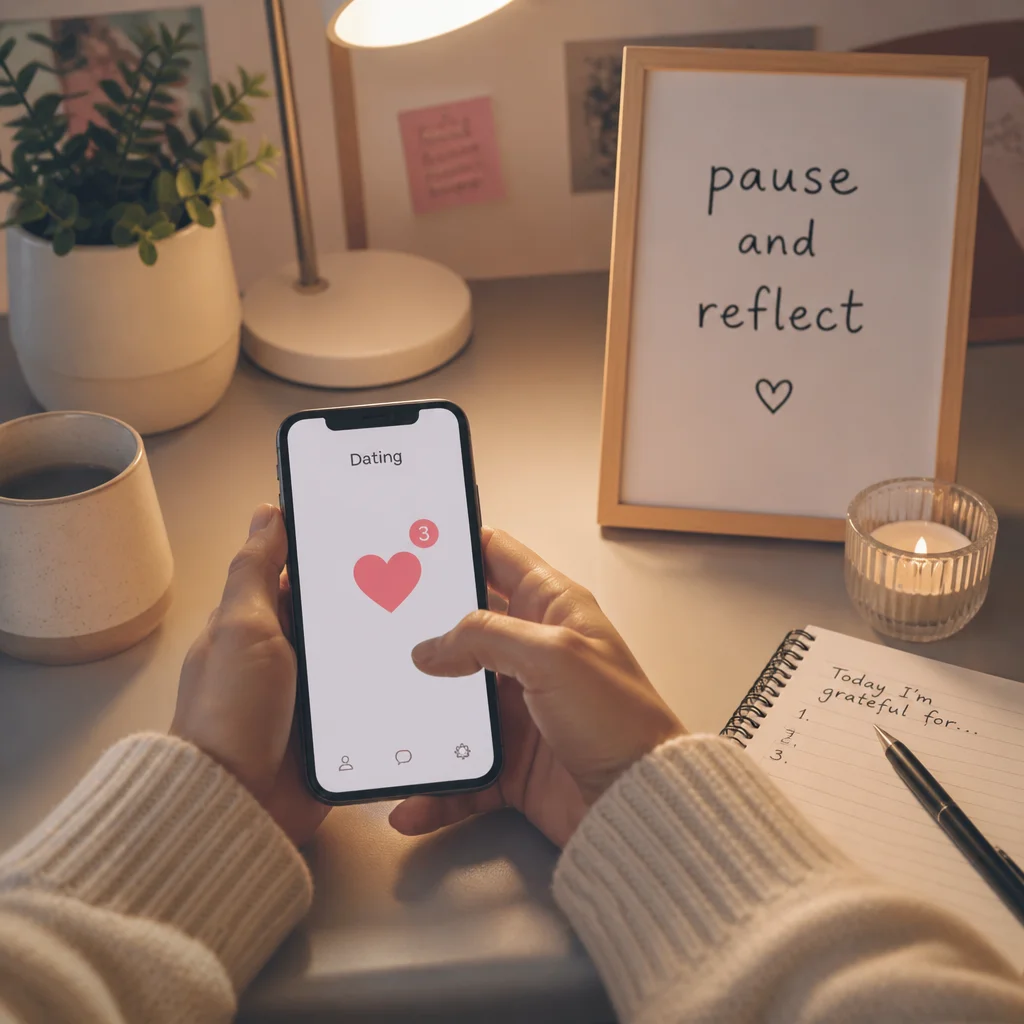
One practical approach is the “24-hour rule” for any significant ENM decision. Before agreeing to a first date, before sharing personal contact information, before introducing a new partner to your polycule — wait 24 hours. This is not about distrusting your instincts. It is about giving your prefrontal cortex time to catch up with your limbic system.
Another tool is the “impulse log.” Keep a notes app entry where you write down impulses as they arise: “Want to message K about meeting up tonight,” “Feel like deleting my dating app,” “Want to tell my partner I am in love after two dates.” Review the log with a trusted friend, therapist, or your nesting partner before acting. Many impulses lose their urgency simply by being named and witnessed.
If you struggle with impulsive messaging during conflict, consider using a draft-first approach. Write the message in a notes app, walk away for at least 30 minutes, then read it back as if a friend sent it to you. Ask yourself: Does this reflect what I actually want to communicate, or just what I feel in this moment?
Rejection Sensitivity and ENM Dating
Rejection sensitivity is arguably the hardest part of ENM dating with ADHD. Non-monogamous dating involves more moving parts — more people, more scheduling, more situations where someone says “not tonight” or “I am feeling more connected to someone else right now.” For a brain that experiences rejection as physical pain, as research from VeryWell Mind explains, these moments can be genuinely destabilizing.

The first step is recognizing RSD for what it is: a neurological response, not an accurate assessment of the situation. When you feel the familiar rush of heat, shame, or the impulse to withdraw entirely, pause and name it. Say to yourself, “This is my RSD. This is my ADHD brain on high alert. It does not mean what I am afraid it means.”
Building a “rejection reality-check” system helps. Create a simple note on your phone with two columns: “What Happened” and “What My Brain Is Telling Me.” In the first column, write only observable facts: “Partner said they need a quiet night alone.” In the second, write your brain’s interpretation: “They are losing interest in me, I am too much, this whole relationship is falling apart.” Seeing the gap between fact and interpretation does not make the feeling disappear, but it does loosen its grip.
If you have not already, talk to your partners about RSD explicitly. You do not need to ask them to walk on eggshells. You are asking them to understand that a brief reply or a rescheduled date might land differently for you than they intend. A partner who knows about your RSD can add five extra words to a text — “nothing is wrong, just swamped at work” — that save you hours of internal turmoil.
Managing the emotional ups and downs of non-monogamous dating is a skill. Our guide on managing anxiety in non-monogamous relationships goes deeper into strategies that apply here.
Time Blindness and Multiple Relationships
Time blindness — the ADHD brain’s difficulty perceiving and estimating time — becomes a genuine relationship issue in ENM. When you are balancing a nesting partner, one or two other connections, dates, check-ins, and your own solo time, the margin for scheduling errors is razor-thin.
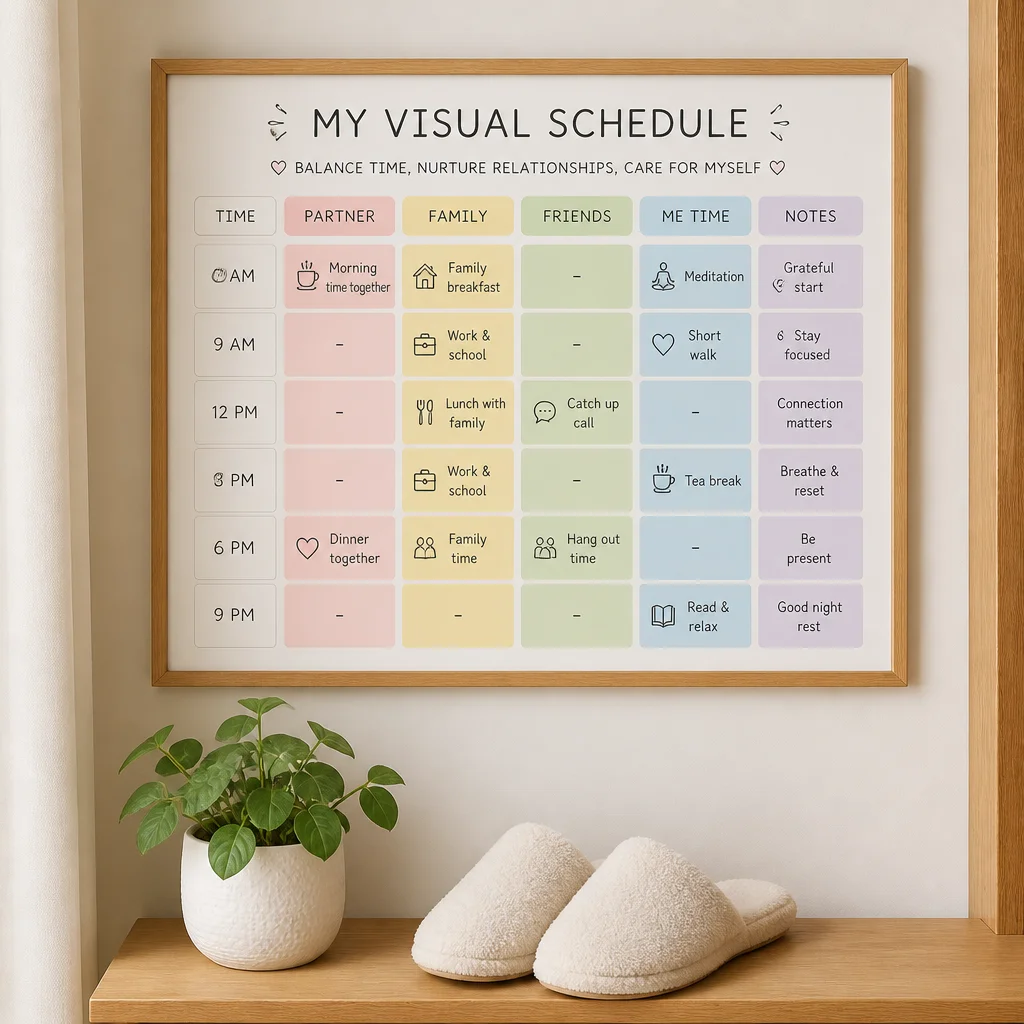
Standard digital calendars help, but they are often not enough. The ADHD brain tends to stop noticing notifications after a while. Instead, try layering multiple reminder modalities: a visual wall calendar with color-coded relationship blocks, phone alarms with distinct sounds for different partners, and a weekly Sunday planning session where you physically write out the week ahead.
One ADHD-specific approach is the “time-block buffer” method. If you estimate a date will take two hours, block three. If a check-in call feels like it should take 30 minutes, block 45. The buffer accounts for both time-blind underestimation and the transition time your brain needs to switch between different relationship contexts.
Also worth considering: some people with ADHD find that parallel polyamory works better than kitchen-table dynamics precisely because it reduces the number of overlapping schedules and social contexts to manage. There is no “right” structure — only the one that lets your brain function without constant overwhelm.
Building ADHD-Friendly ENM Systems
The key to sustainable ENM dating with ADHD is not willpower — it is systems. Your brain needs external scaffolding to do what neurotypical brains do internally. Here are systems that real people with ADHD use in their ENM lives:

Relationship dashboards. A single-page document (digital or physical) that shows at a glance: who you are currently dating, each person’s communication preferences, upcoming important dates, and any outstanding agreements or action items. Update it weekly.
Communication templates. ADHD can make it hard to find words in emotionally charged moments. Pre-write templates for common ENM situations: asking for a check-in, rescheduling a date, sharing that you are feeling disconnected. Having the words ready removes the executive-function barrier.
Body-doubling for tough conversations. Body doubling — having someone present (even virtually) while you do a difficult task — is a well-known ADHD strategy. Apply it to ENM: if you need to have a hard conversation with a partner, do it while you are both folding laundry, walking side by side, or doing a shared activity. Parallel movement reduces the intensity and makes it easier to access your thoughts.
Dopamine-aware dating decisions. Ask yourself before any ENM decision: “Am I making this choice because it aligns with my values and agreements, or because my brain is chasing dopamine?” Neither answer is wrong, but knowing the difference helps you choose consciously.
When Your Partner Is Neurotypical
If you date someone without ADHD, they may misinterpret your symptoms as disinterest, flakiness, or emotional instability. A forgotten check-in looks like you do not care. Hyperfocus on a new connection looks like you have lost interest in them. An RSD spiral looks like you are being dramatic.
You cannot make someone understand ADHD if they are unwilling, but you can offer them a framework. Explain that your brain processes time, emotion, and attention differently — not less, just differently. Share specific, concrete things they can do: “If I go quiet for two days, it is almost never about you — send me a ping with no pressure attached,” or “When I am in an RSD spiral, please just say ‘I am not going anywhere’ instead of trying to logic me out of it.”
Recognizing when your emotional reserves are low is essential in any relationship structure. Our article on recognizing emotional burnout in ENM relationships covers warning signs and recovery strategies that are especially relevant for ADHD brains, which burn out faster and recover differently.
Practical Checklist for ENM Dating with ADHD
- Pre-date prep: Review your relationship agreements. Set a phone alarm for when you need to leave. Pack anything you might forget (charger, medication, water).
- Post-date ritual: Write three bullet points about how you felt. This creates a record your future self can reference and interrupts the impulse to immediately chase the next dopamine hit.
- Weekly reset: Spend 20 minutes every Sunday reviewing your calendar, updating your relationship dashboard, and checking in with yourself about energy levels.
- RSD emergency kit: Keep a saved note with screenshots of kind messages from partners, a list of things you know to be true about your relationships, and a grounding exercise (like 5-4-3-2-1 sensory check).
- Medication timing: If you take ADHD medication, consider how its window affects your dating schedule. A date during a medication crash may not go well — plan accordingly.
- Partner cheat sheet: Give each partner a short list: “When I am overwhelmed, I need ____. My love language is ____. My biggest ADHD-related dating challenge is ____.”
- Dopamine alternatives: Keep a list of non-dating activities that give you a dopamine boost (exercise, creative projects, time in nature). Use them when you notice you are dating primarily for stimulation.
What ENM Dating with ADHD Teaches You
Here is something the ADHD community talks about but the broader dating world rarely acknowledges: ENM dating with ADHD can actually make you better at relationships. The same brain that struggles with time blindness also generates unusual creativity in connection. The same sensitivity that makes rejection painful also makes you deeply attuned to a partner’s emotional state. The same impulsivity that leads to mistakes also brings spontaneity and playfulness that partners often cherish.
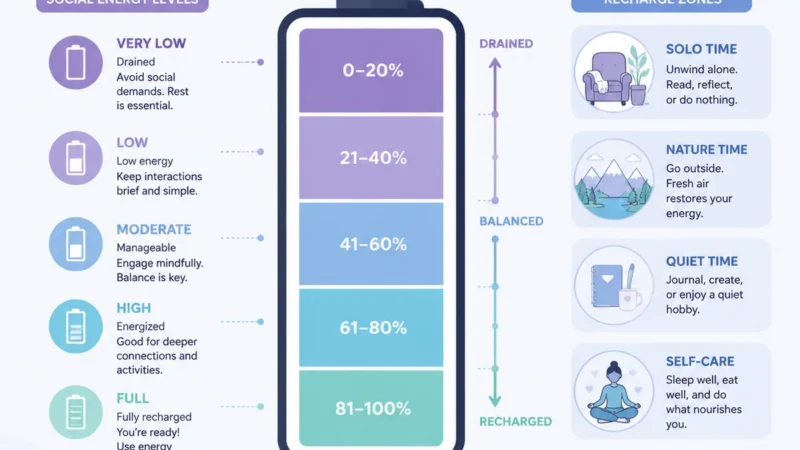
The goal is not to become neurotypical. The goal is to build a relationship life that fits the brain you actually have — one where your ADHD traits are accommodated and your strengths are recognized. ENM dating with ADHD is not about fixing yourself. It is about building the structures that let you show up authentically across all your connections, with all of who you are.
For a deeper dive into how neurodivergent brains can build communication systems that actually work in non-monogamous relationships, read our companion piece on building neurodivergent-friendly communication in ENM.
This article was written by the 3Cupid editorial team to support neurodivergent individuals navigating ethical non-monogamy. Everyone’s experience with ADHD is different — take what works for your brain and leave the rest.