
A relationship smorgasbord is a menu of relationship ingredients you get to choose from, rather than a fixed package you have to accept whole. It turns the loaded question “what is a relationship supposed to include?” into something you and your partners answer together, on purpose.
The idea comes from the non-monogamy community, but you don’t need to be polyamorous to use it. Whether you’re negotiating a threesome, opening a relationship, or just tired of feeling like love has a rulebook nobody handed you, the relationship smorgasbord gives you a shared vocabulary for building a connection that actually fits.
Table of Contents
- What the Relationship Smorgasbord Means
- Where the Idea Comes From
- Smorgasbord vs. the Relationship Escalator
- The Main Categories on the Menu
- Why a Menu Helps in Threesome and ENM Dating
- A Starter Checklist to Try With a Partner
- Final Thoughts
What the Relationship Smorgasbord Means
A smorgasbord, in the original Scandinavian sense, is a buffet of many small dishes. You fill your plate with the things you love and skip the rest. The relationship smorgasbord applies that exact logic to connection. Instead of assuming every romance must bundle together the same ingredients — exclusivity, cohabitation, shared finances, marriage, kids — you treat each one as its own dish that can be chosen, declined, or set aside for later.
The classic version is a grid with categories running down one side, like emotional intimacy, physical affection, sexual connection, time together, and financial entanglement. Next to each, you mark yes, no, or maybe. Two people can sit down with the same grid and realize they’ve been assuming completely different menus. That’s the whole point: the menu makes the assumptions visible so you can actually talk about them.

Where the Idea Comes From
The relationship smorgasbord grew out of relationship anarchy, a philosophy popularized by Andie Nordgren’s 2006 manifesto. Relationship anarchy rejects the idea that romance has to rank above friendship, or that any relationship has to follow a preset path. The smorgasbord is the practical tool that came out of that thinking — a way to actually design your commitments instead of inheriting them.
The Multiamory podcast’s episode on the smorgasbord of relationships helped turn the concept into the visual grid most people know today. Since then it has spread through the polyamory and ENM world as a low-pressure conversation starter. You don’t need to identify with any particular label to find it useful.
Smorgasbord vs. the Relationship Escalator
The relationship escalator is the default script most of us absorbed without noticing: meet, date, go exclusive, move in, get engaged, marry, buy a house, have kids. Each step is a marker that tells the outside world your relationship is “serious.” If you want a fuller picture of that script, our beginner’s guide to the relationship escalator walks through it.
The smorgasbord is the alternative. Where the escalator is a ladder you climb, the smorgasbord is a table you build. Neither is inherently better — the point is that one is a default and the other is a choice. You can absolutely keep every “traditional” ingredient and simply choose it deliberately rather than coasting into it.
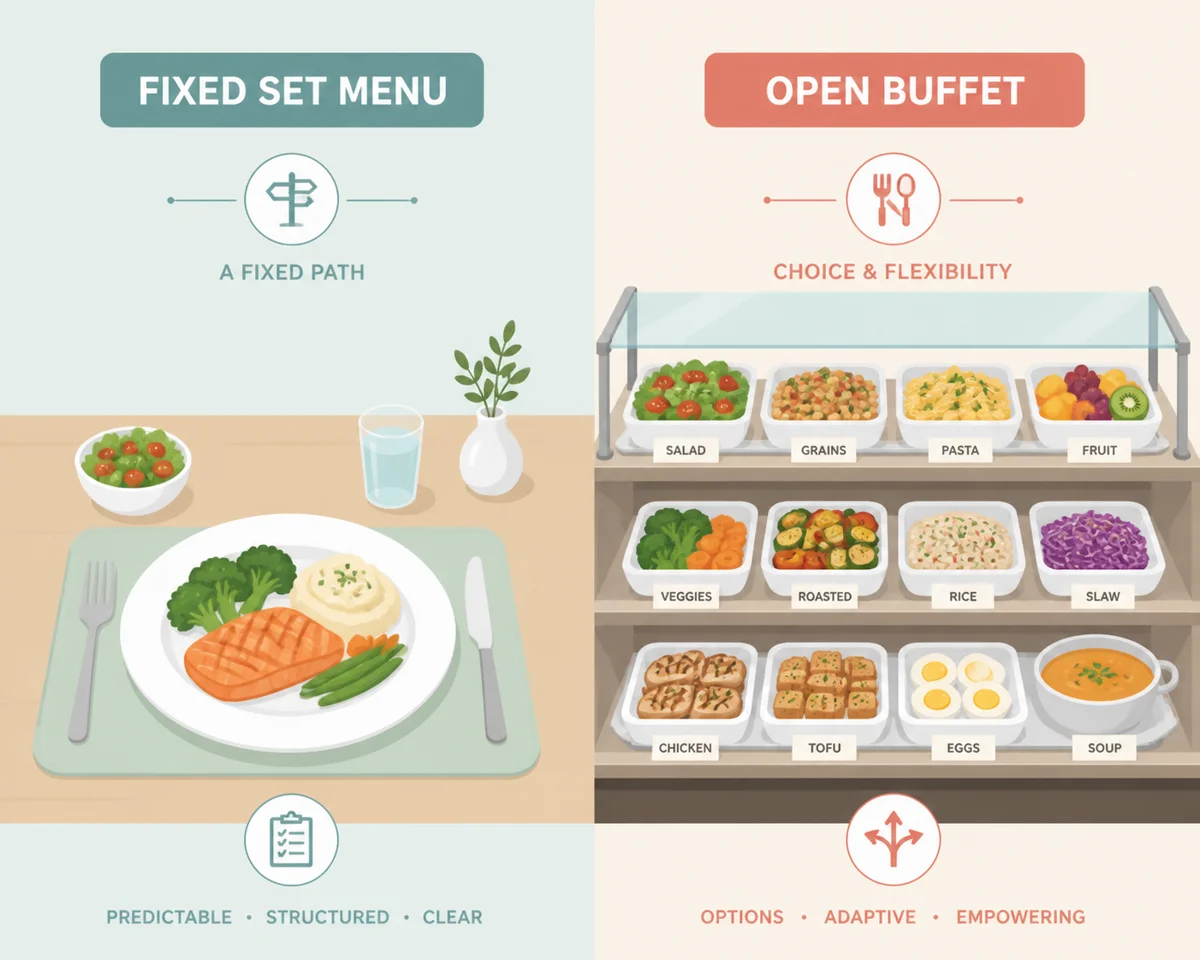
- Escalator: one fixed path with visible markers. Smorgasbord: many possible combinations.
- Escalator: progress measured by outside milestones. Smorgasbord: success defined by the people in it.
- Escalator: skip a step and people ask questions. Smorgasbord: every combination is valid on purpose.
The Main Categories on the Menu
Menus vary, but most versions share a common core of categories. These are the ingredients people tend to assume go together, and the ones worth pulling apart:
- Emotional intimacy — how much you share and lean on each other
- Physical affection — cuddling, touch, and closeness outside sex
- Sexual connection — whether, and how, sex is part of the relationship
- Time and attention — how often you see each other and how you prioritize it
- Cohabitation — whether you share a home
- Financial entanglement — shared accounts, joint expenses, shared goals
- Co-parenting or caregiving — children, pets, or caring responsibilities
- Social recognition — how you present the relationship to friends, family, and work

Not every relationship needs every category. A casual threesome partner might share sexual connection and time together, but not cohabitation or finances. A nesting partner might share a home and finances while keeping sex with others open. The menu is simply a way to name those differences instead of guessing at them.
Why a Menu Helps in Threesome and ENM Dating
Threesome and ENM dynamics involve more than two people, which means more assumptions and more room for them to clash. A couple looking for a third, and the person who joins them, often have very different mental pictures of what the connection will include. The menu gives all of you one shared worksheet to compare.
It’s also a quiet way to surface things that feel too big to bring up. Talking about “financial entanglement” on a grid is often easier than saying “I’m worried you two make decisions without me.” If you’re newer to this world, our ethical non-monogamy 101 guide covers the fundamentals before you dive in.

Above all, the menu respects the third person as an equal participant with their own preferences — not a guest who has to fit a couple’s existing plan.
A Starter Checklist to Try With a Partner
You don’t need a formal grid to start. Pull out these starter categories and, for each one, ask two simple questions: “Do I want this?” and “What does this actually look like to me?”
- Time: how often do we see each other, and who initiates?
- Touch and affection: what kinds of physical closeness feel good outside sex?
- Sex and safer-sex agreements: what are our boundaries and expectations?
- Living and logistics: do we share a home, keys, or daily routines?
- Money: do we share expenses, and if so, how?
- Future plans: do we make long-term plans together?
- Community: how do we describe this relationship to others?
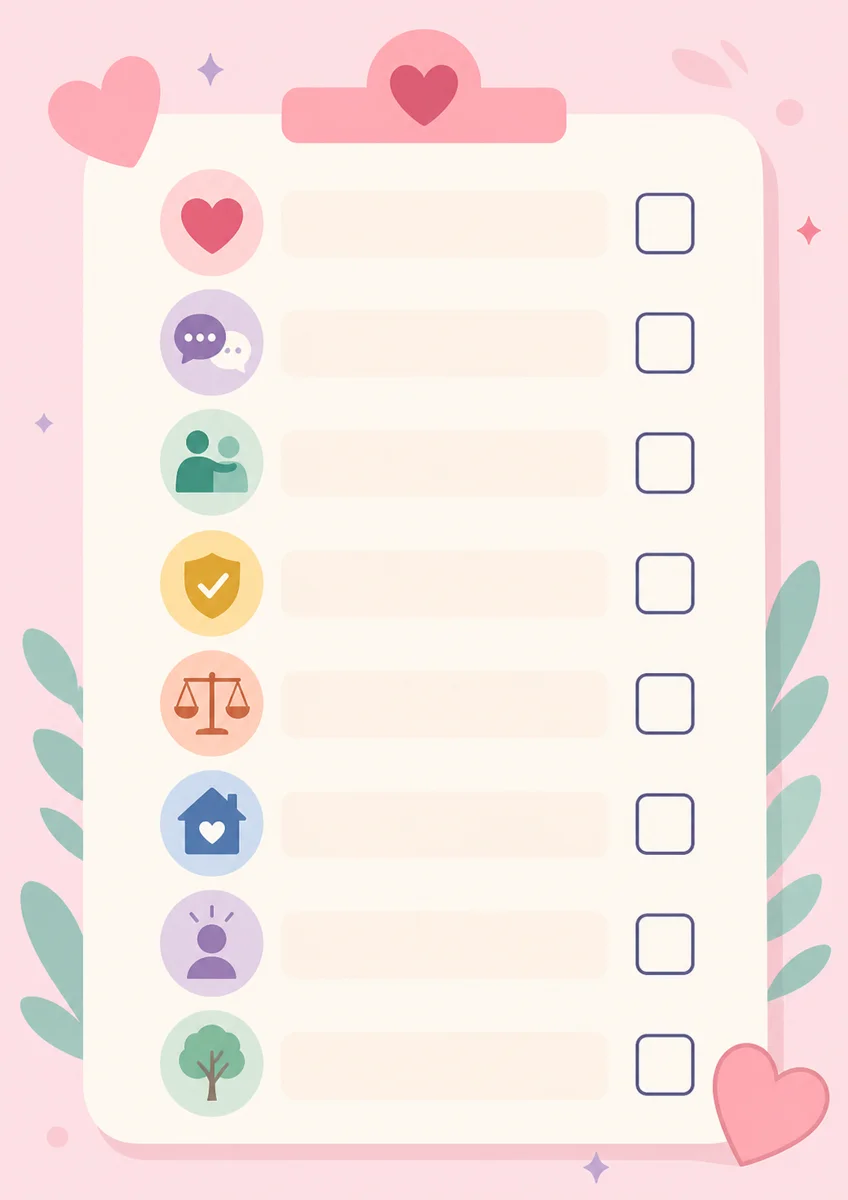
Go through it separately first, then compare notes. The goal isn’t to match perfectly — it’s to see the gaps before they become problems.
Final Thoughts
The relationship smorgasbord isn’t a rulebook; it’s permission. Permission to keep the parts of a relationship you actually want, skip the parts you don’t, and build something that fits the specific people in front of you rather than a template you inherited.
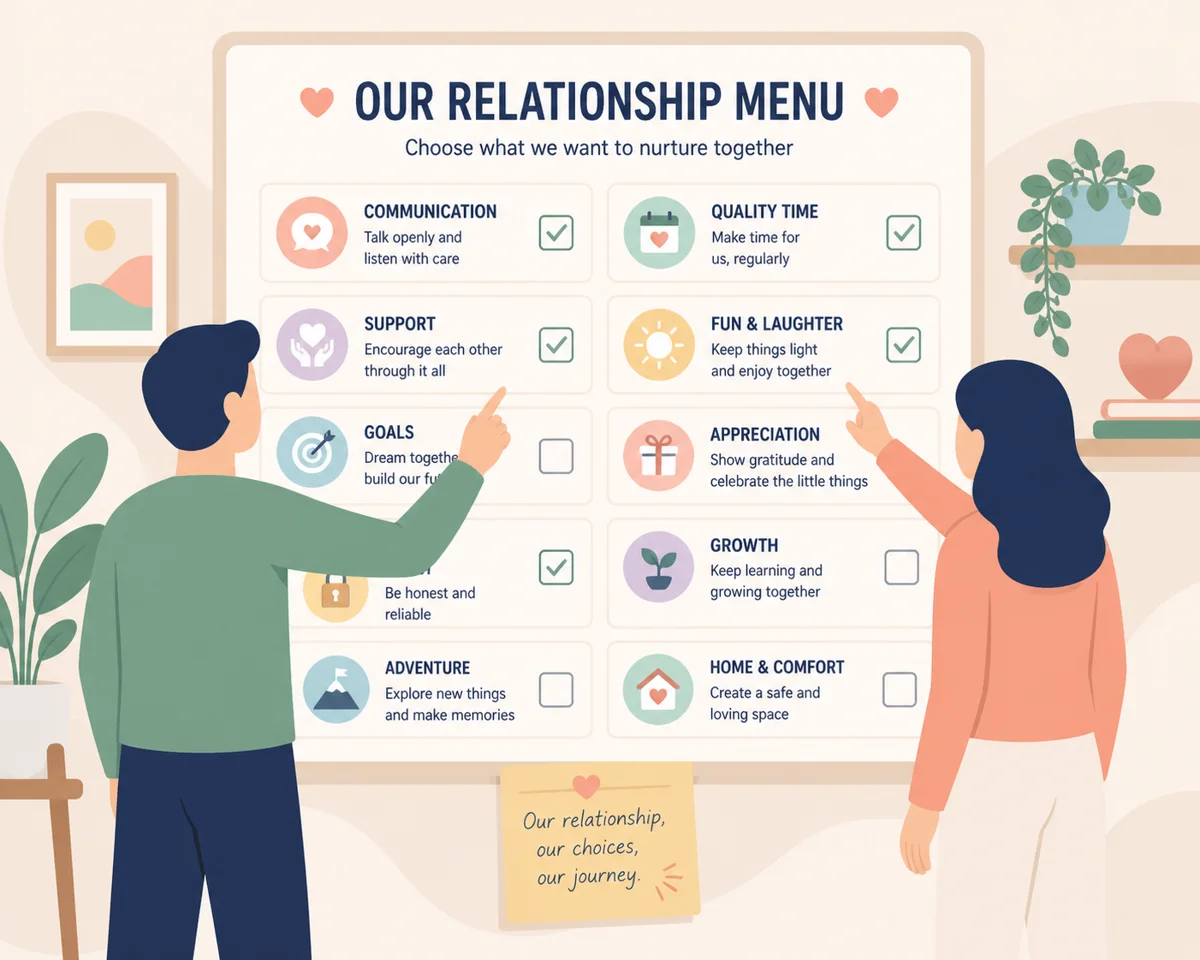
Once you’ve seen the menu, the natural next step is learning how to use it in a real conversation — comparing notes without turning it into an argument, and revisiting the menu as things change. Our guide on how to use a relationship menu to negotiate walks through that process step by step.
Editor’s note: This guide is written for adults (18+) exploring relationship structures. It reflects general educational information, not professional advice. Every relationship is unique, so design yours with honesty, consent, and care.