Table of Contents
- Garden Party Polyamory, Explained Simply
- Where Garden Party Sits Between Kitchen Table and Parallel
- What a Garden Party Dynamic Looks Like Day to Day
- Why Some Poly People Prefer the Garden Party Style
- Garden Party Polyamory vs Swinging vs Open Relationship
- Is Garden Party Polyamory Right for You?
- How to Bring Up Garden Party With Your Partners

You’ve probably heard of kitchen-table polyamory and parallel polyamory. Garden party polyamory is the third spot on that spectrum, and it’s the one that gets the least airtime. Think of it as the friendly middle ground: your partners know each other, you’d happily share a meal with them in the same room, but you don’t expect (or want) to plan a weekly game night with the whole polycule.
Garden party polyamory isn’t a formal label. It’s a vibe — a set of small habits that add up to a particular way of relating. Some people settle into it naturally. Others aim for it because full kitchen-table energy feels like too much, and parallel feels a little cold. Either way, if you’ve ever described your polycule as “we’re friendly but not a unit,” you’ve probably already been living in a garden party dynamic without the name.
This guide walks through what garden party polyamory actually means, where it fits between the two better-known styles, what day-to-day life looks like inside one, and how to figure out if it’s the right shape for the relationships you’re building.
Garden Party Polyamory, Explained Simply
The phrase “garden party polyamory” started showing up in polyamory blogs and Reddit threads around the mid-2010s, and it’s stuck because it captures something specific that the older labels missed. A garden party dynamic is one where your partners (and metas) are on warm, friendly terms — they’d say hi in the supermarket, share a holiday card, sit at the same BBQ. But the relationship between you and one partner isn’t expected to be the same shape as the relationship between you and another, and there’s no pressure to function as one big blended group.
A useful way to picture it: at a garden party, the host knows everyone by name, the guests are comfortable enough to chat with each other without the host running interference, but nobody is asked to commit to next weekend. The vibe is warm, optional, and unhurried.
If you’ve been poly for a while, you’ll probably recognise yourself somewhere in that image. It’s also worth saying what garden party polyamory is not. It’s not a stage on the way to kitchen-table. Plenty of poly people stay in the garden party zone for years by choice. It’s not a downgrade, not a “less committed” version of polyamory. It’s just a different shape, with its own kind of closeness.
Group dinners in a garden party polyamory setup are friendly, occasional, and almost always optional. If the host is busy that week, it just gets rescheduled, and nobody is keeping score.

Where Garden Party Sits Between Kitchen Table and Parallel
If you’re new to polyamory vocabulary, the two big reference points are worth a quick recap. Kitchen-table polyamory means your partners and metamours are comfortable enough to sit around the same table, share meals, co-parent, or plan a trip together. Parallel polyamory means your partners rarely (or never) meet, and you keep the relationships in separate lanes by design — partly to protect privacy, partly because the relationships are different in tone and not naturally compatible.
Garden party polyamory sits between those two. There’s enough warmth and overlap that running into each other isn’t awkward, but the expectation of routine togetherness is gone. You’re friendly, not fused.
This matters because polyamory isn’t one-size-fits-all, and a lot of the friction in new poly arrangements comes from mismatched expectations about how integrated the network should be. If you and one partner are quietly kitchen-table and another partner really values parallel, that mismatch can quietly erode trust if you never name it. Garden party gives the middle a name, which makes it easier to ask for.
What a Garden Party Dynamic Looks Like Day to Day
So what does a garden party polycule actually do? Here’s a composite sketch drawn from how people in long-running garden party setups describe it:
- Group dinners happen a few times a year, not weekly. Birthdays, a holiday, the occasional “we should all get together” that actually happens.
- Metas are on a first-name, hug-or-handshake basis. They’ve had real conversations, they know each other’s work, they might even text occasionally about a shared interest.
- You don’t manage your partners’ relationships with each other. If Partner A and Partner B become friends on their own, that’s lovely. If they don’t, that’s also fine.
- Sleepovers at your place don’t require a six-person group chat. Your existing partner might meet your new partner at the door, exchange a quick hello, and head out for the evening.
- Conflict between metas is handled by the metas. You’re not the relay station.
The common thread is warm autonomy. People in a garden party dynamic tend to describe it as “easy” and “low-drama” — not because there’s no friction, but because the structure leaves room for friction without it becoming everyone’s problem.

A garden party polyamory setup often looks like two metas who’d happily walk a garden path together — comfortable enough to be companionable, but not obligated to plan their weekends around each other.
Why Some Poly People Prefer the Garden Party Style
A few reasons keep coming up when poly people talk about choosing — or landing in — the garden party zone.
First, it’s realistic for adult life. Most poly people have jobs, kids, ageing parents, and at least one hobby that eats their Tuesday nights. Building a tightly integrated polycule is a lot of social coordination, and not everyone has the bandwidth. Garden party asks less of your calendar while still giving you the emotional texture of being part of a small, known community.
Second, it protects different relationship shapes. A long-term nesting partner often has a quieter, more domestic bond. A newer, more fiery partnership might have a totally different rhythm. Forcing both into the same social mould can flatten what’s special about each. Garden party lets each relationship be its own thing without cutting metas off.
Third, it’s a natural fit for long-distance or low-overlap polycules. If your partners live in different cities, or have very different social circles, full kitchen-table isn’t realistic. Parallel might feel more isolating than you’d like. Garden party polyamory is the realistic middle that still feels connected.
Warm autonomy is the through-line — friends who can sit together without anyone keeping score.

Garden Party Polyamory vs Swinging vs Open Relationship
A garden party dynamic can overlap with swinging or open relationship setups, but they’re not the same thing, and it’s worth being clear about why you’re seeking what.
Swinging is usually couple-centric, often recreational, and tends to centre on shared sexual experiences with other couples or singles. The social fabric can absolutely be garden-party-adjacent — friendly metas, occasional group hangs — but the through-line is sexual, not romantic. If what you want is romantic, emotionally bonded, multi-partner relating, you’re in polyamory territory, and garden party is one shape of that.
Open relationships are usually structured around a primary couple with permission to date outside it. The primary bond stays central; outside connections are welcomed but typically don’t reach the same depth as the primary one. A garden party dynamic can absolutely exist inside an open relationship — your primary partner and your outside partner might be friendly, casually share a meal, and not be involved in each other’s lives. But the openness here is negotiated and bounded in a way that polyamory, by definition, isn’t.
If you’re unsure where you fall, a useful question is: do you want your outside relationships to be able to grow into something long-term and emotionally central in someone’s life? If yes, you’re aiming at polyamory, and garden party polyamory is one of the shapes that polyamory can take.
Is Garden Party Polyamory Right for You?
A quick gut-check list. Tick the ones that feel true:
- I like my partners to know each other, but I don’t want to plan my life around a polycule calendar.
- I want my different relationships to keep their own shape, and I don’t need them to mirror each other.
- I’m comfortable with metas being friendly without needing to be close friends.
- I have a full life outside of dating, and I want my poly structure to support that, not compete with it.
- I value warmth and small moments of connection over tightly scheduled group time.
If most of those landed, garden party polyamory is probably a comfortable fit. If several didn’t — for instance, you actively want a tightly bonded polycule, or you really need metas not to interact at all — you’re probably closer to kitchen-table or parallel.
You can also drift between styles over time. A relationship that started parallel can warm into garden party as trust builds. A garden party setup can move toward kitchen-table if life and bandwidth align. The point is to name what you have now, not to lock it in forever.
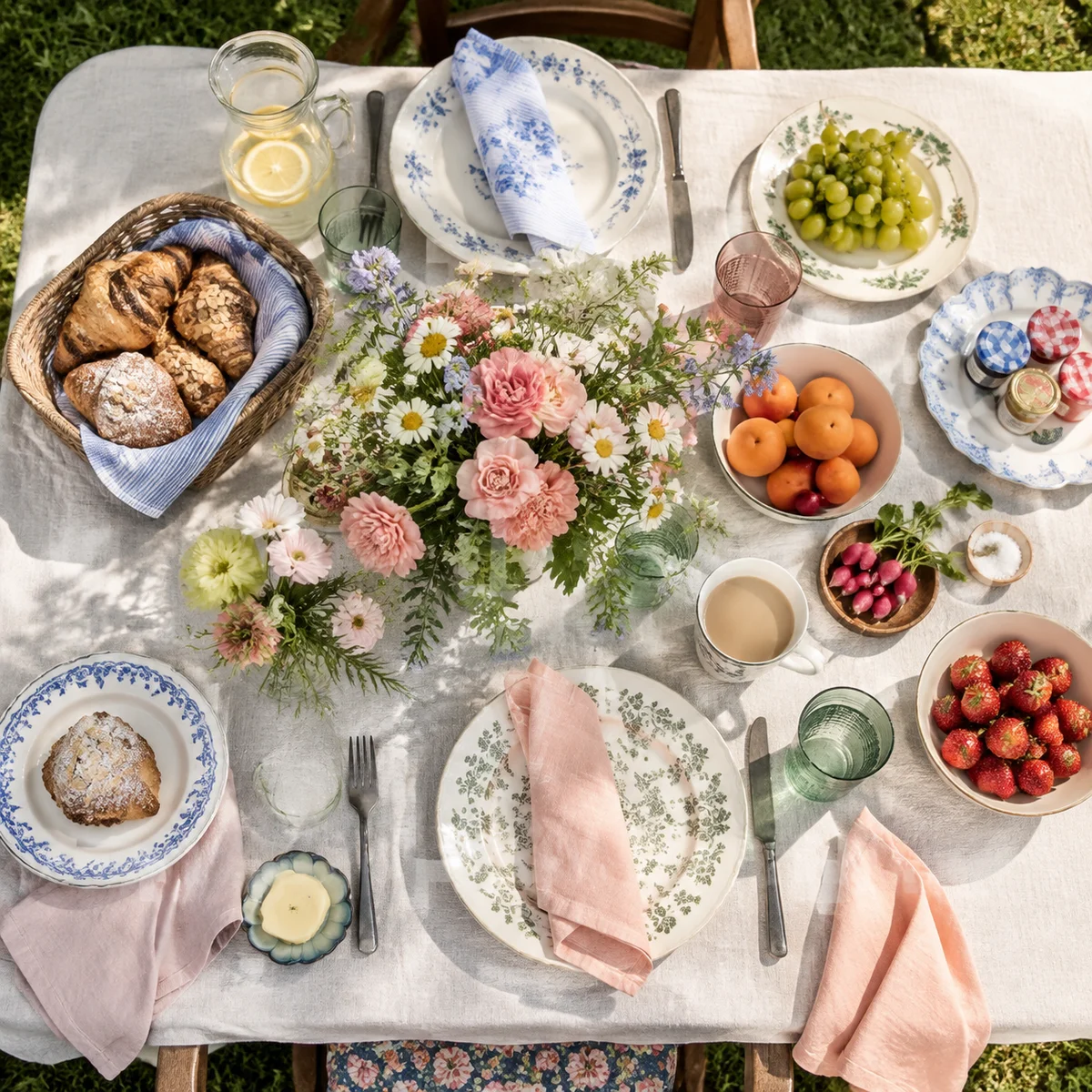
Garden party polyamory isn’t a halfway house. It’s a deliberate choice to keep things warm, optional, and unhurried.
How to Bring Up Garden Party With Your Partners
If garden party polyamory sounds like what you’re already living, naming it out loud is a useful exercise. You don’t need to make it a big policy announcement. A simple “I think what we have is closer to a garden party setup than a kitchen-table one, and that feels right to me — does that match what you want?” is enough.
A few things to listen for in their answer:
- Do they feel relief at the name, or do they wish you’d talked about something else?
- Do they describe a different shape of poly life than the one you’re picturing?
- Are they able to talk about their other partners without defensiveness?
If your answers line up, you’ve just made a small but meaningful piece of your poly structure easier to navigate. If they don’t, that’s not a failure — it’s useful information. Mismatched expectations about how integrated the polycule should be are one of the most common sources of slow-burning friction in polyamory, and naming the shape you each want is usually the first step toward resolving it. For a deeper look at the foundational ideas behind how polyamory relationships are structured, the More Than Two guide to polyamory is a solid starting point. If you’re still figuring out your own shape, our beginner’s guide to ethical non-monogamy covers the foundational vocabulary, and our guide on how to talk about your polyamory style with new partners walks through the conversation itself. You can also browse profiles and lay out what you’re looking for right here at 3Cupid.
Editor’s note: This article is intended for adults 18+ and is written for general informational purposes only. It does not substitute relationship, mental-health, or legal counselling.