Polyamory anniversaries get complicated for a simple reason: nobody hands you a list of which dates count. One relationship has a first-date anniversary. Another has the day you said “I love you.” A third has the day you agreed to open things up. Multiply that by birthdays and you have a calendar most people are quietly improvising.
The short answer: every relationship gets to name its own anchor date, and the names should be said out loud. You do not need to rank them, and you do not need to celebrate them at the same scale. You do need a system, because improvising tends to fail on exactly the days that matter most.
General relationship information for adults, offered as a starting point — not advice about your specific situation.

Table of Contents
- What Counts as a Polyamory Anniversary?
- Build a Milestone Calendar Before You Need One
- Birthdays When Metamours Are in the Picture
- When the Date Itself Is Complicated
- Markers That Cost Nothing
- When a Milestone Hurts Instead
- Frequently Asked Questions
- A Calendar That Actually Works
What Counts as a Polyamory Anniversary?
More than people expect. In monogamy the default is usually the wedding date or the day you started dating. Without that default, you get to choose — and choosing is the whole task.
- The day you met — popular with people who like origin stories.
- The first date — the most common stand-in for a traditional anniversary.
- The defining conversation — the day you agreed to be non-monogamous, or the day you named the relationship.
- First “I love you” — quietly significant for a lot of people, often forgotten.
- First overnight or first trip — practical, memorable, easy to recreate.
- A rebuilt date — the day you came back together after a rupture. Some people value this above all the others.
There is no correct pick. What matters is that both people in that relationship agree on which one is “the” date, so nobody is privately celebrating on a different day and feeling unnoticed. Research on how couples mark shared meaning consistently points to the ritual itself mattering more than the date’s precision.
Anchor dates can also be renegotiated. The day that felt right in year one may stop fitting by year three, especially after a relationship changes shape. Revisiting the choice is not a downgrade — it is maintenance. A five-minute conversation in a quiet month is usually enough.
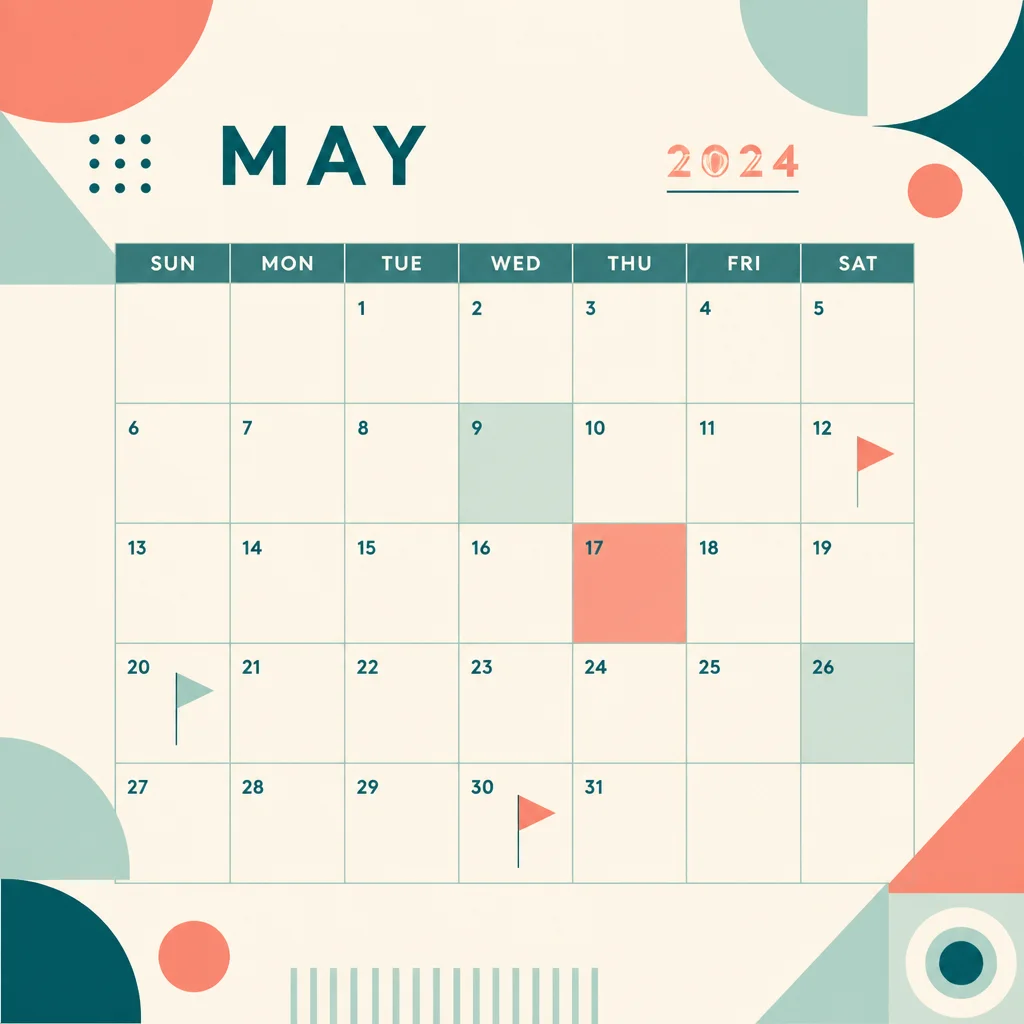
One useful habit: write the date down with a one-line note about why it was chosen. Two years later, when you cannot remember whether April 3rd was the first date or the first kiss, that note saves an awkward guess.
Build a Milestone Calendar Before You Need One
The failure mode is not forgetting a date. It is remembering it the morning of, with no plan, no gift, and no free evening. A calendar with lead time fixes almost all of that.
| What to record | Why it matters | How far ahead to set a reminder |
|---|---|---|
| Anchor anniversary per relationship | Prevents the “which day is it anyway” problem | Two weeks |
| Birthdays of partners | Obvious, but easy to lose in a busy month | Three weeks |
| Birthdays of metamours, if relevant | Small recognition can soften a lot of tension | One week |
| Hard dates (loss, breakup, surgery) | Lets you offer care instead of being surprised by a mood | One week |
| Your own recovery days | So you are not booked solid through a heavy stretch | Two weeks |
Keep it somewhere you will actually look. A shared note, a private calendar, a paper planner — the format does not matter. What matters is that it exists before the first milestone of the year, not after you have already missed one.
This is the same muscle as ordinary logistics. If time is already tight, balancing time across multiple relationships covers the wider scheduling picture, and fair scheduling without keeping score goes at the fairness question directly.
Different Partners, Different Scales of Meaning
Not every anniversary deserves the same production. A five-year nesting relationship and a four-month connection are both real and both worth marking — just not identically. Pretending otherwise is what makes people feel either smothered or dismissed.
A useful framing: match the marker to the relationship’s actual shape, not to its rank on a list. Ask each partner what scale feels right to them. You may be surprised how many people want something small and consistent rather than one big annual event.
- Long, established relationships: often want a protected stretch of time more than a present.
- Newer connections: often want a clear signal that the date was remembered at all.
- Long-distance partners: often want a synchronous moment — a call, a shared film, an online game night.
- Comet relationships: often prefer low-pressure acknowledgement to anything that implies obligations.
Birthdays When Metamours Are in the Picture
A birthday is the milestone most likely to involve more than two people. Someone may want a joint dinner. Someone may want nothing to do with their metamour on their birthday. Both are reasonable, and neither should be assumed.
Ask three questions well in advance: do you want it to be just us, would you like a group thing, or would you rather have the day to yourself entirely? Then respect the answer even if it is not the one you hoped for.
Where a group celebration does happen, keep the focus on the person whose birthday it is. Group events have a way of turning into a metamour social test, and that is a lot to put on someone’s birthday.
It is also worth deciding in advance who pays and how the cost is split. Uneven incomes inside a constellation are normal, and a group dinner can quietly become a resentment generator if the split is never discussed. Name the number before anyone orders.
And if someone declines the group option, take it at face value. Wanting a quiet birthday with one person is not a statement about the rest of the network. The healthiest constellations treat “no” as ordinary information rather than a problem to solve.

For the wider seasonal picture — holidays, family gatherings, the dates fixed by a calendar you did not choose — holidays and special occasions in polyamorous relationships picks up where this section leaves off.
When the Date Itself Is Complicated
Some anniversaries are not clean. The date you got together may sit close to a date someone else in the constellation associates with a breakup. A birthday may coincide with a family loss. An anniversary may arrive two weeks after a hard conversation.
You cannot fix these with better planning. You can only acknowledge them. A short note — “I know this week is tangled for you. I am here, and I am not expecting a performance” — does more than any reservation.
- Ask before the date, not during it, whether they want it marked at all.
- Offer a scale-down option explicitly: “we can do the small version this year.”
- Do not treat a muted reaction as a verdict on the relationship.
- If partners’ milestone dates collide, negotiate the split openly rather than silently picking.
- Let the person with the hard date choose the scale, rather than choosing it for them.
One pattern that works well: give the complicated date a “small version” default. Instead of deciding from scratch each year whether to celebrate, agree that this particular date gets a quiet acknowledgment unless someone actively asks for more. Removing the annual decision removes most of the dread.
The other half of this is telling the truth about your own capacity. If you are the partner supporting someone through a heavy date, you are allowed to say so — and you are allowed to ask for a break from it. Care that never gets replenished does not stay care for long.
Markers That Cost Nothing
Plenty of the most-loved polyamory anniversaries involve no money at all. A short list, drawn from what people actually describe as memorable.
- Re-walk the route of your first date, in the same order.
- Re-read the first messages you exchanged, out loud, and cringe together.
- Re-cook the meal from the night you met.
- Write down five things that changed this year and read them to each other.
- Take the same photo in the same spot as last year and compare.
- Spend the evening doing the ordinary thing you did on day one — nothing staged.
- Name the year out loud: “that was year three” costs nothing and lands heavily.

Rituals work because they repeat, not because they impress. Pick one small thing you can genuinely sustain for five years rather than a grand gesture you will quietly drop by the second.
When a Milestone Hurts Instead
Sometimes the anniversary arrives and the honest feeling is grief. The relationship has changed shape. Someone is not where they were last year. Or you are the person without a marker at all, watching other people celebrate theirs.
That last one deserves saying plainly: being single, or being the partner with the shortest history, can make other people’s milestone season heavy. It is not a character flaw. It is a normal response to a calendar that was not built with you in mind.
If the feeling is persistent rather than occasional, it may be worth a wider look at self-esteem and how we measure our own standing — and at whether your relationships are giving you enough ordinary reassurance, not just annual gestures.
Practical handling: let the day be small. Tell someone what is going on. Do not force a celebration that feels like acting. And if the same milestone hurts every single year, treat that as information worth acting on rather than weather to endure.
Frequently Asked Questions
How many anniversaries should we celebrate?
One per relationship is plenty. You can acknowledge secondary dates casually without turning each one into an event. Most people do better with fewer, more reliably kept markers.
What if two partners have milestone dates in the same week?
Split it openly and early. Give each relationship its own window rather than trying to compress both into one day, and say out loud how you divided things so nobody has to guess.
Is it strange to celebrate the day we agreed to open our relationship?
Not at all. For a lot of people that date carries more weight than a first date ever did. If it means something to both of you, it counts.
Should metamours get anniversary recognition too?
Only if everyone involved wants that. A brief, low-pressure acknowledgement can be warm; an obligation nobody discussed is not. Ask rather than assume.
A Calendar That Actually Works
Polyamory anniversaries stop being stressful when they stop being improvised. Name each relationship’s anchor date, put everything in one place with reminders, ask people what scale they want, and keep the markers small enough that you can still be doing them in five years.
Presents are a separate question from dates, and a thornier one. We covered budgets, the comparison trap, and low-cost options in our guide to gift giving in polyamory.
And if you are still assembling the constellation — meeting people who already speak this language — that is exactly what 3Cupid is built for.
Editorial note: this article offers general relationship information for adults and is not a substitute for mental health or professional advice. Adapt any suggestion to your own agreements.