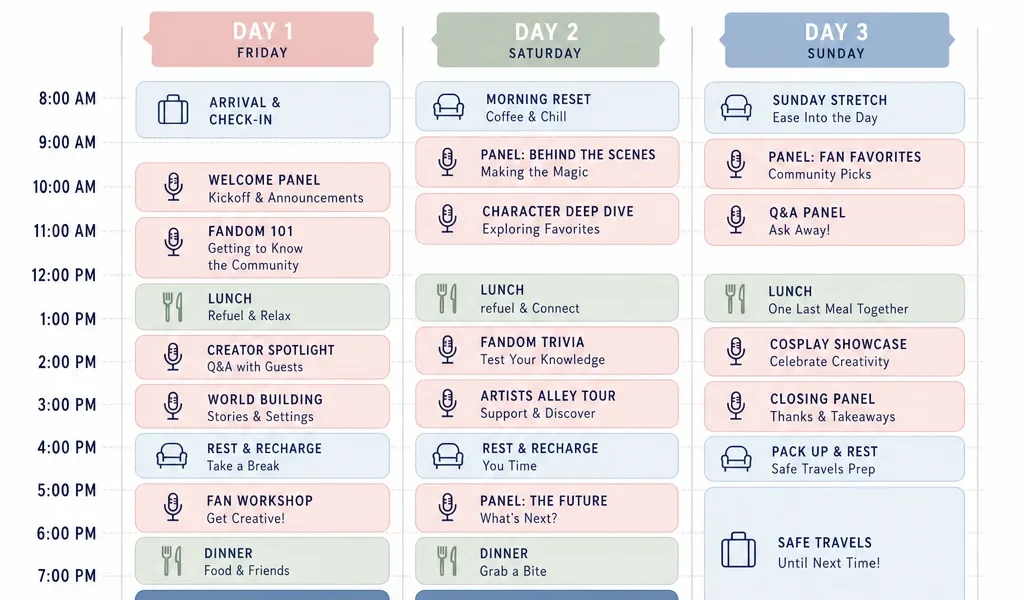
A fan convention is one of the few places where a non-monogamous adult can meet several compatible people in a single weekend without explaining the basics first. Comic conventions, anime conventions, sci-fi conventions, gaming conventions, cosplay gatherings and furry conventions all have a large overlap with ethical non-monogamy, mostly because both scenes attract adults who are already used to negotiating rules, identities and boundaries out loud.
Here is the short version. Non-monogamy at conventions works when you treat the event as a social environment with its own norms rather than as a dating app with better costumes. Choose cons where you genuinely like the programme. Give people a way to find you again. Assume anything you say in a crowded hallway may be overheard. Decide before you arrive what you are and are not available for, because a four-day event is a poor place to improvise.
This guide is general relationship and event-safety information for adults. Conventions publish their own codes of conduct and venues set their own rules; check both for the event you are attending.
Table of Contents
- Why Non-Monogamy at Conventions Works Differently
- Badges, Real Names and How Much to Share
- Consent Culture and Con Culture Are Not the Same
- Room Parties, Suite Floors and After-Hours
- Making Your Situation Readable
- Energy, Sleep and the Four-Day Crash
- Photos, Video and Being Recorded in Costume
- Turning a Con Weekend Into Real Community
Why Non-Monogamy at Conventions Works Differently
Three things separate a convention from every other place you might meet somebody. The first is density: several thousand people with at least one intense shared interest, in one building, for three or four days. If you date from a thin local market, that concentration is worth roughly a year of first dates. It is the same reason people travel to ENM festivals and retreats, except you get the density without having to book time off for a relationship event you have never tried.
The second is that the baseline explanation is shorter. Fandom spaces contain a lot of queer adults, a lot of adults who already do some form of ethical non-monogamy, and a lot of adults who at minimum are not shocked by it. You spend less of the conversation defining terms and more of it finding out whether you actually like each other.
The third is that consent norms are written down. Most established conventions publish a code of conduct, staff a harassment desk, and will remove someone. That is a real advantage over a noisy bar, where the only enforcement is whoever happens to be working the door.
The weekend-feels-like-a-month problem
Compressed time distorts judgement. If you spend eleven hours with someone across three days, your brain files it as a month of acquaintance, because in ordinary life eleven hours of conversation takes about a month to accumulate. It did not. What you have is eleven hours, in an unusual setting, with both of you off work and short on sleep.
The practical fix is boring and it works: schedule one ordinary follow-up. A coffee, a walk, a video call, a film you both watch and then argue about. Anything that happens at normal life temperature. If the connection survives a Tuesday evening conversation about nothing in particular, you have learned something real. The companion piece on what happens after the weekend goes into this in more detail.
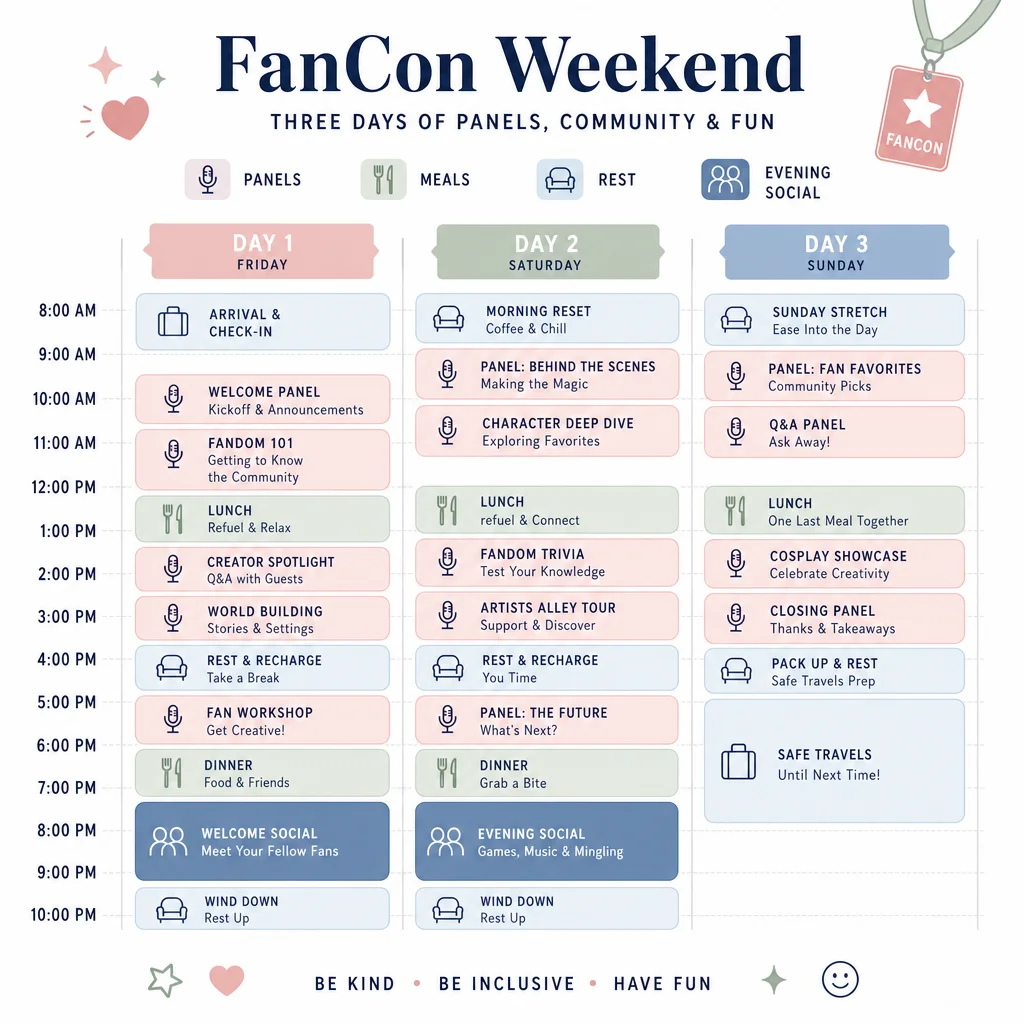
There is one more difference worth naming: at a convention you are not only meeting a person, you are meeting their standing in a community. People talk. Reputation travels between cons, between servers and between cities. Being pleasant company in public is a genuine asset here, in a way it is not on an app.
Badges, Real Names and How Much to Share
A large share of con attendees go by a handle, and a good number of them have serious reasons for it. Stalkers exist. Employers google. Family members search. Trans attendees may use a name at the con that they do not use at work. None of that is evasion, and none of it is your problem to solve.
The rule that keeps everybody comfortable: give your own name when you are ready, and let other people give theirs on their own schedule. Do not ask for someone’s legal name in front of a group. Do not announce that you have worked out who they are. If you need a real name before meeting in person, ask privately, explain what it is for, and accept that the answer may be no.
- Share your handle first, plus one durable contact you actually check – a server, a social account, an email.
- Offer your real name early if you have no reason to withhold it; it makes you easier to verify and costs you nothing.
- Ask for a real name only when there is a concrete reason, such as a safety check before travelling or meeting privately.
- Never read someone’s badge out loud to a group, and never photograph a badge without asking.
- If someone will not give you any verifiable identity at all but wants to meet alone, treat that as your answer.
- Keep the same standard for yourself: if you would not want it repeated in a hallway, do not say it in one.
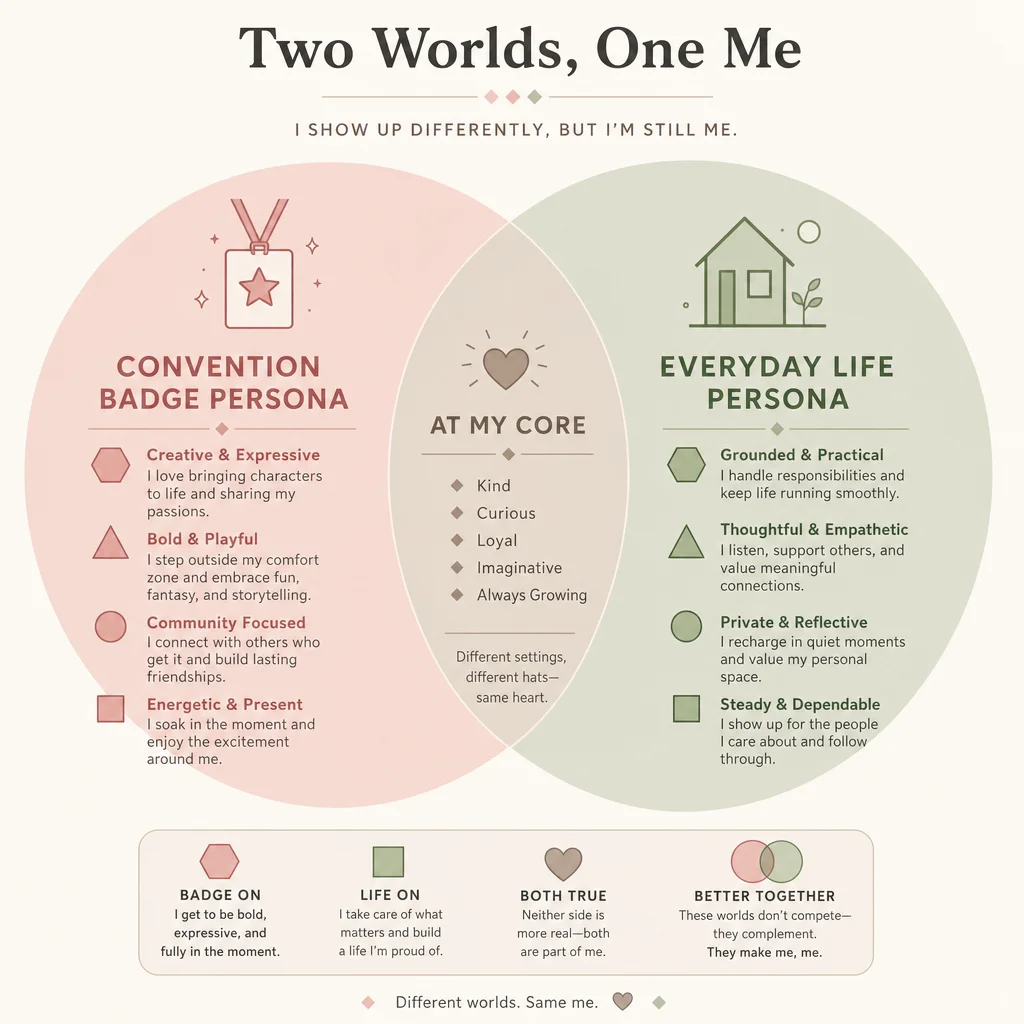
Digital hygiene is the other half of it, and general guidance on keeping your digital life private is worth twenty minutes before any large event. A convention is a weekend of adding people to group chats, QR codes and shared photo albums, and it is very easy to hand out more access than you meant to. Locking down your phone before a big event and thinking about what location sharing actually signals both pay off before you get on the plane.
Consent Culture and Con Culture Are Not the Same
“Cosplay is not consent” is a slogan that exists because it needed to. A costume is a character. It is not an invitation to touch, to photograph from close range, to hug, or to make comments about someone’s body. The same applies to props, wigs, mobility aids and anything else you can see.
There is a specific trap for non-monogamous people here. If you are openly ENM at a convention, a minority of attendees will read that as “generally available”. Being non-monogamous is a relationship structure, not a standing yes. You can be warm, flirtatious and very clearly not available, and the two are not in conflict.
| Do this | Not this |
|---|---|
| Ask before you photograph anyone, and ask again before you post it. | Shooting from the hip in a crowded hall and sorting out permission later. |
| Ask before touching a costume, a prop, a wig or a person. | Reaching for something because it looked interesting. |
| Take a no as information and move on immediately. | Explaining, negotiating or asking again thirty seconds later. |
| Name your situation plainly if you are interested: partnered, solo, checking in first. | Assuming that being ENM means everyone knows what you are offering. |
| Use the con’s harassment desk or staff if someone will not stop. | Handling it alone because you do not want to make a scene. |
When someone treats ENM as an invitation
It happens, and the response that works is short and unapologetic. “I’m flattered, but no” is complete. You do not owe an explanation of your agreements, your partners or your reasons. If it continues, that is now a code of conduct matter rather than a dating matter, and conventions are usually better equipped to handle it than a bar or a house party.
If you want a reference point for how coercion and pressure are described by people who work on it, womenshealth.gov has a plain-language overview of relationship safety and pressure that translates well to event settings.
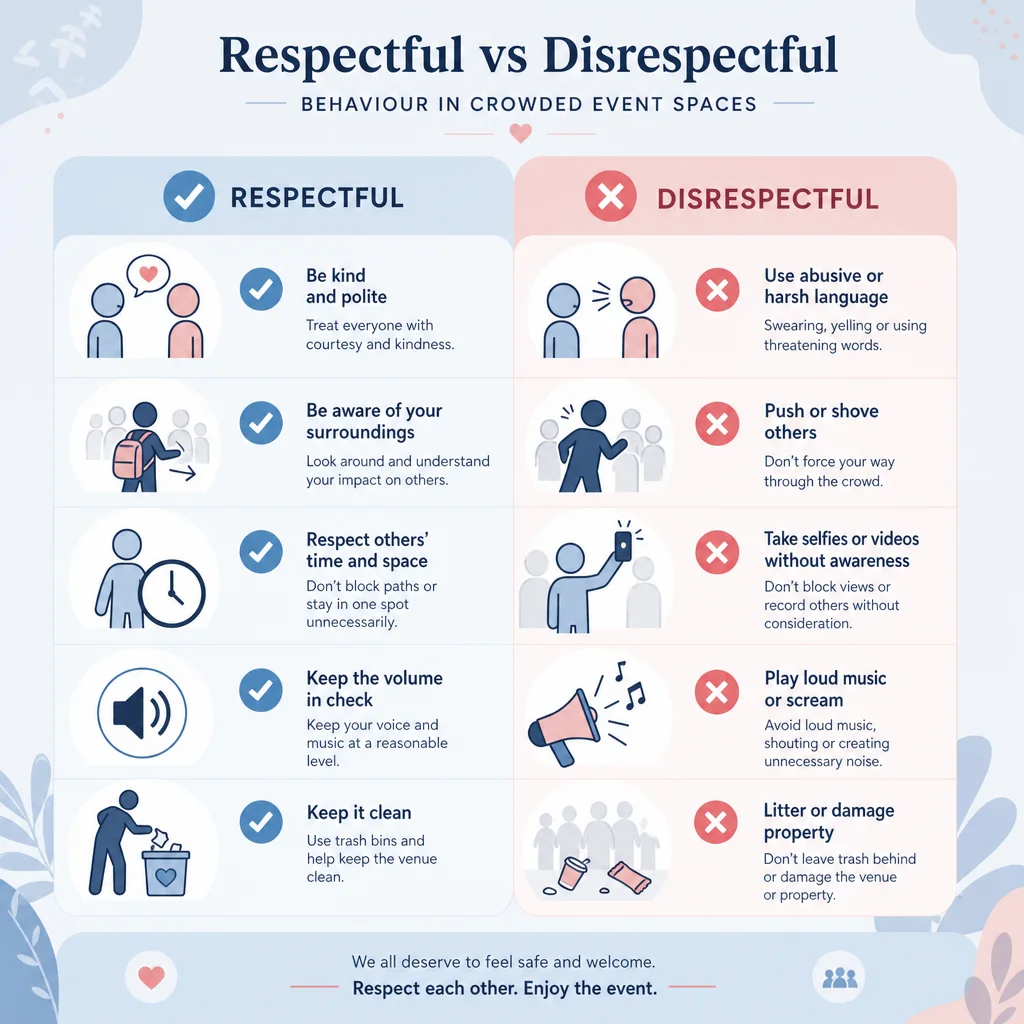
One more, because it comes up constantly: alcohol. A convention evening has the same judgment-degradation problem as any nightlife room, plus a higher baseline of sleep debt. Consent given at 1am after four days of three-hour nights is not the same quality of consent as the same words at 3pm on Saturday. Pace yourself and watch for it in other people.
Room Parties, Suite Floors and After-Hours
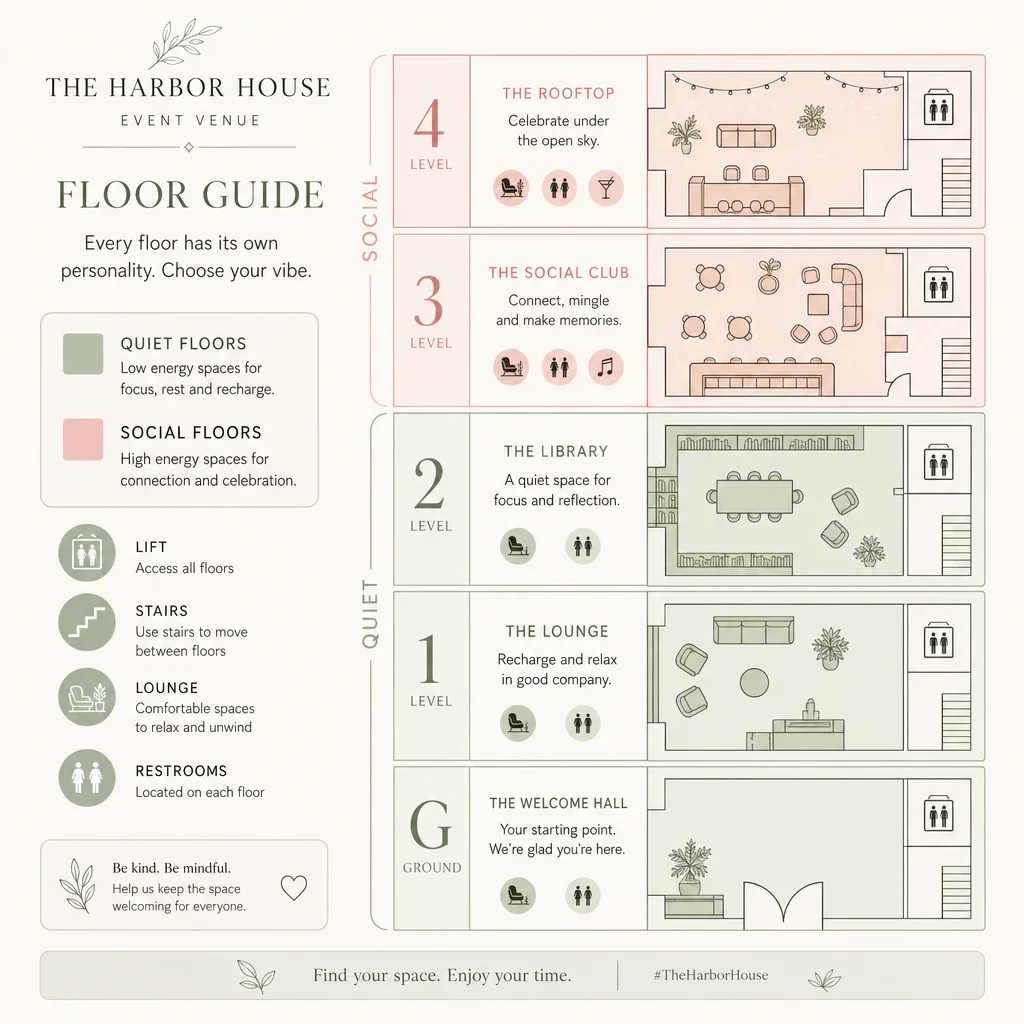
Room parties are an institution at many conventions. Some are genuinely open-invite, listed in the programme or on a board near the lifts. Some are private, invitation-only, and turning up uninvited is a fast way to become a story people tell. Knowing which kind you have been told about is the first skill.
It is also worth being clear with yourself about what kind of party it is. A room party where people drink and talk is not a play party, and walking in with that assumption will make everyone uncomfortable, including you. Where a convention does have adult-oriented evening events, they are run by organisers with their own entry rules – and those rules exist for good reasons.
- Confirm whose room it is and how you were invited before you go.
- Know your own way back: where the lifts are, which floor, what time public transport stops.
- Keep your drink with you and do not accept an open one from a stranger.
- If you arrived with a partner, agree the check-in plan before the door, not inside it.
- Set a leaving time in advance and treat it as real.
- Carry your own water, your medication and a charged phone.
- Decide your level of availability before alcohol is involved, and say it out loud early.
- If anything feels wrong, leave; you do not need a reason that sounds good to anybody else.
If you are at the con with a partner, this is the part worth talking through in advance rather than at midnight. Going out with two partners has its own etiquette, and the con version adds crowd noise, exhaustion and a lot of unfamiliar faces to the mix.
Making Your Situation Readable
You do not owe strangers your relationship structure. But silence creates ambiguity, and ambiguity at a four-day event tends to resolve itself badly – usually with somebody assuming you are solo when you are not, or assuming you are closed when you are open to a conversation.
Low-effort signals do most of the work. Mentioning “my partner” in ordinary passing conversation does more than any formal announcement. A pin, a ribbon, a profile note on the app everyone at the con is using, or a simple line in your introduction at a panel does the rest.
- If you are there with a partner: “I’m here with my partner, we’re both around this afternoon, come say hi.”
- If you are solo and open: “I’m here on my own and I’m enjoying meeting people – no agenda, just saying hello properly.”
- If you are interested but need to check in: “I’d like to keep talking. I check in with my partner before I make plans, so give me a way to reach you and I will.”
- If you are not available: “I’m flattered, I’m not looking for anything this weekend, but I hope the rest of your con is great.”
Notice that all four are short. Long explanations tend to sound like negotiation, and negotiation is exactly what you want to avoid in a hallway with an audience.
Energy, Sleep and the Four-Day Crash
Conventions run people down in predictable ways: too little sleep, too much sugar, aeroplane air, crowded indoor spaces, and the well-known post-con cold that a sizeable share of attendees go home with. None of it is dramatic, and all of it makes you worse at exactly the judgement calls this guide is about.
How stress accumulates over a packed few days is well documented, and a convention is close to a perfect delivery mechanism for it. Treat recovery as a bookable item rather than what is left over. Put two or three empty blocks in your schedule before you arrive and defend them. Sleep at least one full night of the weekend properly. Drink water in a way you would find embarrassing to describe.
- Book at least one unscheduled afternoon and keep it unscheduled.
- Eat something that is not convention food once a day.
- Carry earplugs; crowded halls are genuinely loud and sensory load accumulates.
- If you are neurodivergent or get overloaded in crowds, plan a quiet route out of every space you enter.
- Sleep at least seven hours on one night of the weekend, even if it costs you the late party.
- Put nothing irreversible on the last day – the Sunday mood is real and it distorts decisions.
The Monday crash is also real. Four days of intensity followed by ordinary email produces a flat, slightly bereft feeling that has nothing to do with whether the weekend was good. Expect it, do not make decisions about anyone you met while you are in it, and check in with your people when you get home.
Photos, Video and Being Recorded in Costume
You will be photographed. Conventions are full of photographers, and most of them are fine, ask properly, and will delete on request. Some are not. The practical question is not whether you can avoid being photographed; it is what you do about it.
- Ask before you shoot, and ask again before you post or tag anybody.
- Ask before you tag – a tagged photo connects a handle to a face to a location, permanently.
- If you would not want it searchable by an employer, a family member or a future partner, do not agree to it in costume.
- If someone posts an image of you without permission, most platforms will act on a removal request, and specialist services exist for non-consensual image removal.
- If you are not out about being non-monogamous, assume any photo of you with somebody at a con could end up where people who know you can find it.
The last item is the one non-monogamous attendees most often get wrong. A con photo is not private just because the con felt private. The same caution you would use for choosing dating profile photos applies here, only with less control over the result.
Turning a Con Weekend Into Real Community
The most valuable thing a convention gives you is not a date. It is a crew: a handful of people who will be at the same event next year, who will tell you which panels were worth it, and who will notice if you disappear. Dating within that crew is optional. The crew itself is the asset.
Follow up within about forty-eight hours, while the weekend is still fresh enough that a message does not feel like a cold approach. Move the conversation somewhere durable – a server, a group chat, a social account you actually use. A well-run community server is the usual answer, and it is also where you find out whether somebody is pleasant company over months rather than over one intense weekend.
- Message people within two days; after a week it starts to feel like a stranger reaching out.
- Move to one durable channel rather than three temporary ones.
- Do not try to convert every con connection into a date; most will be friends and that is a better outcome.
- Keep a running list of who you met and where, so next year is not starting from zero.
- If your city has nothing, organising a small local meetup is less work than it sounds.
- If you want a deeper dive on event choice and pacing, the guide to your first ENM conference covers the ENM-specific version of the same problem.
Why friendships are worth maintaining on purpose is the same argument, applied to a community you only see once a year. Conventions reward people who come back. The second year at the same event is a completely different experience from the first, mostly because you spend it with people you already know.
Is it okay to look for partners at a convention?
Yes, as long as you follow the event’s own rules and treat the con as a social space rather than a marketplace. Most conventions are not dating events and most attendees are not there to be approached that way. Read the code of conduct, take no gracefully, and remember that you are a guest in somebody’s community.
How do I bring up being non-monogamous without making it a whole thing?
Casually and early. Mentioning a partner in ordinary conversation does the job in most cases. If you want to be more explicit, one sentence is enough: “I’m non-monogamous, happily, and I’m not looking for anything secret.” No manifesto required.
My partner does not like conventions. Is that a problem?
Not inherently. Plenty of people love their partner and have no interest in a four-day crowd. What matters is the agreement: what you will do there, how you will check in, and what happens afterwards. Sort that out before you go, not on the drive home.
What if someone will not take no for an answer?
Stop explaining and leave the interaction. If it continues or repeats, use the convention’s reporting channel – most have a code of conduct with a named contact or a staffed desk, and they will act on it. You do not have to handle it alone, and you do not owe anyone a reason that sounds reasonable to them.
Non-monogamy at conventions is not complicated, but it is specific. Read the room, protect your identity, ask before you photograph or touch, decide your availability before the first drink, and follow up while people still remember you. Do that and a convention becomes one of the better places to meet people you would actually want to see again.
Editor’s note: this article is general relationship and event-safety information for adults, not legal, medical or mental health advice. Convention policies, venue rules and local laws vary, so check what applies to the event you are attending.