Table of Contents
- Why Matching Tattoos in Non-Monogamy Carry Extra Weight
- Permanence Is Not the Same as Commitment
- Couple Privilege and the Person Asked to Match
- Placement, Visibility and What You Do Not Control
- Cost, Pain and Healing: The Unphotogenic Half
- When the Relationship Changes
- Alternatives That Carry the Same Weight
- Frequently Asked Questions
Matching tattoos in non-monogamy carry more weight than the same mark does in a pair. Two people getting the same design is a private decision between two futures that are already tied together. Three or four people getting it means several futures stay linked on paper, or rather under skin, regardless of which of those relationships is still standing in five years.
That is not an argument against doing it. Plenty of people have a matching piece with two partners and are glad of it every time they look down. It is an argument for slowing the decision down by about three weeks, because the questions that matter here are all boring, practical and easy to skip while everybody is feeling warm about the idea.
This piece walks through those questions: what permanence actually commits you to, how couple privilege shows up when a pair asks a third to match, how visible you want the thing to be, what it costs in money and skin, what happens if the shape of the relationship changes, and what alternatives carry the same feeling without the same permanence. Relationship researchers have written plenty about commitment signals generally, and the APA overview of healthy relationships is a reasonable starting point if you want the framing rather than the tactics.

One line before we start, because it is the one that most often gets skipped: nobody should be asked to get a matching tattoo as a condition of belonging. If the request arrives with a consequence attached, that is not a nice gesture, and the womenshealth.gov section on relationships and safety describes that pattern plainly.
Why Matching Tattoos in Non-Monogamy Carry Extra Weight
In a pair, a shared mark has one obvious reader: the other person. Add a third or a fourth and the same mark gets read by everyone who got it, by their future partners, by whoever sees it in a photograph, and by you on an ordinary Tuesday when the group chat is quiet. The design does not change. The number of people holding a stake in what it means does.
That is the whole argument for slowing this down. The decision is not risky in itself; it is simply wider than it looks, and the questions people skip are the ones that turn out to matter. Below are six of them, beginning with the one that does most of the work.
Permanence Is Not the Same as Commitment
A tattoo is one of the few decisions an adult can make that will very probably outlive the relationship it was made for. That is not cynicism, it is arithmetic: skin lasts decades, and plenty of good relationships do not. The mismatch between the two timelines is the whole reason this topic deserves a slower conversation than buying a pair of necklaces.
- You are marking a moment, not guaranteeing a future. Both can be true, and saying so out loud makes the mark more honest rather than less.
- The ink does not know whether you are still speaking. It will be there at the next job interview, the next family event and the next first date.
- Removal is expensive, slow, partial and colour-dependent. Treat any plan that relies on removal later as no plan at all.
- The meaning can change. A piece that marked one chapter can be reworked into something that marks a different one, which is a real option rather than a consolation prize.
- Some people would rather have the mark than the relationship. That is a legitimate answer and worth saying before you book anything.
The useful test is a simple one. Imagine the relationship ending badly in two years, and then ask whether you would still want this particular mark on this particular part of your body. If the honest answer is no, the design or the placement is wrong, not the person.
Couple Privilege and the Person Asked to Match
This is the section most couples skip and the one third partners talk about afterwards. When an established pair invites a third person to get a matching tattoo, the three participants are not standing on equal ground, and the mark itself tends to make that worse rather than better.
| What the pair gets | What the third person gets | Why the asymmetry matters |
|---|---|---|
| A mark shared with their existing partner | A mark tied to a pair, not to an individual | If the pair splits, the third holds a mark for a unit that no longer exists |
| Reinforcement of an established bond | Entry into a bond they did not build | The gesture can read as membership conditions rather than affection |
| Two people who can interpret the mark together | One person interpreting it alone | Meaning gets set by the majority |
| A visible sign of a long relationship | A visible sign others may question | Outsiders ask the third to explain themselves more often |
| An easy story to tell | A story that depends on two other people | The story changes without their consent |
None of that makes the request wrong. It makes it a request that should come with an explicit invitation to say no, said out loud, by the pair, before the idea gets any momentum. If the person being asked cannot comfortably refuse, they were not really being asked.

The wider mechanics of this are covered in more depth in the guide to couple privilege and in the version written from a third partner’s side, and both are worth reading before the conversation rather than after it. If you are the person being asked, the piece on third partner rights is a useful reminder that you are allowed to want the relationship and decline the mark.
Placement, Visibility and What You Do Not Control
Placement is where an emotional decision quietly becomes a practical one. A small mark on a rib is a very different object from the same design across a forearm, not because one is more meaningful but because one of them interacts with the rest of your life.
- Workplaces differ enormously. Some do not care, some care a great deal, and a few care in ways that are not written down anywhere you can check.
- Family events are a recurring test. A visible piece may need a plan for weddings, funerals and holidays with relatives who would ask questions.
- Travel and borders are a real consideration for some people. Anything visible is part of how you present in places with different norms.
- Future partners get a vote on their own feelings, not on your skin, but a visible match will come up in every new relationship afterwards.
- Sun, ageing and body change are not neutral. Placement affects how well a piece holds its shape over twenty years.
The honest framing is that visibility is a sliding scale and there is no correct setting. What matters is that everyone getting the mark picks a point on that scale knowingly, rather than finding out later that one person imagined a discreet ankle and another imagined a forearm.
If disclosure is already a live question in your life, the guide to coming out at work and the one on talking to friends and family both handle the adjacency problem: a visible mark in a setting where you have not disclosed is a decision you did not get to make privately. Social media privacy covers the version where the mark ends up in photographs rather than in person.
And a note on timing that sounds obvious and gets ignored anyway: do not book a matching piece during the first intense months. The piece on stepping off the relationship escalator is a useful read here, because a matching tattoo is one of the most escalator-shaped gestures available, and plenty of people in non-monogamy are deliberately not on that track. Reading what the relationship escalator actually is alongside it helps separate genuine desire from momentum.
Cost, Pain and Healing: The Unphotogenic Half
Nobody posts the second week. The photograph is always the fresh piece under studio lighting; what follows is a fortnight of aftercare, two people with different pain thresholds, and a bill that is larger than the number anybody said out loud at dinner.
- Agree the money before the appointment, including who pays if one person needs a touch-up session later.
- Compare pain tolerance honestly. The same design on a rib and on a thigh are not the same experience, and one person quietly miserable for three hours changes the memory.
- Check that nobody is booking during a healing window from something else, or around surgery, illness or a planned pregnancy where it may matter.
- Plan aftercare into the calendar rather than improvising. Cream, clothing, swimming, gym, and sun exposure all need a week or two of cooperation.
- Pick a studio each person actually wants, not just the one that can fit three people in on a Saturday. A matching design executed by three different artists well beats one session done badly together.
That last point surprises people. Getting the work done together is a lovely idea, and it is worth sacrificing if the alternative is a shop nobody chose. The mark lasts far longer than the afternoon.
Money is worth its own sentence. A group piece is not automatically a shared cost, and assumptions about who pays are one of the more predictable sources of quiet resentment. The guide to financial boundaries in threesome dating covers the principle, and the piece on gift-giving in polyamory is a good sanity check on what a present means when more than two people are involved.

If you want a structure for talking all of this through, running a regular relationship check-in gives you a format where a decision like this can be raised slowly rather than sprung on a good night out. And if the conversation is happening because one person feels rushed, withdrawing consent cleanly is the clearest statement of why a maybe is not a yes.
When the Relationship Changes
This is the section people hope they will not need and then do. Relationships de-escalate, people move, pairs split, and occasionally somebody leaves a whole network at once. A permanent mark does not adapt to any of that on its own, so it helps to have thought about it while things were good.
- Re-meaning is real. Many people add to a piece over the years, turning a mark for one chapter into a mark for a longer story.
- Cover-up work has limits. Dark, dense pieces and certain colours are harder to work over, and the replacement has to be bigger or bolder.
- Removal is gradual and partial. Several sessions, months apart, and sometimes a faint shadow that stays.
- Leaving it alone is a completely respectable choice. Plenty of people keep a mark from a chapter that ended and feel fine about it.
- Nobody should be asked to remove one. A request to erase a shared mark is a bigger ask than a request to get one.
If this is the chapter you are actually in right now, the guide to de-escalating a polyamorous relationship and the one on grief and recovery after a polyamorous breakup both handle the emotional side, which is almost always the harder half. The skin side is administrative by comparison.
One structural idea that helps: choose a design that is durable without the relationship. A motif, an animal, a line of text that stands on its own, or a piece by an artist you would have gone to anyway. The more a design depends on a specific configuration of people, the worse it ages. Relationship anarchy and metamour relationships both offer models where the mark belongs to you rather than to the structure.
Alternatives That Carry the Same Weight
A matching tattoo is one way to mark something, and it is not the only one. If the feeling you are after is we chose each other, several options deliver that without permanence, and a few of them are better at surviving a change in the group.
| Option | What it gives | What it costs |
|---|---|---|
| Same artist, same style, different designs | A visible thread without identical marks | Still permanent, just less exposed |
| A shared symbol on something you own | A private reference nobody else reads | Very low, and easy to retire |
| Temporary pieces for an event or trip | The photographs and the memory | Almost nothing, and it fades on purpose |
| Jewellery chosen together | Everyday visibility you can take off | Money, and it can be returned or passed on |
| A date, coordinate or initial in a personal placement | Meaning that does not depend on the group | Permanent, but durable if the group changes |
| A piece that continues a theme you already have | Belongs to your body, not to the structure | Permanent, and ages best of all |
Notice that none of those options requires a group booking, which quietly removes the scheduling problem as well. If the appeal was the afternoon together rather than the ink, book the afternoon and skip the needle.
If you do go ahead, borrow the structure from creating a threesome agreement: everyone states what they want, everyone states what would make them say no, and nobody decides in the room. Sleeping on it for a fortnight is the cheapest insurance available.
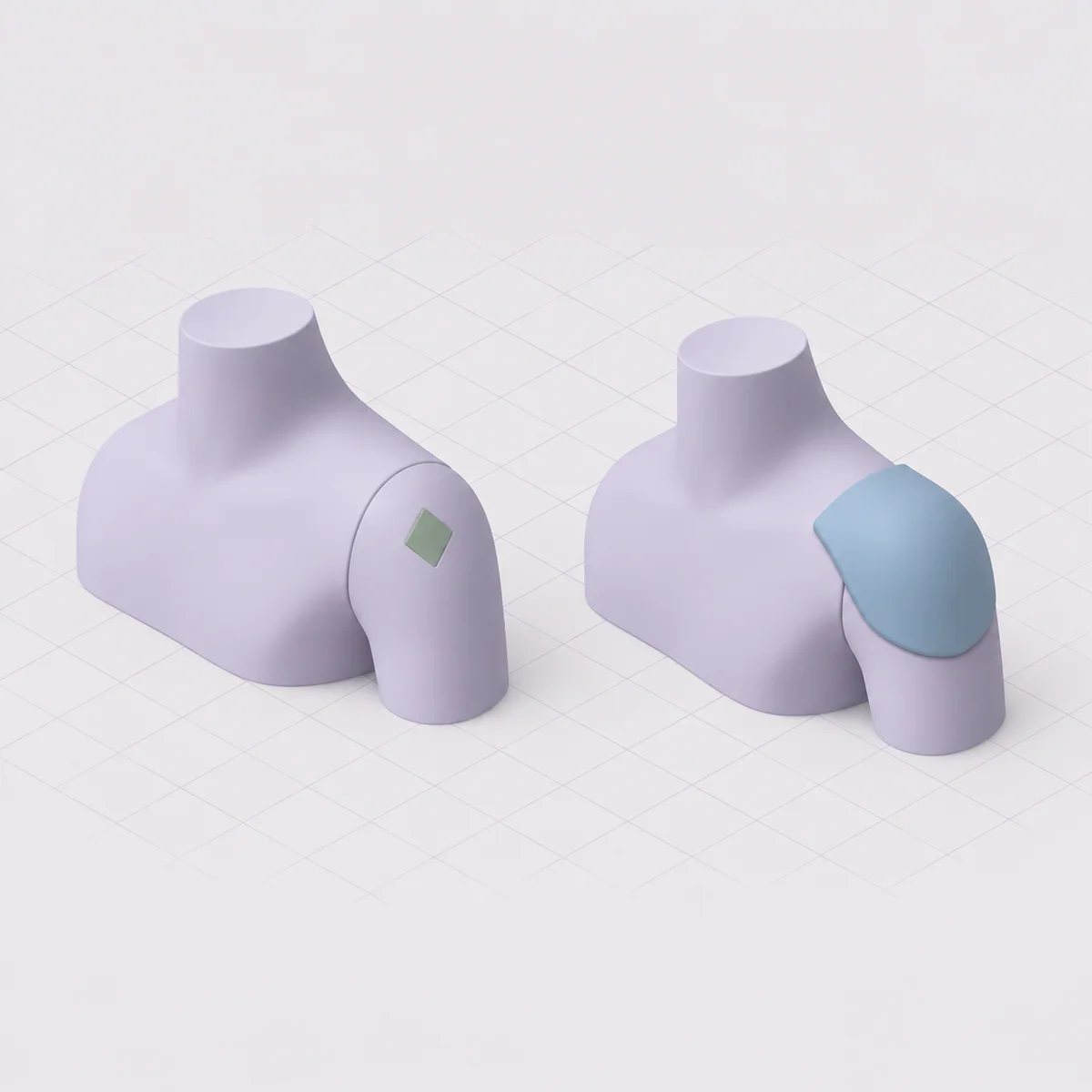
And a small practical afterword on photographs again. A shared mark is an unusually strong identifier once images of it exist, and two people with the same piece are easier to link than two people without one. The guide to ENM profile photographs and the wider privacy guide are worth reading before anyone posts.
Frequently Asked Questions
Is it a bad idea to get a matching tattoo with more than one partner?
No, and plenty of people are happy they did. What matters is that every person getting the mark wants it for their own reasons, can say no without consequence, and has thought about what it means if one of the relationships changes. If any of those three is missing, the design is not the problem; the timing is.
We are a couple and we want a third person to match with us. How do we ask?
Ask once, plainly, and make the no easy. Say what it would mean to you, say that a refusal changes nothing about the relationship, and then let the answer sit without follow-up questions. If you find yourself explaining why they should want it, you have moved from asking to persuading. The guide to couple privilege is worth reading first, and the companion piece on tattoos and piercings in non-monogamy covers the wider etiquette.
What if one of us changes our mind after the appointment is booked?
Change it. Deposits are refundable far more often than skin is, and any artist worth going to would rather lose a Saturday than tattoo somebody who is unsure. The person who cancels should say so as early as they can and should not be made to pay socially for it, which is a version of the same rebooking rule that makes fair scheduling across partners work.
Can I get a mark that matches one partner but not another?
Yes, and it is more common than people admit. Matching one person is not a statement about the others unless you let it become one. What helps is being straightforward about it rather than hiding it, and not presenting it as a ranking. If the reaction is that everyone now has to match, the boundaries checklist is a good place to work out whether that is enthusiasm or pressure.
We already have one and the relationship ended. What are my realistic options?
Four, roughly: leave it, rework it into something new, cover it, or start removal. Leaving it is far more common than people think and carries no obligation to explain. Reworking tends to age best because it treats the mark as part of your history rather than a mistake. Cover-up and removal both depend heavily on the original ink, so ask a professional rather than assuming. If the emotional side is heavier than the practical side, grief and recovery after a polyamorous breakup handles that directly.
Matching tattoos in non-monogamy are not a red flag and not a milestone either; they are a permanent decision made by several people whose futures are not automatically shared. Slow it down, make the no easy, pick a design that survives on its own, and you will probably be glad of it for years. If the question you are actually holding is the smaller everyday one, about who gets a say in your skin at all, the guide to tattoos and piercings in non-monogamy starts there. Everyone figuring this out is doing it without a template, and you will find plenty of people in the same position right here at 3Cupid.
Editor’s note: this is general information for adults, not medical, legal or financial advice. Tattoo removal outcomes depend on ink colour, depth, skin tone and age of the piece, and costs and practitioner regulation vary widely by country. Nothing here is a standard anyone has to meet; it is a set of questions worth asking before something permanent.