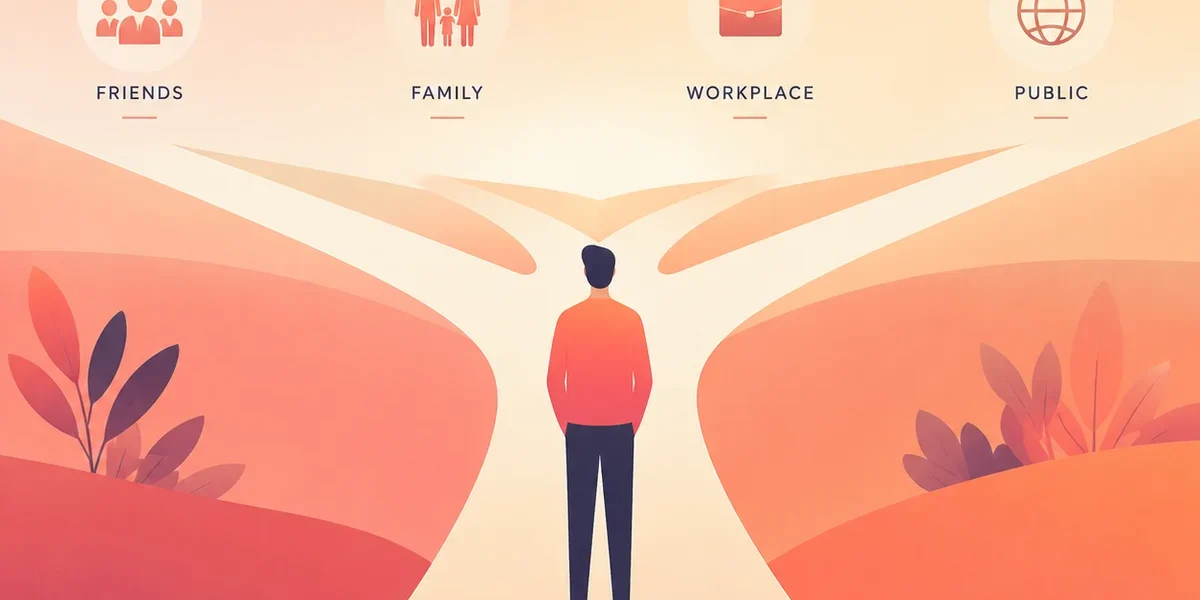
Telling people you’re ethically non-monogamous is nothing like coming out about other aspects of your identity. There’s no Pride month for ENM. No mainstream coming-out narrative to borrow. Your parents probably don’t have a framework for “my daughter and her husband also date other people, and everyone’s happy about it.” So you’re not just sharing information — you’re often building the conceptual scaffolding for someone in real time.
This guide is about making those conversations less exhausting. Not because you owe anyone an explanation — you don’t — but because when you choose to disclose, doing it well protects your relationships and your peace of mind.
Table of Contents
- Why Disclosure Feels Different When You’re ENM
- Deciding Who Actually Needs to Know
- How to Tell Close Friends
- Talking to Family About Your Relationship Structure
- When Reactions Aren’t What You Expected
- Protecting Your Relationship While Being Open
Why Disclosure Feels Different When You’re ENM
Coming out as non-monogamous carries a weight that other disclosures don’t. For one, it’s relational rather than individual — you’re not just revealing something about yourself, you’re revealing something about your relationship structure, which automatically involves your partner. People will have opinions about your partner. They’ll wonder if someone is being coerced or settling. They’ll project their own relationship anxieties onto yours.
There’s also no cultural script for this. When someone comes out as gay, even conservative family members typically recognize the category — they might disapprove, but they understand what’s being said. ENM doesn’t have that baseline recognition. You’ll spend significant energy just explaining what ENM is before you even get to how it works in your life. This article from Psychology Today on the realities of polyamorous relationships highlights how even well-meaning people often lack the vocabulary to discuss non-monogamy without defaulting to misconceptions.
None of this means you shouldn’t come out. It means you should do it intentionally — choosing your audience, your timing, and your framing rather than blurting it out at Thanksgiving because you’re tired of hiding. The energy it takes to manage your private life is real, but so is the energy it takes to manage other people’s reactions. Your job is to figure out which cost you’re willing to pay, with which people.
Deciding Who Actually Needs to Know
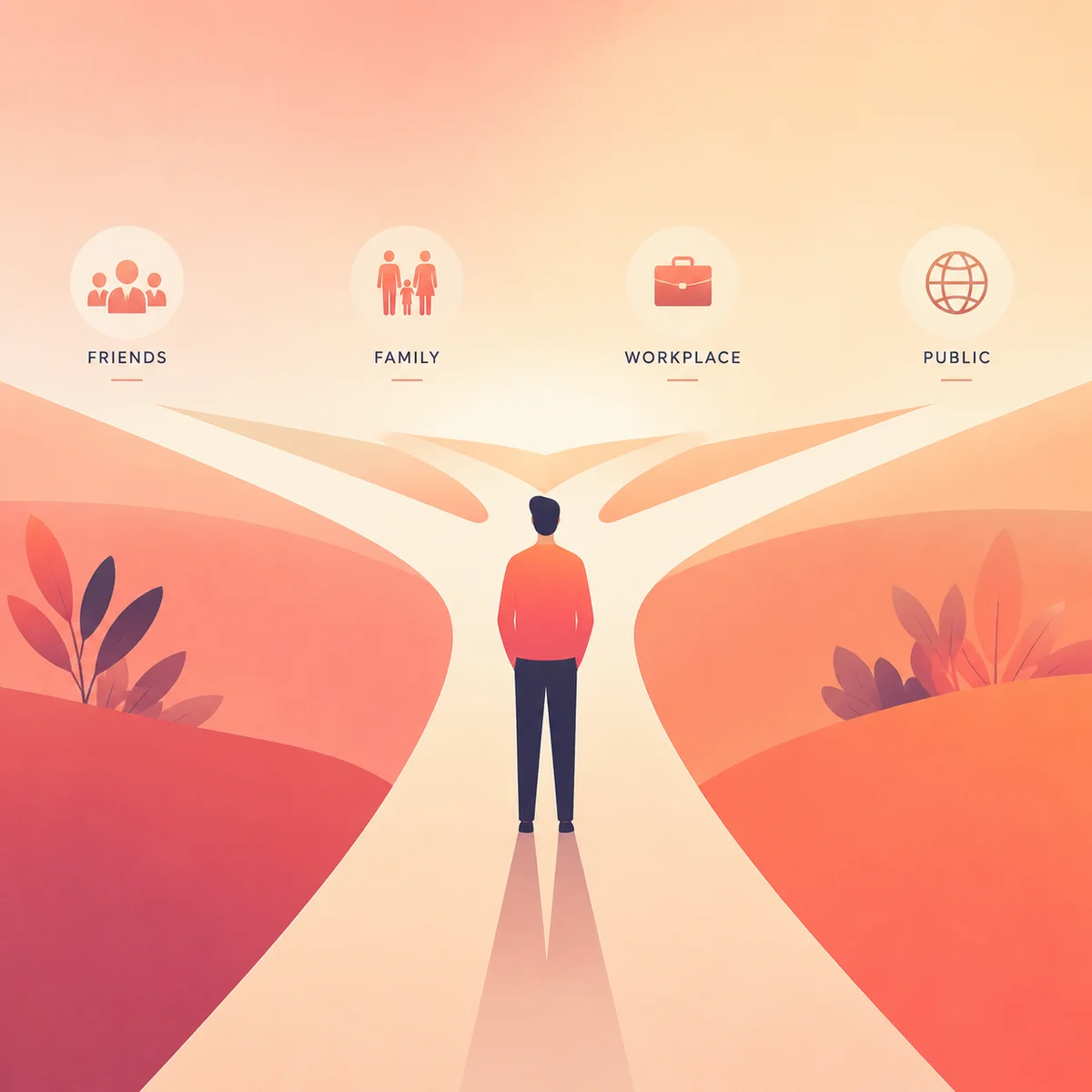
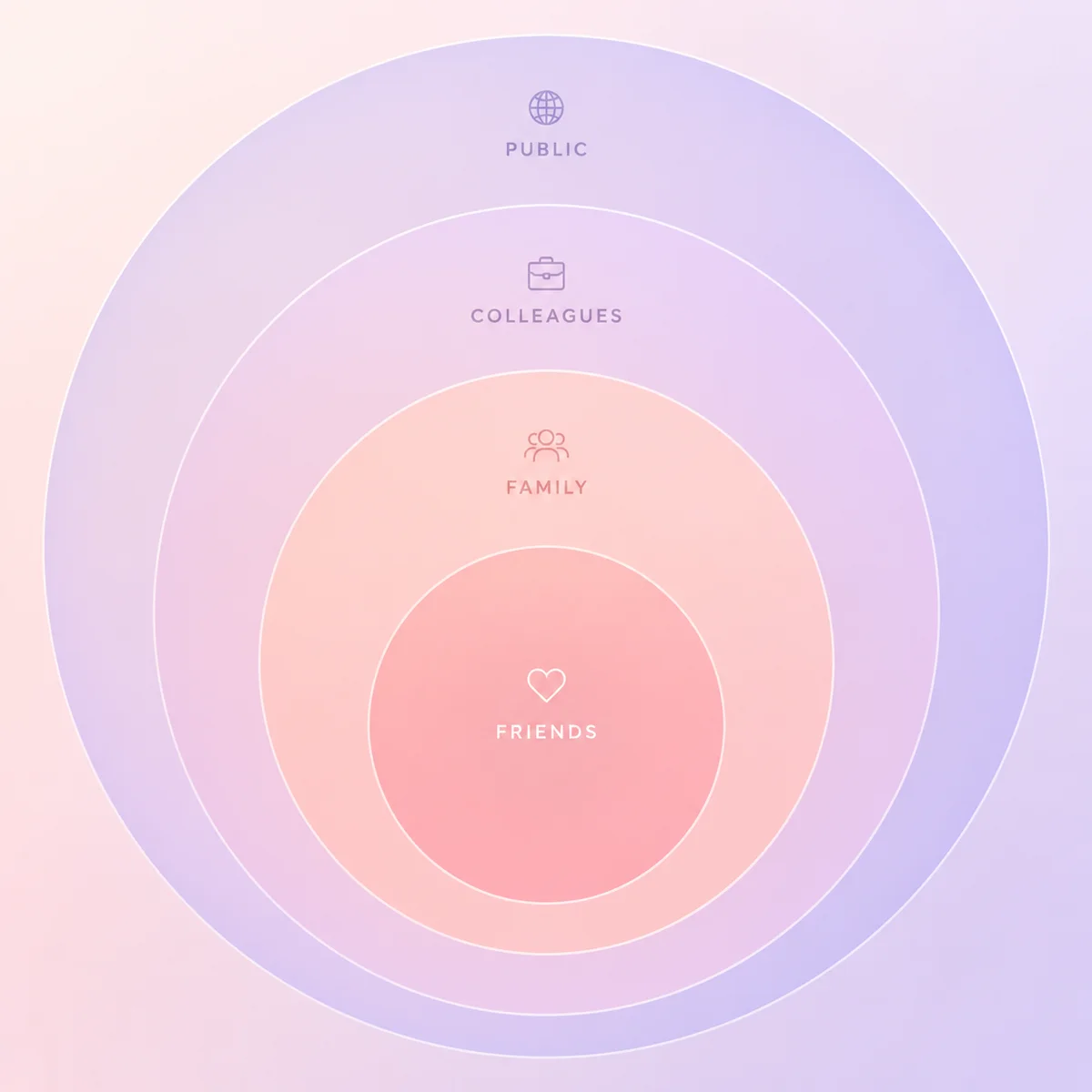
Not everyone in your life needs the full picture. Some people earn that information; others don’t. Before you start planning conversations, sort the people in your life into categories based on how disclosure affects you and them.
Close friends — Usually the safest starting point. They chose you, not the other way around, and they’re more likely to respond with curiosity than judgment. Telling a trusted friend first also gives you practice with the conversation before tackling harder audiences. Our guide on handling social stigma in ENM dating covers what to expect when your lifestyle choices meet others’ preconceptions.
Family — Higher stakes, harder to reverse. Ask yourself three questions before telling family: What are you hoping for? (Acceptance? Relief from hiding? Practical necessity?) What’s your read on their likely response? Is there a practical trigger making disclosure necessary — like a partner attending family events? If the answers point toward more cost than benefit, waiting is a legitimate choice.
Work colleagues — Default to not telling. Professional environments are not designed to handle personal relationship structures, and information circulates in ways you can’t control. The exception is if you’ve built genuine friendships at work that exist outside the office context. Even then, consider whether the potential complications are worth it.
Children — Age-appropriate honesty works best. A five-year-old doesn’t need to understand ENM. They need to know that the adults who care for them are happy and that your family structure is normal and loving. As they grow, you can add complexity. The key principle: never lie, but calibrate your explanation to what they can actually process.
How to Tell Close Friends
Friends are your practice round — and often your strongest allies. The conversation works best one-on-one, in a setting where you can talk without interruptions. A walk, a quiet coffee, or your living room are better than a loud bar or a group dinner.
Frame it as information, not a confession. Your tone sets the expectation for how they should react. If you sound apologetic, they’ll wonder what you’re apologizing for. If you sound matter-of-fact and grounded, they’re more likely to mirror that energy. Something like: “I wanted to share something about my life because you’re important to me and I’d rather you hear it from me than wonder. [Partner] and I practice ethical non-monogamy — we date other people, with each other’s knowledge and consent. It works for us, and I’m happy to answer questions if you have them.”
Expect questions. The most common ones: “But aren’t you jealous?” “Is everything okay between you two?” “So you’re basically single?” Answer them patiently — your friend isn’t being hostile, they’re reorganizing their mental model of you in real time. This is where the emotional grounding covered in our article on emotional realities in threesome dating becomes valuable — the same emotional literacy that helps in your relationships helps in explaining them to others.
Not every friend will get it immediately. That’s fine. Some people need time to sit with unfamiliar information. Give them that time without demanding instant validation.
Talking to Family About Your Relationship Structure
Family disclosure is the hardest tier — partly because the stakes are higher, partly because you can’t choose your family the way you choose your friends. If you decide to have this conversation, approach it with preparation, not spontaneity.
Choose your messenger. If you’re in a primary partnership, one of you might be better suited to lead the conversation with their own family. Sometimes it’s better for the biological family member to have the first conversation alone, then introduce the partner into follow-up discussions. Other times, presenting a united front works better. You know your family’s dynamics — trust your instincts.
Lead with values, not mechanics. Your parents don’t need to understand the details of your dating life. They need to understand that you’re happy, safe, and living with intention. Frame it around what they actually care about: “I wanted you to know about my life because I value our relationship and I don’t want to hide important parts of it. [Partner] and I have a relationship structure that’s different from what you might expect, but it’s built on honesty, communication, and mutual respect — the same values you taught me.”
Building trust within a relationship before bringing others in applies to family dynamics too — the more secure your partnership feels internally, the more confidently you can present it externally. When you know your relationship is solid, your family’s skepticism lands differently. It might sting, but it won’t shake you.

When Reactions Aren’t What You Expected
Even the best-planned disclosure can go sideways. Someone you thought would be supportive freezes. Someone you expected to push back surprises you with acceptance. Neither reaction tells you everything about how they’ll feel in six months.
Common pushback patterns and how to handle them:
“But what about your partner?” — This usually comes from concern, not judgment. A simple “They know, they consent, and this is something we’ve chosen together” often resolves it. The worry behind the question is usually about harm, not about ENM itself.
“This is just about sex.” — You don’t need to defend the emotional depth of your relationships to validate them. “For some people it is. For us, it’s also about connection, honesty, and living in a way that feels authentic” acknowledges their framework without accepting it.
“I could never do that.” — The right response is “That’s completely fine — this is what works for us, not a recommendation for anyone else.” You’re not recruiting. You’re sharing.
Silence or withdrawal. — Don’t chase. Some people need days or weeks to process. A bad first reaction is not necessarily a permanent position. Let them sit with it, and let them come back to you.
Moral or religious objections. — Do not debate. A values clash is not resolved through argument. “I understand we see this differently. I still care about our relationship, and I hope we can find a way to stay connected even if we disagree on this.” Then leave space. Pressuring someone to accept you usually pushes them further away.
If you’re new to ENM yourself, our beginner’s guide to ethical non-monogamy might help you articulate what this lifestyle actually means — having clear language for yourself makes it easier to explain to others.
Protecting Your Relationship While Being Open
Coming out affects your relationship, not just your individual social life. Your partner will hear other people’s opinions about your shared life. They’ll field questions, absorb judgment, and sometimes feel exposed in ways they didn’t sign up for. Protecting each other through this process isn’t optional — it’s the price of disclosure.
Get aligned before you tell anyone. Both partners need to agree on what’s being shared, with whom, and in what language. If one of you wants to tell the whole world and the other wants to keep things private, you need to negotiate that before any conversations happen. The compromise might be that one partner tells their close friends while the other shares with no one, or that you agree on a specific circle of people who get the full picture.
Debrief after disclosures. After a coming-out conversation, check in with each other. How did it feel? Did anything come up that you need to talk through? One partner’s relief might be another partner’s anxiety — and you won’t know unless you ask.
Protect your partner from your family. If your family reacts poorly, your partner shouldn’t be the one absorbing that hostility. It’s your job to manage your family’s response and shield your partner from it. You chose ENM together — you didn’t choose for your partner to become your family’s emotional punching bag.
Remember: staying private is valid. You don’t owe anyone your story. If the energy required to manage disclosure is higher than the energy required to manage privacy, privacy is the rational choice. This isn’t shame or hiding — it’s recognizing that disclosure has costs and benefits that vary by relationship and context. For more on navigating the emotional landscape of ENM, see our guide on jealousy in threesome dating — many of the same tools for managing internal relationship dynamics apply to managing external pressure too.

Script Templates for Different Audiences
For a close friend: “I want to share something about my life because you matter to me. [Partner] and I are ethically non-monogamous — we have the freedom to date and connect with other people, with each other’s full knowledge and support. It’s been really good for us, and I wanted you to know from me rather than hearing it secondhand. I’m happy to answer any questions.”
For a parent: “I’ve been wanting to share something about how [Partner] and I structure our relationship. We practice something called ethical non-monogamy, which means we’re open to connecting with other people while staying committed to each other. Everything is built on honesty and communication, and we’re genuinely happy with how it works. I’m telling you because I don’t want to hide important parts of my life from you.”
For a curious coworker (if you choose to share): “My personal life is a bit unconventional — I’m in an ethically non-monogamous relationship. Everything’s above board and consensual. I’m selective about who I discuss it with professionally, but since we’ve become actual friends, I wanted you to know.”
For setting a boundary when someone gets too invasive: “I’m open to explaining how it works, but I’m not going to share details about my dating life the same way I wouldn’t expect you to. Some things are still personal.”
Do’s and Don’ts of Coming Out as Non-Monogamous
| ✅ Do | ❌ Don’t |
|---|---|
| Start with a trusted friend as practice | Blurt it out during a family argument |
| Frame it as information, not a confession | Apologize for how you live |
| Give people time to process | Demand immediate acceptance |
| Protect your partner from your family’s reactions | Let your partner become the target of judgment |
| Accept that privacy is a legitimate choice | Feel pressured to disclose to everyone |
| Debate moral or religious objections | Stay calm and set boundaries instead |
Coming out as non-monogamous isn’t a one-time event — it’s a series of choices you’ll make throughout your life, with different people, in different contexts. Some conversations will go better than you expected. Some will sting. Over time, you’ll develop a sense for who’s worth the energy and who isn’t. What stays constant is this: your relationship structure is yours to disclose or protect, on your terms, at your pace. No one is entitled to your story.
If you’re exploring ENM and looking for a community that gets it, join 3Cupid to connect with people who understand these dynamics firsthand. For more on navigating the emotional and practical sides of non-monogamy, browse our growing library of guides.
This article is part of 3Cupid’s series on navigating the emotional and social dimensions of ethical non-monogamy. All content is written for adults 18+. We believe in informed, consensual, and judgment-free exploration.