If you’re raising kids while practicing ethical non-monogamy, you’ve probably wondered: When do I tell them? How much do they need to know? What if someone judges our family? These aren’t hypothetical worries — they’re the daily reality of ENM and parenting, and they deserve real answers, not vague reassurance.
This guide walks through the practical side of ENM and parenting: how to talk to kids at different ages, manage logistics without burning out, introduce partners thoughtfully, protect your family’s privacy, and handle judgment from people who don’t get it. No sugar-coating, no one-size-fits-all prescriptions — just what’s worked for real families and what the research actually supports.
Why ENM Parenting Conversations Matter
Kids notice more than we give them credit for. They sense when there’s secrecy, when adults tense up around certain topics, when something feels “off limits.” Avoiding the conversation doesn’t protect them — it leaves them filling in the blanks with their own conclusions, which are often scarier than the truth.
Research on family communication consistently shows that children adapt better to non-traditional family structures when they receive honest, age-appropriate explanations rather than silence or deflection. The goal isn’t to make your kids experts on polyamory. It’s to make sure they understand that their family is intentional, loving, and stable — even if it looks different from what they see on TV.
You don’t need to have all the answers. You just need to be willing to have the conversation — and to keep having it as they grow.

When (and If) to Tell Your Kids About Your Relationship Structure
There’s no universal “right age” to disclose. The decision depends on your child’s maturity, what they’re already observing, and how visible your other relationships are in daily life. But there are some reliable guideposts.
If your partners are people your kids see regularly — someone who comes to dinner, shows up at soccer games, stays overnight — you’re already past the point of “whether” to explain. The question is how. If your relationships are more compartmentalized and your kids rarely encounter your partners, you have more flexibility in timing.
What matters more than timing is consistency. Whatever you tell your kids should align with what your co-parent (if applicable) tells them, and it shouldn’t change dramatically from week to week. Mixed messages create confusion, and confused kids act out.
One ENM parent we spoke with put it simply: “I waited until my daughter started asking why ‘Uncle Mark’ was around so much. She was seven. I said he’s a close friend of Mommy and Daddy’s. As she got older, the explanation grew with her. Now at thirteen, she knows we’re poly and mostly just rolls her eyes at how ‘complicated’ adults are.”
Age-Appropriate Conversations: What to Say at Each Stage
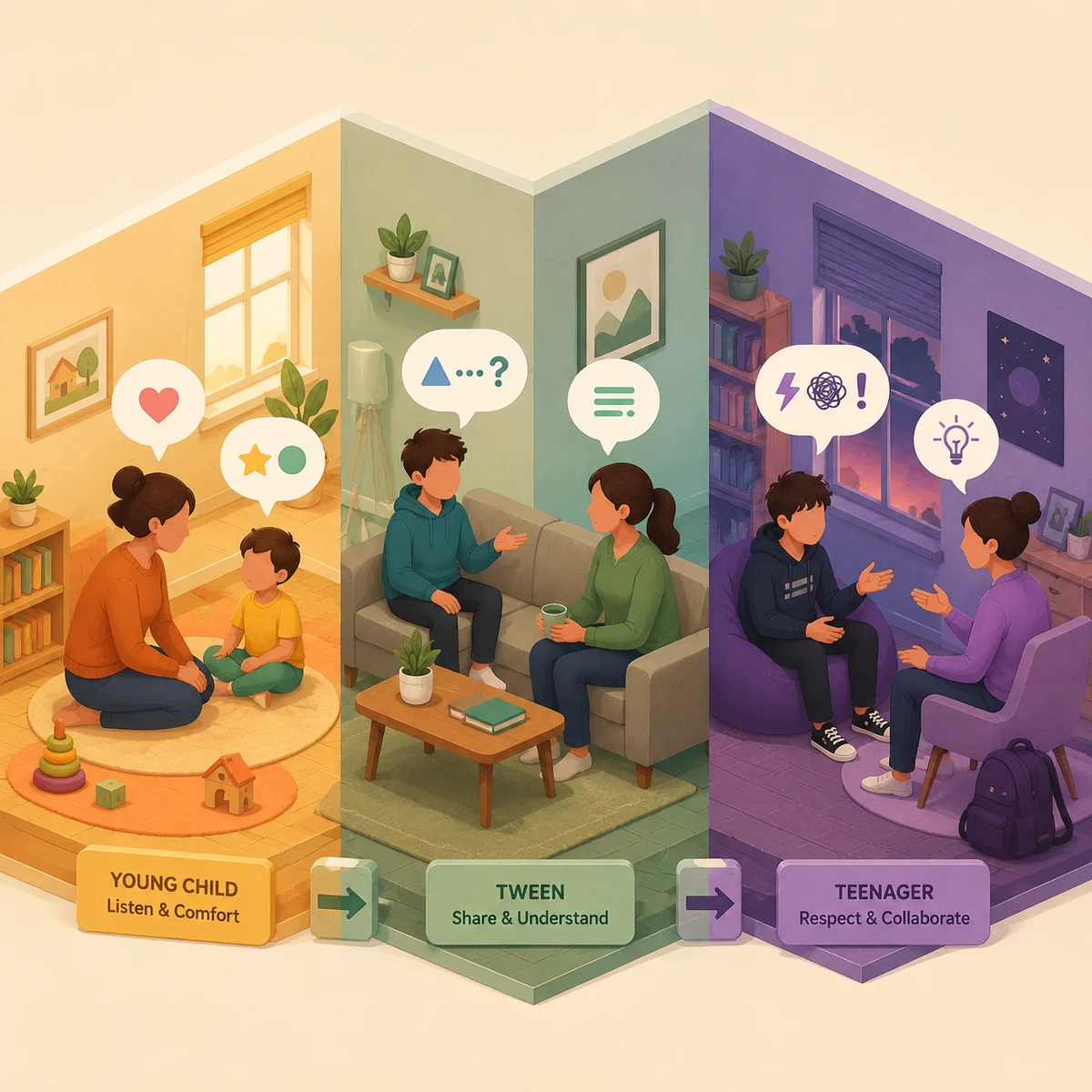
Young Children (Under 8)
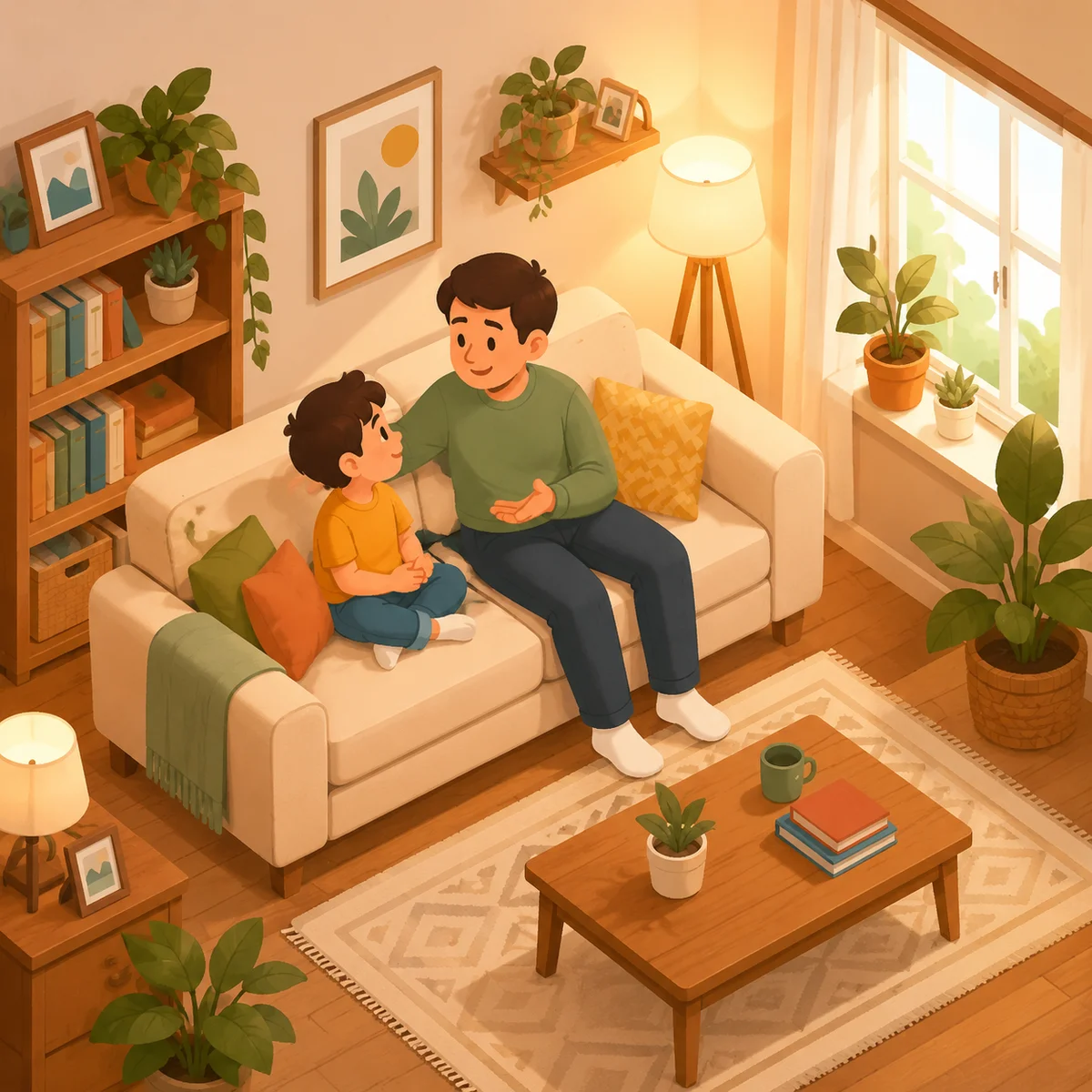
At this age, kids don’t need — and can’t process — abstract concepts like “ethical non-monogamy.” What they need is simple, concrete explanations about who the people in their lives are and why they matter.
- What to say: “Mommy has a special friend named Alex. He’s part of our family in a different way.”
- What not to say: Detailed relationship labels, comparisons to monogamy, anything about sex.
- Key approach: Focus on people, not categories. Answer only the question they asked — don’t volunteer more.
Tweens (8–12)
Kids in this range start noticing that their family doesn’t match the default. They may hear things at school or see depictions of families that make them ask questions.
- What to say: “Some families have two parents, some have one. Our family does relationships a little differently — we care about more than one person in a romantic way, and that’s okay.”
- What to expect: Follow-up questions. “Do other families do this?” “Why?” “Is that allowed?”
- Key approach: Normalize without over-explaining. Give them frameworks for understanding without burdening them with adult complexities.
Teenagers (13+)
Teens can handle nuanced concepts. They’ve probably googled things. They may have opinions — and they’ll share them.
- What to say: Be direct. Your teen can understand polyamory, open relationships, and ethical non-monogamy as concepts. You can explain your specific structure honestly.
- Respect their reactions: They may be supportive, indifferent, or upset. All are valid. Don’t demand approval — let them process.
- Key boundary: Your sex life is still private. They understand relationships; they don’t need details about intimacy.
Managing Logistics: Schedules, Childcare, and Introductions
This is where ENM parenting gets real. You’re not just managing multiple relationships — you’re doing it inside the constraints of school drop-offs, soccer practice, bedtime routines, and the occasional stomach flu. The fantasy of “free love” crashes hard against the reality of “who’s picking up the kids on Thursday.”
Three practical approaches that actually work:
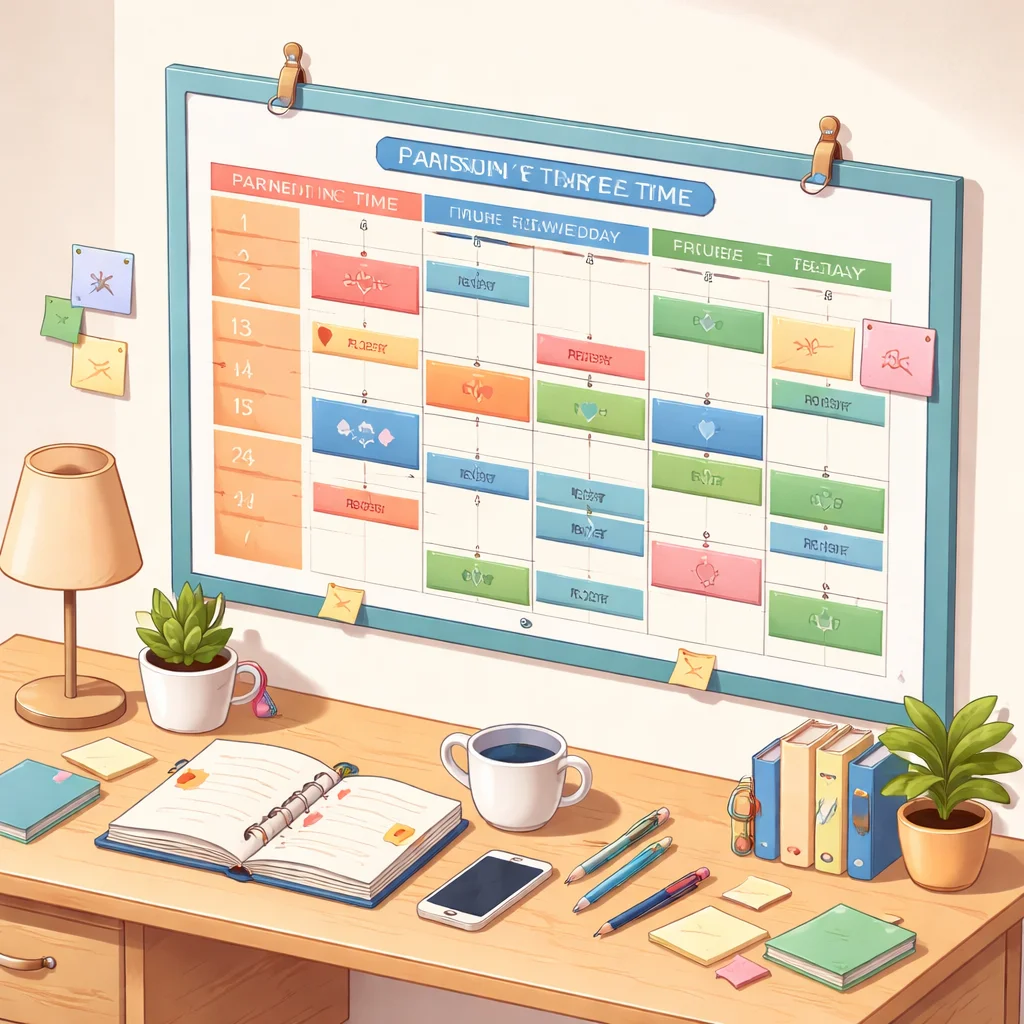
- The Custody Calendar Approach. If you share custody, map your dating time to the other parent’s custody windows. This is the cleanest solution when it’s available — no babysitter needed, no awkward explanations.
- The Babysitter Budget. Set aside dedicated money for childcare separate from your regular budget. Consider babysitter co-ops with other parents — ENM or not — to trade coverage without spending cash.
- Kid-Friendly Integration. Once a relationship is stable and committed (measured in months, not weeks), fold partner time into family time. Dinner together, park outings, movie nights. It normalizes the relationship and solves the scheduling puzzle simultaneously.
The cardinal rule of partner introductions: wait until the relationship has legs. Introducing a partner of three weeks to your kids isn’t fair to anyone — not your kids, who form attachments quickly, and not your partner, who gets thrust into a role they may not be ready for. Most experienced ENM parents recommend waiting at least 3–6 months, or until you’re confident the relationship has genuine staying power.
When you do introduce someone, start casually. “This is my friend Jamie” in a low-pressure group setting. Let the relationship between your partner and your kids develop organically. Don’t force it, and don’t panic if it’s awkward at first. For more on building healthy relationship structures that accommodate multiple connections, our guide to kitchen table vs parallel polyamory offers frameworks that apply well to family contexts.
Privacy and Disclosure: Protecting Your Family’s Boundaries
Privacy in ENM parenting operates on two tracks: what you tell your kids, and what your kids might tell others. Both matter, and they pull in different directions.
Kids talk. They repeat things at school, at the dinner table with grandparents, at their other parent’s house. If you tell your seven-year-old “Mommy has a boyfriend and Daddy has a girlfriend,” assume that information will travel. The question isn’t whether to prevent that — it’s whether you’re ready for the consequences when it happens.
Some parents choose to be fully open, actively normalizing their family structure with teachers, neighbors, and extended family. Others keep their ENM life carefully compartmentalized, with partners existing in a separate sphere from family life. Neither approach is wrong — but mixed approaches (telling kids while asking them to keep it secret) tend to backfire. Secrets create shame, and kids internalize that quickly.
If you’re concerned about legal or custody implications, consult a family lawyer before disclosing. In most jurisdictions, your relationship structure is your business as long as it doesn’t harm your children — but custody disputes can weaponize anything. Better to know where you stand legally than to find out during a courtroom confrontation. Our threesome dating privacy guide covers broader strategies for protecting your personal life that apply directly to parenting contexts.
Handling Judgment from Schools, Neighbors, and Other Parents
Let’s be honest: not everyone will applaud your family structure. Some people — including people in positions of authority over your children — will judge. The question is how you handle it without letting their discomfort become your family’s problem.
For schools and teachers: you’re not obligated to disclose your relationship structure. If you choose to, frame it in terms they can work with. “My child has multiple trusted adults in their life who may pick them up or attend events” is both true and operationally useful. Most schools care about logistics, not relationship philosophies.
For other parents: you’ll encounter everything from genuine curiosity to overt hostility. The ones who matter will judge you on whether your kids are happy, kind, and well-adjusted — not on how many adults are in your household. The ones who don’t matter will judge you regardless. Let them.
For extended family: this can be the hardest. If your parents or siblings don’t approve, set clear boundaries. “I understand this isn’t how you’d choose to live. We don’t need your approval, but we do need you to be respectful, especially around the kids.” You don’t control their reaction — you control what behavior you’ll accept. Our guide to handling social stigma in ENM dating has more scripts for these exact conversations.

Self-Care and Sustainability: Don’t Be the Martyr Parent
ENM parents face a specific kind of burnout. You’re meeting your kids’ needs, your partners’ needs, maybe a co-parent’s expectations — and somewhere at the bottom of that list is you. That’s not sustainable, and it’s not good modeling for your children either.
Watch for the warning signs: feeling constantly stretched thin, resentment toward partners or kids, no time that’s genuinely yours, everything feeling like obligation. When you hit that wall, it’s time to reassess. The most important relationship skill in ENM — clear communication — applies to yourself too. Tell your partners what you can realistically offer. Set limits. Take solo time, even when it feels selfish (it isn’t).
Finding community helps enormously. Other poly parents — whether in local meetups, online forums, or through platforms like 3Cupid — understand your life in ways that monogamous parent friends simply can’t. They won’t blink when you mention your husband’s girlfriend or your wife’s date night. That normalization matters, not just for you but for your kids, who benefit from seeing that other families look like theirs.
Having clear boundaries across all your relationships is the foundation that makes this sustainable. Our threesome boundaries checklist provides a framework that translates directly to parenting — knowing what you will and won’t accept, and communicating it clearly, protects everyone involved, kids included.
Practical Module: Age-Appropriate Conversation Scripts
Below are conversation starters you can adapt to your specific situation. The key to all of them: say your piece, then pause. Let them respond. Answer their actual question, not the question you’re afraid they’re asking.
For Young Children (Ages 4–7)
When they ask who a partner is:
“That’s Sam. Sam is a close friend of mine and [other parent’s name]. We care about Sam a lot, and Sam cares about us. Some families have special friends who are part of their family in a different way — that’s how it is for us.”
For Tweens (Ages 8–12)
When they notice your family is different:
“You’re right that our family doesn’t look exactly like some of your friends’ families. Different families work in different ways. In our family, [parent] and I care about each other, and we also care about other people in a romantic way. This is something we’ve chosen because it feels right for us. Do you have questions about that?”
For Teenagers (Ages 13+)
When having the fuller conversation:
“I want to be honest with you about how our family works. [Parent] and I practice something called ethical non-monogamy — it means we’ve agreed that it’s okay for each of us to have romantic connections with other people, with honesty and everyone’s knowledge. This isn’t about secrets or cheating — it’s something we’ve chosen together. I’m telling you because you’re old enough to understand, and I don’t want you to feel like there’s something we’re hiding. You can ask me anything, and you can have whatever feelings about this you have. There’s no wrong response.”
The Bottom Line
Raising kids in an ENM household isn’t fundamentally different from raising kids in any household. The core ingredients are the same: love, consistency, honesty, and showing up. Your relationship structure is one variable among many — it matters, but it matters less than whether your kids feel safe, heard, and valued.
Give yourself permission to figure it out as you go. There’s no perfect script, no ideal timeline, no universal right answer. There’s just you, your family, and the ongoing conversation about who you are and how you love — which is, when you think about it, exactly what every family is doing, whether they realize it or not.
If you’re new to ENM and still building your foundation, start with our beginner’s guide to ethical non-monogamy. For the practical safety considerations that matter regardless of your family structure, our threesome safety guide covers physical, emotional, and digital health. And if you’re looking to connect with people who understand non-traditional relationship structures, join 3Cupid — a platform built for people like you.
This guide reflects general principles for navigating ENM and parenting based on community experience and available research. It does not constitute legal or professional advice. Families considering disclosure in contexts where custody, employment, or housing may be affected should consult qualified professionals.