
If you spend enough time in ethically non-monogamous circles, you will hear two terms come up again and again: kitchen table polyamory and parallel polyamory. They describe fundamentally different ways of organizing your relationships — and they matter just as much for threesome dating as they do for long-term polyamorous structures. Understanding where you fall on the kitchen table vs parallel polyamory spectrum can save you — and the people you date — a lot of confusion.
When a couple starts exploring threesome dating, they rarely think about relationship architecture. They are focused on the practical stuff: finding someone, setting rules, making sure nobody gets hurt. But the core question in kitchen table vs parallel polyamory — how much do I want to interact with my partner’s other connections? — shapes every dynamic from the first message onward. Getting clear on this early prevents mismatched expectations and the quiet resentment that follows.
What Is Kitchen Table Polyamory?
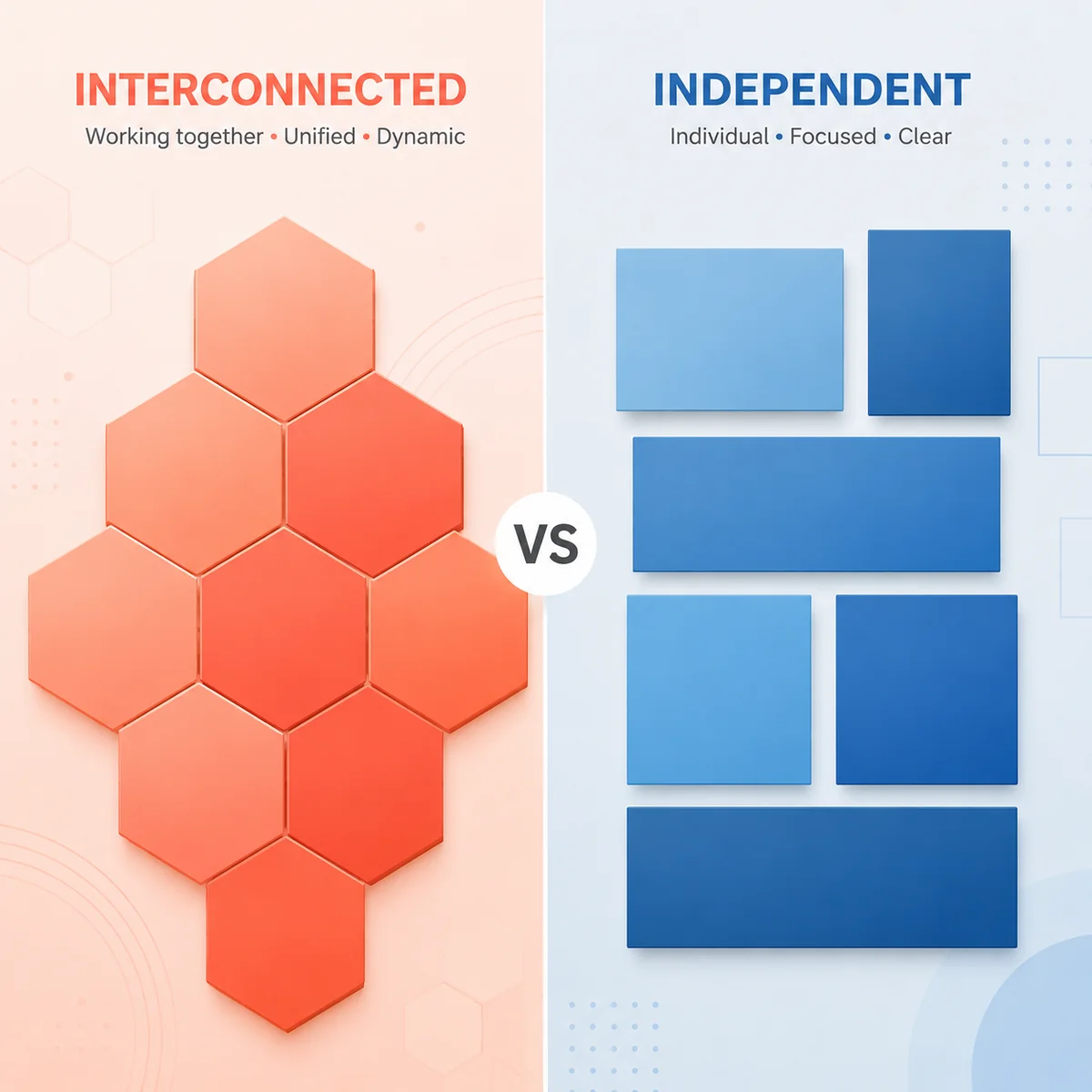
Kitchen table polyamory gets its name from a simple image: everyone in the polycule can sit around the kitchen table together and share a meal. It describes a style of non-monogamy where metamours — your partner’s other partners — are not just tolerated but welcomed as part of your extended social circle. You might not be best friends with everyone, but you know them, you are comfortable in the same room, and there is a baseline of warmth and familiarity.
In practice, this might look like group chats that include everyone, shared holiday gatherings, or casual hangouts where partners and metamours coexist naturally. Some kitchen table dynamics involve genuinely close friendships between metamours. Others are more like cordial acquaintances — the key is that the default is openness, not separation.
This approach appeals to people who value community and transparency. When everyone knows each other, there are fewer shadows for insecurity to hide in. You do not have to wonder what your partner’s other connection is like — you have met them, talked to them, maybe even like them. For a lot of people, that demystification is powerfully reassuring.

What Is Parallel Polyamory?
Parallel polyamory sits at the other end of the spectrum. In this model, relationships run on separate tracks. You know your partner has other partners — but you do not necessarily know them personally, spend time with them, or share social space. Communication between metamours is minimal or nonexistent, and that is by design, not by accident.
This is not about secrecy. Parallel polyamory is a conscious choice to keep different relationships in different containers. You might hear about your metamour in conversation, the same way you hear about your partner’s coworkers, but you are not expected to build a relationship with them. The focus stays on each individual dyad — your connection with your partner, their connection with theirs — without requiring those worlds to overlap.
For many people, parallel polyamory is the structure that makes non-monogamy sustainable. It reduces social friction, protects emotional bandwidth, and eliminates the pressure to perform friendliness when genuine friendship is not there. If kitchen table polyamory is a warm family dinner, parallel polyamory is two separate dinner parties happening in different rooms — and both can be perfectly satisfying for the people at them.

How These Styles Show Up in Threesome Dating
Threesome dating sits at an interesting intersection. By definition, a threesome involves three people in the same physical space — so it might seem like kitchen table is the obvious model. But the reality is more nuanced. A couple can have a threesome with someone and still maintain a parallel dynamic with that person outside the bedroom. The question is not just about what happens during the experience — it is about what happens around it.
In a kitchen-table-leaning threesome dynamic, the third partner might join the couple for dinner before or after, get invited to social events, or become part of an ongoing group chat. There is a thread of social connection that runs alongside the physical one. The third is not just a guest — they are part of the extended circle.
In a parallel-leaning dynamic, the third partner and the couple keep their interaction focused on the arranged meetups. There is warmth and respect during those meetings, but not an expectation of ongoing social integration. Texting might stay in a dedicated group chat that only lights up around plans. Everyone is friendly, but nobody is pretending they are family. For a deeper dive into negotiating these kinds of arrangements, our threesome negotiation guide walks through the conversations you will want to have before anything happens.
Pros and Cons of Each Approach for Threesomes
Neither model is universally better. The right choice depends on your personalities, your existing relationship dynamics, and what you are actually looking for. Understanding the tradeoffs helps you make an intentional decision rather than defaulting into a structure that does not fit.
Kitchen Table: The Upside
- More transparency. When everyone knows each other, there is less room for suspicion or imagined threats. Your partner’s connection stops being a mystery.
- Stronger group chemistry. People who genuinely like each other tend to have better threesome experiences. Comfort breeds chemistry.
- Easier logistics. One group chat, one calendar, one shared understanding. Fewer moving parts to manage separately.
- Emotional safety net. If something feels off, you have a relationship with the people involved — you can talk about it directly rather than through intermediaries.
Kitchen Table: The Downside
- Forced intimacy. Not everyone clicks. Pressuring metamours to be friends when they are not naturally compatible creates resentment.
- Blurred boundaries. When everyone is in everyone’s business, relationship hierarchy can become muddled in ways that hurt people.
- Emotional labor overload. Maintaining multiple warm relationships takes energy. Some people simply do not have the bandwidth.
- Gossip risk. More proximity means more exposure to each other’s conflicts. Your argument with your partner should not become your metamour’s problem.
Parallel: The Upside
- Clear containers. Each relationship gets its own space. What happens in one does not automatically bleed into the other.
- Lower social pressure. You do not have to like your metamour. You just have to respect that they exist and that your partner cares about them.
- Protects introvert energy. For people who find social interaction draining, parallel structures preserve emotional resources for the relationships that matter most.
- Fewer comparison traps. When you do not see your metamour’s dynamic up close, you are less likely to measure yourself against them.
Parallel: The Downside
- Information gaps. You might not know about important developments in your partner’s other relationships until they directly affect you.
- Can feel like secrecy. Even when parallel is a conscious choice, the separation can trigger insecurity in people who need more transparency to feel safe.
- Harder to coordinate. Scheduling threesomes, managing expectations, and handling group dynamics all become more complex when communication runs through a single hinge person.
- Missed community. Some of the richest parts of ENM — the friendships, the shared rituals, the sense of chosen family — are harder to access in a parallel structure.
How to Decide Which Style Fits Your Dynamic
Most people do not arrive at their preferred relationship structure through abstract philosophy. They arrive at it through experience — often the painful kind. You try kitchen table, discover that your partner’s other partner drives you up the wall, and suddenly parallel starts looking pretty good. Or you try parallel, feel isolated and left out, and realize you need more connection to feel secure.
The better approach is to think about it before the friction shows up. Here are the questions that actually matter:
- How do you handle social energy? If social interaction recharges you, kitchen table might feel natural. If it drains you, parallel gives you room to breathe.
- What makes you feel secure? If transparency calms your nerves, lean toward kitchen table. If independence and autonomy make you feel safe, parallel is likely a better fit.
- What does your partner need? You might be flexible, but if your partner has a strong preference, that shapes the conversation. Compromise is possible — more on that in a moment.
- What is the third partner looking for? Some singles want to be folded into a warm social circle. Others want clear, bounded interactions with no expectation of ongoing integration. Neither preference is wrong, but mismatched expectations create pain. Our guide on setting threesome boundaries covers how to clarify these preferences early.
Psychology Today notes that the most successful polyamorous configurations are the ones where everyone involved chose their structure rather than having it imposed on them. The same principle applies to threesome dating: a kitchen table dynamic that one person resents is worse than a parallel dynamic everyone consented to.
Mixing Styles: Can You Have Both?
Absolutely. Very few people are pure kitchen table or pure parallel across all their relationships. Most navigate a hybrid approach that shifts depending on the specific connections involved.
You might have a kitchen table dynamic with one metamour you genuinely click with, while maintaining a more parallel arrangement with another. Your threesome partner might be in the “let’s grab brunch” zone while your partner’s other connections stay in the “I’m glad you’re happy” zone. This is not inconsistency — it is relationship-specific calibration.
The key to making hybrid approaches work is clarity. Everyone needs to know what container they are in. If your threesome partner thinks they are being welcomed into the inner circle while you think you are keeping things casual and parallel, the mismatch will surface eventually — usually at the worst possible moment. That is why navigating metamour relationships explicitly is so important, even in casual arrangements.
A practical way to think about it: imagine a spectrum from 1 (fully parallel — separate everything) to 10 (fully kitchen table — integrated social life). Your comfort zone might span 3 to 7, and your partner’s might span 5 to 9. The overlap — 5 to 7 — is your shared range. Specific relationships can land at different points on that range without breaking the whole system.
Talking to Your Partner(s) About Your Preferred Style
Bringing up relationship architecture can feel awkward, especially if you are new to ENM. It sounds academic. It sounds like you are overcomplicating something that is supposed to be fun. But having this conversation early — before there is a specific third person in the picture — prevents the kind of structural friction that turns exciting experiences into exhausting ones.
Here is a conversation opener that does not sound like a sociology lecture:
“I have been thinking about how we want to structure things when we start dating other people. Some couples prefer keeping everything separate — like, we each have our own connections and they do not really overlap. Others prefer more of a community feel where everyone knows each other. I am not sure where I land yet, but I wanted to hear where you are at.”
This framing does three things: it normalizes the conversation, it presents both options neutrally, and it makes space for uncertainty. You do not need to have a firm answer. You just need to start the dialogue before the stakes get high.
If you are already in a threesome dynamic and realizing your styles are mismatched, the conversation shifts from exploration to negotiation. That is harder but not impossible. Our guide on swinging versus polyamory touches on how different relationship philosophies can coexist — and the same principle applies here. You do not need perfect alignment. You need enough overlap to function, and enough honesty to address the gaps.
Kitchen Table vs Parallel: Quick Decision Guide
Use this table to check where your preferences land. Be honest — there are no right answers, only useful data.
| Preference | Leans Kitchen Table | Leans Parallel |
|---|---|---|
| I feel secure when… | I know everyone involved | I have autonomous space |
| Social time with metamours… | Energizes me | Drains my social battery |
| Group chats feel… | Warm and inclusive | Overwhelming |
| When conflict arises, I prefer… | Direct group conversation | One-on-one resolution first |
| My ideal threesome involves… | Dinner and hanging out too | Focused time, then separate |
| I view my partner’s other connections as… | Extended community | Their business, not mine |
Do’s and Don’ts for Either Style
| Do | Don’t |
|---|---|
| Name your preference explicitly | Assume your partner shares your default |
| Revisit the conversation as dynamics shift | Lock yourself into one style forever |
| Respect that different metamours get different levels of access | Force friendship where there is no chemistry |
| Check in with third partners about their comfort level | Treat parallel as an excuse for secrecy |
| Build flexibility into your agreements | Use “kitchen table” to justify boundary-crossing |
Understanding where you land on the kitchen table to parallel spectrum gives you language for something that otherwise stays unspoken. When you can name what you need — and hear what your partner needs — you stop stumbling into mismatches and start building structures that actually fit. Whether you are a couple exploring threesome dating for the first time or a single navigating connections with multiple partners, the same rule applies: the best structure is the one everyone chose with their eyes open.
If you are looking for a space where you can be upfront about the kind of dynamic you want — whether that is a warm kitchen table connection or a clean parallel arrangement — you will find people who speak the same language right here at 3Cupid.
Editor’s note: This article is part of 3Cupid’s ongoing series on relationship structures in ethical non-monogamy. For more on related topics, read our guides on threesome dating for mature couples, relationship hierarchy in non-monogamous dating and navigating metamour relationships.
This article reflects general guidance and community knowledge. It does not constitute professional psychological or medical advice. Individual circumstances vary — consult a qualified professional for personalized support.