Table of Contents
- Why Romance Can Fade When You Start Swinging
- Separating Lifestyle Adventure from Your Love Story
- Building Intentional Date Nights That Have Nothing to Do with Swinging
- Small Daily Connection Rituals That Strengthen Your Bond
- Physical Intimacy Beyond the Lifestyle
- Regular Check-In Conversations for Emotional Alignment
- Your Romance Maintenance Checklist
When you first entered the swinging lifestyle, chances are your relationship felt electric. Everything was new. You were exploring together, discovering sides of each other you hadn’t seen before, and the shared adventure itself felt like a kind of romance.
Then somewhere along the way — between club nights, group chats, and planning your next event — you looked at your partner across the dinner table and realized you hadn’t had a real conversation in weeks. Not about the lifestyle. About you two.
Keeping romance alive in the swinging lifestyle takes deliberate effort. Not because swinging kills romance — it doesn’t. But because the lifestyle can become so stimulating and logistically demanding that the quiet, tender work of nurturing your primary bond gets pushed to the margins. This guide will show you exactly how to keep that flame burning.
Why Romance Can Fade When You Start Swinging
It usually doesn’t happen overnight. The fade is gradual, almost invisible, until one day you feel more like co-managers of a shared social calendar than romantic partners.
The lifestyle introduces a paradox: it can bring couples closer through shared vulnerability and communication, but it can also consume the emotional bandwidth that romance runs on. Planning for club nights, texting potential play partners, debriefing after experiences — all of these are forms of relationship work, but none of them are romance. Romance requires presence, not productivity.
Research on long-term relationships consistently points to one finding: couples who maintain romance don’t rely on big dramatic moments. They invest in small, daily deposits of attention and affection. The same principle applies in the lifestyle — but with the added challenge that your attention is being pulled in more directions than a monogamous couple’s ever would be.
The fix isn’t to swing less. It’s to become more intentional about what happens between lifestyle activities. Think of it like this: swinging is the spice rack. Your primary relationship is the meal. No amount of spice replaces the need for a solid base.
Separating Lifestyle Adventure from Your Love Story
One of the most common mistakes swinging couples make is letting the lifestyle become their relationship identity. Every conversation circles back to the next event. Every weekend plan involves other people. Date night becomes code for “we’re meeting another couple.”
Your relationship existed before swinging, and it needs to exist independently of swinging to stay healthy. This isn’t about compartmentalization — it’s about preservation. Give your partnership room to be about just the two of you.
Start by creating clear boundaries between “lifestyle time” and “us time.” This could mean designating certain days as strictly couple-only — no lifestyle group chats, no planning, no debriefing. On these days, your conversations are about your shared life outside the lifestyle: your careers, your dreams, the book you’re reading, the trip you want to take next year.
When couples let the lifestyle become the only thing they share, they risk finding out too late that without it, they don’t have much left. The most resilient swinging couples are the ones who could walk away from the lifestyle tomorrow and still have a rich, fulfilling partnership.
Building Intentional Date Nights That Have Nothing to Do with Swinging
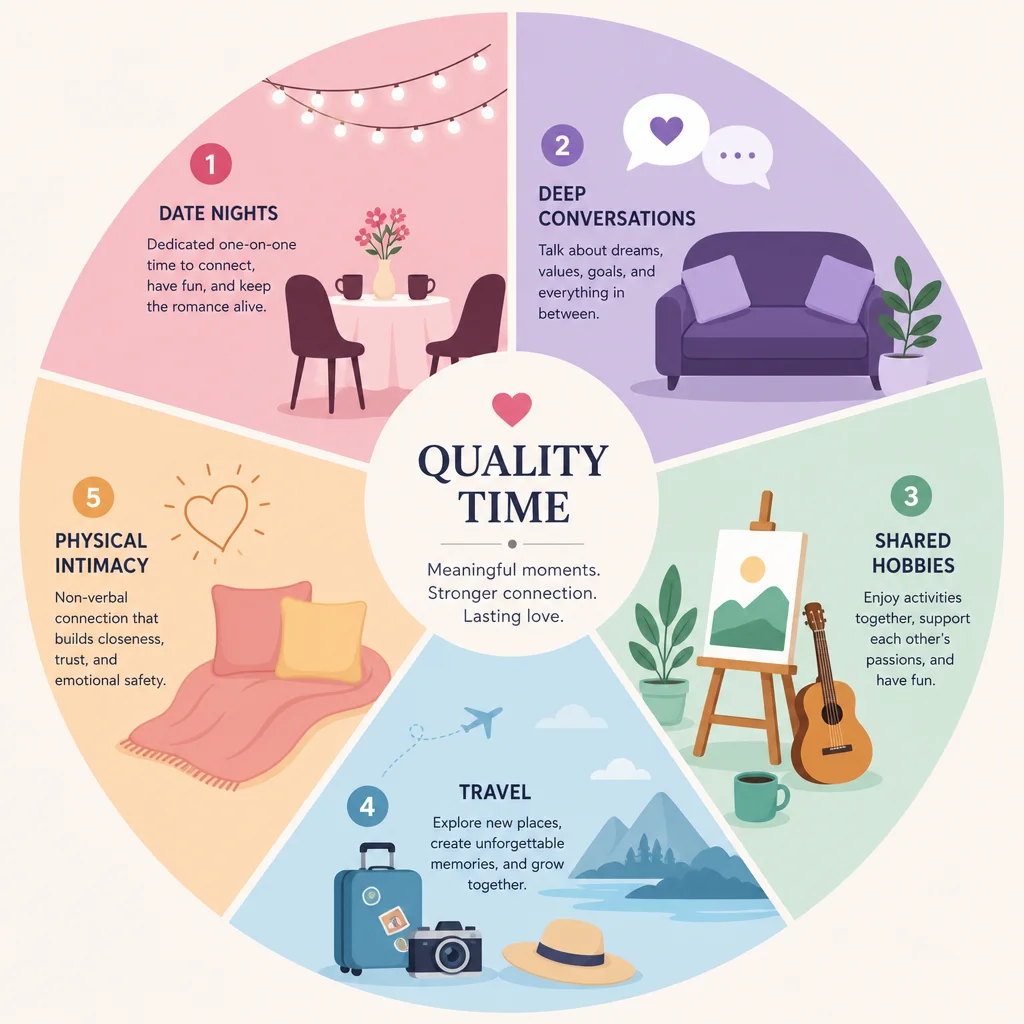
Date night is the most prescribed relationship advice in existence, but for swinging couples, it takes on a specific meaning: date night cannot just be the prelude to a play session. It has to stand on its own.
An intentional date night for swinging couples means: no phones on the table, no “quick check” of the lifestyle app, no conversation about who messaged. It means genuinely being on a date with your partner, the way you did before the lifestyle entered the picture. Remember what that felt like? The anticipation, the undivided attention, the sense that for those few hours, nothing else existed?
Try these approaches to reclaim date night:
- Theme your dates. Cook a new cuisine together, visit a gallery opening, go stargazing. Make the activity the point, not the preamble.
- Rotate who plans. Each partner takes turns being fully responsible for the evening. The planner puts in effort. The other receives. This simple dynamic restores a sense of courtship.
- Dress for each other. Not for a club, not for an impression — for your partner. Wear something they love. Notice each other.
- End with just each other. Go home together. No after-party, no additional plans. Let the evening close with the two of you.
If you’re struggling to find the motivation, think about what drew you together in the first place. Those early-date butterflies? That electricity? It’s still there — it just needs space to surface without the noise of lifestyle logistics crowding it out.
Small Daily Connection Rituals That Strengthen Your Bond
Grand romantic gestures are nice, but they’re the cherry on top. The cake itself is made of daily rituals — small, repeated actions that signal “you matter to me” in a language your nervous system understands.
The most connected swinging couples we’ve observed share a pattern: they touch base regularly throughout the day, not to discuss logistics, but simply to connect. A text that says “thinking of you.” A kiss that lasts longer than a peck. Eye contact that isn’t interrupted by a notification.
Some rituals to consider building into your daily rhythm:
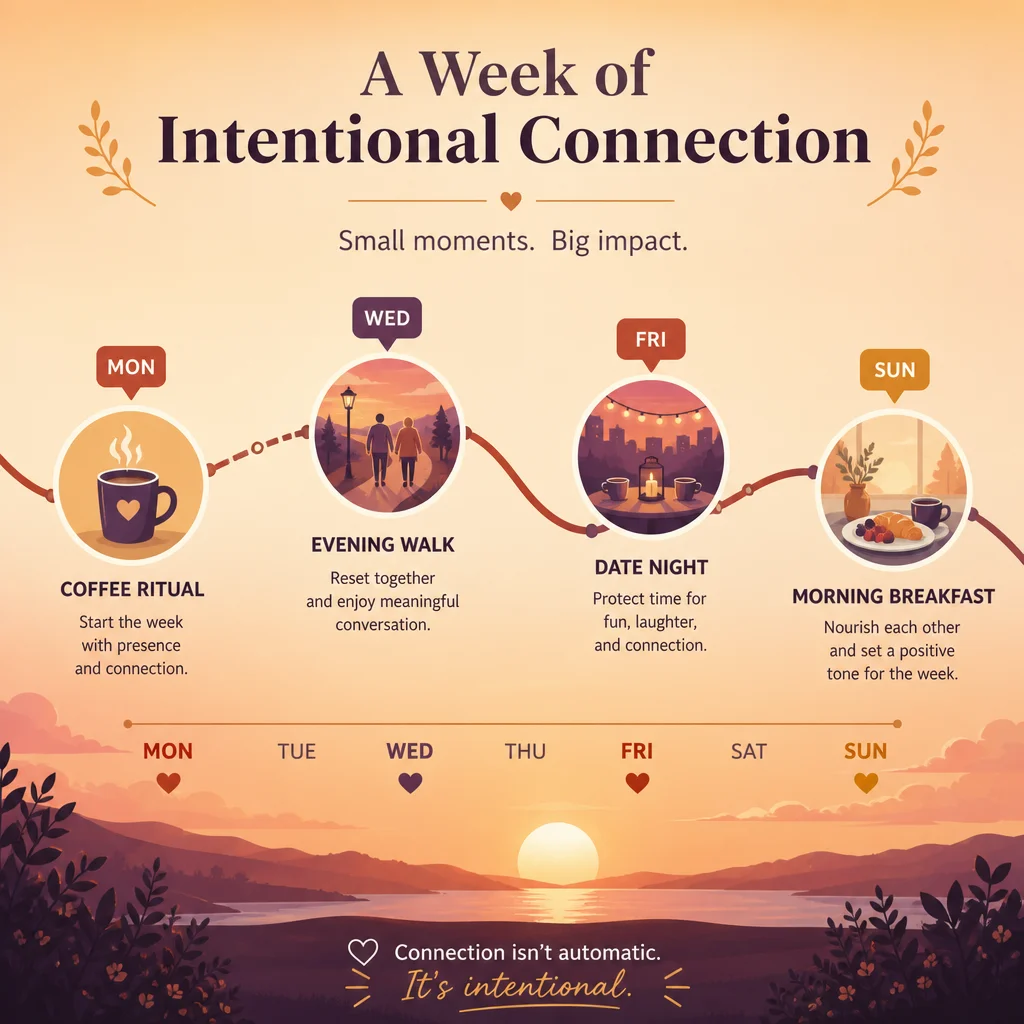
- Morning coffee together, no screens. Ten minutes. Just the two of you. Talk about the day ahead, not the lifestyle.
- The six-second kiss. Research by relationship expert John Gottman found that a six-second kiss is long enough to trigger oxytocin release and create a moment of genuine connection. Try it before you leave for work and when you come home.
- Gratitude check-in at dinner. Each name one thing you appreciated about the other that day. It doesn’t have to be profound. “You made me laugh” counts.
- Bedtime wind-down together. Even if you go to sleep at different times, spend five minutes lying together, no phones, no agenda. Just proximity.
These rituals might seem almost too simple to matter. But couples who sustain romance in swinging lifestyle dynamics over years report the same thing: it’s not the vacations or anniversary surprises that hold them together. It’s the coffee. The kiss. The text. The five minutes in the dark before sleep.
Physical Intimacy Beyond the Lifestyle
When you’re active swingers, it’s easy for all physical intimacy with your primary partner to become framed through the lens of the lifestyle. You’re either recovering from a play session, anticipating the next one, or comparing experiences. Your own physical connection can start to feel like an extension of your lifestyle activities rather than a separate, sacred space.
Reclaiming physical intimacy that belongs only to the two of you requires conscious effort. This doesn’t mean you need to have the kind of sex you were having before you started swinging. It means you need physical connection that isn’t performative, isn’t planned around anyone else’s schedule, and isn’t competing with the novelty of new partners.
Some ways to protect and nurture your exclusive physical connection:
- Schedule “just us” intimacy. Pick a night each week that belongs only to the two of you. No lifestyle activities that day, no recovery mode — just presence and touch, whatever form that takes.
- Separate reclamation sex from lifestyle sex. After swinging, many couples have “reclamation sex” to reconnect. That’s valuable. But also make room for intimacy that isn’t a response to anything external — it’s just because you want each other.
- Non-sexual physical affection. Holding hands while walking. A back rub while watching TV. Resting your head on their shoulder. These small acts of touch keep the physical bond alive between more intense moments.
Physical intimacy within the lifestyle and physical intimacy exclusive to your partnership can coexist beautifully — but they need to be treated as distinct categories, each receiving their own care and attention.
Regular Check-In Conversations for Emotional Alignment
Every healthy swinging relationship has one thing in common: the couple talks. Not just about rules and boundaries and who they’re meeting next, but about how they feel. About each other. About themselves. About whether the lifestyle is adding to their bond or quietly draining it.
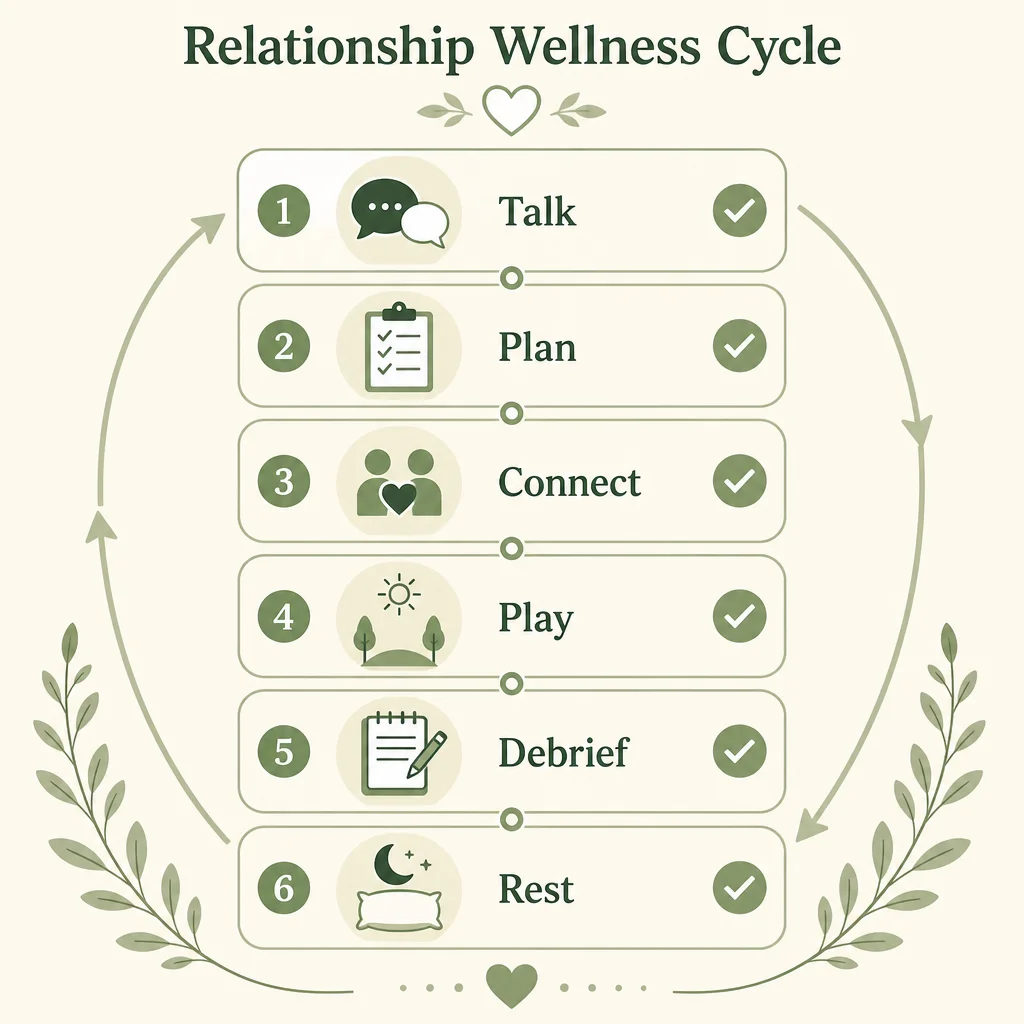
Set aside time — weekly or biweekly — for a structured check-in that isn’t a debrief of any particular experience. This is a relationship health audit. Some questions to guide the conversation:
- On a scale of 1 to 10, how connected do you feel to me right now?
- Is there anything about our dynamic lately that’s been sitting uncomfortably with you?
- What’s one thing I’ve done recently that made you feel loved?
- What’s one thing I could do differently to help you feel more secure?
- Are we spending enough quality time that has nothing to do with the lifestyle?
If the answers reveal distance, don’t panic. Distance is normal. It’s a signal, not a verdict. What matters is that you’re both willing to notice it and adjust. For couples who master handling emotional complexity in the lifestyle, these check-ins become a non-negotiable part of their rhythm.
The check-in is also the right time to discuss whether you need a pause. If the lifestyle has been consuming more energy than it’s giving back, pausing without resentment is a skill worth developing early.
Your Romance Maintenance Checklist
Print this. Save it. Run through it once a month. If you’re hitting most of these, your romance in swinging lifestyle practice is on solid ground.
- ☐ Weekly date night (no lifestyle talk). This is non-negotiable. Protect it like a doctor’s appointment.
- ☐ Daily six-second kiss. Morning and evening. Set a reminder if you need to.
- ☐ One screen-free meal together per day. Phones face down. Eyes on each other.
- ☐ Monthly relationship check-in. The five questions above. Honest answers.
- ☐ Physical intimacy that isn’t lifestyle-adjacent. Once a week minimum — just the two of you.
- ☐ A shared activity that’s new to both of you. Once a month. Cooking class, hike, museum, concert. Novelty fuels connection.
- ☐ One “remember when” conversation per week. Reminisce about your early days. Your first date. Your funniest travel disaster. Your shared history is your relationship’s foundation.
- ☐ Post-swing reconnection ritual. After every lifestyle experience, take time to debrief together and then intentionally turn toward each other — whether that’s cuddling, talking, or just being close.
If you’re checking fewer than five of these boxes, don’t beat yourself up. Start with two. Master them. Then add a third. Consistency matters more than completeness. Your relationship isn’t a project to be optimized — it’s a living thing that needs steady, patient attention. Tend to it daily, and it will flourish, in the lifestyle and out of it.
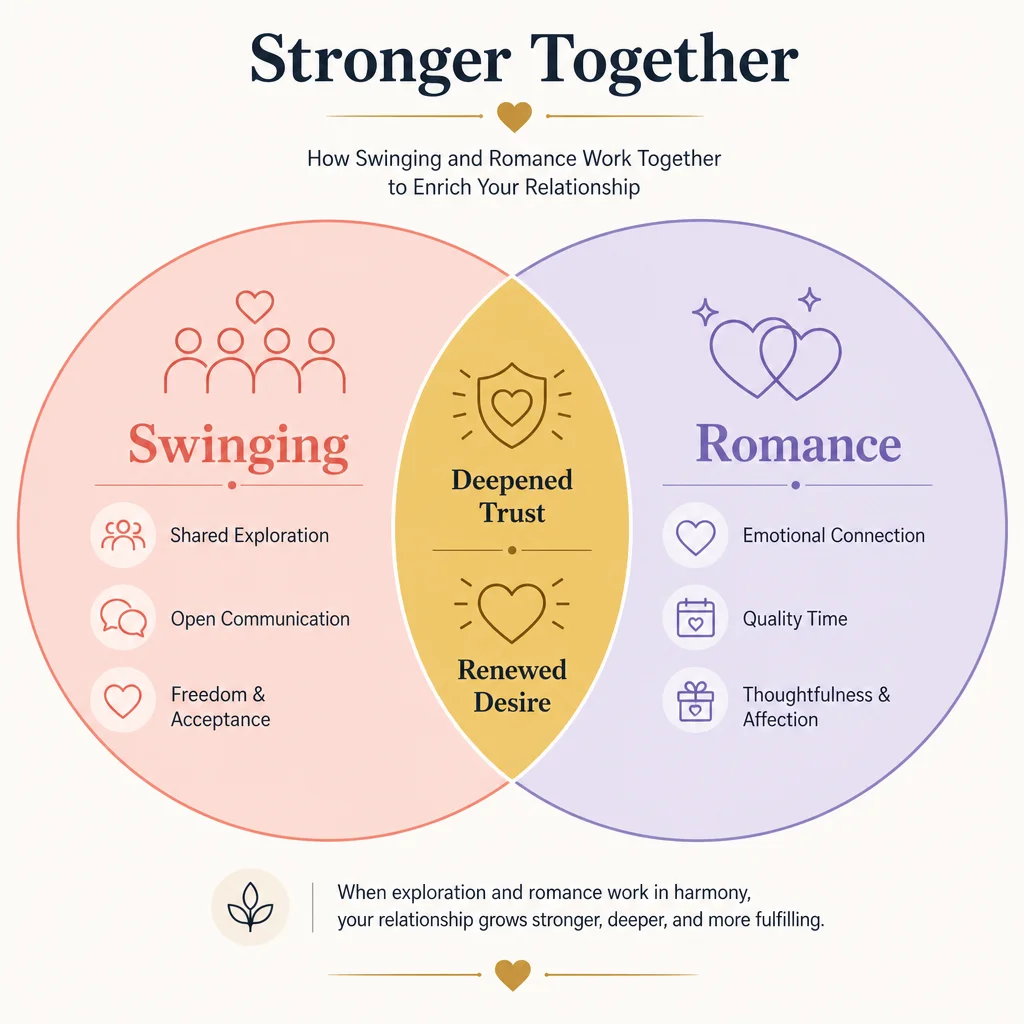
Swinging can absolutely coexist with deep, lasting romance. The couples who pull it off aren’t magic — they’re just intentional. They treat their primary relationship as something worth protecting, worth investing in, worth showing up for every single day. They know that the lifestyle is an addition to their love story, not a replacement for it.
If you’ve been feeling the drift, start small. Plan one date night this week with no lifestyle agenda. Give your partner one genuine compliment that has nothing to do with swinging. Hold their hand for no reason. These tiny acts are the building blocks of a romance that can weather the emotional highs and lows of the lifestyle — including reconnecting after the emotional drop that sometimes follows intense experiences.
Your relationship is the home you both return to. Keep the lights on. Keep the door open. Keep choosing each other — not because the lifestyle demands it, but because you genuinely, deeply want to.
For more on maintaining emotional health in the lifestyle, read our guide on keeping romance alive in long-term relationships from Psychology Today. And if you’re looking for a community where relationship-minded swingers connect, you’ll find a welcoming space right here at 3Cupid.
For a deeper dive into building relationship foundations, read our companion guide on nurturing your primary relationship outside of swinging — it covers the rituals and boundaries that keep your partnership thriving independent of lifestyle activities.
This article was written by the 3Cupid editorial team to help couples build stronger, more romantic relationships while navigating the swinging lifestyle. Our content is grounded in relationship research, community experience, and a commitment to ethical, communicative non-monogamy.