When three people come together — whether for a one-time experience or an ongoing connection — the question of who holds more influence can quietly shape everything. One person picks the restaurant every time. Another’s comfort level becomes the unspoken benchmark. Someone’s schedule always wins. Power dynamics in threesome dating are real, and they rarely announce themselves. They show up in small decisions — who texts first, whose boundaries get priority, who gets to change the plan — and if left unexamined, they can turn what should be a shared experience into something unequal.
The good news? Power imbalances are not a sign that something is broken. They are a signal that something needs attention. Every relationship structure — monogamous, polyamorous, or somewhere in between — carries its own distribution of influence, resources, and decision-making weight. What matters is whether everyone involved can see it, name it, and adjust it together.
Table of Contents
- What Power Dynamics Actually Look Like in a Threesome
- Why Couples Often Hold Structural Power
- 5 Signs of a Power Imbalance You Shouldn’t Ignore
- The Third Partner’s Voice: Autonomy as the Foundation
- Practical Steps to Rebalance Power
- Power Dynamics as an Ongoing Conversation
What Power Dynamics Actually Look Like in a Threesome
Power is not just about who makes decisions. It is about whose comfort gets centered, whose desires set the tempo, and whose boundaries are treated as flexible versus firm. In a threesome context, power shows up in several layers.
There is relational power — the history a couple shares, the inside jokes, the unspoken shorthand that a third person cannot possibly match on a first date. There is logistical power — who hosts, who travels, whose schedule dictates the availability windows. And there is emotional power — who gets to express discomfort and have it taken seriously, versus who feels they have to stay agreeable to keep the dynamic going.
These layers do not always align. A person might hold logistical power (their place, their rules) while feeling emotionally powerless (afraid to voice a boundary because they do not want to seem difficult). Recognizing that power is multi-dimensional is the first step toward addressing it honestly.

Why Couples Often Hold Structural Power
When an established couple opens their relationship to include a third person, they bring something the third cannot — a shared history, a home, financial entanglement, and years of emotional investment. This is not a moral failing. It is a structural reality. The question is whether the couple acknowledges it and acts accordingly.
Couple privilege — a term widely discussed in ethical non-monogamy communities — describes the unearned advantages that come from being part of a primary partnership. It can show up in small ways: the couple makes decisions privately and then presents them to the third as a done deal. Or in larger ones: the third is expected to be sexually available to both partners equally, regardless of their own chemistry or comfort. Navigating couple privilege is essential reading for anyone entering this space — whether you are part of the couple or the third joining them.
This dynamic is not unique to threesomes. Any group where two members share a deeper bond will naturally have asymmetries. What makes it manageable is transparency: naming the privilege, inviting the third’s input on decisions that affect them, and being willing to adjust the couple’s default patterns when they do not leave room for someone else.

5 Signs of a Power Imbalance You Shouldn’t Ignore
Power imbalances are often subtle. They rarely announce themselves with a dramatic confrontation. Instead, they accumulate through small, repeated patterns that one person notices and the others overlook. Here are five signals worth paying attention to.
1. One Person’s Comfort Always Comes First
When discomfort arises — and it will, in any dynamic involving three people — whose feelings get addressed first? If the answer is always the same person, that is a power signal. A healthy arrangement makes space for everyone’s emotional experience to matter equally.
2. Decisions Happen Without the Third Partner
If the couple routinely discusses boundaries, scheduling, or expectations privately before bringing them to the third, the third is being managed rather than included. True collaboration means everyone has a seat at the table before decisions are finalized.
3. The “Veto Rule” Hangs Over Everything
Couples sometimes agree that either partner can unilaterally end the arrangement with the third at any time. While this may feel like a safety measure for the couple, it puts the third in a precarious position — knowing their participation can be revoked without warning or discussion. There are healthier ways to set boundaries for a successful threesome without resorting to the veto model.
4. One Person Does All the Emotional Labor
Emotional labor — checking in, initiating hard conversations, managing schedules, reading the room — tends to fall disproportionately on one person. When that pattern persists, it drains the person carrying it and lets others off the hook. Power is shared when emotional labor is shared.
5. The Third Is Expected to Match Both Partners Equally
Chemistry is not symmetrical. Expecting a third to feel the same level of attraction, connection, or comfort with both partners — and interpreting any difference as a problem — is a form of pressure that reflects the couple’s needs being centered above the third’s autonomy. Being the more interested partner is challenging enough without this layer of expectation.

The Third Partner’s Voice: Autonomy as the Foundation
Join any online forum about threesome experiences — whether on Reddit or within ENM communities — and one theme emerges repeatedly: third partners often feel like guests in someone else’s relationship rather than equal participants. They describe being expected to adapt to the couple’s existing rhythms, to defer to the couple’s comfort zones, and to exit gracefully when their presence becomes inconvenient.
This is not what ethical threesome dating looks like. A third partner is not an accessory to a couple’s adventure. They are a full person with their own needs, limits, and agency. Protecting that agency requires active effort — especially from the couple, who hold most of the structural advantages.
Practical ways to center the third’s voice include: asking for their input before the couple reaches consensus on anything that affects them, checking in one-on-one rather than always as a pair, and making it explicitly clear that they can say no to anything — including one partner — without endangering the overall dynamic. Autonomy is not granted by the couple. It belongs to the third by default, and the couple’s job is to avoid eroding it.
A useful thought experiment for couples: imagine the arrangement from the third’s position without any of your shared history as a buffer. What would feel risky? What would feel like an unspoken rule you did not agree to? Answering those questions honestly — without defensiveness — usually reveals exactly where the power asymmetries live.

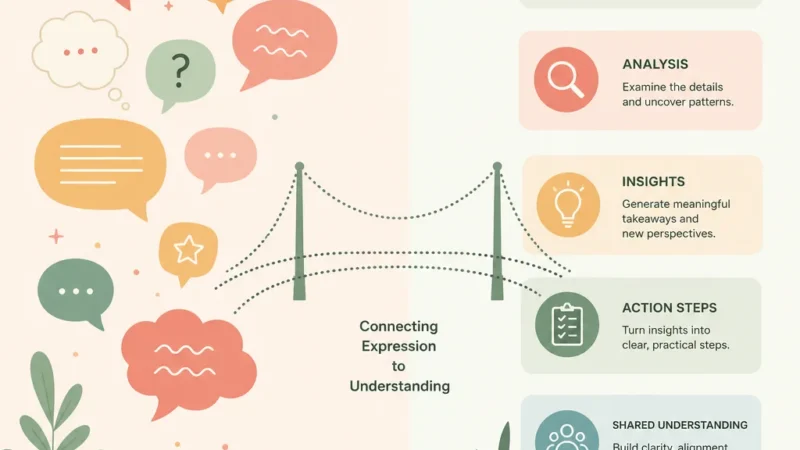
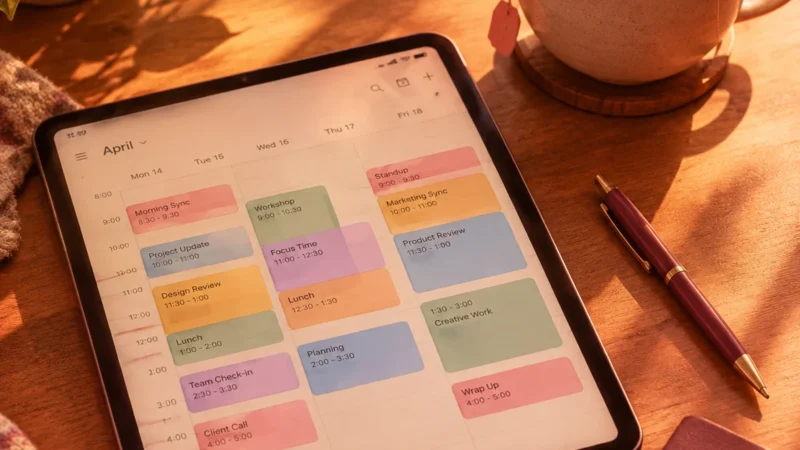
Seeing the same idea from two angles often makes it easier to talk about with a partner — the picture above and the one below are two sides of the same conversation.

Practical Steps to Rebalance Power
Recognizing a power imbalance is one thing. Doing something about it is another. The strategies below are designed to be actionable — things you can implement before your next date, your next conversation, or your next check-in.
| Power Imbalance Signal | Rebalancing Action | Who Leads the Change |
|---|---|---|
| Couple makes all decisions privately | Move key conversations to a three-person group chat before decisions are made | The couple |
| Third feels pressure to please both partners | Explicitly state that different levels of connection with each partner are normal and fine | The couple |
| One person’s schedule always wins | Rotate who proposes dates; use a scheduling tool where everyone can mark availability | Everyone |
| Emotional check-ins only happen reactively | Schedule a 15-minute check-in before every date — not after problems arise | Whoever notices the gap |
| Third is treated as “the guest” | Invite the third to host, choose the activity, or set the pace for at least one date | The couple |
Beyond these specific fixes, there is one overarching principle: slow down. Power imbalances often intensify when things move fast — when the couple is excited, when the third feels swept up, when nobody pauses to ask “how is this actually feeling for you?” Slowing down creates the space for each person to locate their own voice and use it.
Power Dynamics as an Ongoing Conversation
Power is not a problem you solve once and cross off a list. It is a living feature of every relationship — one that shifts as circumstances change, as feelings evolve, and as people grow more (or less) comfortable speaking up. Treating power dynamics as an ongoing conversation rather than a fixed arrangement is what separates draining threesome experiences from genuinely fulfilling ones.
A useful habit: every few dates, ask a simple question. “Is there anything about how we’re doing this that does not feel balanced to you?” Deliver the question neutrally, without defensiveness, and be prepared to hear an answer you did not expect. The goal is not to achieve perfect equality — that is a fantasy. The goal is to make sure that when imbalances appear, everyone feels safe enough to name them.
There is a growing body of discussion around how power dynamics in threesome dating affect long-term satisfaction and emotional safety. Psychology Today notes that relationship satisfaction in non-monogamous arrangements correlates strongly with perceived fairness in decision-making and emotional investment — not with the specific structure of the relationship itself (Psychology Today). In other words, it is not about whether you are a couple-plus-one or a fully equal triad. It is about whether everyone involved feels they have genuine influence over how things unfold.
If this conversation feels relevant to your situation, you may also find value in our guide on navigating couple privilege, which goes deeper into the specific dynamics between established couples and third partners. And for those moments when interest levels feel lopsided, our piece on handling unequal investment offers a compassionate framework for staying grounded when you are the one who cares more.

Power does not disappear when you ignore it. It just goes underground — shaping decisions, silencing voices, and slowly eroding the trust that brought three people together in the first place. Naming it, talking about it, and adjusting it together is not extra work layered on top of the relationship. It is the relationship itself.
Editor’s note: This article is part of our ongoing series on building healthy, balanced relationships in the threesome dating space. We update our content regularly to reflect evolving conversations in the ENM community.