Table of Contents
- Why Volunteering in Non-Monogamy Needs Its Own Rules
- The People You Serve Are Not a Dating Pool
- Coordinators, Rotas and the Power Nobody Mentions
- Shared Values Are Not Shared Boundaries
- Tired, Visible and Recognisable
- How Much the Group Needs to Know
- Dating a Fellow Volunteer, and Leaving Afterwards
- A Short Agreement Before Your Next Shift
Volunteering in non-monogamy sits in an odd position: less fraught than dating a colleague, more complicated than joining a sports league. The reason is that a volunteer role comes with duties owed to people who did not choose you. Turn up, do the work, and the question of who you are seeing is not the point of the room.
That is what makes it worth doing. It is also what makes the rules different from the ones that apply to a hobby group. This piece covers the four lines that matter most, the power in a rota, and how to date a fellow volunteer without either of you losing the placement.

A note on shape. The sections below run from the widest obligation to the narrowest, because that is the order in which problems actually arrive. If you only read one, read the second.
Why Volunteering in Non-Monogamy Needs Its Own Rules
Most guidance about meeting people assumes a scene built for socialising: a club, a class, a league. A volunteer placement is not that. It is a workplace with better motives, and it usually involves a coordinator, a schedule you are expected to honour, and service users who are there because they need something.
The consequence is simple and worth stating plainly. Your behaviour at a placement is judged against the job, not against whether people like you. Two volunteers can behave identically toward each other and produce very different outcomes depending on whether the shift still got covered.
There is a second, quieter reason. Many placements serve people in difficult situations, and organisations are rightly cautious about anything that blurs the boundary between helper and guest. A reputation for treating the placement as a social club travels faster than you would expect, and it is hard to walk back.
The People You Serve Are Not a Dating Pool
This is the line, and everything else in the article is downstream of it. Anyone who is at the placement because they need the service is off limits while they are receiving it. Not complicated, not negotiable, and not softened by the fact that they approached you first.
The reason is structural rather than moralistic. They cannot refuse you cleanly. Saying no to someone who is handing them something they need is a different act from saying no to a stranger in a bar, and a decent organisation will treat any confusion on that point as a safeguarding matter.
- Do not ask service users out, and do not give them your contact details for personal reasons.
- Do not accept their contact details either, even when they offer them warmly.
- If somebody persistently pursues you, tell your coordinator. That is what the role is for.
- If a connection genuinely develops after they have left the service entirely, that is a different situation and it still deserves a conversation with the organisation first.
Organisations vary on how strictly they write this down, and some have a policy you signed without reading closely. Find it. The federal volunteer portal and the UK umbrella body for voluntary organisations both publish plain guidance on conduct that is worth ten minutes before your first day.
Coordinators, Rotas and the Power Nobody Mentions
A volunteer coordinator may be unpaid, part-time and entirely without formal authority, and still control the thing you care about: which shift you get, whether you keep it, and what is said about you if something goes wrong. That is real power, and it is the same shape as the one described in dating a coworker in ENM, just with less paperwork.
So: do not date your coordinator while they are coordinating you. If something starts, one of you moves to a different team or a different project, and you tell the organisation rather than letting them work it out.
| Do | Don’t | Why |
|---|---|---|
| Tell the organisation if you start seeing a fellow volunteer | Assume nobody will notice because everyone is friendly | Small organisations run on information, and being straight keeps you out of the guessing |
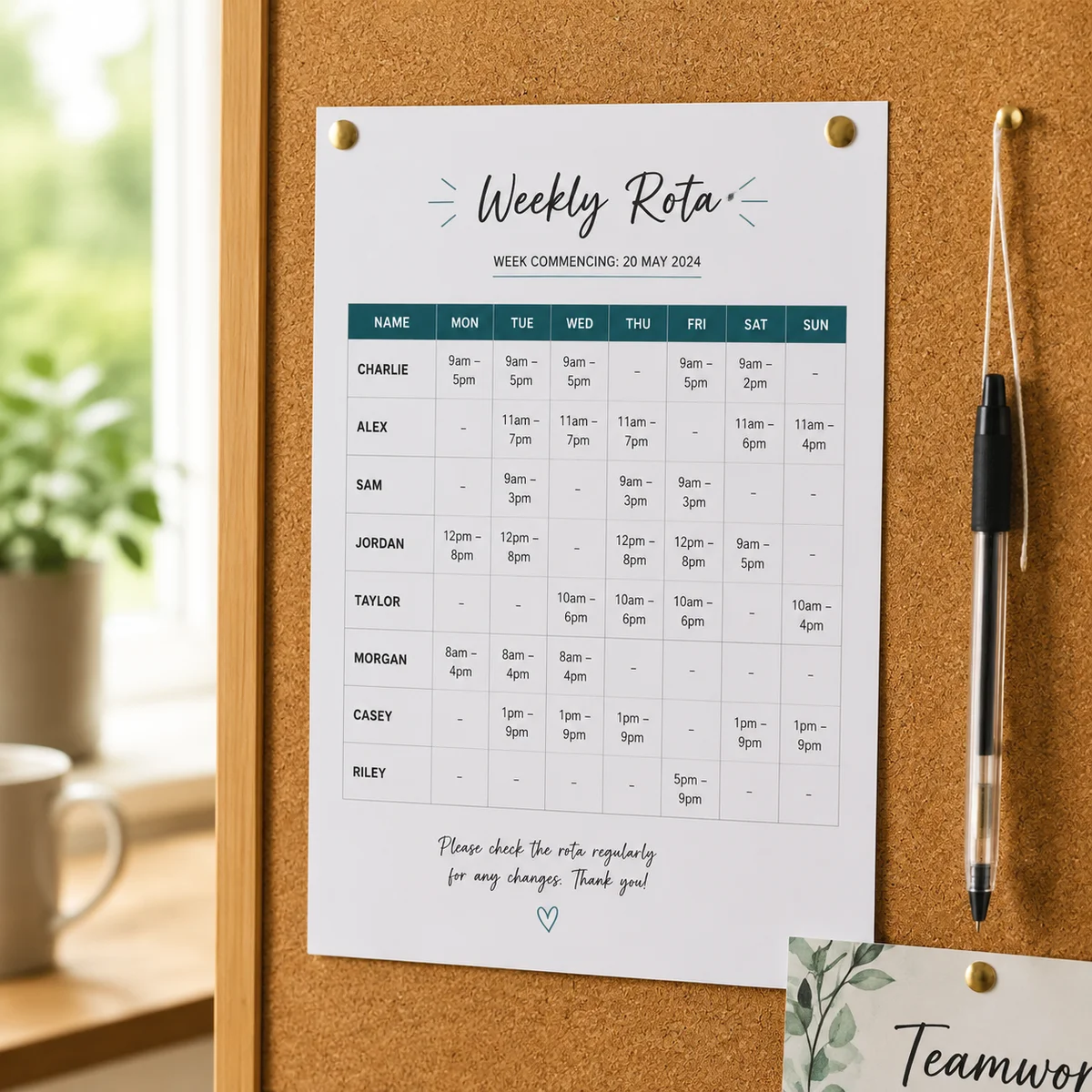
| Swap shifts through the official channel | Cover for each other informally and sort the rota later | An uncovered shift is the fastest way to turn a private matter into an organisational one |
| Keep the first month of any new relationship quiet at the placement | Let the room find out because two people keep arriving together | Pacing is yours to set, and it is much harder to set once it has been set for you |
| Step back from a decision that affects your partner | Advocate for them in a meeting about shifts or responsibilities | Even the appearance of favouritism costs both of you credibility |
If the placement is large enough to have a staff team, the same logic as any workplace applies and the psychology of work and organisational life is a reasonable reference for why informal power is often sharper than formal power.
Shared Values Are Not Shared Boundaries
People who volunteer together tend to assume they agree about more than they do. You both turned up on a Saturday to do unpaid work; it feels like evidence of a shared outlook. It is evidence of a shared Saturday.

This matters because volunteer groups are where adults let their guard down fastest. There is a task, there is daylight, and there is a strong sense of doing something decent, so conversation skips several steps it would normally take. That is pleasant and it is also how people end up three weeks in before discovering they disagree about something central.
The fix is unglamorous: treat the shared purpose as the shared purpose. Ask ordinary questions at an ordinary pace rather than inferring a whole worldview from the fact that somebody is good with a hammer. If you want a structure for that, questions worth asking early works just as well in a hi-vis vest as it does over dinner.
Tired, Visible and Recognisable
A shift is physical in a way most social scenes are not. Lifting, standing, heat, cold, early starts. People see you at your least composed, and they see you repeatedly, which combines into a kind of familiarity that feels like closeness and is not.
Two practical consequences. First, do not have significant relationship conversations at the end of a long shift. Everybody is depleted and the read you get of the other person is not reliable. Second, notice whether the version of you that the group knows is only ever the working version. If it is, that is a friendship with a costume on.

Uniforms, badges and name labels add a visibility wrinkle. If you are identifiable by role in public, you are also identifiable to anyone who recognises you from anywhere else in your life. That is worth thinking about before you agree to appear in an organisation’s publicity, and it is the same calculation covered in photos and your ENM dating profile and phone privacy in non-monogamy.
For most people the answer is simply to decline the photo and get on with the work. Nobody needs a reason, and a good organisation will not ask for one.
How Much the Group Needs to Know
You are not obliged to disclose anything at a placement. What you are obliged to do is avoid putting the organisation in a position where it has to manage something you could have handled quietly.
In practice that means three things and nothing more. Tell the organiser if two people on the same shift are in a relationship that might affect the rota. Keep any disagreement between you off the group chat. And do not recruit: a volunteer placement is not a place to find a third person for anything, and doing so makes the organisation answer for your private life.
Everything beyond that is yours. Plenty of people volunteer for years with colleagues who know nothing about their relationships, and that is a completely legitimate way to do it. If you would rather be open, the considerations in handling social stigma in ENM dating are the relevant ones.
Dating a Fellow Volunteer, and Leaving Afterwards
Fellow volunteers are a genuinely good pool. You get observed behaviour over months, which is the thing most people say they want, and you get it without the performance that comes with a dating app. The cost is that neither of you can easily leave.
Before anything starts, ask what happens if it ends. Not as a pessimistic gesture, but because volunteer teams are small and a break-up that takes two people out of a rota is a real operational problem. The usual answer is that you both stay, you both act normally, and you do not ask colleagues to pick sides. Saying it out loud is what makes it true.

Then the ordinary rules, which are the same as anywhere: ask once, take the answer, do not reopen it because the shift went well. If the person is also a friend of your other partners, or becomes one, the guidance in working through jealousy is more useful than a rule about who you may find attractive.
And if the placement itself becomes untenable, you are allowed to stop. Give notice as the organisation asks, hand back what you borrowed, and go. A volunteer role is a gift of time, not an obligation you owe indefinitely, and no relationship is worth a standing commitment you have come to dread.
A Short Agreement Before Your Next Shift
Read this once, then whenever something changes. Five lines, and most of them take a minute to settle.
- You know the organisation’s policy on relationships between volunteers, or you know it has none.
- You know who coordinates you, and you are not romantically involved with that person.
- If you are seeing a fellow volunteer, the organiser has been told in general terms.
- Service users are off limits, and you could explain why to a colleague without hesitating.
- You have decided what happens to the placement if a relationship in the team ends.

That is most of it. The rest is the work itself, which is why people sign up in the first place. If the room you have in mind is a hobby group rather than a workplace, the trade-offs set out in book clubs in non-monogamy are the ones that apply, and they are gentler than these.
Either way, the wider argument for structured unpaid activity is well supported. research on social support and the psychological basics of healthy relationships both make the case better than enthusiasm can, and guidance on relationships and safety is the place to read about where care stops and pressure begins.
Can I date someone who uses the service I volunteer with?
No, not while they are using it. The imbalance is the problem: declining someone who is helping you is not the same as declining a stranger, and most organisations treat any blurring of that line as a safeguarding issue rather than a personal one.
Do I have to tell the organiser if two volunteers are dating?
If it could affect the rota, the shifts or who supervises whom, yes, in general terms and without detail. Small teams run on trust, and being the person who mentioned it is far better than being the person who did not.
What if I am the coordinator and a volunteer interests me?
Wait, or move. While you assign their shifts and write anything about their conduct, the power difference does not resolve, whatever the intention. Transferring one of you to another project is a small administrative act that removes a large problem.
It has ended badly and I cannot face the next shift. What now?
Say so to the coordinator in plain terms and ask for a short break or a different shift. Most organisations would rather adjust a rota for a fortnight than lose a volunteer permanently. Reading about stress and recovery may help you work out how much of it is the week rather than the placement.
Volunteering in non-monogamy works well when the work stays the work. The relationships are a bonus, the boundaries are what protect both, and a placement you would be sorry to lose is worth a few unglamorous conversations up front. If you are building a life with room in it for that, plenty of people are doing the same thing right here at 3Cupid.
This article is general information for adults, not legal, medical or therapeutic advice. Safeguarding policies, volunteer agreements and reporting duties vary by organisation and by jurisdiction, and where they are stricter than anything written here they take precedence. Nobody in a volunteer role owes anybody a relationship, and nobody receiving a service owes anybody their attention.