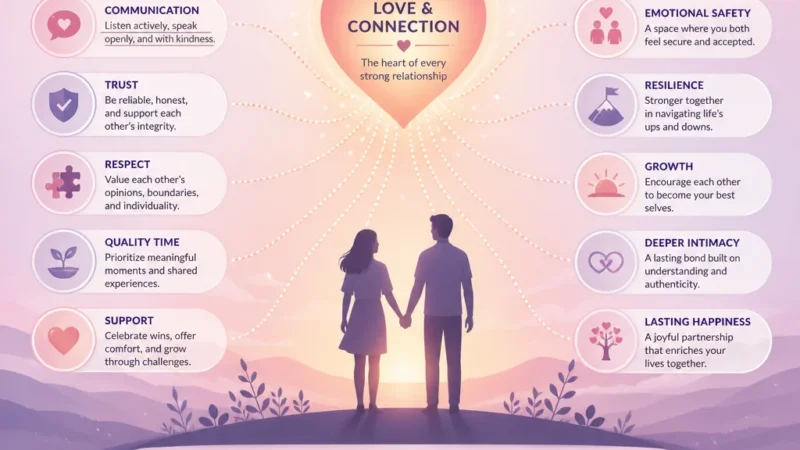
If you have ever hesitated to explore threesome dating because you worried your body did not fit some imaginary standard, you are not alone — and the data backs you up. A 2023 Pew Research survey found that body image concerns are one of the top three reasons people avoid putting themselves out there in dating, across all genders and orientations. Body-positive threesome dating is not a niche or a trend. It is a recognition that attraction, chemistry, and connection have nothing to do with a clothing size — and that the platforms and communities built around threesomes should reflect that reality.
This guide is for couples and singles who want to explore three-way connections without the weight of unrealistic body expectations. We will cover how to find spaces that genuinely welcome all body types, how to present yourself in a way that feels honest rather than apologetic, and how to handle the insecurity that can surface when things get real.

Why Body Image Matters in Threesome Dating
Threesome dating adds a layer of vulnerability that one-on-one dating does not. When two people are involved, there is a natural (if often unspoken) comparison dynamic: “Are they more attracted to the third person than to me? Does my partner prefer their body type?” These thoughts are not evidence of a weak relationship. They are what happens when three people with three different bodies and three different histories of self-image occupy the same emotional space.
The mainstream depiction of threesomes — in media, in pornography, even in dating app marketing — overwhelmingly features a narrow range of body types. This creates a false baseline. Couples and singles who do not match that image may assume they do not belong in these spaces at all. That assumption costs everyone. It keeps interesting, kind, attractive people on the sidelines while the dating pool shrinks to a caricature of itself.
The reality is that chemistry is unpredictable. People are drawn to warmth, humor, confidence, and presence far more than to any specific physical metric. As we explore in our guide to the emotional realities of threesome dating, the connections that last are built on how someone makes you feel — not how they photograph.
What “Body-Positive” Actually Means in Dating

Body positivity in dating is not about pretending insecurity does not exist or demanding that everyone find every body type attractive. It means creating an environment where all bodies are treated as worthy of desire, respect, and presence — and where people are not reduced to their physical characteristics. In threesome dating specifically, it means pushing back against the assumption that only one kind of body “belongs” in these spaces.
For couples, body-positive threesome dating often begins with an honest internal conversation. Are you both genuinely open to connecting with people of different body types, or are you unconsciously filtering before you even start? Do your profile photos and bio reflect what you actually value in a connection, or are you signaling something narrower? These are uncomfortable questions, but they matter. The couples who have the best experiences are almost always the ones who lead with openness rather than a checklist of physical preferences.
For singles — especially plus-size women and men who date couples — body-positive spaces mean you do not have to apologize for existing in your body. You do not have to lead with self-deprecation. You do not have to use photos that hide or minimize. You can simply show up as yourself, the same way a thinner person would, and trust that the right people will respond.
Finding Platforms and Communities That Welcome All Bodies
Not every dating platform makes body inclusivity a priority. Some apps and sites are effectively hostile to anyone who does not fit a narrow aesthetic — not through explicit policy, but through user culture, algorithmic bias, and the absence of tools that let you filter out the noise.
So how do you find spaces that feel genuinely welcoming? Start with platforms that serve the ENM and threesome community specifically rather than general dating apps. Niche platforms tend to attract people who are already outside the mainstream in one way, which often correlates with greater openness about body diversity as well. Look for communities where profiles emphasize personality, interests, and relationship philosophy — not just a grid of carefully curated photos.
Read the room before you invest time. Spend a few days browsing profiles. What kinds of bodies do you see represented in the community? What language do people use in their bios? If every profile reads like a casting call with physical requirements, that is useful information. If you see a mix of body types and language that emphasizes connection over appearance, you have likely found a healthier space. As we note in our guide to finding a third for a threesome, the quality of the platform directly shapes the quality of the experience.
How to Write a Profile and Choose Photos That Reflect the Real You

If you carry insecurity about your body, the impulse is often to compensate: use older photos, crop strategically, write a bio that over-explains. Resist all of it. The goal is not to attract the maximum number of people. The goal is to attract the right people — the ones who will see you and think “yes, exactly.”
Choose recent photos that show you doing something you genuinely enjoy. A full-body shot matters — not because anyone needs to inspect you, but because hiding creates a gap between expectation and reality that works against you. When someone meets you on video or in person, you want their reaction to be recognition, not recalculation. Include at least one photo where you are laughing or fully engaged in an activity. These images communicate far more about what it is like to spend time with you than a posed mirror selfie ever could.
In your bio, resist the urge to apologize. Do not write “I know I am not everyone’s type” or “working on losing weight.” These statements do not protect you from rejection. They invite it, by signaling that even you believe there is something wrong. Instead, write about what excites you about connecting with a couple (or a third). Share a specific interest, a quality of connection you value, or what kind of dynamic you are curious about. Give people a reason to message you that has nothing to do with your body — because that is what good matches will be drawn to anyway.
Handling Insecurity Before, During, and After

Even with the best preparation, insecurity has a way of surfacing at the worst moments — right before a video call, during an in-person meeting, or in the quiet aftermath when your brain starts replaying everything. This is not a sign that body-positive threesome dating is not for you. It is a normal human response to vulnerability.
Before a date, do not try to talk yourself out of feeling insecure. Acknowledge it: “I notice I am feeling self-conscious about my stomach / arms / whatever. That is a familiar feeling, and it does not have to run the show.” Naming the feeling separates it from your identity. You are not insecure. You are experiencing insecurity — and experiences pass.
During a date, anchor yourself in the present. Pay attention to how the other person is actually behaving, not what you imagine they are thinking. Are they engaged? Are they laughing? Are they asking questions? If yes, your body is clearly not the obstacle your brain insists it is. If they seem distant or disengaged, the reason is far more likely to be conversational mismatch or simple lack of chemistry — things that happen to people of every body type every day.
After a date, resist the urge to dissect your appearance. Instead, debrief on connection: “Did I enjoy their company? Did they seem to enjoy mine? Do I want to see them again?” These are the questions that matter. Our guide to body image in threesome dating goes deeper into the psychological patterns at play and offers additional strategies for quieting the inner critic.
Red Flags: When “Preference” Crosses Into Discrimination

Everyone is allowed to have preferences. But in body-positive threesome dating, it is worth understanding the difference between a genuine preference and the kind of exclusion that reflects bias rather than attraction. Here are the signs that a space or person may not be as welcoming as they claim.
“No fats, no fems” and similar language in profiles. If someone needs to announce who they exclude, they are telling you something about their character that goes beyond attraction. This language creates a hostile environment for everyone, not just the people it explicitly targets. Move on.
Discrepancy between words and behavior. A couple who says they are “open to all body types” but whose profile only features thin people, or whose messages subtly probe about weight and size, is signaling that their stated values and actual preferences do not align. Believe the behavior.
Feeling like a “safe experiment.” If you get the sense that a couple is choosing you because they perceive you as less threatening — less conventionally attractive, and therefore less likely to trigger jealousy — trust that instinct. You are not anyone’s training wheels. A 2022 article in VeryWell Mind on throuple dynamics emphasizes that healthy triadic connections require all three people to be valued equally — not one person serving as a low-stakes test case.
Comments that frame attraction as exceptional. “I am usually not into bigger people, but you are different.” This is not a compliment. It is othering dressed up as praise. Someone who is genuinely attracted to you does not need to explain why you are the exception to their rule.
Building Confidence Through Small Wins
Confidence in body-positive threesome dating is not something you wake up with one morning. It accumulates through small, repeated experiences that teach your brain a new story. A message from someone who read your profile and genuinely connected with what you wrote. A video call where you forgot to worry about the camera angle because the conversation was too good. An in-person meeting where someone looked at you with unmistakable interest.
Each of these moments chips away at the old belief that your body disqualifies you from this kind of experience. They do not eliminate insecurity, but they build a counterweight — evidence that attraction is broader, weirder, and more generous than the narrow images we have been fed. The goal is not to become someone who never feels self-conscious. The goal is to become someone who feels self-conscious and shows up anyway.
Body-Positive Threesome Dating Checklist
- Choose recent, unfiltered photos — at least one full-body shot and one where you are genuinely laughing or engaged in an activity.
- Write a bio about who you are, not what you are not — lead with interests, values, and what kind of connection you are looking for.
- Screen platforms before investing time — browse profiles and community language to gauge whether body diversity is actually welcomed.
- Have the “are we genuinely open?” conversation with your partner — if you are a couple, align on whether your openness includes people of all body types, honestly.
- Name your insecurity without letting it drive — “I notice I am feeling self-conscious” is different from “I should not be here.”
- Watch for red-flag language — exclusionary bios, backhanded compliments, and couples who treat you as a low-risk experiment are signs to move on.
- Debrief on connection, not appearance — after a date, ask “Did I enjoy their company?” not “Did they think I looked okay?”
- Give yourself credit for showing up — every positive interaction builds evidence against the inner critic. Stack the wins.
Body-positive threesome dating is not about pretending bodies do not matter. They do — but not in the way insecurity insists. What matters is not whether you fit a mold. What matters is whether you find people who see you clearly, treat you with respect, and make you feel like the connection itself is the point. Everything else is noise.
Editorial note: This article was written by the 3Cupid editorial team to support body-positive, inclusive threesome dating. We believe attraction comes in all shapes and sizes, and that every person deserves to explore connection without judgment.