
Most couples start unicorn dating with a simple idea: find someone they both like, spend time together, and see where it goes. But for some, that connection deepens into something more — a genuine three-way relationship where all three people matter equally. Building an equal triad from unicorn dating is possible, but it takes more than good chemistry. It takes intention, self-awareness, and a willingness to dismantle the couple-first mindset that most of us grow up with.
This article walks through what it actually looks like to build an equal triad when you started as a couple looking for a third. Not the fantasy version. The real one — with its challenges, its awkward conversations, and its genuinely beautiful moments.
Table of Contents
- What “Equal Triad” Actually Means
- Step 1: Recognize Your Couple Privilege
- Step 2: Build Individual Connections, Not Just a Triangle
- Step 3: Rewrite the Rules Together
- Step 4: Handle Jealousy as a Group, Not a Couple-Plus-One
- Step 5: Make Equality Show Up in Everyday Life
- Triad Building Checklist
What “Equal Triad” Actually Means
Let’s clear this up first, because a lot of people get it wrong. An equal triad doesn’t mean every relationship looks identical. It doesn’t mean you all spend exactly the same amount of time together or feel exactly the same way about each other. That’s not how humans work.
An equal triad means all three people have equal standing in decisions that affect them. Nobody’s needs are prioritized by default. Nobody gets vetoed. Nobody is the “guest” in someone else’s relationship. The original couple doesn’t hold all the keys while the third partner hopes they get invited back next weekend.
This distinction matters because when couples say “we want an equal triad” but still operate from a couple-first framework, the third partner feels it immediately. They notice when major decisions happen between the two of you first. They notice when their preferences are “considered” but never actually change the outcome. Equality is a practice, not a label you apply once and forget about.
Think of it this way: in an equal triad, if one person wanted to change something about how the relationship works, their voice carries the same weight as anyone else’s. The goal isn’t perfect symmetry — it’s that nobody has to earn their place at the table.

Step 1: Recognize Your Couple Privilege
You can’t dismantle something you refuse to see. Couple privilege is real, and if you’ve been together for years before meeting your third partner, you have it — no matter how welcoming you think you are. You share a home, a history, inside jokes, financial ties, and probably a social circle that sees you as a unit. Your third partner walks into all of that with none of it.
This isn’t about guilt. It’s about awareness. When you acknowledge that couple privilege exists, you can start making conscious choices to offset it instead of pretending it’s not there. Some practical ways this shows up:
- Decision-making: Does your third partner get a vote, or do you two decide first and then inform them?
- Calendar control: Do you fit the third partner into your existing schedule, or do all three of you build a schedule that works for everyone?
- Conflict resolution: When there’s tension, does the couple naturally side with each other?
- Social integration: Do you introduce your third partner as your partner, or as a “friend”?
Research on non-monogamous relationships consistently finds that power imbalances — especially those created by pre-existing couple dynamics — are one of the top reasons third partners feel marginalized over time, according to relationship psychologists who study polyamorous structures. The fix isn’t to pretend the couple history doesn’t exist. It’s to actively create space where the newer relationship can grow roots just as deep.

Step 2: Build Individual Connections, Not Just a Triangle
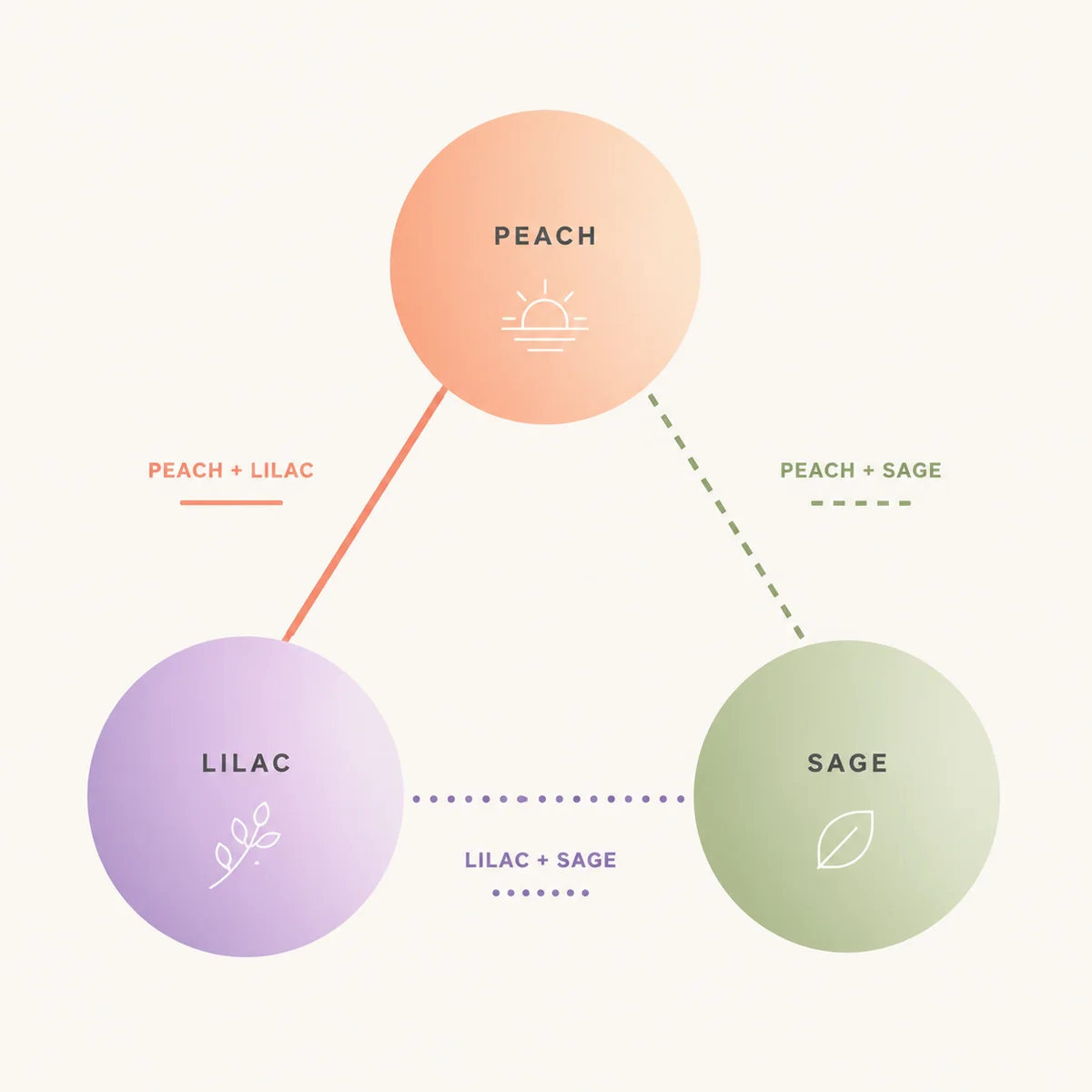
Here’s where a lot of well-meaning couples stumble. They focus so much on the “triad” that they forget a triad is made of three one-on-one relationships. If you only ever spend time as a group of three, those individual bonds stay shallow.
Make it a practice for each pair in the triad to have dedicated one-on-one time. Partner A and the third partner grab coffee alone. Partner B and the third partner go for a walk. And yes — the original couple should keep nurturing their own relationship separately too. When every dyad is strong, the triad as a whole is resilient.
This also means letting go of the expectation that everyone needs to know everything. In a healthy triad, each dyad has its own private conversations, inside references, and emotional intimacy — just like any relationship. The third partner shouldn’t feel like everything they share with one person automatically gets reported to the other. That’s surveillance, not partnership.
A useful question to ask yourselves: “Would I feel comfortable if my partner’s relationship with our third was just as strong as their relationship with me?” If the honest answer is no, you’re not ready for an equal triad yet — and that’s okay. Knowing where you actually stand is better than pretending and hurting someone later. For more on the foundational principles of ethical unicorn dating, check out Unicorn Dating 101.
Step 3: Rewrite the Rules Together
When you started unicorn dating, you probably had some ground rules — things like “no sleepovers,” “always use protection,” or “no catching feelings.” Those rules were designed for a casual arrangement where the couple’s relationship was the only one being protected. An equal triad needs its own rulebook, written by all three people.
Sit down together — all three of you — and ask some honest questions:
- What does “commitment” mean to each of us in a three-person relationship?
- How do we want to handle holidays, family events, and social situations?
- What happens if one dyad goes through a rough patch — how do we support each other without taking sides?
- How do we want to manage finances if this becomes long-term?
- What are each person’s non-negotiables?
The key here is that nobody’s pre-existing agreement gets to override everyone else’s needs. The original couple doesn’t get to say “well, we already agreed that…” as a conversation-ender. If it affects all three people, all three people get input.
This process can be uncomfortable. You’ll probably discover that some of your old rules were really just ways to maintain control — and that’s exactly why they need to be rewritten. A third partner who’s truly equal doesn’t operate under rules they had no part in creating.

Step 4: Handle Jealousy as a Group, Not a Couple-Plus-One
Jealousy happens. In any relationship structure, but especially in one where new emotional bonds are forming in real time while existing ones are being reshaped. The difference between a triad that works and one that implodes isn’t the absence of jealousy — it’s how jealousy gets handled.
In couples that practice unicorn dating, the pattern is often: someone in the couple feels jealous → the couple talks about it privately → they present a decision to the third partner. This pattern reinforces exactly the power imbalance you’re trying to move away from. In an equal triad, jealousy is brought to all affected parties — not to a private couple-only conversation where the third partner’s perspective is absent.
This doesn’t mean every twinge of jealousy requires a group meeting. It means that when jealousy leads to a proposed change in how the triad operates — new boundaries, new rules, new expectations — all three people need to be in the room. The third partner deserves to understand what’s happening, share how the proposed change affects them, and help shape the solution.
It’s also worth naming: jealousy in a triad doesn’t only happen to the original couple. The third partner might feel jealous watching the couple’s established ease with each other. The couple might feel jealous seeing their partner form a deep connection with someone new. A triad where jealousy is treated as a shared challenge rather than someone’s personal failing is a triad that builds trust through difficulty rather than breaking under it. For guidance on supporting each other through these dynamics, read How to Be a Good Unicorn — which is just as relevant for couples wanting to be good partners to their third.
Step 5: Make Equality Show Up in Everyday Life
Equal triads aren’t built in big dramatic conversations. They’re built in the small, daily choices that either reinforce or erode equality. Here are the moments that matter more than most people realize:
- Who gets a key? If your third partner stays over regularly but doesn’t have a key, that’s a statement about who belongs.
- Whose name is on what? Lease agreements, emergency contacts, event invitations — these small formalities signal who’s considered permanent.
- Who gets introduced to whom? If the third partner has met your friends but not your family after a significant period, ask yourself why.
- Where do they keep their things? A drawer, a toothbrush, a space in the closet. Physical space reflects emotional space.
- Who gets the final say? If disputes about shared life logistics always resolve in the couple’s favor, that’s not equality.
None of these need to happen on day one. But they should be on the table as real possibilities — not indefinitely deferred “because we’re not there yet.” If “not there yet” stretches into months and years with no movement, the triad isn’t building toward equality. It’s maintaining a hierarchy with nicer language.

Triad Building Checklist
Use this checklist as a conversation starter with all three partners. It’s not a test — it’s a mirror. Answer each question honestly and discuss where your answers differ.
| Area | Question | ✅ / ❌ |
|---|---|---|
| Decision Power | Does each person have equal say in relationship decisions that affect them? | |
| One-on-One Time | Does every dyad get regular, dedicated time alone — without the third person present? | |
| Conflict Access | When conflict arises in one dyad, does the third person get to hear about it directly — not through one side only? | |
| Social Visibility | Is every person comfortable introducing the other two as partners in any social context? | |
| Physical Space | Does each person have tangible evidence of belonging — keys, storage space, their name on something? | |
| Future Planning | Do all three people participate in conversations about the future — living arrangements, finances, long-term goals? | |
| Veto Power | Has the couple explicitly given up the right to unilaterally end the third partner’s involvement? | |
| External Support | Does each person have friends or community outside the triad they can talk to about relationship challenges? | |
| Emotional Safety | Can each person express difficult emotions — jealousy, insecurity, fear — without worrying it’ll be used against them? | |
| Exit Options | If the triad doesn’t work out, has everyone discussed what a fair and respectful ending would look like? |
Building an equal triad is slow work. There will be moments where old patterns creep back in — where the couple defaults to couple-mode without noticing, where the third partner feels themselves shrinking to fit, where someone’s jealousy gets handled in a private conversation that should have included everyone. That’s not failure. That’s the normal friction of unlearning a lifetime of couple-centric thinking.
What matters is whether you notice those moments and correct course. Whether all three people feel safe enough to say “hey, this doesn’t feel equal right now.” Whether the response to that feedback is defensiveness or genuine adjustment. A lasting equal triad isn’t a destination you arrive at — it’s a practice you commit to, one conversation at a time.
If you’re a couple ready to start this journey — or ready to take the next step toward something more committed like a throuple relationship — or a single person curious about joining one — the community at 3Cupid includes people at every stage of this process, from first conversations to established triads. You don’t have to figure it all out alone. For a deeper look at the psychology behind why some couples are drawn to this structure and what makes it succeed, Psychology Today’s research on polyamorous relationship success factors offers a research-grounded perspective that aligns closely with what real triads report.
This article is part of the 3Cupid Unicorn Triad & Throuple Transition series. We write about the real dynamics of multi-partner relationships — not the fantasy, not the fear-mongering, just honest guidance for adults navigating non-traditional relationship structures.