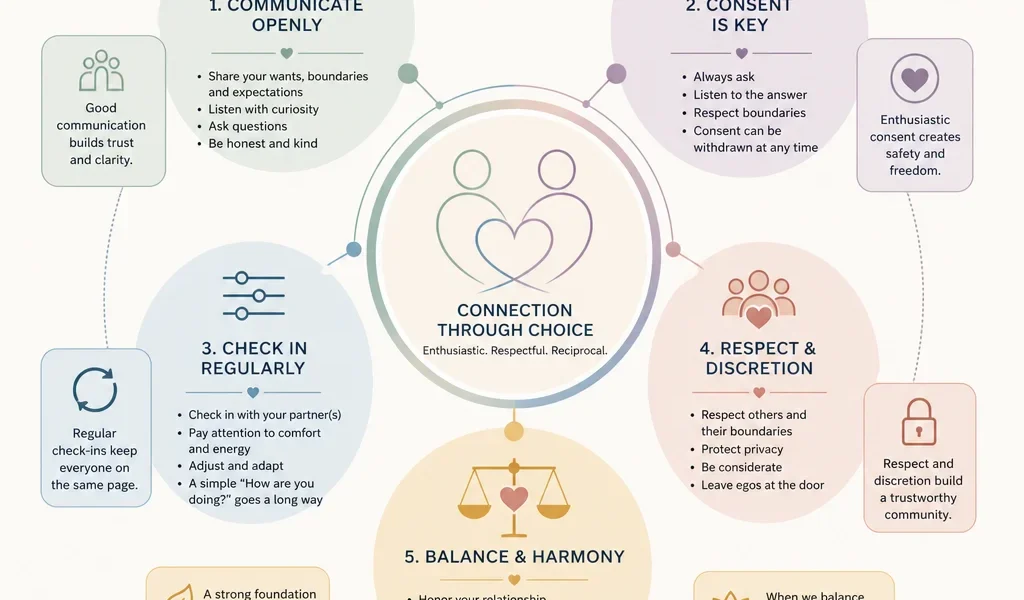
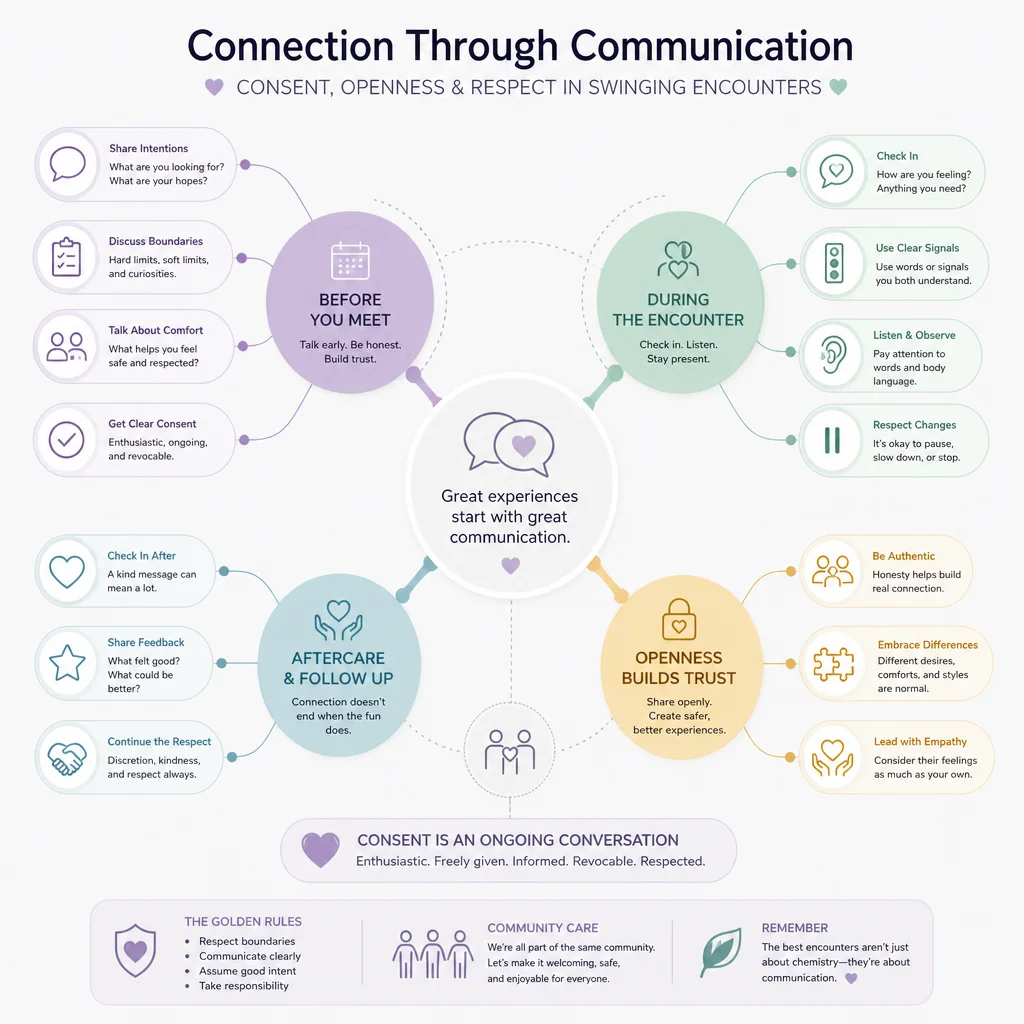
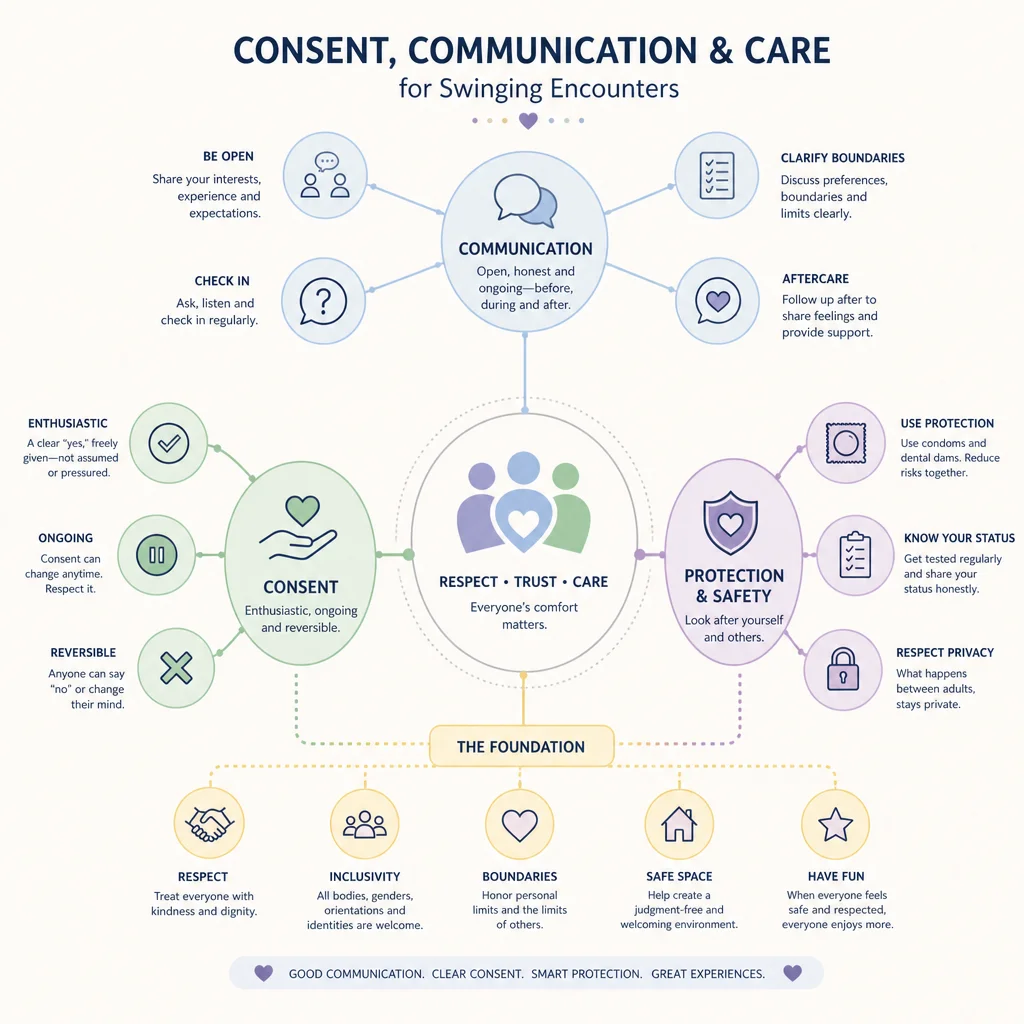
Consent is not a one-time checkbox you tick before an encounter begins. It is an ongoing conversation — one that continues through every moment of a swinging experience. The most common mistake newcomers make is assuming that once boundaries are negotiated and everyone says yes, the consent work is done. It is not. Consent during swinging is dynamic. It can shift, fade, or be withdrawn at any point, and handling those moments with grace is what separates a good experience from one that leaves people feeling uneasy.
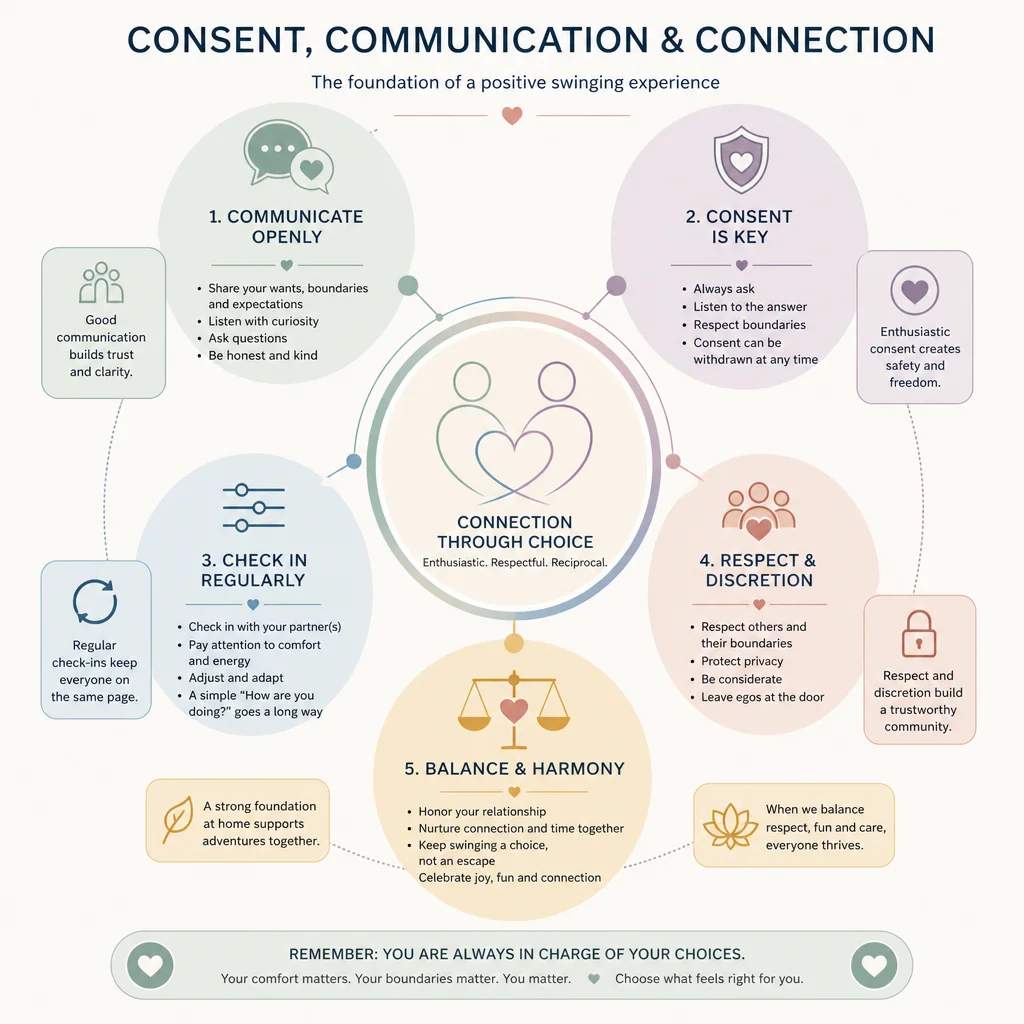
Table of Contents
- Ongoing Consent: What It Actually Means in Practice
- How to Check In Without Killing the Mood
- Reading Nonverbal Cues When Words Are Not Enough
- When Someone Withdraws Consent Mid-Encounter
- The Couple’s Internal Consent System
- After the Encounter: The Consent Debrief
Ongoing Consent: What It Actually Means in Practice
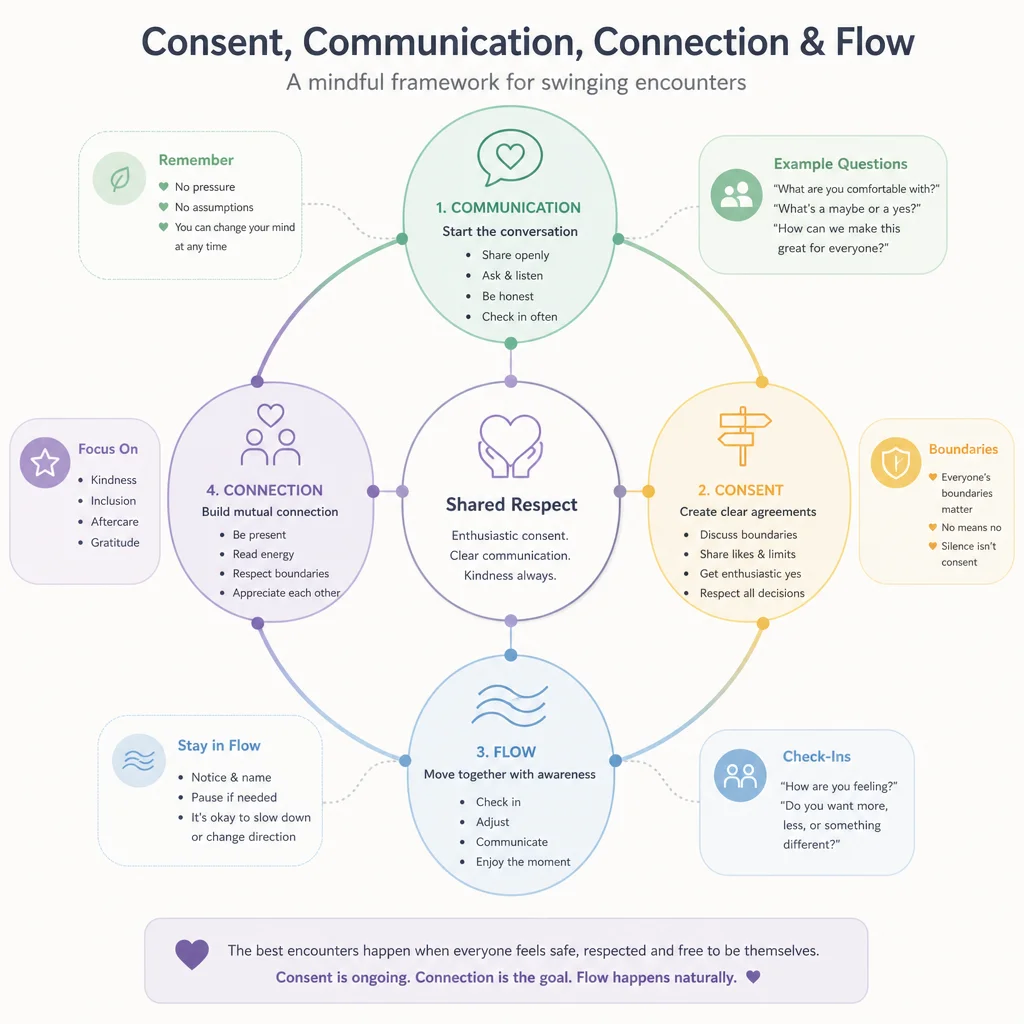
In the abstract, everyone agrees that consent should be ongoing. In practice, it is harder than it sounds. When you are in the middle of an encounter, the social momentum can feel like a current pulling you forward. Stopping to ask “is this still okay?” can feel awkward, especially if you are new to the lifestyle and worried about appearing inexperienced or insecure.
But here is the reframe: checking in is not a sign of insecurity. It is a sign of attentiveness. The most experienced swingers — the ones everyone wants to play with — are the ones who check in naturally and often. They have learned that consent is not the thing that interrupts the experience. It is the thing that makes the experience safe enough to fully enjoy.
According to resources from VeryWell Mind, enthusiastic consent is not just about getting a “yes” — it is about maintaining an atmosphere where anyone can say “no” or “slow down” at any time without fear of awkwardness, disappointment, or backlash. That atmosphere does not create itself. You build it, moment by moment, through small check-ins that become second nature.
How to Check In Without Killing the Mood
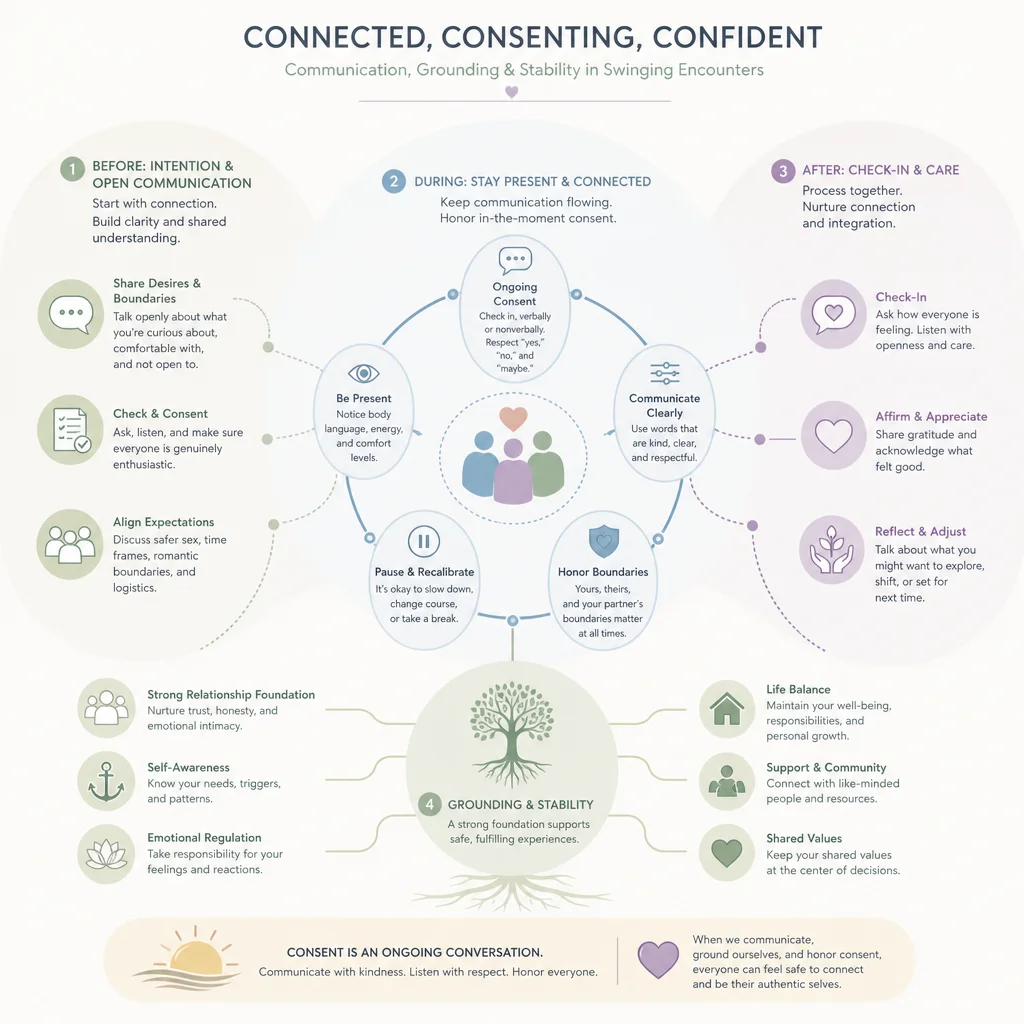
The number one fear people have about mid-encounter consent checks is that they will “kill the mood.” This fear is understandable but misplaced. The mood is already fragile if it cannot survive a simple check-in. And there are ways to check in that actually enhance the connection rather than interrupt it.
Here are five low-friction check-in phrases that fit naturally into the flow of an encounter:
- “Is this good for you?” — Simple, direct, warm. Said with eye contact and a pause, it invites an honest response.
- “Do you want more of this?” — Forward-looking rather than backward-looking. It is an invitation, not an interrogation.
- “Should we slow down?” — Offers the option without assuming anything is wrong. It normalizes pacing.
- “How are you feeling?” — Open-ended enough to capture physical, emotional, or situational discomfort.
- “Still with me?” — Quick, easy to answer, and signals that you are paying attention to their presence, not just their body.
The secret is delivery. These phrases work when spoken softly, with genuine curiosity, and without an expectation of a particular answer. If you ask “is this good for you?” and then look disappointed when they say “actually, could we pause?” — you have undermined the entire point of asking.
For couples navigating swinging dynamics, our guide on maintaining momentum in the swinging lifestyle without burnout explores how regular check-ins actually sustain excitement over time rather than dampening it.
Reading Nonverbal Cues When Words Are Not Enough
Not everyone is comfortable verbalizing discomfort in the moment — especially people who are socialized to prioritize others’ enjoyment over their own comfort. This means you need to be fluent in nonverbal consent cues as well.
Here are some common nonverbal signals to watch for:
- Body stiffening or freezing. When someone who was relaxed suddenly goes rigid, that is a red flag. Do not wait for them to say something — pause and check in.
- Avoiding eye contact. If someone who was making eye contact suddenly looks away and does not return, they may be disengaging emotionally.
- Hands that pull back or block. A hand that moves from participating to creating distance — placed on your chest, pulling away, or covering their own body — is communicating something.
- Silence where there was responsiveness. Someone who was verbally engaged and then goes quiet may be processing discomfort rather than enjoying the moment.
- Facial expression shifts. A furrowed brow, a tight jaw, or a flat expression replacing an engaged one — these are often involuntary and worth noticing.
None of these signals alone is definitive. Context matters. But if you notice one, and especially if you notice a cluster of them, pause and check in verbally. “Hey, I noticed you got quiet — everything okay?” is infinitely better than pushing forward and hoping for the best.
When Someone Withdraws Consent Mid-Encounter
This is the moment that tests your character as a swinging partner. Someone says they need to stop, slow down, or step away. How you respond in the next ten seconds matters enormously — not just for that person, but for your reputation in the community and your own self-respect.
Here is what to do, in order:
- Stop immediately. No “are you sure?” No “just one more minute.” No negotiation. Stop. Physical contact ends the moment consent is withdrawn.
- Thank them. Yes, thank them. Say “Thank you for telling me” or “I am glad you said something.” This rewards the act of speaking up and makes it more likely they will do it again in the future.
- Create physical space. Take a step back. Sit up. Put on a robe. The shift in physical proximity signals that the dynamic has genuinely changed.
- Ask what they need. “Do you want to talk? Do you need some time alone? A glass of water?” Do not assume. People process differently.
- Do not make it about you. Their withdrawal is not a rejection of you personally. Do not launch into an apology spiral that forces them to manage your feelings on top of their own.
For couples who have experienced an encounter that did not go well, we recommend reading about how to handle catching feelings while swinging, which covers the emotional processing that sometimes follows even consensual experiences.
The Couple’s Internal Consent System
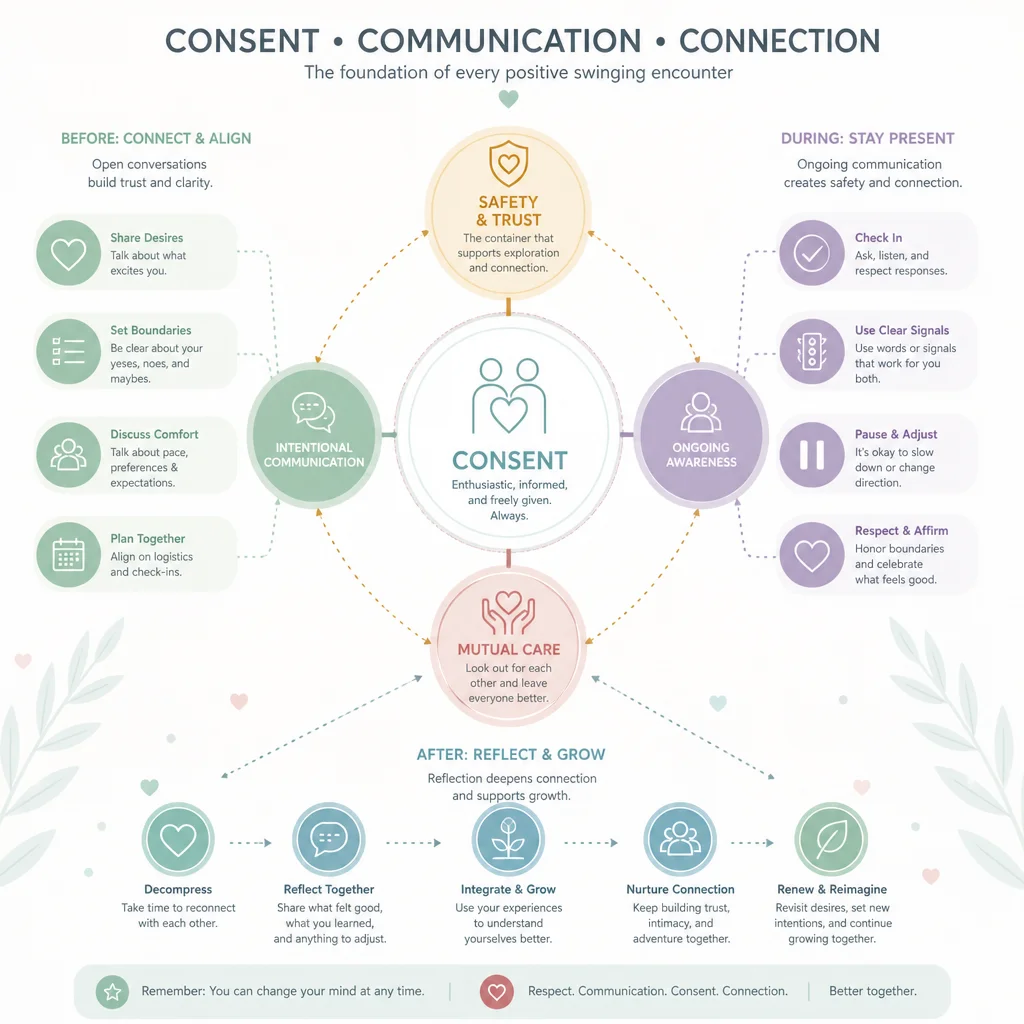
Couples in the swinging lifestyle benefit enormously from having a private, pre-agreed consent signal system. This is separate from the negotiation you do with other partners — this is just between the two of you. It is your safety net.
Here is a simple three-tier system that many couples use:
- Green signal — “I am good.” A subtle nod, a specific hand squeeze, or eye contact with a small smile. This is your way of saying “I am comfortable, keep going.” Couples who check in with green signals throughout an encounter report feeling more connected and less anxious.
- Yellow signal — “Check in with me.” A specific phrase, a double tap on the arm, or a specific look. This means “I need a private word with you right now.” It does not necessarily mean you need to leave — it might just mean “Can we adjust something?” or “I need thirty seconds of your attention.”
- Red signal — “We need to stop.” A word or phrase that would never come up naturally in an encounter — something like “pineapple” or “I need some air.” When either of you says this, everything stops, no questions asked in the moment. You regroup privately and decide what to do next.
Agree on these signals during your boundary negotiation conversation and rehearse them until they feel natural. The more automatic they are, the less awkward they will feel in the moment.
After the Encounter: The Consent Debrief
Consent does not end when the encounter does. The debrief is where you process what happened — including how consent was handled — and learn for next time.
Here are the questions worth asking each other, ideally within 24 to 48 hours:
- Did you feel comfortable checking in during the encounter? Why or why not?
- Was there any moment where you wanted to speak up but did not? What held you back?
- Did our signals work? Were they clear enough in the moment?
- Did you notice anything about the other person’s comfort that I might have missed?
- Is there anything we should adjust about our approach for next time?
These questions are not about finding fault. They are about refining your shared system. Every encounter teaches you something — but only if you pause long enough to learn it. Over time, consent check-ins become so natural that they do not feel like interruptions at all. They just feel like part of being a good partner.
Consent is not the awkward part of swinging. It is the skilled part. The people who do it well are the people everyone wants to play with — because they create spaces where others feel genuinely safe. That reputation takes time to build and seconds to lose. If you and your partner are looking for a community that takes consent as seriously as you do, the conversations start right here at 3Cupid.
Editorial note: This guide reflects current best practices in consent culture within the swinging community as of August 2026. Every person’s boundaries are unique and deserve individualized respect.