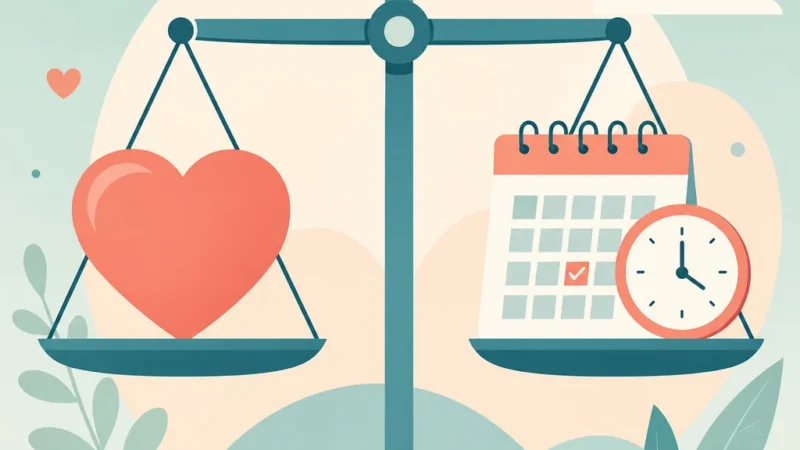
Most couples who talk about having a threesome focus on the logistics — where to find someone, what rules to set, how the night should go. Fewer ask the bigger question: what does this actually do to us as a couple? The answer is not as simple as “it makes you stronger” or “it ruins everything.” How threesomes affect relationships depends almost entirely on where the relationship stands before the third person ever enters the room, and what happens in the days and weeks afterward.
Some couples come out of a threesome more connected than they’ve ever felt. Others split up within months, not because the experience itself was catastrophic, but because it exposed cracks that were already there. The difference is rarely the threesome itself — it is the foundation underneath it.
Table of Contents
- The Positive Side: What Couples Actually Gain
- The Risks Nobody Talks About
- How It Changes Your Day-to-Day Dynamic
- Signs Your Relationship Can Handle It
- Signs Your Relationship Cannot (Red Flags)
- Aftercare and Reconnection That Actually Works

The Positive Side: What Couples Actually Gain
When a threesome goes well, couples often report feeling something they did not expect: a deeper appreciation for each other. Watching your partner through someone else’s eyes can reignite attraction that daily routine has dulled. The novelty of the experience becomes something you share, not something that drives you apart.
Research covered by Psychology Today suggests that couples who approach group experiences with clear communication and mutual enthusiasm tend to report higher relationship satisfaction afterward — not because of the physical aspect, but because the process of negotiating boundaries and checking in regularly strengthens emotional intimacy. The conversations you have before a threesome are often more valuable than the threesome itself.
One couple we spoke with described it this way: “The night was exciting, sure, but what stuck with us was the week leading up to it. We talked more in that week than we had in the previous six months combined.” That kind of communication — about desires, fears, limits, and expectations — does not stop when the experience ends. Couples who do it right carry those conversations into the rest of their relationship.

The Risks Nobody Talks About
For every story of a couple growing stronger, there is another of a couple falling apart. The most common reason has nothing to do with the third person and everything to do with what was already present in the relationship: unspoken resentment, uneven enthusiasm, or one partner agreeing only to keep the other happy.
When one person goes along with a threesome because they are afraid of saying no, resentment builds fast. It does not always show up during the experience — sometimes it surfaces days or weeks later, disguised as withdrawal, irritability, or sudden criticism of things that never used to matter. This is where common threesome mistakes become relationship-breaking: people underestimate how much emotional fallout can come from a single night.
Another risk that gets less attention: the couple who thrives on the experience and then cannot stop chasing it. The threesome becomes the center of their connection, and without it, things feel flat. This is not the same as an open relationship evolving naturally — it is dependency on novelty to maintain intimacy, and it rarely ends well.
The research is clear on one point: couples who enter a threesome to “fix” something almost always end up making it worse. A shaky foundation does not become stable by adding a third person. If anything, it collapses faster under the extra weight.

How Threesomes Affect Your Day-to-Day Dynamic
Even a positive threesome experience shifts the energy between you. Some couples find they are more physically affectionate afterward — touching, holding hands, checking in more. Others notice they are more guarded, especially in the first few days. Both reactions are normal. Neither means the relationship is doomed or saved.
The shift often shows up in small ways: you hesitate before mentioning something about the experience. You wonder if your partner is thinking about the third person. You catch yourself comparing — not just physically, but emotionally. “They seemed more comfortable with him than they ever are with me.” These thoughts do not make you a bad person or a jealous partner. They make you human. What matters is whether you talk about them or let them fester.
Jealousy after a threesome is one of the most predictable outcomes, and yet most couples do not have a plan for it. If you have not read our guide on managing threesome jealousy before, during, and after, it covers the emotional timeline in detail. The short version: jealousy is not proof that you made a mistake. It is proof that something needs attention. The couples who treat jealousy as information to work with — rather than a verdict on the relationship — are the ones who come out closer.
Signs Your Relationship Can Handle It
Not every stable couple should have a threesome, and not every couple who has one is stable. But certain signs make a positive outcome far more likely. Here are the patterns we see in couples who navigate this well:
- You already talk about hard things. If you can discuss money, family conflict, and past hurts without shutting down or exploding, you have the communication infrastructure for this conversation.
- Both of you want it — genuinely. Not one person pushing and the other reluctantly agreeing. Enthusiasm from both sides, even if nervous enthusiasm, is non-negotiable.
- Your relationship is not in crisis. You are not fixing a dead bedroom, recovering from infidelity, or trying to save a dying connection. The relationship is solid on its own.
- You have clear and specific agreements. As we cover in our guide to threesome rules for couples, vagueness is the enemy. “We’ll figure it out as we go” is not a strategy.
- You can imagine it going badly and are still willing. This sounds counterintuitive, but couples who acknowledge the risks and decide it is still worth it are more resilient than those who assume everything will be perfect.
Red Flags: Your Relationship Is Not Ready
Equally important is recognizing when you should not proceed. These signs do not mean your relationship is broken — but they do mean a threesome right now is likely to cause damage:
| Red Flag | Why It Is Dangerous |
|---|---|
| One partner keeps bringing it up and the other keeps deflecting | This is pressure, not mutual desire. The deflecting partner is not “warming up” — they are not ready. |
| You cannot agree on basic rules without arguing | If a theoretical conversation about boundaries turns into a fight, the real thing will be far worse. |
| There is a recent betrayal, loss, or major life stress | Threesomes require emotional bandwidth. If you are already drained, you have none to spare. |
| One partner wants to pick someone they already have in mind | Pre-selecting a specific person they know or have feelings for is a massive red flag. This is often about that person, not about the couple. |
| You are both avoiding talking about jealousy because “we just don’t get jealous” | Everyone is capable of jealousy. Claiming immunity means you are unprepared. |

If you recognize multiple items on this list, do not take it as a permanent no. Take it as a “not yet.” Work on the issues first. The threesome — and your relationship — will be better for the delay.
Aftercare and Reconnection That Actually Works
Aftercare is not just a nice-to-have. For many couples, what happens in the 48 hours after a threesome determines whether the experience strengthens the relationship or slowly corrodes it. The single most important thing you can do: reconnect as a couple, alone, as soon as reasonably possible after the third person leaves.
This does not mean debriefing every detail like an after-action report. It means being present. Lie in bed together. Talk about how you feel, not just what happened. Touch each other. Say the things you usually assume your partner already knows: “I love you,” “That did not change anything between us,” “I am glad we did this together.” These words carry weight they might not carry on a normal Tuesday.
A practical aftercare checklist:
- Immediately after: Private time together. No phones, no distractions.
- Same night or next morning: A brief check-in. “How are you feeling about everything?” Keep it light. Do not force a deep conversation while emotions are still raw.
- 24 hours later: A longer conversation. What went well? What felt uncomfortable? What would we do differently next time — or would there be a next time?
- One week later: This is the real test. Jealousy and insecurity often hit on a delay. Ask: “Anything still sitting with you from the other night?”
- Ongoing: Pay attention to behavior changes — withdrawal, increased criticism, unusual clinginess. Catch the small signals before they become big problems.

Some couples plan something meaningful for the day after: a favorite restaurant, a hike, even just an uninterrupted morning together. The ritual itself matters less than the intention behind it. You are telling each other: this experience happened, but we are still us.

Understanding how threesomes affect relationships comes down to this: when couples approach the experience with an honest assessment of where they stand — and a real plan for what happens after — the odds tilt in their favor. It is not about the mechanics of the night itself. It is about whether the two of you are solid enough to hold each other through whatever feelings come up along the way. For more on how to find a third safely and set yourselves up for a positive experience, our pillar guide walks through every step.
Editor’s note: This article reflects the experiences and perspectives shared within the non-monogamous community. Every relationship is different. What works for one couple may not work for another. If you are unsure, talking to a relationship therapist who is knowledgeable about ethical non-monogamy can help.