Most threesome advice assumes a lot of things. It assumes you’re a heterosexual couple. It assumes one of you is a man and the other a woman. It assumes the third person will slot neatly into whichever gender role completes the configuration you had in mind.
If you’re an LGBTQ+ couple — or a single navigating threesome dating in queer spaces — a lot of that advice doesn’t land. The dynamics are different. The safety concerns are different. Even the etiquette is different.
LGBTQ+ threesome dating isn’t just “straight threesome advice with rainbows added.” It comes with its own questions about community, identity, safety, and the particular dynamics that show up when gender roles don’t follow the script most guides are written for.
This guide covers what actually matters: finding partners in queer-friendly spaces, navigating gender dynamics when both partners share a gender, the coming-out layer that straight couples don’t have to think about, and a practical safety checklist built for LGBTQ+ realities.
Table of Contents
- Why LGBTQ+ Threesome Dating Is Different
- Finding Your People: Where to Look
- Safety Considerations Beyond the Usual Checklist
- Navigating Gender Dynamics in Threesome Settings
- Couple Communication When Both Partners Share a Gender
- The Coming-Out Layer: Managing Privacy and Disclosure
- LGBTQ+ Threesome Readiness and Safety Checklist
- Finding Community Without Compromising Safety
Why LGBTQ+ Threesome Dating Is Different
Let’s get the obvious out of the way: if you’re two women looking for a third — or two men, or two non-binary people — the “MFM vs FMF” framework that dominates threesome advice doesn’t fit your reality. You’re not fitting into a predefined configuration. You’re creating one.
But the differences go deeper than terminology. LGBTQ+ couples in threesome dating often navigate:
- A smaller dating pool, which can create pressure to lower standards or rush vetting
- The risk of being fetishized — especially for lesbian couples targeted by men looking for a “lesbian experience,” or gay couples treated as exotic accessories
- Community overlap — the third person might be two degrees of separation away in your social circle, making privacy management more complex
- The added weight of representing your relationship well in spaces where LGBTQ+ relationships are already scrutinized
None of this means LGBTQ+ threesome dating is harder — it means the conversation needs to start from a different place. Which is what we’re doing here.
Finding Your People: Where to Look
The standard threesome app recommendations don’t always translate. Feeld has a solid queer user base and explicitly welcomes non-traditional gender expressions. Lex is text-first and inherently queer — it’s not built for threesomes specifically, but the community overlaps heavily with ENM-friendly spaces. OKCupid’s non-monogamy filters work well, and the platform has long been LGBTQ+-friendly.
But apps are only part of the picture. In-person spaces often produce better matches with less friction:
- Queer social events and meetups explicitly labeled as ENM or poly-friendly
- LGBTQ+ community centers that host discussion groups — some have ENM-specific meetups
- Queer speed-friending and social mixers, where you can be upfront about what you’re looking for
A note on approach: in queer spaces, the “couple seeking a third” dynamic can feel predatory if not handled carefully — similar to the concerns we explored in our ENM beginners guide. Be transparent about being a couple. Don’t pretend to be single to get your foot in the door. That’s a fast way to get a reputation you don’t want.
Safety Considerations Beyond the Usual Checklist
The standard safety advice applies — meet in public first, verify identity, share your location with a friend. But LGBTQ+ threesome dating has additional layers worth addressing head-on.
Fetishization is a safety issue, not just a preference issue. If you’re a lesbian couple and a man approaches you looking for a “lesbian fantasy,” that’s not a match — that’s someone who doesn’t see you as people. Screen for language that treats your identity as a category on a menu. Real partners talk about you as individuals, not as a configuration.
Outing risk varies by location and profession. In some places, being outed as ENM carries professional consequences. In others, being outed as LGBTQ+ carries legal ones. Consider what information you’re sharing and with whom. Use apps that let you control photo visibility. Be especially careful if you live somewhere where LGBTQ+ relationships aren’t legally protected.
Trans and non-binary safety requires specific vetting. If you or a partner are trans or non-binary, screen potential thirds for basic competence before meeting. Do they use the right pronouns unprompted? Have they dated trans people before? You shouldn’t have to educate someone about your body while also trying to figure out if you’re attracted to them.
For a broader framework, revisit our guide on finding a third safely — the verification and meeting protocols apply regardless of orientation, but the cultural vetting layer is uniquely important in queer contexts.
Navigating Gender Dynamics in Threesome Settings
When a threesome involves three people of the same gender — three men, three women, three non-binary people — the dynamics shift in ways worth naming. There’s no “default” role. No one is automatically the “woman in the middle” or the “man leading.” You have to actually talk about what everyone wants rather than relying on gender scripts to fill in the blanks.
This is genuinely liberating, but it also means you can’t coast on assumptions. Some things that help:
- Name what you’re into explicitly. Don’t assume “it’ll flow naturally.” In same-gender dynamics, ambiguity can lead to two people waiting for the third to make a move.
- Check in about attraction distribution. In an all-male threesome, for example, one person can easily end up feeling like an observer if attraction isn’t mutual across all three. This is the same dynamic we wrote about in our guide to unequal attraction during threesomes.
- Don’t assume gendered preferences. A lesbian in a threesome might prefer certain dynamics over others. A gay man might not want to do what porn suggests gay men do. Ask. Every time.
The absence of opposite-gender dynamics doesn’t make things simpler — it makes communication more important. Which, honestly, is a feature, not a bug.
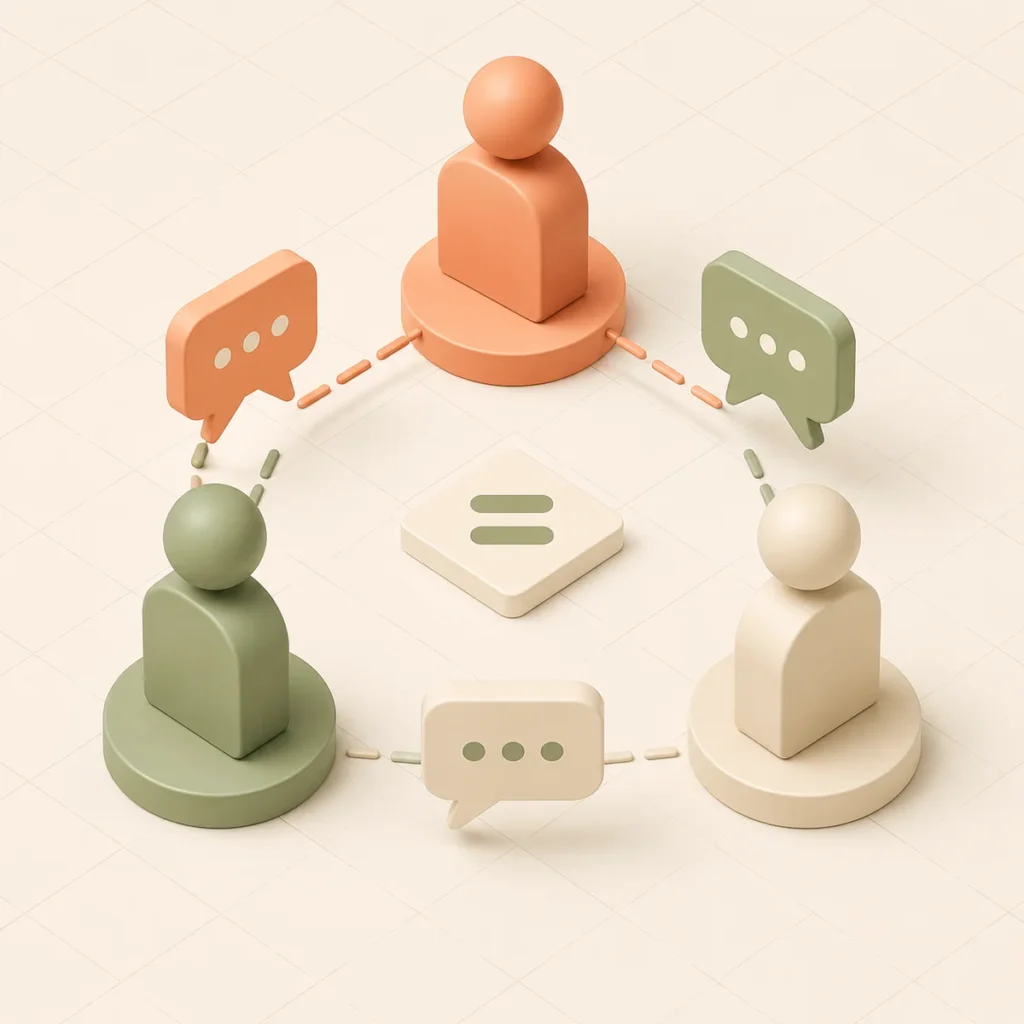
Couple Communication When Both Partners Share a Gender
Same-gender couples face a specific communication challenge in threesome dating that different-gender couples rarely encounter: the comparison runs deeper because the similarities are more visible.
If you’re two men and the third is also a man, body comparisons can feel more acute. If you’re two women and the third is a woman, the “is she more feminine than me?” spiral can activate in ways it doesn’t when the third is a different gender entirely. These aren’t character flaws — they’re proximity effects. Someone who shares your gender and your partner’s attraction profile is, by definition, in your lane.
What helps:
- Name the specific insecurity to your partner before the date. “I’m nervous about comparing myself to him physically” is actionable. “What if you like them more?” is a spiral dressed as a question.
- Agree on a post-date debrief format. Same-gender couples can fall into competitive debriefing without realizing it — comparing reactions, replaying who did what. Set a structure: start with what felt good, then what felt complicated, then what you’d adjust.
- Remember the basic threesome rules still apply — but with an added layer of awareness that your similarities as a couple can amplify insecurities rather than reducing them.

The Coming-Out Layer: Managing Privacy and Disclosure
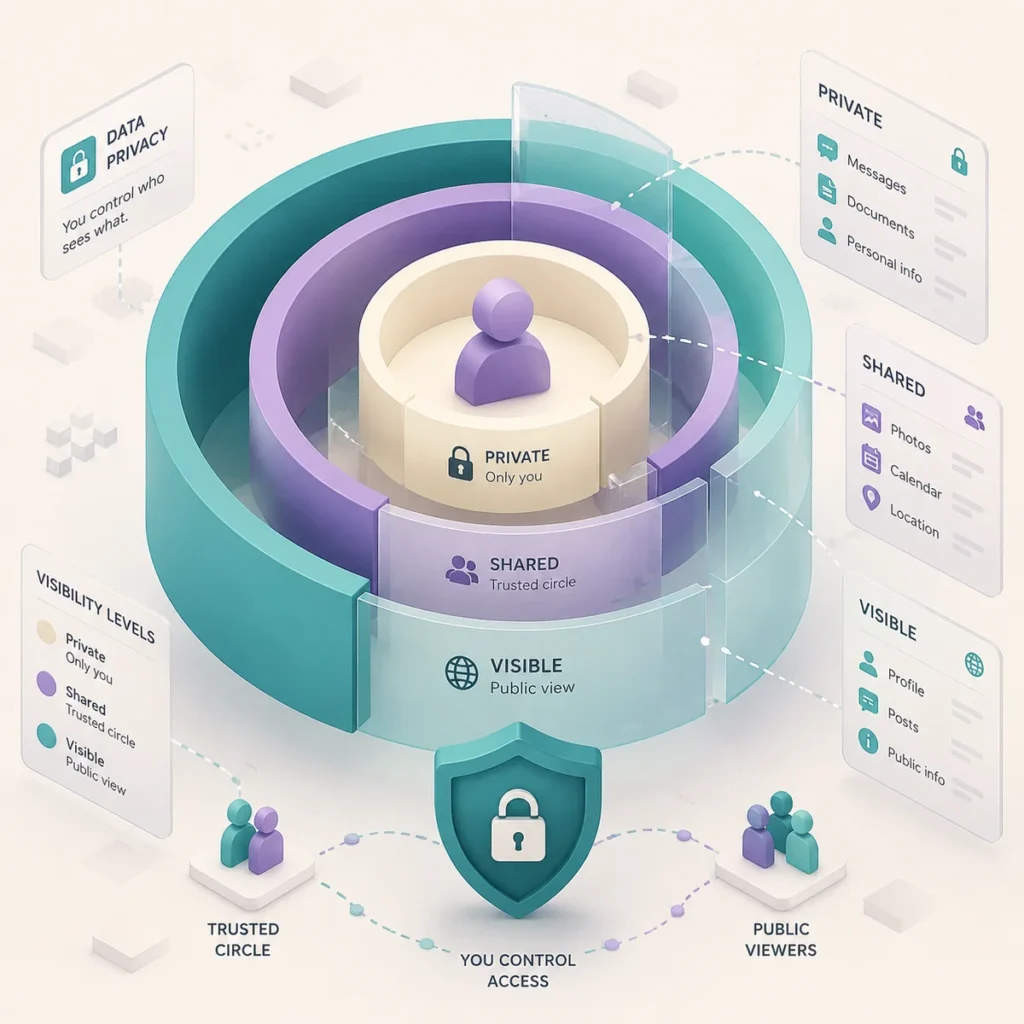
Straight couples exploring threesomes worry about privacy. LGBTQ+ couples worry about privacy plus. The “plus” is the coming-out calculus that runs underneath every dating decision.
Every new person who enters your dating life is another person who knows things about you — not just that you’re in an open relationship, but potentially about your gender identity, your sexual orientation, your relationship structure. For some LGBTQ+ people, these are things they’re selective about sharing with employers, family, or broader social circles.
This isn’t paranoia. A 2023 survey by the Williams Institute found that nearly half of LGBTQ+ employees in the U.S. remain partially closeted at work. Adding ENM to an already-managed identity profile isn’t trivial.
Practical steps:
- Discuss with your partner what information is shareable and what isn’t before meeting anyone new
- Use apps with granular privacy controls — photo visibility, distance hiding, separate profiles
- Have a one-sentence boundary statement ready: “We’re private about our relationship outside of trusted circles” is clear without over-explaining
We covered the broader social dynamics in our guide to handling social stigma in ENM dating. For LGBTQ+ couples, the stigma stacks — and the privacy protocols should too.
LGBTQ+ Threesome Readiness and Safety Checklist
Before you meet anyone, run through these items together. Some are universal threesome prep. Some are specific to LGBTQ+ dynamics. All of them matter.
- Are we on the same page about what we’re looking for? A one-time experience? An ongoing third? A potential triad? If one of you wants a hookup and the other wants a girlfriend, stop here.
- Have we discussed whether being out as ENM is on the table? If your partner tells their best friend and that friend tells their cousin who works at your company — are you both okay with that? Decide now, not after it happens.
- Have we screened for fetishizers vs. genuine interest? Look for language that treats your identity as a category (“I’ve always wanted to be with a lesbian couple”) vs. language that treats you as people (“You both seem really interesting”).
- Do we have a plan for what happens if the third person is in our extended social circle? In small queer communities, this is more likely than not.
- Have we discussed trans-specific concerns if relevant? Does the third need to know about surgeries, boundaries around language, dysphoria triggers? Have that conversation structure ready.
- Is our first meeting in a queer-friendly public space? A bar or cafe where you know you’ll be safe matters more than finding the trendiest spot.
- Do we have safe words or pause signals that account for emotional triggers, not just physical ones? “Yellow” works for “I need a moment” regardless of the reason.
- Have we planned aftercare that includes identity-affirming reassurance? Aftercare for LGBTQ+ couples might need to include “I love you as you are” in addition to the physical reconnection.
Finding Community Without Compromising Safety
One of the best things about LGBTQ+ threesome dating is the community that surrounds it. One of the hardest things is that same community’s small-world problem. Everyone knows everyone — or at least knows someone who knows someone.
This isn’t a reason to hide. It’s a reason to be deliberate. Treat people well. Be the couple that has a reputation for clear communication, respectful rejections, and showing up sober and honest. In a small pond, reputation is currency — and it compounds.
If you’re looking for community spaces that explicitly welcome ENM and threesome exploration:
- Local LGBTQ+ centers increasingly host ENM discussion groups — check their event calendars
- Queer polyamory meetups (search Meetup.com or Facebook Groups for your city + “queer poly”)
- Regional LGBTQ+ conferences often have relationship diversity panels and networking
- Online: r/queerpolyam, r/LGBTQrelationships, and private Facebook groups for queer ENM in your area
The goal isn’t to find the biggest community. It’s to find one where you can be fully yourself — your relationship structure, your gender, your orientation, all of it — without having to explain or defend any of it.
LGBTQ+ threesome dating asks more of you upfront. More communication. More intentionality about safety. More clarity about what you want and what you’re protecting. But what you get back is worth it: the chance to build experiences that actually reflect who you are, not some script you’re supposed to follow.
This article is part of 3Cupid’s commitment to inclusive relationship content. For more foundational guides, read our ENM beginners guide and our advice on threesome rules for couples.