Breaking an agreement in an ethically non-monogamous relationship can feel like dropping a glass on a tile floor. You did not mean to cause damage, but the pieces are everywhere and you are not sure where to start picking them up. Whether you stayed out later than agreed, did not disclose a new connection in time, or crossed a boundary your partner thought was clear — the aftermath is heavy.
The good news: trust can be rebuilt. Not overnight, and not without real effort, but thousands of couples in open relationships, polyamorous dynamics, and swinging arrangements have come back from breaches stronger than before. This article walks through exactly how to rebuild trust after breaking an ENM agreement, step by step.
Table of Contents
- Why Broken Agreements Cut Deeper in ENM
- Take Full Ownership Without Defensiveness
- Give Your Partner the Space They Need
- Build a Better Agreement Together
- Prove Trust Through Consistent Actions, Not Just Words
- When to Bring in Outside Support
- Trust After a Breach Is Different — And That Is Okay

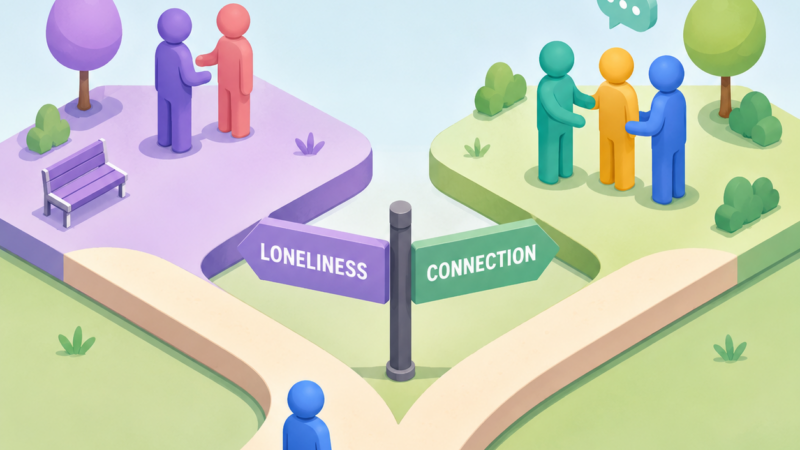
Trust rebuilding takes time. Let each step settle before moving to the next.
Why Broken Agreements Cut Deeper in ENM
In monogamous relationships, trust breaches often follow a predictable script. In ENM, the script is more complicated because the boundaries themselves are custom-built. You and your partner did not inherit a rulebook — you wrote one together. So when that agreement gets broken, it is not just a violation of trust. It is a violation of something you co-created, which can feel deeply personal.
This is also why generic relationship advice about apologizing falls flat here. ENM agreements often touch on vulnerability around time, emotional energy, sexual health, and disclosure — areas where the stakes feel existential. Your partner is not just wondering if they can trust you. They are wondering if the entire structure of your relationship was a mistake.
Acknowledging this gravity is the first step. Do not treat a broken ENM agreement like a minor slip-up. Treat it like what it is: a rupture in a system you both depend on to feel safe while exploring non-monogamy.

The hardest conversations often lead to the deepest understanding.
Take Full Ownership Without Defensiveness
This is the hardest part, and also the most important. When you are the one who broke the agreement, every instinct will tell you to explain why. You will want to talk about the context, the gray areas, the parts of the agreement that felt unclear. Resist that urge — at least at first.
Start with a clean, unqualified acknowledgment: “I broke our agreement. I understand that hurt you, and I am sorry.” No “but,” no “I thought,” no “technically.” Save the context for later, when your partner is ready to hear it. In the immediate aftermath, what your partner needs is evidence that you understand the weight of what happened — not a detailed justification.
This is hard because it means sitting with the discomfort of being the person who caused harm. But defensiveness is trust kryptonite. Every justification you offer at this stage will read as an attempt to minimize what happened. Own it fully, and you create space for repair.

Consistency over time is what transforms an apology into renewed trust.
Give Your Partner the Space They Need
After you have taken ownership, step back. Your partner may need days or even weeks to process what happened. They may cycle through anger, sadness, confusion, and numbness — sometimes all in one afternoon. Your job during this phase is not to manage their emotions or rush them toward forgiveness. It is to give them room without disappearing.
Check in gently. Something like, “I am here when you are ready to talk. No pressure.” Then actually be available. If they want to talk at an inconvenient time, make it convenient. If they need to ask the same question five times, answer it five times without frustration.
One common mistake: trying to fast-forward to “the fix.” You might feel an urgent need to solve the problem so you can stop feeling guilty. But your partner’s healing timeline is not about your comfort. Let them lead the pace.

A clearer agreement protects both of you — not just the person who was hurt.
Build a Better Agreement Together
Once emotions have settled enough for a real conversation, it is time to revisit the agreement itself. Not to assign blame, but to understand why it broke and how to make the next version stronger.
Ask honest questions: Was the original agreement too vague? Did one of you agree to something you were not actually comfortable with? Were there unspoken assumptions that never got aired? The goal is not to create a longer list of rules — it is to create clearer, more honest agreements that both of you can actually follow.
For example, if the broken agreement was “tell me before you hook up with someone new,” dig into what “before” actually means. An hour before? A day before? Before things get physical, or before the first date? Specificity prevents future breaches. Write the new agreement down. Both of you should be able to explain it in your own words.
This process of building trust through clear communication is essential. The key is treating the agreement as a living document that evolves with your relationship — not a one-time contract carved in stone.

Healing is not linear. Some days will feel like progress, others like setback.
Prove Trust Through Consistent Actions, Not Just Words
Apologies are verbal. Trust is behavioral. After the conversation, the real work begins: demonstrating reliability over time through actions that match your words.
Start small. If you say you will text when you get home from a date, text when you get home from a date — every single time. If you agree to check in before making plans with someone new, check in before making plans — no exceptions, no “I forgot.” These small consistencies matter more than grand gestures because they rebuild the pattern of predictability that trust depends on.
It helps to think of this phase like physical therapy after an injury. You are not running a marathon on day one. You are doing small, repetitive exercises that gradually restore function. Expect this phase to last months, not weeks. And expect your partner to test you — not out of cruelty, but because their trust-detection system is on high alert.
Developing emotional resilience in non-monogamous relationships is essential for both of you during this period. The partner who breached the agreement needs resilience to handle their own guilt without making it their partner’s problem. The hurt partner needs resilience to stay open to repair instead of shutting down permanently.
When to Bring in Outside Support
Some trust breaches are too deep for DIY repair. If you have been working at it for weeks and keep hitting the same wall — defensiveness, resentment, inability to move forward — it is time to call in reinforcements.
A therapist who specializes in ENM and polyamory can be transformative here. They understand that non-monogamous agreements are not like monogamous ones, and they will not treat your relationship structure as the problem. Look for someone who lists “CNM,” “polyamory,” or “open relationships” in their areas of expertise. According to Psychology Today, therapists with specific training in consensual non-monogamy are better equipped to help couples navigate agreement breaches without pathologizing the relationship structure itself.
Outside support can also take other forms: a trusted friend who understands your dynamic, an ENM support group, or structured workbooks designed for couples navigating trust repair. The point is recognizing that some patterns are too entrenched to break without an outside perspective.
Trust After a Breach Is Different — And That Is Okay
A common fear after breaking an ENM agreement is that things will never go back to the way they were. That fear is accurate — and that is not a bad thing. Trust after a breach is almost never identical to trust before one. It is more conscious, more deliberate, and often more honest.
Pre-breach trust often contains unexamined assumptions. Post-breach trust is built on explicit agreements and demonstrated reliability. In many relationships, this version is actually stronger — because both people know it was tested and survived.
The process of supporting a partner through difficult ENM emotions is connected to trust rebuilding in important ways. When you can hold space for your partner’s difficult feelings while doing your own repair work, you demonstrate the kind of emotional maturity that makes sustainable ENM possible.

Trust that survives a breach is not weaker — it is wiser.
Five-Step Trust Rebuilding Framework
- Step 1 — Acknowledge Fully: State what you did without justification or minimization. Use “I” statements and name the specific agreement you broke.
- Step 2 — Make Space: Let your partner set the pace of conversations. Do not push for resolution before they are ready.
- Step 3 — Rewrite Together: Examine why the old agreement failed and co-create a clearer, more specific version. Write it down.
- Step 4 — Consistency Sprint: Pick three small, observable commitments and follow through daily for at least four weeks. Track them.
- Step 5 — Check In Weekly: Schedule a 15-minute check-in each week to discuss how trust rebuilding is going. Adjust as needed.
If you are navigating a trust breach in your ENM relationship, start with full accountability, give your partner space, rebuild your agreements thoughtfully, and let consistent actions speak louder than any apology. And if you are looking for partners who share your commitment to clear communication and mutual respect, you will find a community of like-minded people right here at 3Cupid.
Editor’s note: This article is part of 3Cupid’s ENM relationship health series, designed to support honest, resilient non-monogamous relationships through every stage of the journey.