
Table of Contents
- More Than a Role: The Third Partner as a Full Person
- What the Third Partner Actually Needs
- Boundaries from the Third Partner’s Side
- Ethical Responsibilities — on All Three Sides
- The Emotional Experience of Being the Third
- Finding the Right Fit as a Third Partner
Most conversations about cuckold dating focus on the couple — their boundaries, their communication, their aftercare. The third partner rarely gets the same depth of attention, yet their role is equally complex and their emotional experience equally real. Whether you are considering becoming a third partner, are already filling that role, or are part of a couple looking to bring someone into your dynamic, understanding the third partner’s perspective is not optional — it is the difference between a sustainable arrangement and one that burns out without anyone understanding why. Research on consensual non-monogamy consistently finds that acknowledging the needs of all participants — not just the couple — is essential for healthy dynamics (Psychology Today).
This article covers what the third partner’s role actually involves — the practical, emotional, and ethical dimensions that often go unspoken. It is written for all three sides: the third partner themselves, the couple they join, and anyone who wants to build something that respects everyone involved.
More Than a Role: The Third Partner as a Full Person
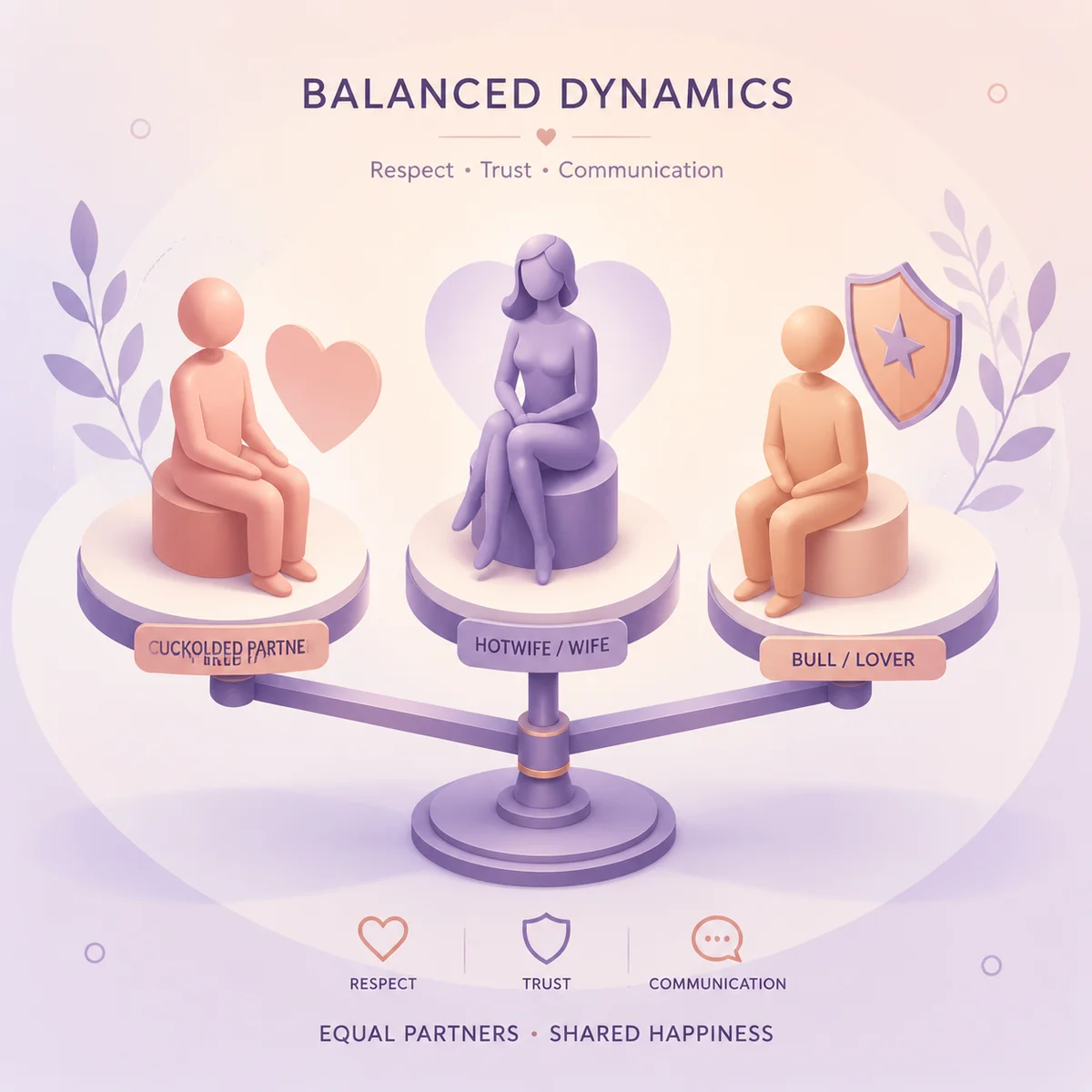
In cuckold dating, the third partner is sometimes referred to using shorthand labels. Whatever term a couple and their third agree on, it is essential to remember that this is a role two or more people choose together, not a preset identity that comes with a script. The third partner is a complete human being with their own desires, limits, history, and emotional needs — they are not a service provider, not a prop, and not a tool for the couple’s exploration.
When couples approach a third partner primarily as a means to fulfill their own fantasy, the dynamic becomes transactional from the start. The healthiest cuckold arrangements treat the third as an equal participant whose comfort, pleasure, and boundaries matter as much as anyone else’s. This does not mean the third has equal standing in the couple’s primary relationship — it means the third has equal standing as a person in a shared experience. For more on how this dynamic differs from other relationship structures, see our comparison of cuckolding versus threesome dating.
Practically, this means the third partner gets a voice in what happens — before, during, and after. It means their preference for pacing, communication style, and level of ongoing involvement is actively solicited, not assumed. It means the couple does not make decisions about the arrangement and then “inform” the third — they co-create the terms together.

What the Third Partner Actually Needs
If you are a third partner — or a couple hoping to work with one — here are the non-negotiable foundations that make the role sustainable rather than draining.
Clarity about the arrangement. What exactly are you being invited into? A one-time experience? An ongoing connection? Something in between that will be evaluated after the first meeting? Ambiguity benefits no one. The couple should be able to state clearly what they are looking for, what their boundaries are, and how they handle things when feelings or circumstances change.
Respect for your time and energy. Being a third partner requires emotional labor — you are navigating a pre-existing relationship, managing your own expectations, and often serving as a source of excitement and novelty for the couple. That is legitimate work, and it deserves to be acknowledged. The couple should match your communication effort, show up on time, and not treat you as available on demand.
Safety — physical and emotional. You have the right to verify who you are meeting, choose a public first-meeting location, and bring your own safety protocols to the table. Emotional safety means the couple does not use you to work through their own unresolved issues, does not make you responsible for their relationship health, and does not discard you without explanation if their dynamic shifts. For practical safety measures, our cuckold dating safety guide offers a comprehensive framework.
A defined exit path. Every arrangement should have a clear understanding of how it can end — on any side, at any time, without retaliation. If a couple reserves the right to end things unilaterally but expects the third to give notice and justification, that is a power imbalance worth naming and correcting.
Boundaries from the Third Partner’s Side
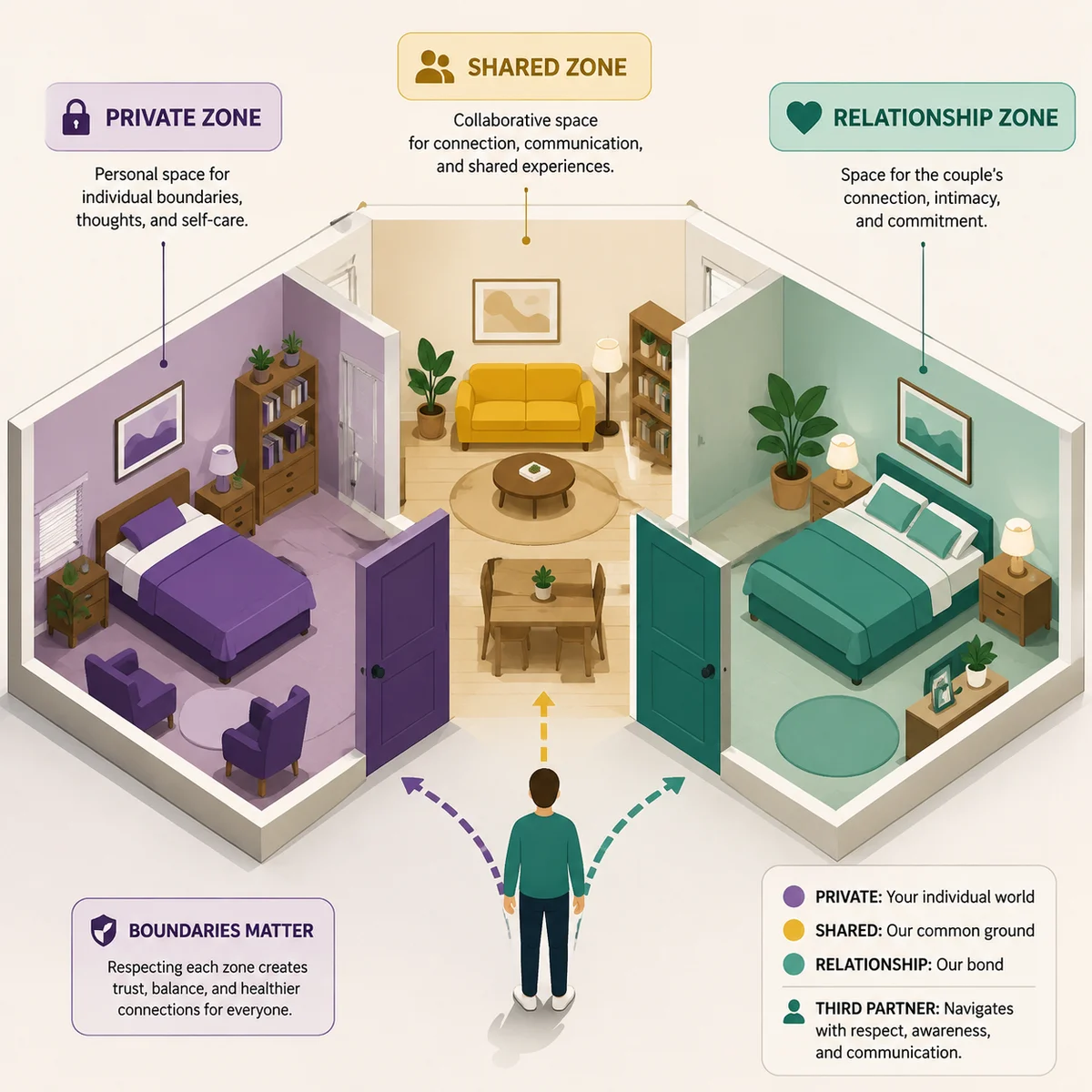
Couples are often advised to set boundaries. Third partners need the same clarity — and they need to know that their boundaries will be respected, not negotiated away. Here are the boundaries most experienced third partners bring to new arrangements.
Communication access. Decide how you want to communicate and with whom. Some thirds prefer a group chat only. Others are comfortable with individual messages but set limits on frequency. If the couple has a “no private messaging” rule, make sure it is mutual — not a rule that only applies to you. Clarify whether the couple discusses you privately between themselves and what transparency looks like. You are entitled to know if conversations about you are happening without you.
Emotional boundaries. You get to decide how much emotional intimacy you are available for. Some thirds enjoy building genuine friendship and ongoing connection. Others prefer to keep the dynamic compartmentalized. Neither is wrong, but it must be stated clearly and matched. If the couple wants deep emotional availability but you are only comfortable with a lighter connection, that incompatibility needs to be named early — not discovered through hurt feelings later.
Time and availability. Set expectations about how often you are available, how far in advance you need to plan, and what happens when life gets busy. Couples sometimes assume the third partner will flex around their schedule because they are the “guest.” You are not a guest — you are a participant, and your calendar matters. If the arrangement becomes a recurring one, for guidance on sustainable pacing see our article on setting boundaries in cuckold relationships.
Ethical Responsibilities — on All Three Sides
Ethics in cuckold dating are not one-sided. The third partner has responsibilities too — not just the couple. Here is what an ethical framework looks like for all three people.
The couple’s responsibilities: Be transparent about your relationship status, your experience level, and what you are actually looking for. Do not present yourselves as more emotionally available than you are. Do not offload your relationship problems onto the third. Provide aftercare — yes, third partners need it too. After an experience, check in: “How are you feeling? Do you need anything from us?” The third partner’s emotional wellbeing is not less important because they are not in the primary relationship.
The third partner’s responsibilities: Be honest about your intentions, your other connections, and your STI status and testing practices. Respect the couple’s relationship boundaries — if they have agreed that certain activities or dynamics are off-limits, honor that. Do not position yourself as a solution to their relationship issues or insert yourself into their conflicts. If you develop unexpected feelings, communicate them rather than acting on them unilaterally. For more on the ethical dimension, our ethical cuckold dating guide covers this in depth.
Shared responsibilities: All three parties share the obligation to communicate clearly, to respect stated boundaries without testing them, and to treat each other’s emotional and physical safety as a shared priority. If something changes — feelings, availability, comfort level — everyone agrees to speak up rather than let resentment build silently.
The Emotional Experience of Being the Third
There is a particular emotional terrain that comes with being the third partner, and it deserves honest acknowledgment.
You may feel like an outsider. No matter how welcoming a couple is, you are entering an established relationship with its own history, private jokes, and unspoken rhythms. This can feel isolating, especially immediately after an experience when the couple naturally turns toward each other. A responsible couple anticipates this and includes the third in post-experience reconnection — even a simple “How are you doing today?” the next morning matters enormously.
You may develop feelings — or they may develop feelings for you. This is not a failure of the arrangement. Emotional connection is a natural human response to intimacy. What matters is how it is handled. If the arrangement was explicitly casual and feelings develop on either side, that needs to be named and discussed — not suppressed or acted on without conversation. Sometimes the arrangement evolves; sometimes it ends. Either outcome is valid, but it should be a conscious decision, not a drift.
You are allowed to have needs. The third partner’s role is often framed around what the couple wants, but your own satisfaction and wellbeing are equally valid reasons to participate — or to leave. If an arrangement stops feeling good for you, you have every right to step away. You do not owe the couple a continuation of something that no longer serves you. If you are navigating complex emotions in the aftermath, the same aftercare principles apply. For cuckold-specific aftercare guidance, our cuckold aftercare guide walks through immediate and long-term reconnection strategies. General aftercare protocols from threesome aftercare can also be adapted.
Finding the Right Fit as a Third Partner
Not every couple is ready for a third partner, and not every third partner is right for every couple. Here is how to assess compatibility before committing.
Red flags for third partners: The couple cannot articulate what they want beyond broad terms. They have not discussed boundaries between themselves. One partner seems significantly more enthusiastic than the other — or one seems reluctant. They ask you to keep secrets from the other partner. They treat you as a problem-solver for their relationship (“We have been fighting less since we started talking to you”). They are unwilling to verify their identity or meet in public first. They dismiss your boundaries as “too cautious” or “not fun.”
Green flags for third partners: Both partners participate actively in communication — you are not only talking to one of them. They can name specific boundaries and preferences without prompting. They ask about your needs and boundaries before discussing their own. They have a clear safety protocol. They reference ethical frameworks and demonstrate understanding of power dynamics. They treat your time and comfort as equally important to their own.
Questions to ask before agreeing: What does aftercare look like for all three of us? How do you handle it if one of you wants to stop and the other does not? What happens if feelings develop on any side? How do you make decisions about the arrangement — together, or does one partner have veto power? What is your experience level, and how have previous arrangements ended? A couple who can answer these questions thoughtfully is far more likely to provide a safe, respectful experience than one who deflects or gets defensive.
Third Partner Readiness Checklist
- You understand your own boundaries and can articulate them clearly
- You have verified the couple’s identities and met in a public, neutral location
- Both partners show equal enthusiasm — no reluctant participants
- The couple can describe their aftercare plan in specific terms
- You have discussed and agreed on communication frequency, channels, and privacy
- You have a clear understanding of what happens if anyone wants to stop
- Your own emotional support system is in place — friends, community, or therapist
- You feel genuinely respected, not just desired
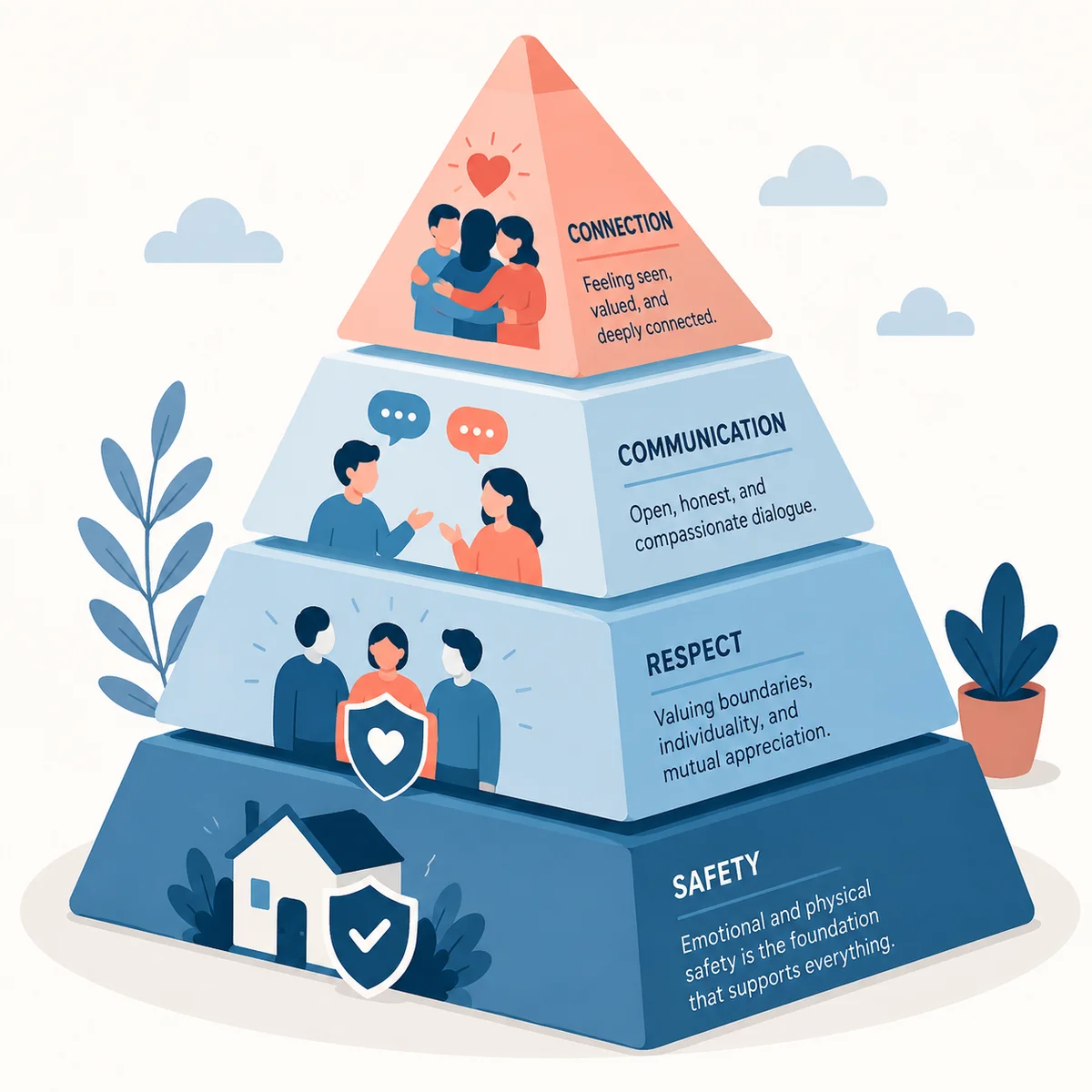
Being a third partner in a cuckold dynamic can be deeply rewarding — it offers connection, exploration, and the chance to be part of something that works for everyone. But it only works when all three people are seen, heard, and respected as full participants. If you are looking for a platform where couples and third partners connect with transparency and mutual respect, 3Cupid provides the space to find people who share those values.
This article was written by the editorial team at 3Cupid. We create evidence-informed content about ethical non-monogamy, cuckold dynamics, and relationship communication for adults exploring consensual alternative relationship structures.