
Enthusiastic consent is an eager, freely given yes — not just the absence of a no. In non-monogamy, that difference is everything. When a threesome involves three people, or a polycule connects five or six, the risk of someone quietly going along with something they don’t actually want multiplies. That’s why enthusiastic consent in non-monogamy isn’t a box you tick once. It’s a skill you practice before, during, and after every connection.
This guide explains what enthusiastic consent really means, why it works differently when more than two people are involved, and how to bring it into your everyday dating life — whether you’re exploring ethical non-monogamy for the first time or you’ve been in open relationships for years.
Table of Contents
- What Enthusiastic Consent Actually Means
- Why Consent Works Differently in Non-Monogamy
- Enthusiastic Consent vs. “Going Along With It”
- The Power Dynamics That Can Quiet a “No”
- How to Practice Enthusiastic Consent Every Day
- When Someone Withdraws Consent
- How Consent, Boundaries, and Agreements Fit Together
What “Enthusiastic Consent” Actually Means
Most of us grew up learning consent as a simple rule: no means no. That’s a useful floor, but it isn’t the ceiling. Enthusiastic consent asks for something more active. Instead of looking for the absence of a no, you look for the presence of a clear, comfortable yes. It’s the difference between a partner who shrugs and says “I guess” and one who says “yes, I want this.”
A helpful way to remember the standard is the FRIES model: consent should be Freely given, Reversible, Informed, Enthusiastic, and Specific. Freely given means no pressure or power imbalance is doing the talking. Reversible means you can change your mind at any time. Informed means everyone knows what they’re agreeing to. Enthusiastic means it’s an eager yes, not a reluctant one. Specific means agreeing to one thing doesn’t mean agreeing to everything. If you want a deeper look at the psychology behind it, this Psychology Today breakdown of consent is a good companion.
In practice, enthusiastic consent sounds like asking and being asked. “Is this okay?” “Do you want to keep going?” “Can I do this?” The questions can feel awkward at first, especially if you’re used to reading the room silently. But people who practice it consistently report feeling safer — and, over time, more relaxed and more connected.

None of this means every yes has to be loud. Some people express enthusiasm quietly — a steady nod, a relaxed posture, an easy smile. The point is learning to tell a real yes from a “yes” that’s actually a no in disguise.
Why Consent Works Differently in Non-Monogamy
With two people, consent is a single conversation between two sets of wants. Add a third, and the number of conversations grows fast. In a threesome, everyone needs to consent not just to the overall experience, but to each individual dynamic — who touches whom, what’s on the table, what’s off. A yes between two of you doesn’t automatically cover the third person.
Non-monogamy also layers consent on top of relationship structure. Agreeing to be in an open relationship is one kind of consent. Agreeing to a specific date, a specific act, or a specific night is another. They’re related but not the same — which is why clear agreements matter so much. They give everyone a shared map of what’s already been consented to and what still needs to be asked. If you’re newer to all of this, start with our ethical non-monogamy beginner’s guide.
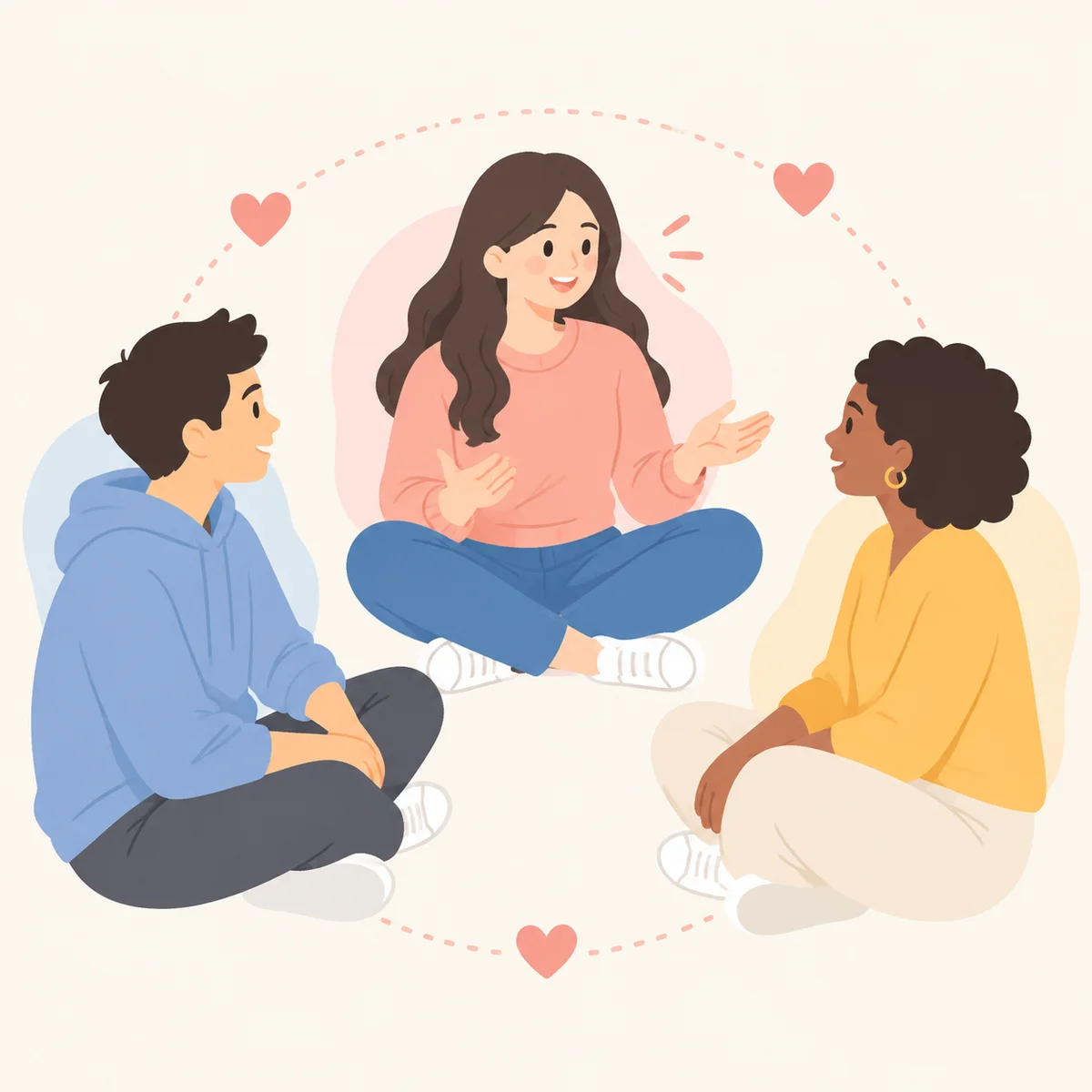
And because these dynamics often involve people with different levels of experience and different stakes — a long-term couple plus a newer third, for example — power can shift quickly. Enthusiastic consent becomes the tool that keeps everyone on equal footing.
Enthusiastic Consent vs. “Going Along With It”
There’s a big gap between “yes” and “fine.” A partner who goes quiet, shrugs, or says “if you want to” might be consenting on the surface while checking out underneath. In group dynamics, people go along with things for lots of reasons: they don’t want to be difficult, they don’t want to disappoint, or they feel like the moment has already moved past them.
Enthusiastic consent treats that lukewarm “fine” as a pause signal, not a green light. If someone’s answer isn’t an eager yes, the caring move is to slow down and check in — not to push. If you want to learn how to voice a no clearly in the moment, we have a dedicated guide on how to say no during a threesome.
The Power Dynamics That Can Quiet a “No”
Consent lives or dies by power. When one person holds more power — more experience, more social capital, or the safety of being part of an established couple — it gets harder for the other person to say no and mean it. This shows up constantly in non-monogamy. A single joining an established couple, a newer partner meeting a more connected polycule: in each case, the person with less power may feel pressure to agree just to belong.
That pressure is rarely spoken out loud. It lives in small things — the couple who makes decisions privately, the assumption that the newer person will simply fit in, the sense that saying no might end the invitation. Enthusiastic consent asks the people with more power to notice this and actively make room for a real no. That means asking directly, inviting disagreement, and never treating silence as a yes.

It also means checking in with yourself if you’re the one with less power. Sometimes the hardest yes to give is the one you’re afraid to withhold. Knowing how consent plays out in high-social-pressure spaces is worth a read — our guide to handling consent during a swinging encounter covers that terrain.
How to Practice Enthusiastic Consent Every Day
Enthusiastic consent isn’t a one-time conversation. It’s a set of habits. Here’s a checklist you can run through before any date, threesome, or new connection:
- Ask for a clear yes instead of assuming one.
- Check in during the moment, not just before it.
- Watch body language — hesitation, silence, and freezing are all information.
- Invite a no out loud: “No is always okay.”
- Separate consent for each act and each person.
- Never treat past consent as standing consent.
- Slow down if anyone seems to be going along rather than into it.

A quick do-and-don’t table makes the mindset concrete:
| Do | Don’t |
|---|---|
| Ask “Is this okay?” | Assume silence means yes |
| Invite a pause | Push past a lukewarm answer |
| Treat “no” as neutral information | Take “no” personally |
| Check in with the quietest person | Let the loudest person set the pace |
When Someone Withdraws Consent
Because consent is reversible, it can be withdrawn at any moment — even in the middle of something that started with an eager yes. A withdrawal of consent isn’t a rejection of you as a person. It’s a signal that the moment changed, and the only correct response is to stop and check in. No debate, no guilt-tripping, no “but you said yes earlier.”
The same goes in reverse. If you’re the one who wants to stop, you don’t need a dramatic reason or a long apology. “I need to pause” or “I’m not comfortable with this anymore” is a complete sentence. A caring partner will treat that as important information, not an inconvenience. This is such a big topic on its own that we wrote a full guide on how to withdraw consent in an ENM relationship.

How Consent, Boundaries, and Agreements Fit Together
People often blur consent, boundaries, and agreements, but they do different jobs. Boundaries are the personal lines you draw around yourself — what you’re comfortable with. Agreements are the shared rules you negotiate with your partners. Consent is the moment-to-moment yes that keeps both of them alive. A boundary is “I’m not comfortable with that.” An agreement is “we agreed to check in before new partners.” Consent is “yes, right now, this is okay with me.”
The three support each other. Clear boundaries make consent easier to give and read. Honest agreements make it clearer what’s already on the table. And consistent consent makes everyone feel safe enough to keep showing up. If you want to understand the difference in more depth, start with our guide to rules vs. boundaries vs. agreements.
Enthusiastic consent in non-monogamy isn’t about being perfect. It’s about being present — asking real questions, listening to real answers, and treating every person’s comfort as something worth protecting. When you get it right, it doesn’t make things colder. It makes them safer, warmer, and far more fun.

Whether you’re a couple talking through your first threesome or a single figuring out what you want, the conversation starts the same way: with a clear, honest yes. If you’re ready to meet people who take consent as seriously as you do, you can find like-minded singles and couples right here at 3Cupid.
This article was written by the 3Cupid editorial team to help adults explore ethical, consensual non-monogamy. It is for informational purposes only and does not replace professional medical, legal, or relationship advice.