If you or your partner feel curious about same-gender attraction and wonder whether a threesome could be a space to explore that, you’re asking one of the most common — and least openly discussed — questions in non-monogamous dating. Bisexual curiosity doesn’t mean your relationship is broken, and it doesn’t mean you need to label yourself overnight. What it does mean is that you owe each other honesty, patience, and a plan.
This guide walks through bisexual exploration in threesome dating from both partners’ perspectives — the one who’s curious and the one who’s watching their partner figure things out. No pressure, no identity ultimatums, just practical steps for couples who want to explore together while keeping their relationship solid.
Table of Contents
- Understanding Bisexual Curiosity in a Relationship Context
- Starting the Conversation Without Pressure
- Setting Boundaries That Honor Both Partners
- Finding the Right Person for Shared Exploration
- During the Experience: What Actually Matters
- After the Experience: Processing Together
Understanding Bisexual Curiosity in a Relationship Context
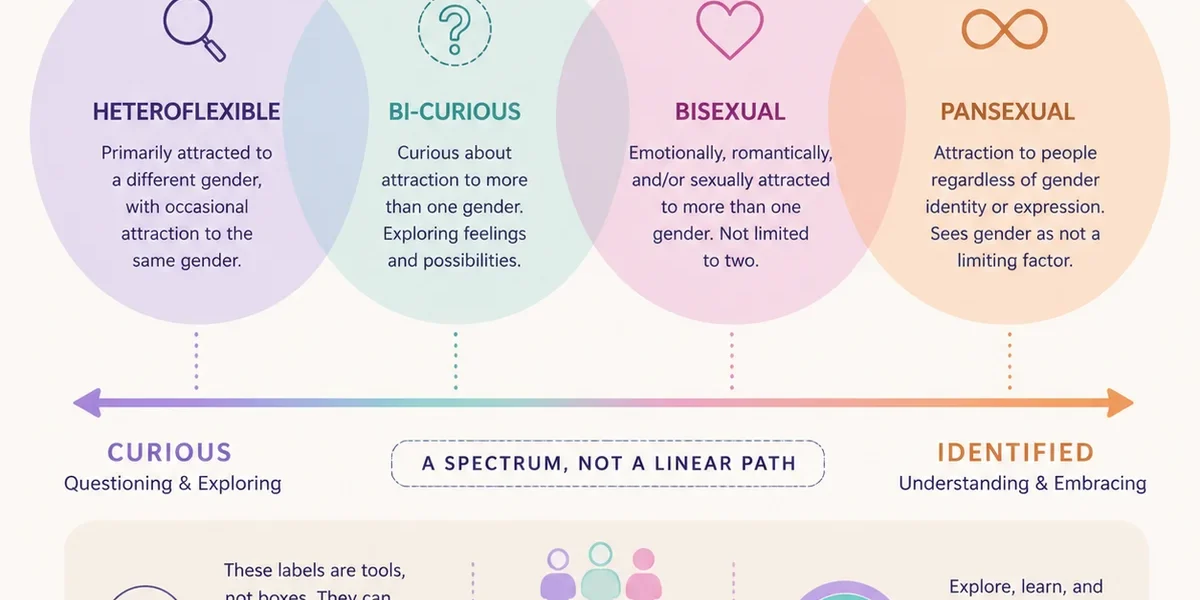
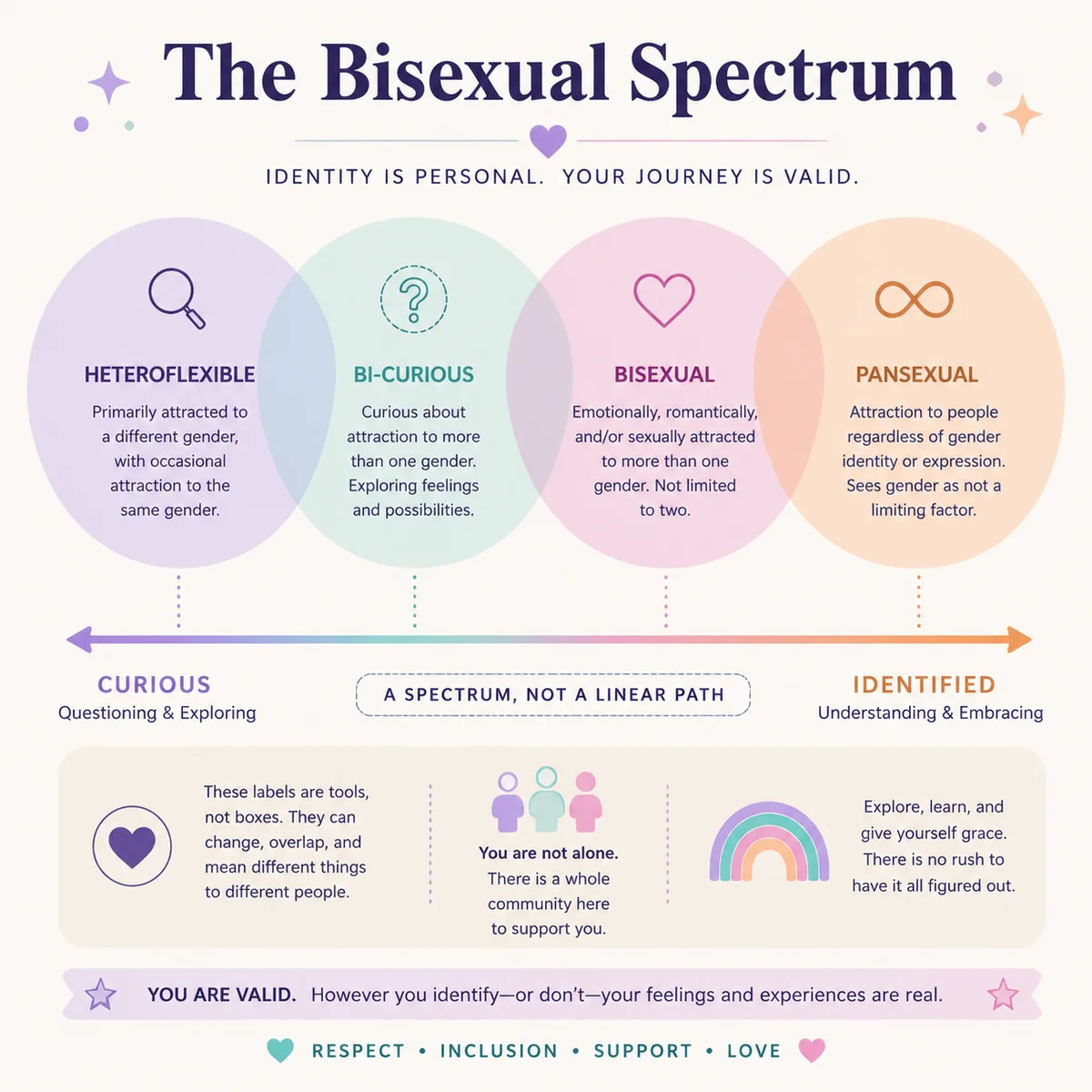
Bisexuality exists on a spectrum. Some people know their orientation clearly from adolescence. Others discover it mid-relationship, sometimes triggered by a specific attraction or a growing awareness that “straight” doesn’t quite fit. Neither path is more valid.
According to research on consensual non-monogamy, a significant number of people who explore threesomes do so partly out of bisexual curiosity — a pattern well-documented in relationship psychology. Some describe themselves as — even if they never use that label. Some describe themselves as “heteroflexible,” “bi-curious,” or simply “open.” What matters isn’t the word you choose. It’s that you’re honest with yourself and your partner about what you’re feeling and what you hope to learn.
One thing couples often miss: curiosity doesn’t always equal identity. You might have a positive same-gender experience and still not identify as bisexual. You might try it and realize it isn’t for you. Or you might discover something about yourself that reshapes how you see your sexuality. All outcomes are real, and all are fine. The goal of exploration is information — not a final answer.
Starting the Conversation Without Pressure
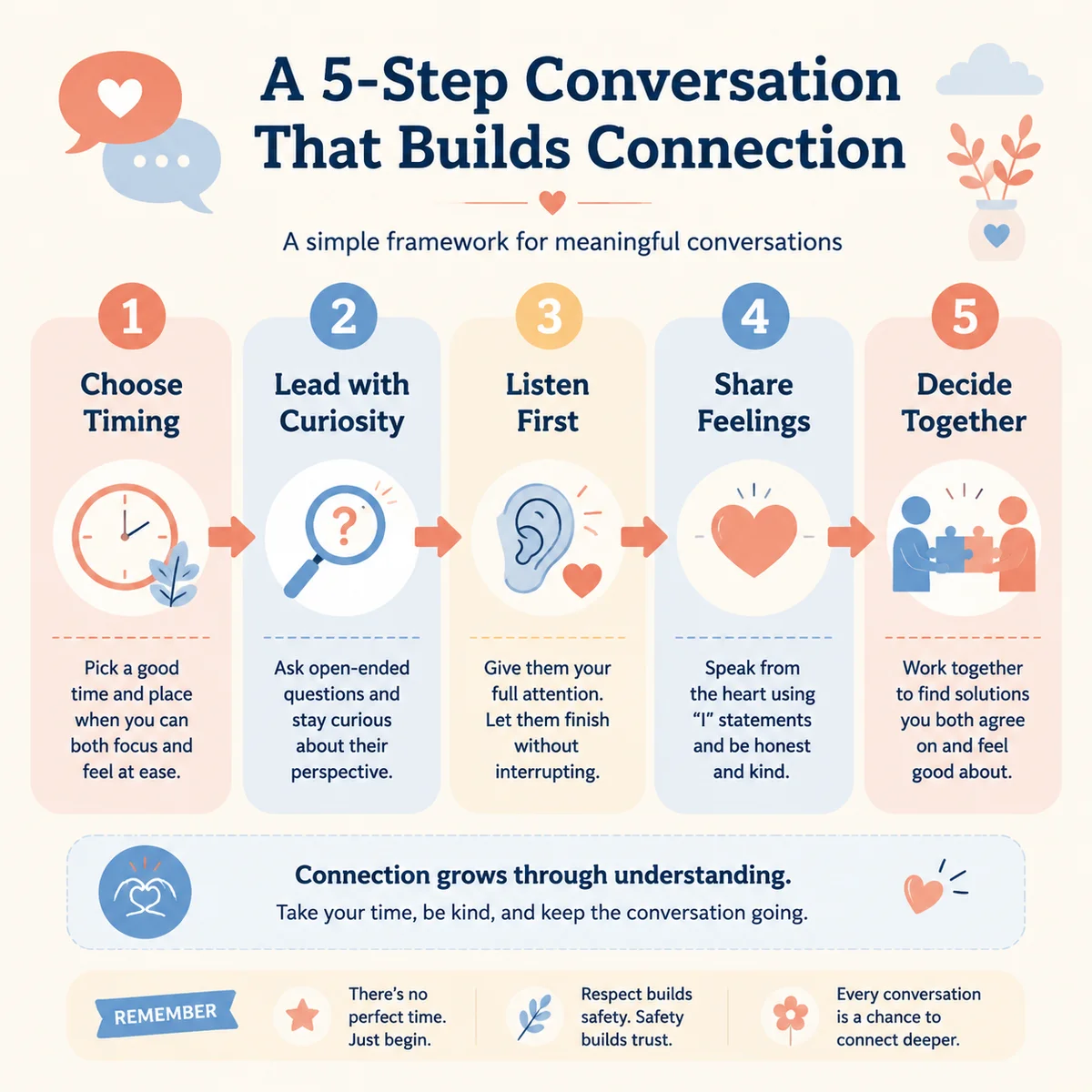
Bringing up bisexual curiosity with a partner can feel terrifying. You might worry they’ll assume you want to leave, or that you’ve been hiding something, or that your relationship isn’t enough. The conversation goes better when you frame it as an invitation rather than a declaration.
Instead of “I think I’m bisexual and I want to explore,” try: “I’ve been noticing some feelings I want to understand better, and I’d like to talk about them with you because your perspective matters to me.” The difference is enormous. One feels like a door closing on your current relationship. The other feels like a door you’re asking your partner to walk through with you.
Pick a calm moment — not during an argument, not after a few drinks, not right before bed. A weekend afternoon when neither of you is rushed works well. Start with curiosity rather than a request: “What are your thoughts on people who discover new sides of their sexuality while in a relationship?” Listen to their answer before sharing your own feelings. This approach, covered in detail in our guide on talking to your partner about a threesome, turns a potentially threatening conversation into a collaborative one.
If you’re the partner hearing this news: your feelings are valid too. You might feel insecure, blindsided, or worried about what this means for your future. These reactions are normal. What helps is separating your partner’s curiosity from a threat. Their attraction to others doesn’t erase their attraction to you — bisexuality adds capacity, it doesn’t subtract.
Setting Boundaries That Honor Both Partners
Boundaries for bisexual exploration aren’t fundamentally different from boundaries for any threesome — but they need extra attention because the emotional stakes are different. When one partner is exploring identity, not just novelty, the experience carries more weight.
Start with the basics: what specific activities are you each comfortable with? Kissing? Touching? More? Be uncomfortably specific. “We’ll see how it goes” is not a boundary — it’s a gamble. Our threesome boundaries checklist provides a structured way to work through this conversation, covering everything from physical limits to emotional check-ins.
Beyond the physical, address the identity questions. Does the exploring partner want to use this experience to try on a label? Does the other partner feel ready for their partner to potentially identify differently? What happens if the experience confirms a bisexual identity — how does that change your relationship day to day? These questions feel heavy because they are heavy. But avoiding them doesn’t make them go away.
One boundary couples often overlook: the right to pause. Agree beforehand that either partner can call a timeout during the experience — no questions asked, no resentment. This safety valve alone reduces anxiety more than any specific rule.
Finding the Right Person for Shared Exploration
Not every potential third partner is right for bisexual exploration. Someone who’s experienced with same-gender dynamics can make the encounter smoother and less pressured. Someone who’s also new to this might share your nervousness — which can be bonding or anxiety-producing, depending on your personalities.
Be upfront about what you’re looking for. A profile or conversation that says “My partner is curious about exploring with another woman and we’re looking for someone patient and communicative” will attract better matches than vague language. The third partner deserves to know the context they’re walking into. This is where our complete guide to finding a third safely becomes essential reading — it covers how to communicate your intentions clearly without making anyone feel like an experiment.
A few practical considerations: consider meeting in a neutral, public space first — coffee, not a bar. Give everyone a chance to feel the chemistry before committing to anything. And if you’re using a dating platform, 3Cupid connects couples with singles who are specifically interested in these dynamics, so you’re not navigating awkward explanations on mainstream apps.
Red flags to watch for: Anyone who dismisses your nervousness, pushes past stated boundaries during the conversation phase, or treats bisexual exploration as inherently “hot” rather than personally meaningful. The right third partner will respect that this is exploration, not performance.
During the Experience: What Actually Matters
The moment itself is rarely what people imagine. It’s slower, more human, more full of small decisions than any fantasy accounts for. That’s actually good — it means there’s room to navigate.
Check in with your primary partner visually. A glance, a touch, a quick “you okay?” goes further than you’d think. If you agreed on a pause signal, don’t be afraid to use it. Using it once and seeing that your partner respects it builds more trust than never needing it at all.
For the exploring partner: give yourself permission to not know what you’re doing. You don’t need to perform confidence. Saying “I’m new to this, can you guide me?” is more attractive than faking experience. For the observing partner: your job isn’t to monitor — it’s to be present. If you find yourself scrutinizing every interaction, take a breath and reconnect with why you chose to do this together.
This is also where threesome negotiation pays off. The conversations you had beforehand — about pacing, about signals, about what “good” looks like for each of you — become your navigation system in the moment.
After the Experience: Processing Together
The hours and days after a threesome matter as much as the encounter itself, especially when bisexual exploration is part of the picture. Your partner isn’t just processing what happened physically — they’re processing what it might mean for their identity, your relationship, and how they see themselves.
Start with reconnection. Physical closeness — not necessarily sexual, just skin-to-skin contact — helps both partners feel safe. Then, when you’re both ready, talk. Not an interrogation, not a performance review. Simple questions: “How are you feeling?” “What surprised you?” “Is there anything you want to talk through?”
Don’t rush to conclusions. Someone who just had their first same-gender experience might need days or weeks to understand what it meant to them. Your job as a partner isn’t to help them label it — it’s to hold space while they figure it out. Some days they might feel certain. Other days they might feel confused. Both are part of the process.
If jealousy surfaces — and it often does, even for the most prepared couples — name it without shame. “I’m feeling insecure and I know it’s not logical, but it’s here” is a conversation starter. “I’m fine” when you’re not is a relationship eroder. Our guide on jealousy in threesome dating offers specific strategies for working through these feelings together.
One final point that couples rarely discuss: what if one partner enjoyed the exploration and the other didn’t? This outcome is uncomfortable but common. The answer isn’t forcing more exploration or shutting it down permanently. It’s a slower conversation about what each of you learned and where you go from here — ideally with the same patience you brought to the initial conversation.
Before You Explore: A Checklist for Couples
- Have you talked about it sober, unrushed, and more than once? A single conversation isn’t enough. Circle back after a few days and see if feelings have shifted.
- Have you named your fears out loud? Both partners should articulate what scares them — jealousy, identity shifts, comparison, loss of connection.
- Have you agreed on specific boundaries? Activities, signals, check-in protocols, aftercare expectations. Write them down if it helps.
- Does the third person know the context? They should understand this involves curiosity or exploration, not just casual fun. Informed consent matters.
- Have you agreed there’s no “right” outcome? Exploration might confirm attraction, rule it out, or leave things ambiguous. All results are valid.
- Is your relationship in a stable place? Exploration should add to a solid foundation, not compensate for cracks.
Conversation Scripts for the Tough Moments
If you’re the one bringing it up: “I want to share something I’ve been thinking about, and I’m nervous because your feelings matter more to me than any curiosity I might have. I’ve noticed some attractions I don’t fully understand yet. I’m not asking to act on anything right now — I just didn’t want to process this alone.”
If your partner just told you they’re curious: “Thank you for trusting me with this. I need some time to sit with it, and I might have questions later. Can we talk more this weekend when I’ve had space to process?”
If the experience left you confused: “I don’t know what that meant for my identity yet, and I might not know for a while. What I do know is that I’m glad we did this together, and I need your patience while I sort through it.”
Bisexual exploration in threesome dating isn’t about finding a label or performing for anyone. It’s about two people choosing to learn something together — about desire, about identity, about each other. That takes courage, and it takes communication. If you approach it with curiosity rather than pressure, you might discover that the exploration itself strengthens your relationship regardless of where the attraction leads.
Ready to take the first step? Start with how to find the right third partner safely, or join 3Cupid to connect with people who understand these dynamics from experience.
This article is part of 3Cupid’s guide to navigating threesome dating with clarity and care. We write for adults 18+ exploring consensual non-monogamy. For more on communication and boundaries, browse our blog.