You’ve talked it through, set your boundaries, and everyone’s on the same page. Then the moment arrives — and suddenly your body isn’t cooperating the way your mind wants it to. If this sounds familiar, you’re not alone. Threesome performance anxiety is one of the most common yet least discussed experiences in group dating. It has nothing to do with how attracted you are to anyone in the room, and everything to do with how your brain processes pressure, novelty, and self-consciousness all at once.
Performance anxiety can show up as erectile difficulties, trouble reaching orgasm, or a general feeling of being “in your head” instead of in your body. It happens to people of all genders, at all experience levels. The good news: it’s manageable. This guide covers why it happens, how to prepare, and what to do when it hits — so you can actually be present for the experience you wanted.
Table of Contents
- Why Performance Anxiety Happens in Threesomes
- The Psychological Side: It’s Not Just Physical
- How to Talk About It Beforehand
- 5 Grounding Techniques to Stay Present
- What to Do If It Happens In the Moment
- Aftercare for Performance Anxiety
- When Anxiety Signals Something Deeper
Why Performance Anxiety Happens in Threesomes
In a one-on-one setting, you’ve probably settled into a comfortable rhythm with your partner. You know what they like, they know what you like, and there’s a shared script — even if it’s unspoken. A threesome rewrites that script entirely.
Your brain is suddenly tracking three bodies instead of two. You’re managing your own arousal, trying to read two other people’s signals, and possibly worrying about whether you’re giving everyone equal attention. That’s a lot of cognitive load. When your brain goes into overdrive, your body’s relaxation response gets blocked — and relaxation is the foundation of sexual function.
Add to that the pressure many people feel to “perform” or prove themselves, and it’s no surprise that anxiety shows up. A 2018 study published in the Journal of Sexual Medicine found that performance anxiety is one of the most frequently reported concerns in non-monogamous encounters, affecting roughly the same proportion of men and women — though it manifests differently.
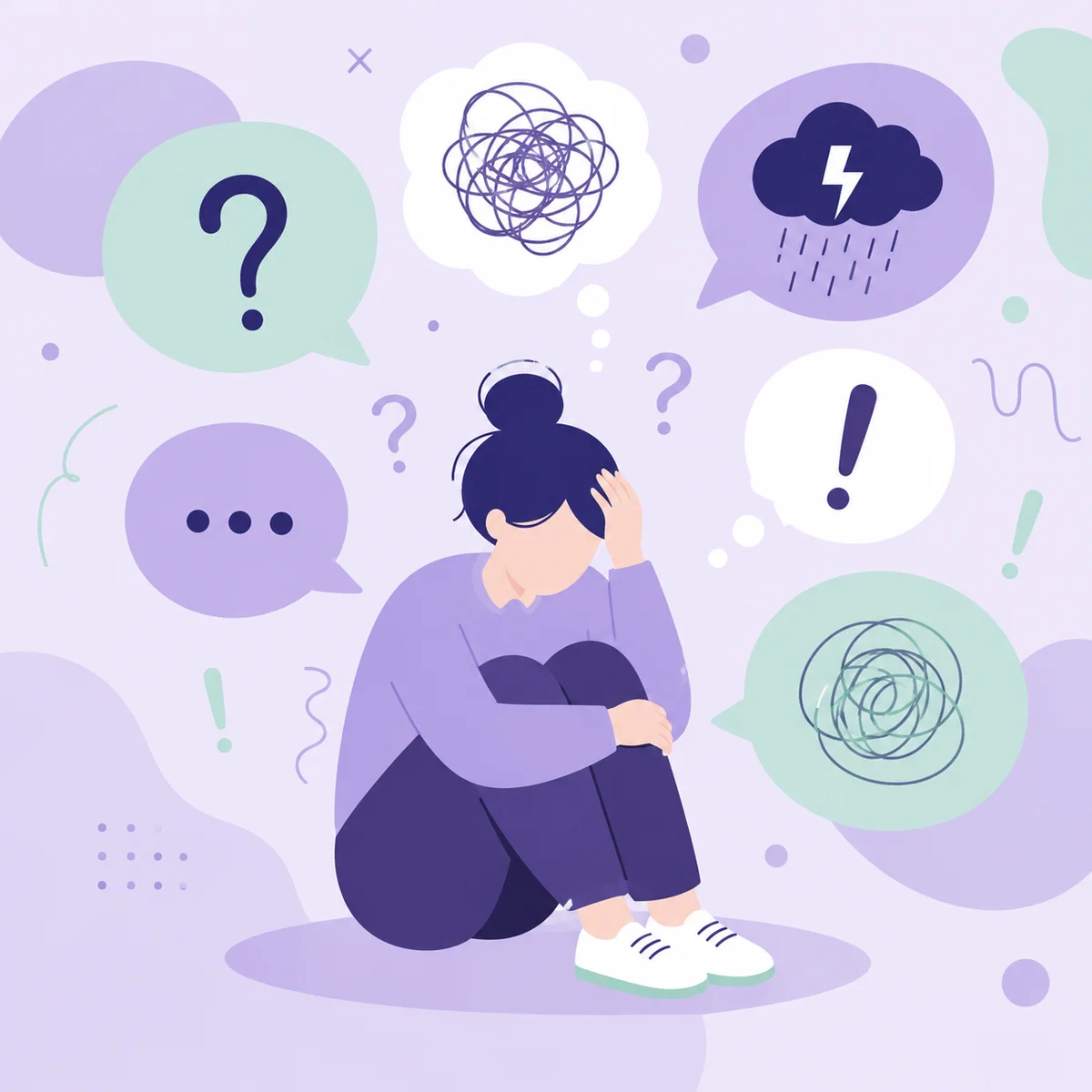
Understanding that performance anxiety is a physiological and psychological response — not a personal failure — changes everything. It’s your nervous system doing exactly what nervous systems do in unfamiliar, high-stakes situations: going into alert mode.
The Psychological Side: It’s Not Just Physical
Performance anxiety isn’t just about what’s happening in your body. It’s fed by a few predictable thought patterns:
- Comparison thinking: “Is the third partner more attracted to my partner than to me?”
- Spectatoring: Watching yourself from the outside, judging how you look or what you’re doing, instead of feeling it from the inside.
- Pressure to impress: Especially common when the third partner is new — there’s a sense of wanting to “deliver.”
- Equity anxiety: Am I giving too much attention to one person? Not enough to the other?
Psychology Today describes spectatoring as one of the most disruptive patterns in sexual anxiety — it pulls you out of your body and into a hypercritical mental loop. The more you observe yourself, the less you feel, and the anxiety spiral tightens.
Here’s what helps: naming these patterns out loud. Simply saying to your partner, “I tend to get in my head and spectator, so if I seem distant for a moment, that’s what’s happening,” takes the power out of the pattern. It stops being a secret failure and becomes a known, manageable thing.

How to Talk About It Beforehand
The conversation about performance anxiety should happen before anyone’s clothes come off. Not in the moment, not as a whispered aside during the date — beforehand, calmly, when everyone is fully dressed and undistracted.
Here’s a framework that works:
- Name it directly: “I want to mention something — I sometimes get performance anxiety in new situations. It has nothing to do with attraction. If it happens, I’ll just need a moment to breathe and reset.”
- Set the expectation: “The goal tonight isn’t a specific outcome. It’s connection and exploration. If something doesn’t work physically, that’s fine — there’s no script we have to follow.”
- Check in with your existing partner: If you’re part of a couple, have a private conversation too. Reassure each other that whatever happens — or doesn’t happen — is okay.
This kind of pre-emptive communication does two things. First, it takes the pressure off — the “secret worry” is now a shared understanding. Second, it models emotional honesty for the third partner, which almost always makes them feel safer too. If you’ve already read our guide on managing jealousy in threesomes, you’ll recognize the same principle: unspoken fears grow, spoken fears shrink.
One practical tip: agree on a simple signal or phrase that means “I need a pause.” It could be as straightforward as “can we slow down for a minute?” Having a pre-agreed exit from intensity gives everyone permission to breathe.
5 Grounding Techniques to Stay Present
Grounding techniques pull your attention out of the anxious mental loop and back into your body. They work because they give your brain something concrete to focus on instead of the spiraling “what if” thoughts. Here are five you can use:
- The 5-4-3-2-1 reset: Notice 5 things you can see, 4 things you can touch, 3 things you can hear, 2 things you can smell, 1 thing you can taste. Do this silently or out loud — it takes about 30 seconds and immediately interrupts the anxiety loop.
- Box breathing: Inhale for 4 counts, hold for 4, exhale for 4, hold for 4. Repeat 3-5 times. This activates your parasympathetic nervous system — the one responsible for relaxation.
- Feet-on-ground anchor: Press your feet firmly into the floor (or bed). Focus entirely on the sensation of pressure and contact. This is subtle enough to do without anyone noticing.
- Temperature shift: Hold something cold — a glass of water, an ice cube, even just pressing your palm against a cool surface. Temperature shocks pull your brain out of abstract anxiety and into physical sensation.
- Single-sense immersion: Pick one sense and focus on it completely. The texture of the sheets. The sound of breathing in the room. The smell of someone’s skin. Narrowing your attention to one sensory input breaks the overwhelm.
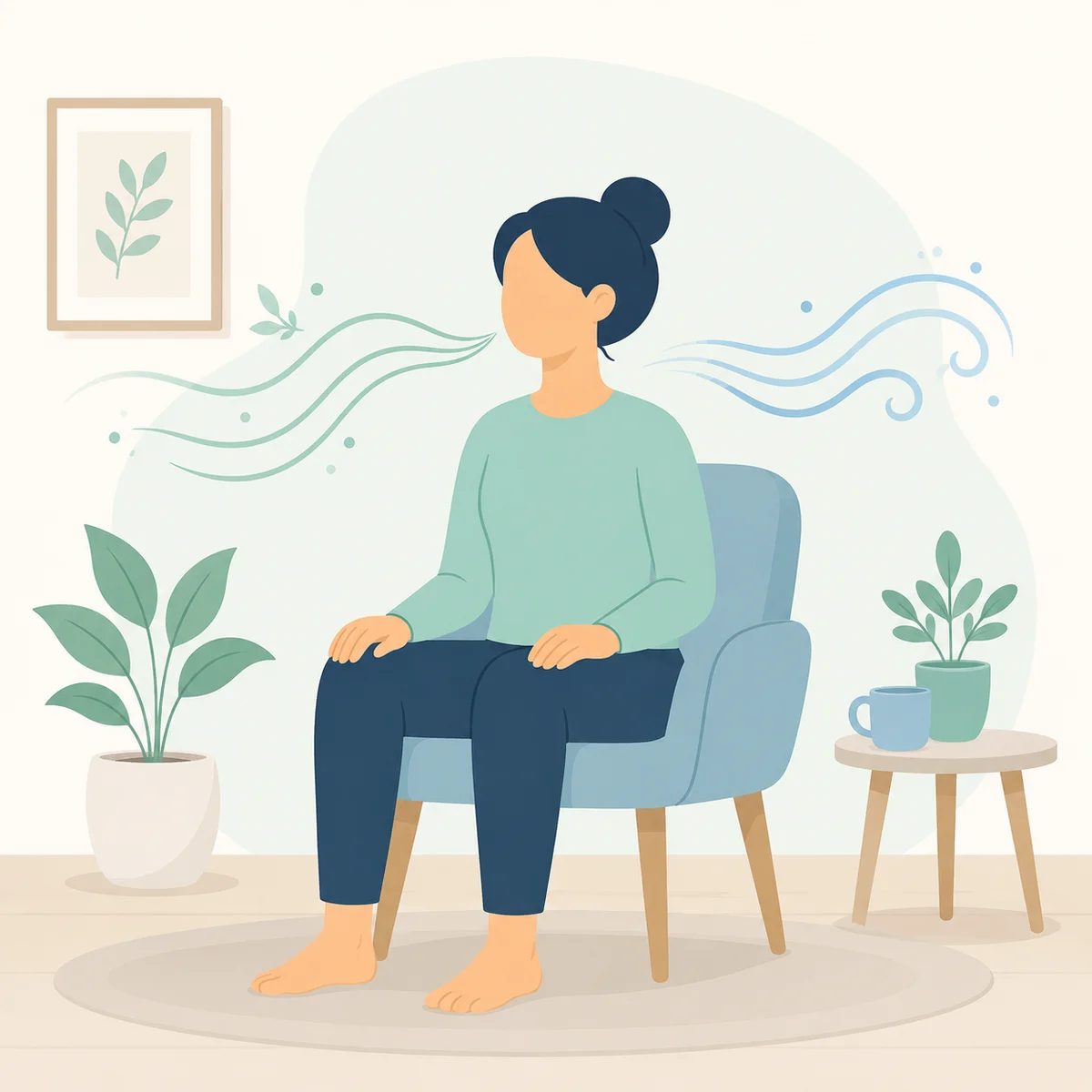
The key is to practice these before you’re in a high-pressure situation. Box breathing at your desk once a day for a week makes it much more accessible when you actually need it. Muscle memory matters.
What to Do If It Happens In the Moment
Despite all the preparation, performance anxiety can still show up. Here’s what to actually do when you feel it happening:
First, name it — out loud or internally. “This is anxiety. My body is in fight-or-flight. It will pass.” The simple act of labeling the experience, which psychologists call “affect labeling,” has been shown to reduce amygdala activation — your brain literally calms down when you name what you’re feeling.
Second, shift the activity. If penetrative sex isn’t working, move to something that doesn’t require the same physiological response. Use your hands. Use your mouth. Focus entirely on someone else’s pleasure for a few minutes. Taking the spotlight off yourself is often all it takes for your body to reset.
Third, call a timeout if needed. “Can we take a water break?” is a perfectly normal thing to say. Get up, drink some water, splash your face, shake out your limbs. A two-minute reset is vastly better than suffering through twenty minutes of increasing anxiety.
Here’s a quick reference for what helps versus what makes it worse:
| Do This | Avoid This |
|---|---|
| Name the feeling: “I’m getting anxious” | Ignore it and hope it goes away |
| Shift to non-penetrative touch | Keep forcing the same activity |
| Take a water break / pause | Power through in silence |
| Focus on someone else’s pleasure | Obsess over your own “performance” |
| Use grounding (breathing, sensation) | Apologize repeatedly — it amplifies the pressure |
| Remember: this is normal biology | Interpret it as attraction failure |
Aftercare for Performance Anxiety
Aftercare isn’t just about the immediate post-experience cuddle. When performance anxiety was part of the picture, aftercare takes on a specific purpose: preventing the experience from hardening into shame or avoidance.
If you were the one who experienced anxiety:
- Don’t apologize excessively. One genuine “thank you for being patient with me” is enough. Over-apologizing turns a physiological event into a character flaw in your own mind.
- Debrief the good parts first. Before talking about what went wrong, talk about what went right. This isn’t toxic positivity — it’s accurate memory formation. Anxiety tends to erase the positive; you have to consciously restore it.
- Reconnect physically in a non-sexual way. If you’re part of a couple, spend time being physically close without any sexual expectation afterward. This rebuilds the association between touch and safety.
If you were the partner of someone who experienced anxiety:
- Don’t make it about you. “Was it something I did?” “Aren’t you attracted to me?” These questions, while understandable, add pressure. Performance anxiety is about the nervous system, not about attraction.
- Normalize it. “That happens to so many people. I’m glad you said something.” A brief, casual acknowledgment is more powerful than an intense processing session right away.
- Follow their lead on when to talk. Some people want to process immediately. Others need a day. Ask: “Do you want to talk about what happened now, or later?”
For a deeper look at reconnecting after group experiences, our threesome aftercare guide walks through specific rituals that help couples — and trios — process together. The principles apply equally whether anxiety was present or not: intentional reconnection builds resilience.
When Anxiety Signals Something Deeper
Sometimes performance anxiety isn’t just about the pressure of the moment. It can be a signal that something else needs attention:
- Unresolved relationship tension: If you and your partner have been fighting or disconnected, a threesome won’t fix it — and your body might be telling you that.
- Not actually wanting this: It’s possible to intellectually agree to a threesome while your body says “no.” If anxiety persists across multiple attempts and situations, it’s worth asking yourself honestly: do I actually want this, or do I feel like I should?
- Mismatch with the third partner: Sometimes the chemistry just isn’t there, and anxiety is your body’s way of saying “this person isn’t the right fit.”
- Generalized anxiety patterns: If performance anxiety shows up in other areas of your life — work presentations, social situations — it may be part of a broader pattern worth addressing with a therapist.
None of these are failures. They’re information. The emotional realities of threesome dating include the fact that your body sometimes knows things before your mind does. Learning to listen to those signals — whether they say “slow down,” “this isn’t right,” or “try again with better preparation” — is what makes you a safer, more attuned partner.
Performance anxiety and ghosting sometimes feed each other — the fear of not measuring up can drive someone to disappear rather than have an honest conversation. Our guide on handling third partner ghosting in ENM dating covers that territory in depth, with screening strategies to reduce the odds of it happening to you.
Performance anxiety doesn’t mean you’re bad at this. It doesn’t mean you’re not cut out for group experiences. It means you’re human, in a situation your nervous system hasn’t fully mapped yet. And that’s exactly where growth happens — not by eliminating the anxiety, but by learning to move through it.

For couples exploring threesome dating for the first time, the foundation matters more than the execution. Our guide on finding a third partner safely emphasizes the same principle: preparation, communication, and realistic expectations are what turn a potentially stressful experience into a genuinely connecting one.

If you’re looking for a space where honesty and realistic expectations are the norm — not the exception — you’ll find people who get it at 3Cupid. The best experiences start with the best conversations.
This article was written with input from current research on sexual anxiety and first-hand accounts from the ENM community. It reflects the editorial standards of 3Cupid and is regularly reviewed for accuracy.