
Most conversations about threesome dating focus on what happens during the evening — but almost no one talks about what happens when the lights go out and morning arrives. The overnight part. Who stays? Who leaves? What does the morning after actually look like when three people wake up in the same space? The logistics of a threesome sleepover can make or break the experience for everyone involved, yet they rarely get discussed beforehand. Getting this part right doesn’t require a script — it just requires thinking it through before anyone’s tired, emotional, or standing in the kitchen in borrowed pajamas wondering what comes next.

Table of Contents
- Before Anyone Arrives — Setting the Scene
- Who Stays and Who Goes — The Core Decision
- Hosting Essentials for a Three-Person Overnight
- The Morning After — What Nobody Tells You
- Handling Awkward Morning-After Situations
- Threesome Sleepover Checklist
Before Anyone Arrives — Setting the Scene
A good threesome sleepover starts hours before anyone walks through the door. It starts with a conversation between the hosts — or, if you’re a single hosting, with some honest self-reflection about what you’re actually comfortable with.
Ask yourselves these questions before you extend an overnight invitation:
- How do we feel about someone being in our home while we’re asleep? Sleep is vulnerable. Having a third person in your space during those unconscious hours is different from having them over for an evening.
- What does morning look like for us? Some couples have rituals — coffee together, quiet reading, a run. Are you okay with a third person being part of that, or do you need your morning to yourselves?
- Is our home actually set up for a guest? Clean sheets on a spare bed? An extra toothbrush? A clear path to the bathroom at 3am? These details matter more than you’d think.
- What’s our exit strategy if things feel off? Hope for the best, but have a plan for the worst. A pre-agreed signal between partners can prevent a lot of 4am anxiety.
If you’re the one being invited to stay over, you get to ask questions too. “What time do you usually wake up?” and “Is there anything I should know about your morning routine?” aren’t intrusive — they show you’re considering their comfort as well as your own.
Before you even get to the overnight stage, the groundwork of finding a third safely and creating a comfortable space needs to be solid. If the chemistry and trust aren’t there before bedtime, no amount of fresh towels will fix it.

Who Stays and Who Goes — The Core Decision
This is the question that causes more silent anxiety than any other aspect of threesome sleepover logistics: does the third person stay the night, or do they head home? There’s no single right answer, but there are wrong ways to handle it — and most of them involve not discussing it until 2am.
Option 1: Everyone stays. This works best when there’s established trust and everyone genuinely wants the shared morning experience. It’s the most intimate option and tends to deepen connections — which also means it carries more emotional weight. If this is your first overnight together, acknowledge that out loud. Something as simple as “We’re really glad you’re staying — and if at any point you want space, just say so” removes pressure.
Option 2: The third person leaves after the evening. Perfectly valid, especially for early-stage arrangements. The key is making this clear before the evening begins, not after. A pre-arranged departure time — “We’re early risers, so we’ll wrap up around midnight” — frames it as logistics rather than rejection. Never spring a “so, when are you heading out?” on someone who assumed they were staying.
Option 3: Split the difference. The third stays for a late breakfast but doesn’t sleep over. This gives you the bonding of a morning meal without the full overnight commitment. It can be a good stepping stone toward full sleepovers down the line.
Option 4: One partner leaves, two stay. This happens more often than people admit — and it’s risky. If you’re the couple, and one of you wants to leave while the other hosts overnight, you need to be absolutely sure there’s no resentment brewing. The person leaving should be doing it because they want to, not because they feel pushed out. And the third person shouldn’t be caught in the middle of a dynamic they didn’t sign up for.
Whatever arrangement you land on, say it out loud before the evening starts. “We’d love for you to stay the night — we have the guest room ready.” Or “We’re going to call it a night around midnight, but we’d love to do breakfast another time.” Clarity in advance prevents awkwardness in the moment.

Hosting Essentials for a Three-Person Overnight
Hosting one person overnight is straightforward. Hosting a third person when you’re a couple adds layers: sleeping arrangements, bathroom logistics, and the subtle power dynamic of “our house, our rules.” Getting the practical details right reduces that dynamic.
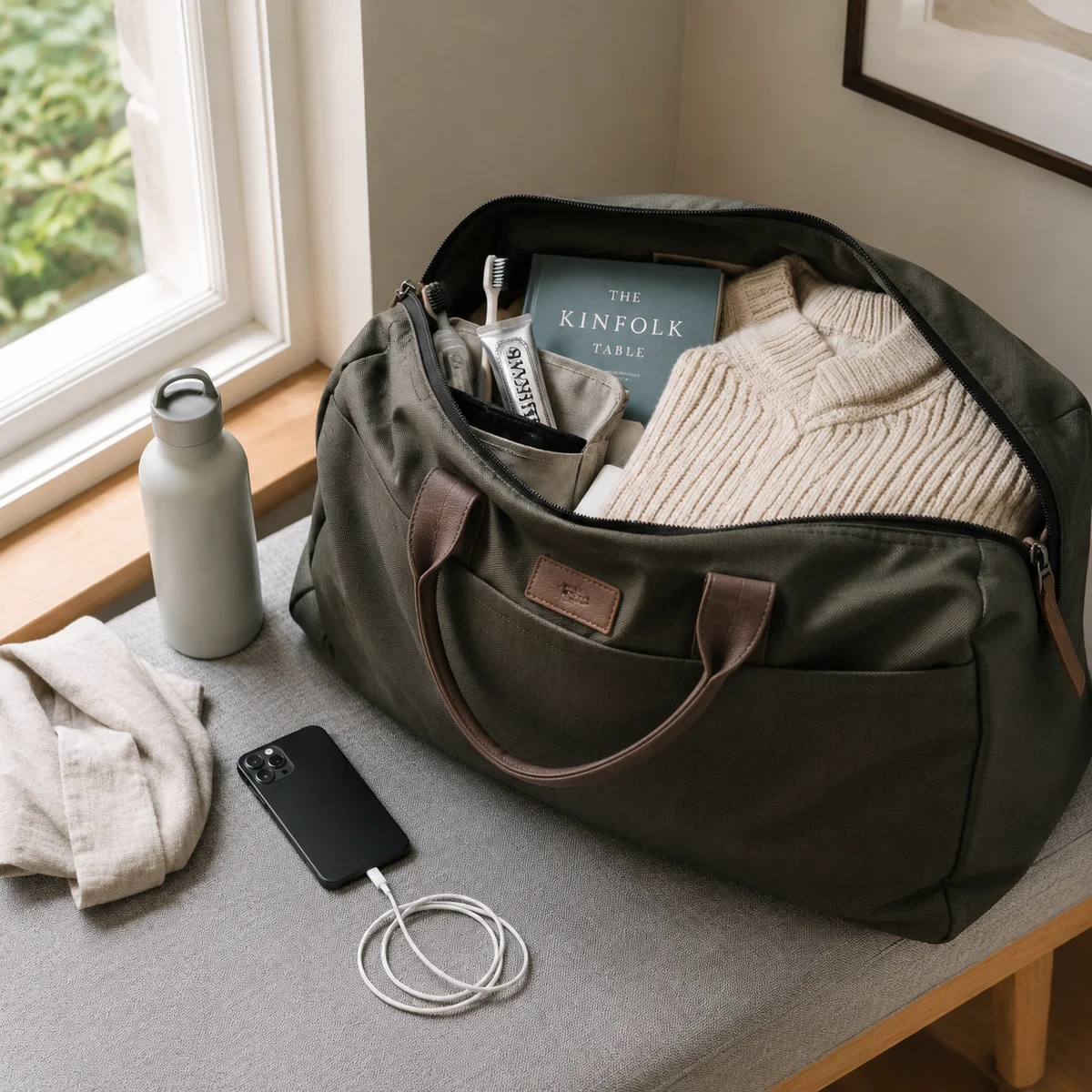
Sleeping arrangements — have a plan, but stay flexible. Does the third person have their own bed, or will everyone share? If sharing, is the bed actually big enough for three adults to sleep comfortably — not just fit, but sleep? A queen bed with three people means someone’s arm is going numb by 3am. If you have a guest room, make it genuinely inviting: clean sheets, a reading light, a phone charger, a glass of water. If the guest room is actually a storage closet with a futon, be honest about that and consider alternatives.
The bathroom: the unspoken stress point. Three adults sharing one bathroom in the morning is a logistical puzzle. Have extra toiletries visible and accessible — a spare toothbrush (still in the package), clean towels in an obvious spot, a hairbrush they don’t have to ask for. Point out where things are during the evening tour rather than making them hunt in the morning. If you have a preferred shower schedule, mention it casually: “I usually shower first thing, but the bathroom’s all yours after 7:30.”
Food and drink — plan for the morning. Nothing says “we thought this through” like having breakfast options ready. You don’t need a full spread — coffee, tea, something to eat that doesn’t require cooking, and knowing whether your guest has any dietary restrictions. Ask in advance: “Any breakfast preferences? We usually do coffee and toast, but happy to grab something else.” This also serves as a natural confirmation that they’re staying for breakfast.
Privacy and personal space. Everyone needs a moment to themselves, even in the coziest arrangement. If someone retreats to the couch with their phone for 15 minutes, that’s not a rejection — it’s self-regulation. Normalize this by saying it explicitly: “Feel free to take space whenever you need it. No explanations necessary.”
For couples who are new to this, managing your time as a couple includes not just scheduling dates but accounting for the recovery and processing time that overnights require. A sleepover isn’t over when the guest leaves — it’s over when you’ve both had a chance to check in with each other.
The Morning After — What Nobody Tells You
The morning after a threesome sleepover has its own emotional texture, and it’s different from the morning after a one-on-one date. There’s a third person’s energy in the mix, and the dynamics that felt smooth the night before can feel different in daylight.
Give people time to wake up. Not everyone is a morning person, and not everyone processes social situations the same way at 7am. Some people need silence and coffee before they can form sentences. If your guest is quiet at breakfast, don’t interpret it as regret or awkwardness — they might just need an hour to become human. A simple “Take your time — there’s no rush this morning” releases the pressure to perform.
Watch the couple bubble. This is the most common morning-after pitfall for couples. Without realizing it, you slip into your usual rhythms — inside jokes, shorthand communication, “remember when we…” stories that exclude the third person. It’s not malicious, but it can make your guest feel like an audience member watching a show about your relationship. Make an effort to include them in conversation. Ask what they thought about something. Reference something that happened the night before that involved all three of you.
Acknowledge the moment before it ends. Before everyone disperses, take 60 seconds to close the experience. It doesn’t need to be a formal debrief — a genuine “This was really nice. Thanks for staying” goes a long way. If you’re open to doing it again, say so. If you need time to process, say that too. Ambiguity is the enemy of emotional safety, and mornings are when ambiguity tends to settle in.
What comes after the morning matters just as much. The period following an overnight is vulnerable territory — this is when threesome aftercare becomes essential. Check in with your partner. Check in with your guest later that day. A text that says “Hope you got home okay — we had a great time” takes 10 seconds and prevents 24 hours of second-guessing.
If the overnight leads to something more regular, the dynamics shift again. Our guide on maintaining a recurring arrangement covers the unique challenges that come up when overnights become routine rather than occasional.

Handling Awkward Morning-After Situations
Even with the best planning, mornings can get weird. Here’s how to handle the most common awkward scenarios without making things worse.
Someone wants to leave immediately. If your guest is packing up at 6:30am with obvious urgency, don’t take it personally — and don’t try to talk them into staying. They might be anxious, overwhelmed, or simply need their own space. Say something genuine: “Thanks for staying — text me when you’re home if you want.” Then let them go without a guilt trip. The worst thing you can do is make someone feel trapped when they’re already uncomfortable.
You wake up and realize the chemistry isn’t there. It happens. Sometimes what felt right at 11pm feels confusing at 8am. You don’t need to address this at breakfast. Be kind, be normal, and process it privately. If you decide you don’t want to repeat the experience, communicate that later in the day — not while the person is still in your kitchen holding a coffee mug.
One partner got less attention and it’s showing. Maybe you notice your partner is unusually quiet, or making passive comments, or seems eager for the guest to leave. Don’t address this in front of the third person. Wait until you’re alone, then approach it with curiosity rather than accusation: “I noticed you seemed quiet this morning — want to talk about it?”
The third person is having a harder time than expected. Some people discover during the overnight that they caught feelings, or that the reality of sleeping over was more intense than they anticipated. If you sense this, offer grace without overcompensating. “I know overnights can hit differently than evening dates. If you want to talk about it, I’m here — and if you need space, that’s okay too.”
Threesome Sleepover Checklist
Before your next overnight, run through this list. Most of these take five minutes or less to prepare — but forgetting any one of them can turn a great evening into a stressful morning.
- Sleeping surface confirmed. Is the bed big enough? Is the guest bed actually made? Extra pillows and blankets are within reach — not buried in a closet.
- Bathroom stocked. Extra toothbrush (unopened), clean towels in plain sight, toilet paper easily findable, basic toiletries accessible without having to ask.
- Phone charger available. Have a spare charger or let your guest know which outlets they can use. Nobody wants to wake up to a dead phone in someone else’s house.
- Water by the bed. A glass or bottle of water on the nightstand is a small gesture that communicates real care.
- Breakfast plan exists. You know what’s available, you know about dietary restrictions, and you’ve communicated whether breakfast is included or if they should plan to head out before.
- Departure expectations are clear. Everyone knows roughly when the overnight ends — whether that’s “stay for breakfast” or “we have a thing at 10am.”
- Privacy zones identified. Your guest knows where they can go if they need a moment alone, and it’s been made clear that asking for space is welcome.
- Partner check-in is scheduled. You’ve agreed on a time to debrief with each other after the guest leaves — not “eventually,” but “let’s talk after lunch.”
- Next-day text is planned. Whether you’re the host or the guest, a follow-up message within 24 hours prevents the silence that breeds insecurity.
- Exit is easy. Keys, shoes, coat — everything is findable. Your guest shouldn’t have to do a scavenger hunt to leave your house.
According to VeryWell Mind, the quality of post-intimacy communication significantly predicts relationship satisfaction — and this applies just as much to ENM arrangements as it does to traditional relationships. The overnight isn’t an afterthought; it’s part of the experience, and how you handle it shapes whether someone wants to come back.

The best overnights aren’t the ones where everything went perfectly — they’re the ones where everyone felt considered, where the awkward moments were met with humor instead of tension, and where waking up together felt like a continuation of connection rather than an obligation to perform. Getting the logistics right doesn’t guarantee a great experience, but it removes the obstacles that get in the way of one. And when you’re navigating threesome sleepover logistics with care, what you’re really doing is telling the third person: “You’re not just welcome for the fun part. You’re welcome for all of it.”
Editor’s note: This article was written to help adults navigate overnight logistics in threesome dating with thoughtfulness and care. All advice emphasizes communication, consent, and mutual respect. This post was last updated in June 2026.