Table of Contents
- Why Cuckold Aftercare Is Different
- The Emotional Landscape After a Cuckold Experience
- Immediate Aftercare: The First 24 Hours
- Long-Term Reconnection Practices
- When Aftercare Reveals Deeper Issues
- Building an Aftercare Ritual That Works
Cuckold aftercare is not an optional step — it is the foundation that keeps the dynamic emotionally sustainable. Unlike standard threesome aftercare, cuckold aftercare must account for the unique power dynamics, vulnerability, and emotional complexity that define the experience. If you have explored a cuckold arrangement and now feel emotionally raw, disconnected, or uncertain about what comes next, you are not alone. The emotional drop is real, predictable, and manageable with the right approach.
This guide walks through what makes cuckold aftercare distinct, how to structure the first 24 hours, and how to build long-term reconnection practices that strengthen your primary relationship rather than strain it. Whether you are new to the dynamic or have been exploring it for years, having a clear aftercare plan makes all the difference.
Why Cuckold Aftercare Is Different
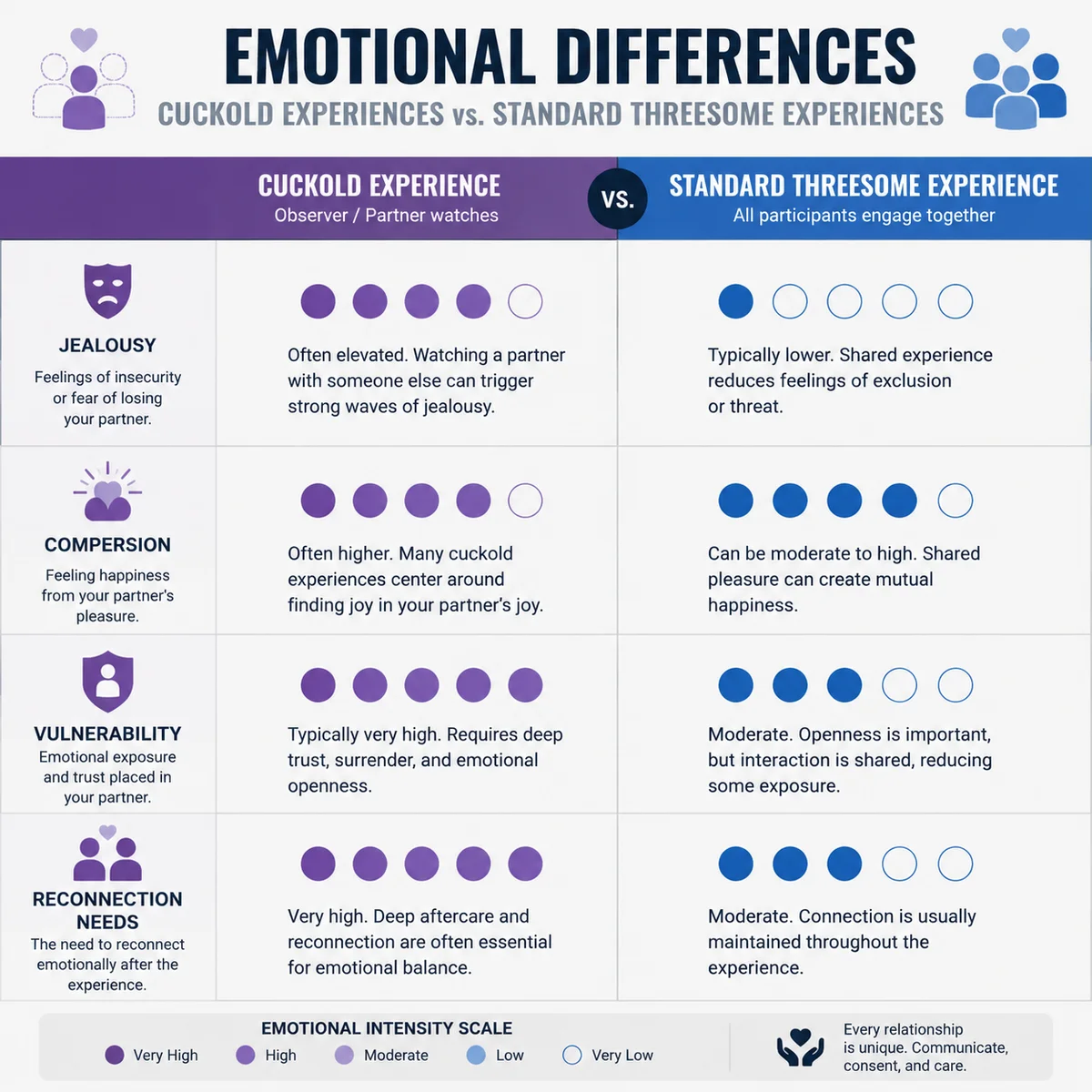
Cuckold dynamics involve a deliberate power exchange — one partner consensually occupies a more vulnerable position while the other explores with a third person. This is not the same emotional terrain as a threesome where all three participants share attention more evenly. The asymmetry built into cuckold arrangements means the emotional aftermath needs targeted attention.
In a cuckold scenario, the watching or aware partner experiences a layered emotional response: arousal intertwined with vulnerability, compersion mixed with insecurity. Meanwhile, the partner who engaged with the third may feel exhilarated but also carries the responsibility of reassuring their primary partner. Both people need aftercare, but they need different kinds of it. Research on consensual non-monogamy consistently points to post-experience reconnection as the strongest predictor of long-term relationship satisfaction (Psychology Today).
There is also the social dimension. Cuckold dynamics are less visible than swinging or polyamory — fewer people talk openly about them. This means couples have fewer templates for what healthy aftercare looks like and may feel they are navigating uncharted territory. That isolation can amplify post-experience anxiety. Named, structured aftercare breaks that cycle.
The Emotional Landscape After a Cuckold Experience
Understanding what is normal helps you recognize when something needs more attention. After a cuckold experience, both partners commonly cycle through several emotional states — sometimes within the same hour.
For the watching or aware partner: A sense of emotional whiplash is common. What felt intensely arousing during the experience may shift into feelings of vulnerability, self-doubt, or even shame once the arousal fades. This is not a sign that something went wrong — it is the brain rebalancing after a powerful neurochemical event. The key is not to suppress these feelings but to name them and receive reassurance. Some people also experience what the cuckold community calls “angst” — a specific mix of jealousy, inadequacy, and longing that is distinct from simple insecurity. It passes, but it needs acknowledgment, not dismissal.
For the partner who engaged with the third: Post-experience emotions can include guilt, even when everything was enthusiastically consensual. You may worry that your primary partner is secretly hurt, or you may feel a tension between your own enjoyment and concern for their wellbeing. This is where proactive reassurance becomes essential — waiting for your partner to ask for comfort usually means they have already been sitting with difficult feelings alone.
Immediate Aftercare: The First 24 Hours
The first 24 hours set the emotional trajectory. What you do — and what you avoid — during this window matters more than anything that comes later. Here is a step-by-step framework.
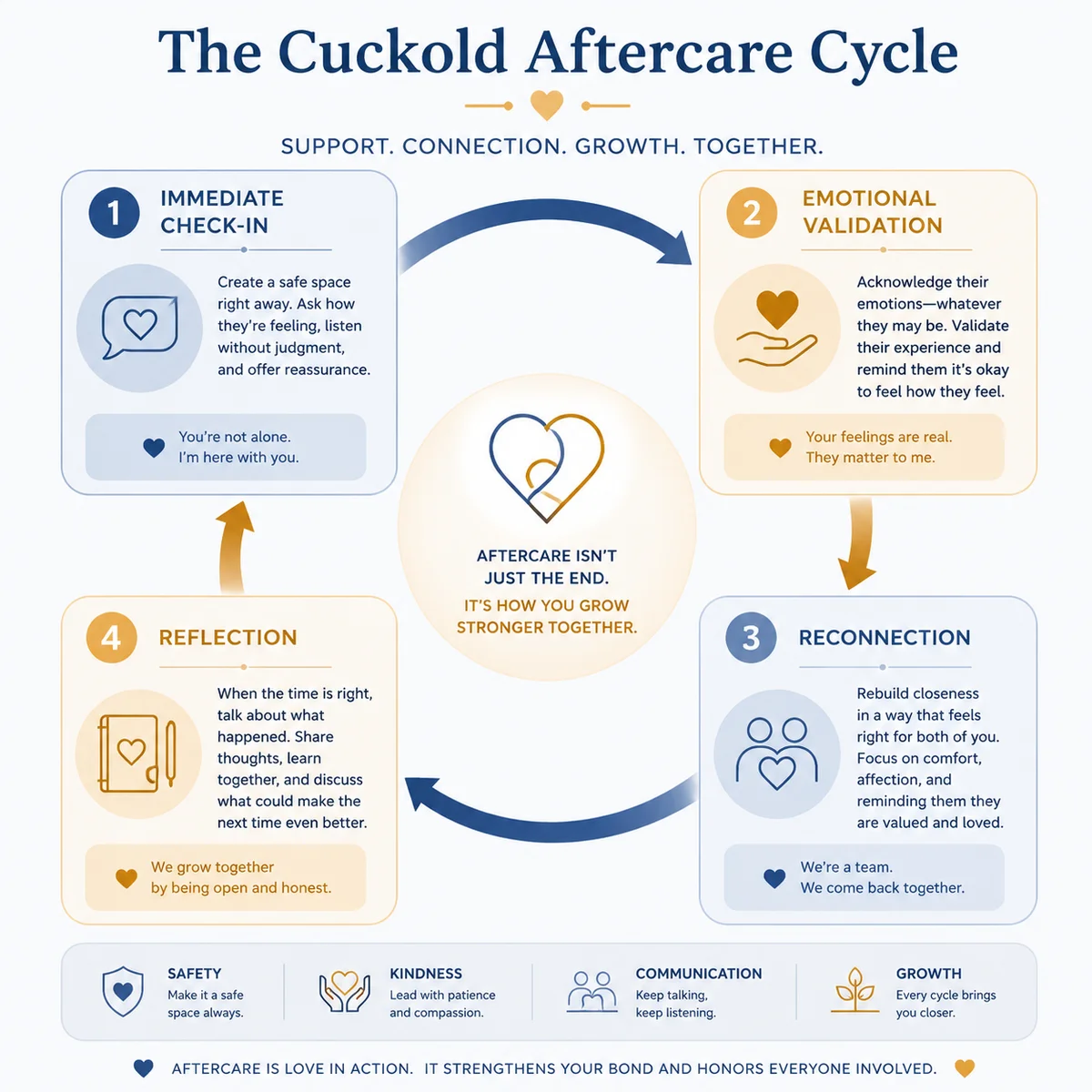
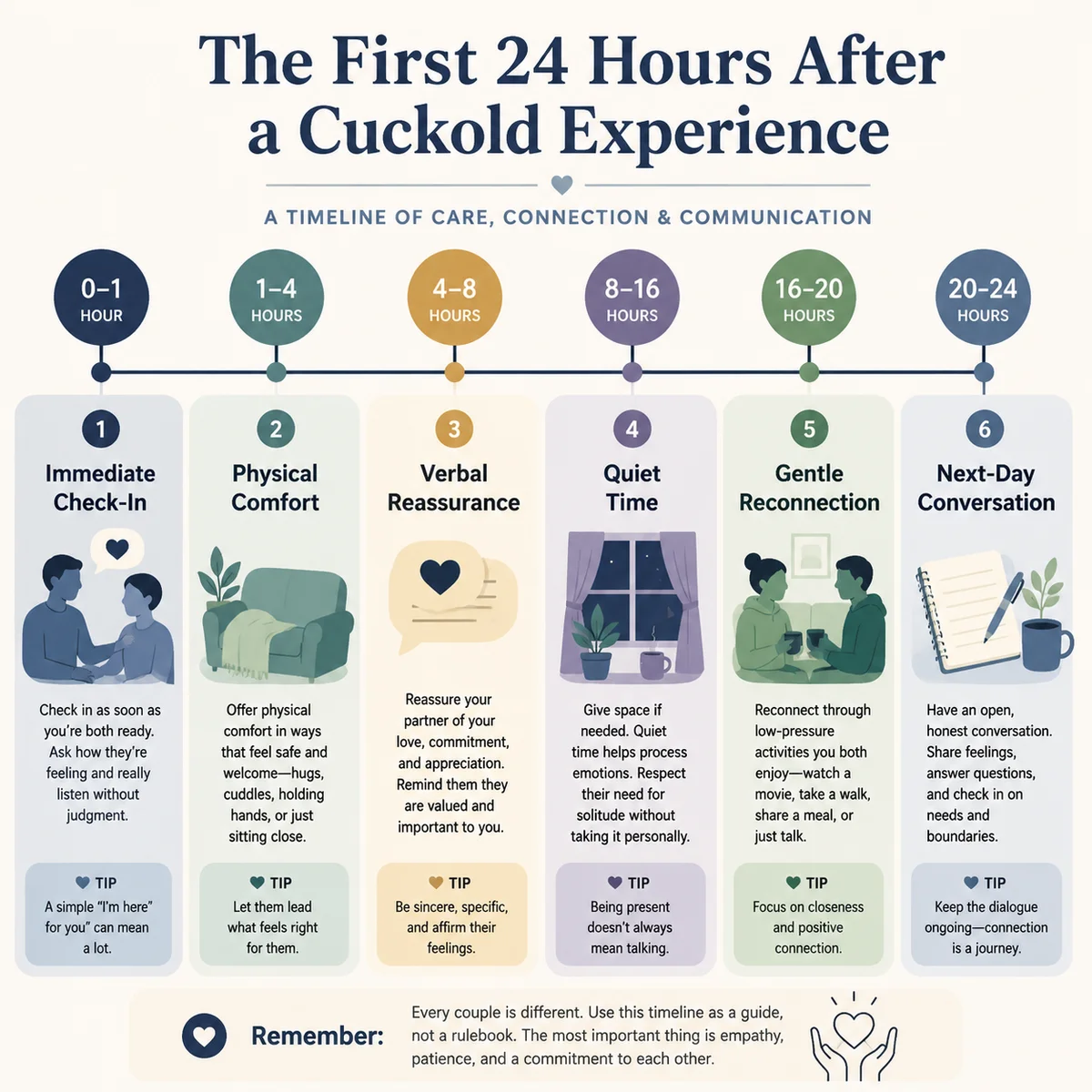
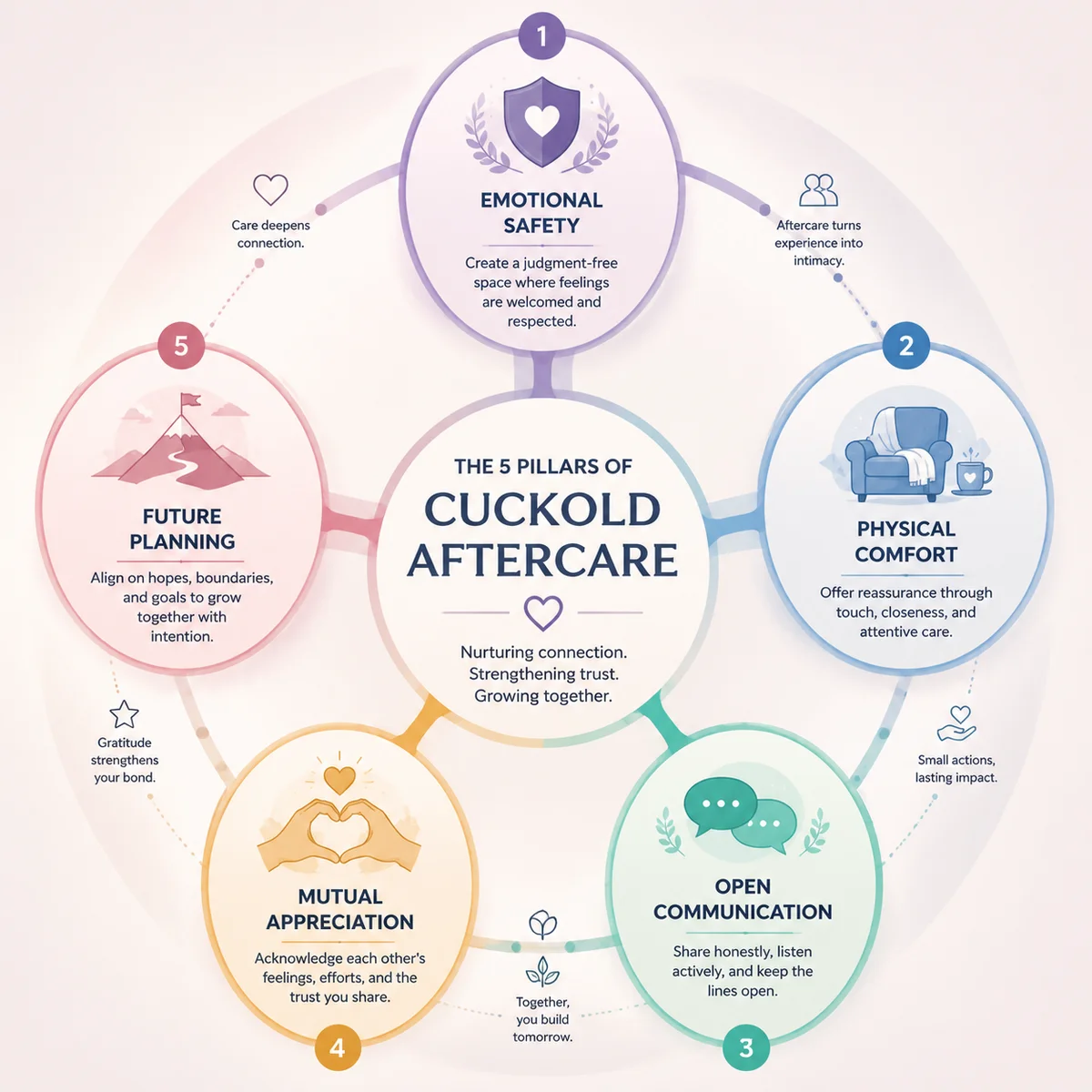
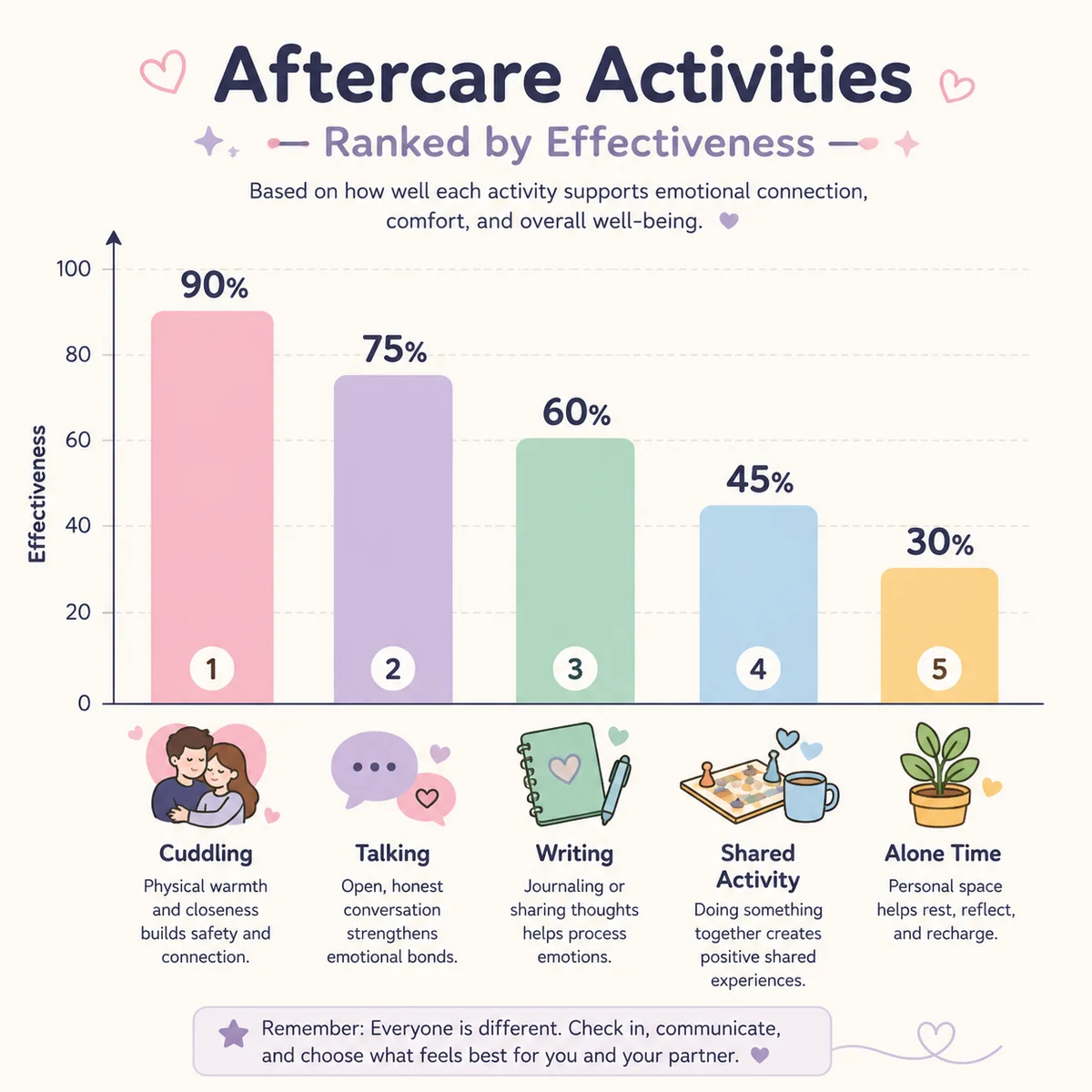
Step 1: The immediate check-in (within 30 minutes). As soon as the third person leaves or the experience concludes, turn toward each other. Do not debrief or analyze. The only question right now is: “How are you feeling?” Physical touch — holding hands, a long hug, lying together — communicates safety faster than words can. This is a moment for presence, not problem-solving.
Step 2: Physical comfort (first hour). The body processes intense experiences alongside the mind. Offer water, a warm blanket, a snack. If either of you tends to get cold or shaky after emotional intensity, that is normal — adrenaline and dopamine are settling. Create a physically comfortable baseline before attempting any conversation.
Step 3: Verbal reassurance (first 2-3 hours). For the watching partner, the core fear is often “Did you enjoy them more than me?” or “Do you still want me the same way?” The partner who engaged should offer explicit, unprompted reassurance: “I love you. What we have is the foundation. That experience does not change us.” Do not wait to be asked. For the engaged partner, the core fear may be “Are you upset with me?” — and the watching partner can counter this by explicitly separating the experience from the relationship: “I am processing my own feelings, but I am not upset with you. I am glad we did this together.”
Step 4: Quiet reconnection (hours 3-12). Shift into low-stimulation togetherness. Watch a familiar show, cook a simple meal together, take a walk. The goal is to re-establish “us” mode. Avoid immediately jumping into detailed analysis or planning the next experience — your brains need time to come back to baseline before making decisions or drawing conclusions.
Step 5: The next-day conversation (24 hours later). After sleep and distance, have a structured check-in. Ask: What felt good? What felt uncomfortable? What do you need from me right now? Was there anything that surprised you emotionally? This conversation is not about evaluating the third person or comparing experiences — it is about understanding each other’s internal experience and identifying anything that needs follow-up care.
Long-Term Reconnection Practices
Aftercare is not just an event — it is an ongoing practice woven into your relationship. The couples who sustain cuckold dynamics long-term are the ones who build reconnection into their daily lives, not just the hours immediately following an experience.
Create a reconnection ritual. This can be as simple as a 15-minute check-in each evening for the week following an experience. Ask: “On a scale of 1-10, how connected do you feel to me right now?” If the number is lower than usual, explore why without judgment. Some couples use a shared journal where each person writes one sentence about how they are feeling each day — this can surface concerns that are harder to say out loud.
Schedule deliberate “us” time. After a cuckold experience, the primary relationship needs extra intentionality. Plan a date night, a weekend away, or even just an evening with phones off. The goal is to remind each other — through action, not just words — that the primary bond remains the priority. This is especially important if the experience involved strong chemistry with the third person; the contrast between that novelty and everyday life can feel jarring without deliberate re-anchoring.
Revisit and revise your boundaries. Every cuckold experience provides data. Maybe something that sounded good in theory felt different in practice. Maybe a boundary you set turned out to be unnecessary, or maybe you discovered a new area that needs protection. Aftercare includes the ongoing work of refining your agreement. For more on this, our guide on setting boundaries in cuckold relationships offers a structured framework.
When Aftercare Reveals Deeper Issues
Sometimes aftercare does not work — not because you are doing it wrong, but because the emotional response signals something that needs more than a check-in conversation. Recognizing the difference between normal post-experience processing and a red flag is a critical skill.
Signs that aftercare alone is not enough: If either partner experiences persistent sadness, withdrawal, or anxiety lasting more than a few days after the experience, that warrants attention. If the watching partner feels consistently diminished or if you find yourselves avoiding conversations about what happened, the issue may be deeper than a rough emotional comedown. If one partner wants to pause or stop the dynamic entirely and the other resists, this is a relationship conversation that needs to happen outside the aftercare framework.
In these situations, do not push through. Pause any further cuckold activities and focus entirely on the primary relationship. Consider speaking with a therapist who is knowledgeable about consensual non-monogamy. The emotional intensity that makes cuckold dynamics compelling is the same intensity that can surface unresolved relationship issues — and those issues deserve real attention, not just standard aftercare checklists. For more on navigating complex emotions, our article on handling jealousy in cuckold dating provides additional tools. And since the third partner’s experience is inseparable from aftercare quality, understanding the third partner’s role and boundaries helps both sides of the dynamic.
Building an Aftercare Ritual That Works
The most effective aftercare rituals are personalized, consistent, and co-created. Do not borrow someone else’s template wholesale — build something that reflects how both of you receive love and reassurance.
Start by asking each other these four questions before your next experience: (1) What makes you feel most loved immediately after an intense emotional event? (2) What should I absolutely avoid doing or saying in the first few hours? (3) How much alone time vs together time do you typically need to process? (4) What is one thing I can do in the days following that would make you feel fully secure again?
Write the answers down. Turn them into a shared aftercare protocol — a document you can both reference. It does not need to be complicated: a few sentences per stage is enough. The act of creating it together is itself a form of aftercare — it signals that both of you are invested in each other’s emotional safety, not just the experience itself.
Cuckold Aftercare Checklist
- Immediate physical check-in — eye contact, touch, “How are you feeling right now?”
- Physical comfort — water, warmth, quiet space together
- Verbal reassurance from both partners — specific, unprompted, repeated if needed
- Low-stimulation reconnection activity — shared, familiar, no analysis yet
- Next-day structured conversation — separate feelings from evaluations
- Daily brief check-ins for the following week — short, low-pressure
- Boundary review session — what worked, what needs adjustment
- Deliberate “us” time — scheduled, phones-down, re-anchoring the primary bond
Communication Scripts for Difficult Moments
If the watching partner is struggling: “I hear that you are feeling raw right now. I am right here. Take your time — I am not going anywhere. When you are ready to talk, I want to hear everything.”
If the engaged partner is feeling guilty: “I gave my consent. I am not hurt — I am processing, which is different. Thank you for checking on me. I need you to trust that I will tell you if something is wrong.”
If either partner is unsure how they feel: “It is okay not to have words yet. Let us just be together right now. We can sort through the feelings tomorrow.”
Cuckold aftercare is not about getting it perfect every time. It is about building a pattern of turning toward each other when things feel intense. The couples who thrive in this dynamic are not the ones who never have difficult emotions — they are the ones who know exactly what to do when those emotions arise. If you are looking for a community where couples explore these dynamics with clarity and respect, 3Cupid provides a space built around communication, consent, and genuine connection.
This article was written by the editorial team at 3Cupid. We create evidence-informed content about ethical non-monogamy, cuckold dynamics, and relationship communication for adults exploring consensual alternative relationship structures.