Table of Contents
- The Pre-Event Conversation Every Couple Needs
- Setting Boundaries and Signals Before You Arrive
- What to Pack for a Swinging Event or Club Visit
- Emotional Preparation: What to Expect From Yourself
- Final Check Before You Leave the House
- Planning the Morning After
- Swinging Event Preparation Checklist
The Pre-Event Conversation Every Couple Needs
If you only do one thing to prepare for a swinging event, let it be this: sit down with your partner and talk through every detail before you even pick out what to wear. Not the night before — give yourselves at least a few days, ideally a week. Rushed conversations lead to assumptions, and assumptions are what turn a potentially great night into a difficult one.
Start with the big question: What do we each want to get out of this evening? The answer might be different for each of you, and that’s fine. One of you might want to dance and socialize; the other might be curious about watching in a playroom. Neither goal is wrong. What matters is that you know each other’s expectations before walking through the door. A mismatch you discover at midnight is much harder to navigate than one you talk through on Tuesday over coffee.

Then cover the harder questions: What would make either of us feel uncomfortable? What’s our plan if one of us wants to leave early? Are we open to separate-room play, or do we stay together the whole night? These aren’t mood-killers. They’re the foundation that lets you both relax because you know the safety net is in place.
Setting Boundaries and Signals Before You Arrive
Boundaries are not restrictions — they’re agreements that create freedom. When you both know exactly where the lines are, you can play confidently within them instead of second-guessing every interaction. Write your boundaries down if it helps. Some couples even keep a shared note on their phones (which stays in the car or locker, naturally).
What should these boundaries cover? At minimum: physical limits (what kind of touch is okay with others?), communication boundaries (do you check in with each other before going to a playroom?), and emotional boundaries (are certain acts reserved just for the two of you?). The more specific you are, the fewer surprises you’ll face.

Next, establish a nonverbal signal. A squeeze of the hand, a specific phrase, a tap on the shoulder — something discreet that means “I need to talk to you privately” or “I want to leave.” Clubs can be loud and crowded, and you won’t always be able to have a full conversation in the moment. A pre-agreed signal cuts through the noise and gives both of you a safety valve that doesn’t require explaining yourself to anyone else.
Also discuss: what happens if one of you is having a great time and the other isn’t? The rule that protects most couples is simple — if one person wants to leave, you both leave. No debate, no bargaining, no “just fifteen more minutes.” You can always come back another night. You can’t undo the resentment that builds when someone felt trapped.
What to Pack for a Swinging Event or Club Visit
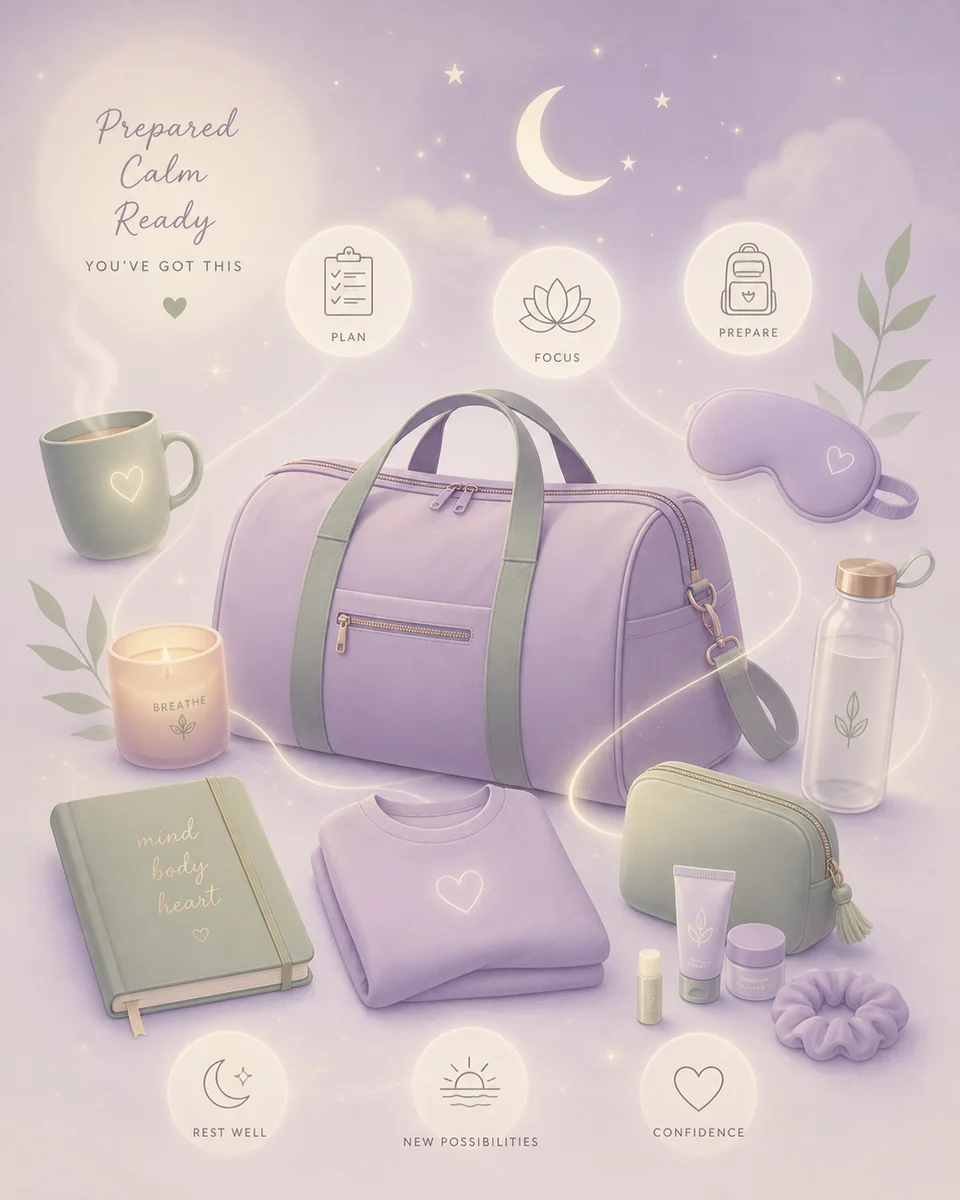
Packing for a lifestyle club or event isn’t like packing for a regular night out. You’ll want two categories of items: things for during the event, and things for after.
Essentials for the club bag:
- ID and membership card — most clubs check at the door, no exceptions
- Condoms and lubricant — even if the club provides them, bring your preferred brands
- A small toiletry kit — travel-size mouthwash, deodorant, body wipes, hair ties
- Flip-flops or slide sandals — for the shower and locker room areas
- A change of clothes — something comfortable for the drive home
- A robe or wrap — some clubs have areas where guests change into robes; having your own feels more comfortable
- Cash — for bar drinks, locker rental, or coat check
- Water bottle — staying hydrated matters, especially if you’re dancing
Leave your phone in the car or locker. This isn’t optional — it’s the single most enforced norm in every lifestyle venue. If you need it for directions or emergency contact, check it outside. Inside, phones are a privacy violation that can get you asked to leave.
Emotional Preparation: What to Expect From Yourself
The emotional side of preparing for a swinging event is where most first-timers under-invest. You can pack the perfect bag and have the clearest boundaries, but if you haven’t checked in with yourself emotionally, the night can still catch you off guard.
Start by naming what you’re feeling. Nervous? Excited? A mix of both? That cocktail of anticipation and anxiety is completely normal. What helps is distinguishing between good nerves (butterflies, curiosity, the thrill of trying something new) and warning nerves (a pit in your stomach, dread, the sense you’re doing this to please your partner rather than yourself). Pay attention to which one is showing up. If it’s the second kind, slow down — you might not be ready tonight, and that’s okay.

Also, prepare for the possibility that you might feel jealous. Even people who’ve been in the lifestyle for years experience jealousy from time to time. The question isn’t whether jealousy will appear — it’s whether you have a plan for it. Agree with your partner in advance: if jealousy surfaces, you’ll name it, take a break together, and talk it through privately. Jealousy is a signal, not a verdict — it’s telling you something about a need or a fear, and addressing it together can actually deepen your connection.
Final Check Before You Leave the House
You’ve talked, packed, and emotionally prepared. Now, right before you walk out the door, do a final check:
- Are we both genuinely excited? Not just “willing to go along with it” — actually looking forward to the evening. If one of you is hesitating, address it now, not at the club entrance.
- Do we both remember our boundaries and signals? A quick verbal recap takes thirty seconds and prevents hours of confusion.
- Do we have a clear exit plan? Where’s the car? What’s our signal for “let’s leave”? Who drives home?
- Is our bag packed? ID, toiletries, change of clothes, protection. Phone is going in the locker as soon as we arrive.
- Are we sober? A drink to take the edge off is one thing. Arriving already intoxicated is a recipe for poor decisions and boundary violations — and most clubs will turn you away at the door.

Planning the Morning After
One of the most overlooked parts of learning to prepare for a swinging event is planning what comes after. The hours and days following your first club visit can be emotionally rich — in both good and challenging ways — and having a structure for processing makes all the difference.
Block off the next morning. Seriously. Put it on your calendar. Don’t plan brunch with friends or a packed workday. Give yourselves space to sleep in, make coffee, and talk without a deadline. The conversation doesn’t need to be heavy — it can be as simple as “What was your favorite part?” and “Was there anything that didn’t sit right?” The key is that you’re talking, not letting the experience sit in unexamined silence.
Some couples find it helpful to have a reconnection ritual for the morning after — making breakfast together, taking a walk, or just spending time physically close without the expectation of anything more. This isn’t about debriefing every detail. It’s about reminding each other that whatever happened at the club, your primary connection is still the center of gravity. Our guide on post-swing debriefing offers a structured approach if you want a more intentional framework.
Swinging Event Preparation Checklist
Here’s a practical checklist you can run through before your first swinging event. Check each box before you leave, and you’ll walk in grounded rather than scrambling.
| Category | Task | Done |
|---|---|---|
| Conversation | We’ve discussed what we each want from the evening | ☐ |
| Conversation | We’ve set clear physical, emotional, and communication boundaries | ☐ |
| Conversation | We have a nonverbal signal for “I need to talk” and “let’s leave” | ☐ |
| Conversation | We’ve agreed: if one wants to leave, we both leave — no debate | ☐ |
| Packing | ID, membership card, cash | ☐ |
| Packing | Condoms, lubricant, toiletry kit, flip-flops | ☐ |
| Packing | Change of clothes, robe or wrap, water bottle | ☐ |
| Packing | Phone plan: it stays in the locker or car | ☐ |
| Emotional | I’ve checked in with myself — am I genuinely excited? | ☐ |
| Emotional | We’ve talked about how we’ll handle jealousy if it shows up | ☐ |
| Emotional | We’ve blocked off the next morning for rest and reconnection | ☐ |
| Logistics | We know the venue’s dress code, theme, and rules | ☐ |
| Logistics | We’ve arranged safe transportation there and back | ☐ |
| Logistics | We are sober and clear-headed | ☐ |

For more on what to actually expect once you arrive, read our swinging club etiquette guide for first-timers, which covers the social norms, dress codes, and unwritten rules that make club visits comfortable for everyone. And if you’re still in the discovery phase, our guide to finding your swinging community walks through how to locate events and spaces that match your comfort level, whether you’re looking for a large club, a small house party, or an online community first.
If the idea of all this preparation feels like a lot — that’s because it is. But the couples who do this work before their first event are the ones who come back for a second, and a third, and eventually find themselves part of a community they didn’t know existed. The preparation isn’t a barrier to entry. It is the entry.
This article is part of our Swinging Event Preparation series. For the companion guide on club etiquette, read: Swinging Club Etiquette for First-Time Visitors.