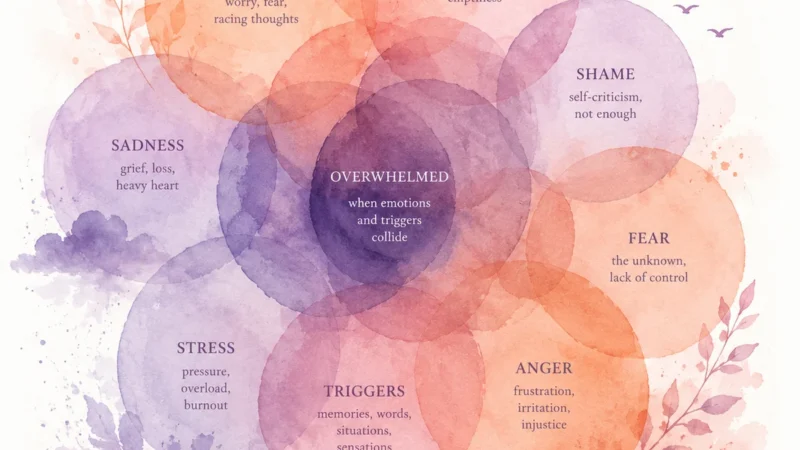
Bringing up STI testing and sexual health with a new partner is rarely anyone’s favorite conversation. But in non-monogamous dating — where multiple partners and overlapping sexual networks are part of the picture — these discussions move from “nice to have” to non-negotiable. The good news: the more you practice them, the easier they get. And there’s a real skill to having these talks in a way that builds trust instead of killing the mood.
Table of Contents
- Why STI Conversations Feel Harder in ENM
- When to Bring Up Sexual Health
- What Every STI Conversation Should Cover
- Sample Scripts for Different Situations
- Handling Difficult or Defensive Responses
- Building a Regular Testing Rhythm
- Normalizing the Conversation for Everyone
Why STI Conversations Feel Harder in ENM
In monogamous dating, the sexual health conversation usually follows a predictable script: exchange test results, agree on exclusivity, and move on. It’s a single checkpoint. In ethical non-monogamy, that checkpoint becomes an ongoing dialogue — and that’s what makes it feel more complicated.
When you are dating or sleeping with multiple people, you are not just managing your own health — you are part of a wider network where every new partner potentially changes the risk profile for everyone else. That can feel like a lot of responsibility. It can also trigger anxiety about being judged as “risky” or “irresponsible” simply for having more partners, even when your safer-sex practices are actually more rigorous than most monogamous people’s.
Part of the difficulty is cultural. Many of us grew up with abstinence-only education or were taught that STIs are shameful rather than a neutral health matter. Carrying that baggage into ENM dating means you might find yourself apologizing for your own sexual history or avoiding the topic entirely out of embarrassment. Neither serves anyone. A calm, informed, and matter-of-fact approach to sexual health is one of the most attractive things a person can bring to non-monogamous dating — and it is absolutely a learned skill.

There is also the simple fact that talking about STIs requires a certain vulnerability. You are disclosing personal health information. You might be sharing test results that are not what you wish they were. You are trusting someone with information that, in the wrong hands, could be used to judge or shame you. All of this is legitimate emotional weight. Acknowledging it — without letting it stop you — is the first step toward getting good at these conversations.
When to Bring Up Sexual Health
Timing matters. Bring it up too early — say, in the first message on a dating app — and it can feel clinical and off-putting. Bring it up too late — when clothes are already coming off — and you have put everyone in a position where they either rush through the conversation or skip it entirely. Neither sets you up for good decision-making.
The sweet spot is typically after you have established mutual interest and before any sexual contact happens. For many people, this means somewhere between the second date and the conversation that explicitly confirms “we are heading toward physical intimacy.” If you meet someone at a lifestyle event or club where things move faster, you adapt: a brief but honest check-in before anything happens, even if it is just two minutes in a quieter corner.
Some people prefer to put their testing practices and status directly in their dating profile — a simple line like “STI tested every 3 months, happy to share results” can filter for compatible partners and signal that you take this seriously. You do not need to list specifics publicly, but normalizing the mention helps set the stage for the deeper conversation later.

What Every STI Conversation Should Cover
A thorough STI conversation does not have to be long, but it does need to hit certain points. Think of it less as an interrogation and more as an exchange of relevant information between adults who care about each other’s wellbeing. Here is what belongs in it:
- Recent testing. When was your last full panel? What was tested, and what were the results? Be honest — a positive result you have treated, or a diagnosis you manage, is not a dealbreaker for many people if you are upfront about it.
- Testing cadence. How often do you test? Every three months is common in active ENM communities. Knowing someone’s rhythm tells you more than a single set of results.
- Current partners. You do not need to provide a detailed roster, but sharing how many current sexual partners you have and the general nature of those connections gives useful context.
- Safer sex practices. What barriers do you use and when? Do you use condoms for penetrative sex? Dental dams for oral? Is there a fluid-bonding agreement with a primary partner? Be specific.
- Disclosure practices. How do you handle it if something changes — a new partner, a potential exposure, a positive test? Agreeing on a notification protocol ahead of time reduces anxiety later.
- Vaccination status. Are you vaccinated for HPV, hepatitis A and B, and mpox where available? These are often overlooked but highly relevant.
This might look like a lot on paper, but an experienced communicator can cover all of it in under five minutes. The key is to approach it as a collaborative information exchange, not a performance review.
Sample Scripts for Different Situations
If you have never done this before, having some language ready can make all the difference. Here are scripts for three common scenarios, adapted for different comfort levels:
The Direct Opener
“Before things go further, I want to check in about sexual health. I was last tested three months ago — full panel, all negative. I test every three months and use condoms with all partners. How about you?”
This is straightforward and sets the tone. By sharing your own information first, you make it an invitation rather than an interrogation.
The Collaborative Approach
“I’d love for us to have the sexual health conversation before we get physical. I can go first with my testing history and practices, and then you share whatever you’re comfortable with. No pressure — this is just about making informed choices together.”
This version works well with someone who seems a little nervous about the topic. It frames the conversation as a shared project rather than a demand.
The Lifestyle Event Quick Check
“Hey — quick health check before we go further. I tested negative two months ago, use condoms, and my last partner tested last month. You good with barriers? Anything I should know?”
This is appropriate for faster-paced environments where a long sit-down conversation is not realistic. It covers the essentials without killing the energy.

Handling Difficult or Defensive Responses
Not everyone reacts well to the STI conversation — and how they react tells you a lot. A partner who gets defensive, dismissive, or refuses to engage is giving you valuable information about how they handle responsibility and communication.
Some common difficult responses and how to handle them:
- “I’m clean — trust me.” This is a red flag, not a green light. A gentle but firm response: “I appreciate that, and I would still feel more comfortable if we could both share our most recent test dates and what we were tested for.”
- “I haven’t been tested in a while, but I feel fine.” Many STIs are asymptomatic. Your response: “Totally understand — life gets busy. Would you be open to getting tested before we go further? I’m happy to wait.”
- “You must think I sleep around.” This is projection. Reassure while holding your boundary: “Not at all. This is just my standard practice with everyone — it is about mutual care, not judgment.”
- Vague or evasive answers. If someone dodges specific questions repeatedly, take that seriously. A partner who cannot give clear answers about their sexual health practices is likely not managing them carefully.
The rule of thumb: if someone makes you feel awkward or ashamed for bringing up sexual health, they are not a safe person to be sexually intimate with. Period. The right people will meet you with relief, gratitude, or at minimum respectful engagement.
Building a Regular Testing Rhythm
One of the best things you can do for yourself and everyone you date is establish a consistent testing routine. When testing is just a thing you do — like going to the dentist — it stops feeling like a big deal and becomes part of the background rhythm of your life.
For most sexually active people in non-monogamous networks, testing every three months is a reasonable baseline. If you have fewer partners or use barriers consistently, every six months might work. If you have many partners or engage in higher-risk activities, you might test more frequently. The right cadence depends on your specific circumstances — the important thing is that you have one and stick to it.
Full-panel testing should include: HIV, chlamydia, gonorrhea (urethral, throat, and rectal swabs where relevant), syphilis, hepatitis B and C, and trichomoniasis. Herpes testing is not routinely included unless you have symptoms or specifically request it, so have a conversation with your healthcare provider about what makes sense for you. HPV testing for people with cervixes is typically part of routine screening.
Finding an ENM-friendly healthcare provider makes a significant difference. Look for clinics that advertise as LGBTQ+ friendly or that specialize in sexual health — Planned Parenthood, local sexual health clinics, and services like Nurx or LetsGetChecked for at-home testing are good places to start. A provider who does not blink when you mention multiple partners is worth their weight in gold.

Normalizing the Conversation for Everyone
The more people who treat STI conversations as standard procedure, the less stigma there is for everyone. You contribute to that every time you bring it up calmly, without apology, and without making it weird.
If you are part of a couple opening up, make sexual health part of your ENM foundation conversations from the beginning. If you are new to polyamory, build your testing rhythm before you start dating. If you are experienced, model the behavior you want to see — bring it up first, share your results openly, and make it easy for others to do the same.
A useful next step is formalizing your practices into a written agreement with your primary partner or partners. This is where a sexual health agreement becomes invaluable — it takes the conversation from “we should probably talk about that sometime” to a clear, shared document everyone can reference. We have a full guide on building one, including a template you can adapt.
If you are looking to deepen your knowledge, the VeryWell Mind guide to STI stigma and communication is an excellent resource for understanding the psychological barriers that make these conversations challenging — and how to overcome them.

Sexual health conversations are not a one-time hurdle to get past. They evolve as your relationships evolve, as your testing results update, and as new partners enter your network. Treat them as an ongoing practice rather than a checkbox, and you will find that they strengthen rather than strain your connections. The people worth being intimate with will always appreciate the care you put into this.
This article is part of our ongoing series on health and communication in non-monogamous relationships. You can connect with like-minded people who prioritize open, honest communication at 3Cupid.